
Electric vehicle transition

Search documents
Volkswagen AG's Financial Performance and Market Valuation
Financial Modeling Prep· 2026-03-10 13:00
Core Viewpoint - Volkswagen AG is a significant player in the global automotive industry, known for its diverse vehicle range and is actively transitioning to electric vehicles despite facing competition and challenges [1]. Financial Performance - On March 10, 2026, Volkswagen reported earnings per share (EPS) of $0.51, which was below the estimated $0.57, but generated revenue of approximately $99.97 billion, surpassing the estimated $84.86 billion, indicating strong sales performance despite the earnings miss [2][6]. - The company projects its revenue for the year to be either flat or up to 3% higher compared to the previous year, with an expected operating margin between 4% and 5.5%, reflecting a cautious but optimistic outlook for profitability [3][6]. Market Valuation - Volkswagen's price-to-earnings (P/E) ratio is approximately 6.36, indicating a relatively low valuation compared to its earnings, while the price-to-sales ratio of about 0.14 suggests a modest market valuation of its sales [5][6]. - The enterprise value to sales ratio is around 0.86, reflecting the company's overall valuation in relation to its revenue [5]. Future Outlook - The company anticipates a recovery in its profit margin in 2026 following a significant slump in 2025, which was impacted by tariffs, competition from China, and the costly transition to electric vehicles, although sales may continue to stagnate [4].

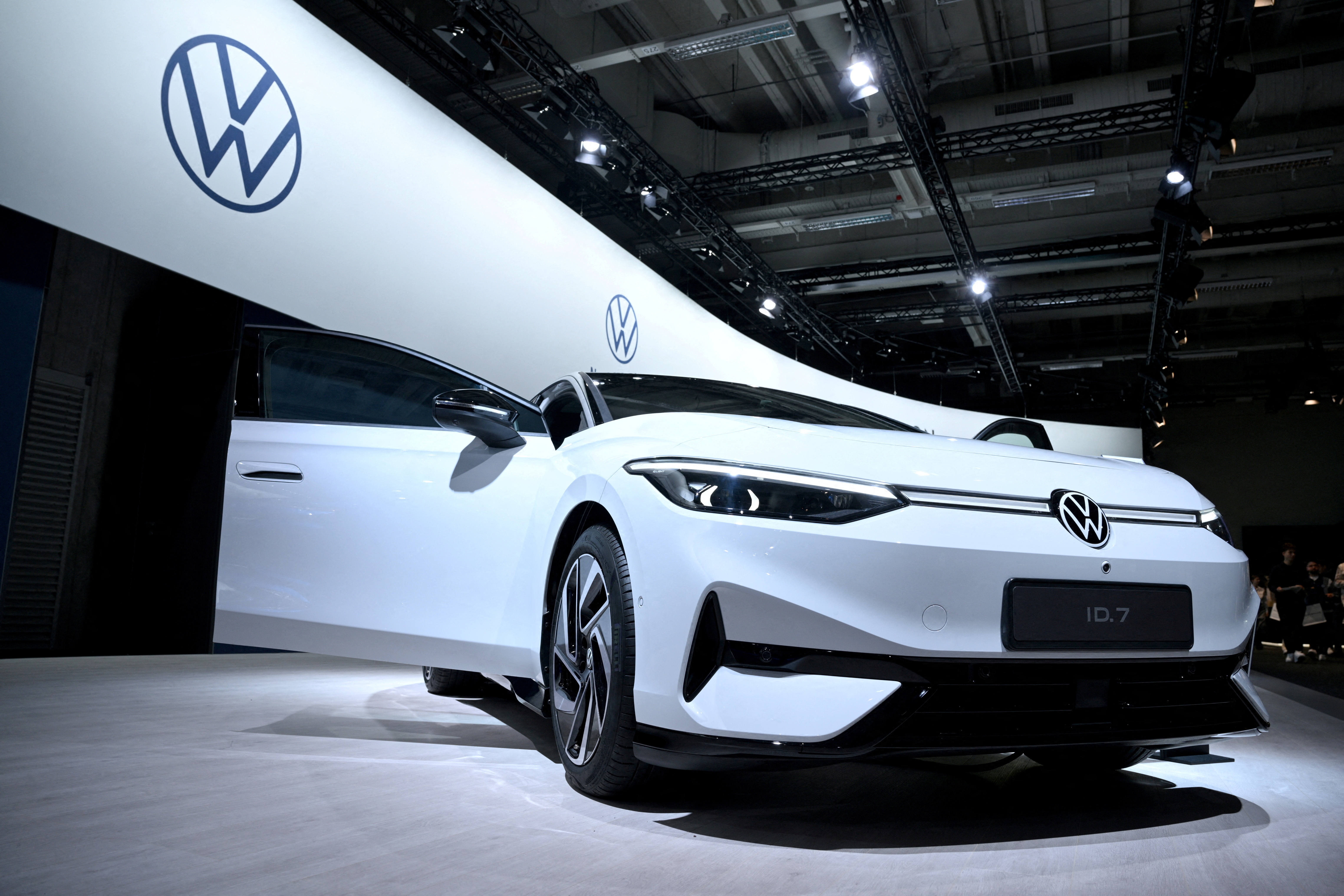
UK car market up 7.2% in February
Yahoo Finance· 2026-03-05 10:35
Market Overview - The UK new car market experienced a 7.2% increase in February, reaching 90,100 registrations, marking the highest February volume in 22 years [1] - The month typically sees lower volumes, leading to volatility as many buyers wait for the March numberplate change [1] Demand Drivers - The growth in demand was primarily driven by recovering private retail registrations, which rose by 17.6% to 35,227 units [2] - Fleet registrations increased by 1.8%, while the lower-volume business segment saw a decline of 12.7% [2] - Fleets accounted for 59.4% of new car registrations, remaining the largest source in the market [2] Electric Vehicle Trends - Battery electric vehicle (BEV) registrations increased by 2.8% to 21,840 units, representing 24.2% of the market [3] - However, BEV market share declined for the second consecutive month compared to the previous year, partly due to a strong start in 2025 as buyers aimed to avoid new tax rates [3] - Plug-in hybrids (PHEVs) saw the largest growth, up 43.5% to capture an 11.6% market share, while hybrid electric registrations rose by 3.3% to a 13.1% share [4] Market Dynamics - Petrol demand grew by 5.2%, but its market share decreased to 46.5%, while diesel volumes continued to decline, down 3.8% to just 4.5% of the market [4] - Year-to-date BEV market share stands at 22.0%, which is two-thirds of the 33% target mandated for 2026, making March a critical month for the market [5] Industry Insights - Manufacturers have invested billions in new models and discounts to stimulate demand, supported by the government's Electric Car Grant [5] - The SMMT Chief Executive highlighted the need for a holistic review of the transition to electric vehicles, emphasizing that buyer confidence may weaken due to plans for a pay-per-mile tax for EVs starting in 2028 [6] - The urgency of reviewing the transition is underscored by the impending end of sales for new petrol and diesel cars in less than four years, necessitating rapid acceleration in EV uptake [6]
Ford CEO Jim Farley knew the EV pain would be bad, but the ‘punch line’ is a $4.8 billion loss: ‘The customer has spoken’
Yahoo Finance· 2026-02-12 16:40
Core Viewpoint - Ford Motor CEO Jim Farley predicts a significant decline in the electric vehicle (EV) market due to the expiration of federal tax credits, estimating that EV sales will drop to 5% of the industry from the current 10% to 12% [1][2] Group 1: Financial Performance - Ford's Model E electric vehicle unit reported a $4.8 billion operating loss, with expectations of an additional loss of $4 billion to $4.5 billion in 2026 [1] - The break-even target for the Model E unit has been pushed back to 2029 [1] - Ford anticipates approximately $7 billion in special charges over 2026 and 2027 related to the transition from its old EV strategy [5] Group 2: Market Strategy - The company is shifting focus to a "high-volume, affordable end of the market," specifically targeting the $30,000 to $35,000 price range for EVs [4] - This new strategy contrasts with the previous focus on higher-priced electric trucks and SUVs, which were deemed too expensive by consumers [4] - Farley emphasized that Ford will no longer build EVs solely to meet regulatory targets, indicating a shift in production philosophy [3] Group 3: Market Response - Despite the grim forecasts, Ford's stock has increased by more than 27% over the past six months, suggesting that the market had been prepared for these developments [2] - Farley noted that the consumer's preferences have influenced the company's strategic pivot, reflecting a deeper understanding of the "duty cycle" of vehicle usage [3]

Ford CEO Jim Farley knew the EV pain would be bad but the 'punch line' is a $4.8 billion loss
Fortune· 2026-02-12 16:40
Core Viewpoint - Ford Motor Company is experiencing significant challenges in its electric vehicle (EV) segment, with CEO Jim Farley predicting a substantial decline in EV market share due to the expiration of federal tax credits, which could reduce EV sales to 5% of the industry from the current 10% to 12% [1][2] Financial Performance - Ford reported a $4.8 billion operating loss for its Model E electric vehicle unit, with expectations of an additional loss of $4 billion to $4.5 billion in 2026, pushing the break-even target to 2029 [1] - The company anticipates approximately $7 billion in special charges over 2026 and 2027 related to the transition away from its previous EV strategy [5] Market Strategy - Ford is shifting its focus to the "high volume, affordable end of the market," specifically targeting the $30,000 to $35,000 price range for EVs, contrasting with the previous focus on higher-priced electric trucks and SUVs [4] - The company is moving away from building EVs solely to meet regulatory targets, emphasizing a more consumer-driven approach [3] Consumer Trends - There is a growing consumer preference for "partial electrification," with hybrids gaining popularity over pure EVs, now accounting for over 20% of Ford's U.S. sales mix [7] - JD Power reported that affordability remains a significant pressure in the car sales market, with average monthly finance payments reaching $760, contributing to depressed EV retail sales [6] Operational Strengths - Ford's commercial division, Ford Pro, generated $6.8 billion in EBIT for the year, helping to subsidize losses from the electric vehicle segment [6] Political and Economic Environment - The current political landscape is volatile, with Ford acknowledging a partnership with the administration and a reset in emission standards as key factors for 2026 [8] - The company faced an unexpected $1 billion hit in the fourth quarter due to late-year changes in tariff credits for auto parts, complicating its financial outlook [9]
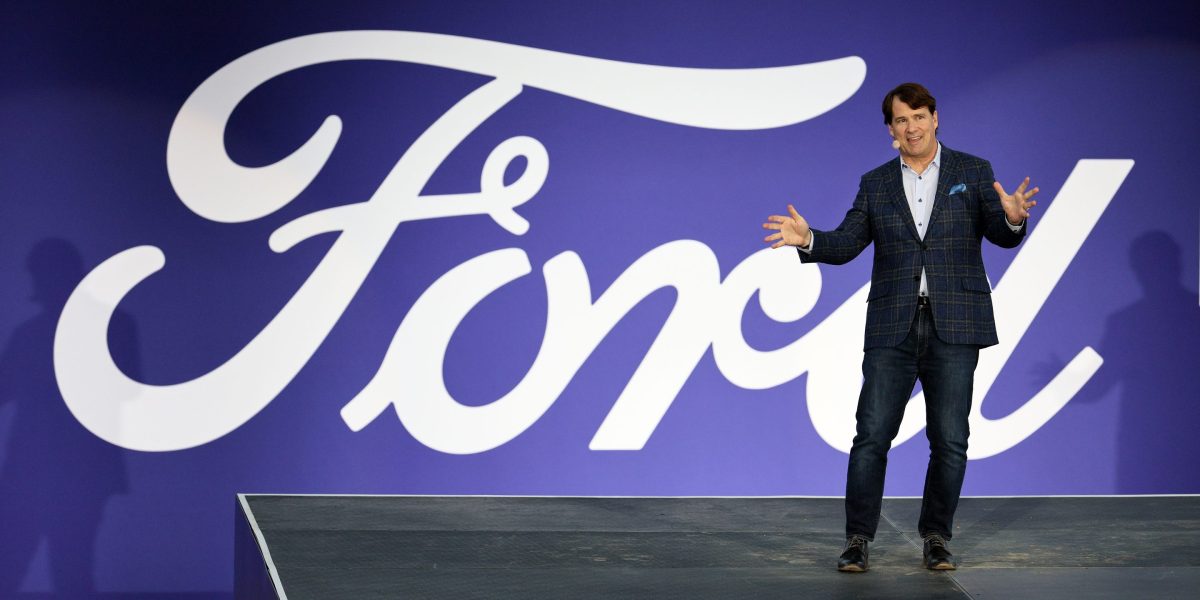
Volkswagen Falls to Third Place in China's Competitive Auto Market
ZACKS· 2026-01-14 16:46
Core Insights - Volkswagen AG has fallen to third place in China's auto market, overtaken by Geely Automobile Holdings Limited, marking a significant decline for the German automaker in the world's largest vehicle market [1][9] - The shift in market leadership indicates increasing pressure on traditional foreign automakers as domestic brands strengthen their positions [1][3] Market Share Dynamics - Volkswagen's joint ventures in China accounted for a 10.9% share of retail vehicle sales, down from 12.2% in 2024, while Geely's market share increased to 11% from 7.7% in 2025 [2] - BYD remains the market leader but saw its share decrease to 14.7% from 16.2% [2] Competitive Landscape - Established global automakers like Volkswagen, General Motors, and Toyota are losing ground to Chinese competitors due to a slower transition to electric vehicles, as Chinese consumers increasingly favor EVs supported by government incentives [3] Strategic Responses - Volkswagen is enhancing its localization efforts in China, including partnerships with Xpeng and Horizon Robotics to develop electric vehicle technologies and smart vehicle chips tailored for the Chinese market [4] - The company is also exploring opportunities to export vehicles developed and manufactured in China to international markets, similar to strategies employed by Chinese automakers like BYD [5] Global Performance - Volkswagen delivered approximately 4.73 million vehicles globally, with around 382,000 fully electric vehicles delivered in 2025, reflecting a slight decline of 0.2% [6] - Battery-electric models constituted 8.1% of Volkswagen's total vehicle deliveries for the year [6] Competitor Performance - BYD achieved sales of 4.6 million vehicles in 2025, a 7.7% increase from 2024, with sales evenly split between fully electric vehicles and plug-in hybrids [7] - Geely sold 3.02 million vehicles, meeting its target, and has set a sales goal of 3.45 million vehicles for 2026, indicating a projected growth of about 14% from 2025 [8]

New China Subsidies Are Lifting the Bull Case for Nio Stock Today. What the Data Tells Us for 2026.
Yahoo Finance· 2025-12-30 21:29
Core Viewpoint - Nio's stock experienced a significant increase following the announcement of a consumer trade-in subsidy program by the Chinese government, aimed at stimulating the economy and promoting electric vehicle adoption [1][3]. Group 1: Government Initiatives - The Chinese government plans to offer consumer trade-in subsidies worth up to $8.92 billion next year to counter deflationary pressures and economic softness [1]. - The National Development and Reform Commission (NDRC) stated that the program will help optimize the implementation of new economic and social organizations [1]. Group 2: Company Performance - Nio shares have been in a downtrend, declining over 30% from their year-to-date high on October 2 [2]. - The company is expected to achieve over $4 billion in vehicle sales for the fourth quarter, a significant increase from last year's $2.7 billion [5]. Group 3: Market Sentiment and Valuation - The recent stimulus package is seen as bullish for Nio, as it directly incentivizes consumers to upgrade to new vehicles, including electric vehicles [3]. - Nio's price-sales (P/S) ratio is approximately 1.18x, making it more attractively valued compared to larger U.S. rivals like Tesla and Rivian [6]. - Options data indicates a positive outlook for Nio, with contracts suggesting the stock could trade above $7 within the next five months [5]. Group 4: Future Outlook - Analysts on Wall Street predict further upside for Nio stock in the calendar year 2026 [8]. - The company's expansion into both premium SUVs and affordable EVs, along with investments in battery-swapping technology, positions it favorably in the market [6].

Tesla privately warned UK that weakening EV rules would hit sales
The Guardian· 2025-12-03 06:00
Core Viewpoint - Tesla has warned the UK government that weakening electric vehicle (EV) regulations could negatively impact battery car sales and hinder the country's ability to meet carbon dioxide targets [1][4]. Group 1: Government Regulations and Industry Impact - The Labour government has weakened the zero-emission vehicle (ZEV) mandate, which previously required increased sales of EVs, allowing carmakers to sell more petrol and diesel vehicles [2]. - Critics argue that new taxes on electric cars could further reduce demand, complicating the transition to electric vehicles [2]. - Tesla emphasized that introducing new loopholes, referred to as "flexibilities," would suppress battery electric vehicle (BEV) supply and significantly impact emissions, risking the UK's carbon budgets [4]. Group 2: Industry Reactions and Concerns - Carmakers like BMW, Jaguar Land Rover, Nissan, and Toyota have expressed concerns that the weakened mandate is damaging investment, as they are selling electric cars at a loss [3]. - Ford and Mercedes-Benz have lobbied against stricter rules post-2030, which would require further reductions in average carbon dioxide emissions, allowing them to sell more polluting vehicles for a longer period [7]. - Ford criticized European governments for retracting support for electric car sales, highlighting the competitive threat from Chinese manufacturers with lower cost bases [9]. Group 3: Financial Measures and Future Proposals - The UK Chancellor announced a "pay-per-mile" charge on electric cars starting in 2028, which may diminish their appeal compared to petrol and diesel models, while also extending grants for new electric cars [5]. - Mercedes-Benz proposed reducing VAT on public charging from 20% to 5% to align with home electricity rates and suggested a price cap on public charging [10]. - Tesla called for a ban on sales of plug-in hybrid electric vehicles with a battery-only range of less than 100 miles after 2030, which would eliminate many popular models in that category [10].

General Motors Stock Just Revved Up to New 10-Year Highs
Yahoo Finance· 2025-12-01 16:20
Core Insights - General Motors (GM) is valued at $68.58 billion and has a complex history, including a bankruptcy filing during the financial crisis, from which it quickly emerged [1][2] - The company is focusing on an electric future with its Ultium Drive system, which supports the transition to an all-electric vehicle portfolio [2] - GM's stock has shown strong technical momentum, gaining 9.09% since a "Buy" signal was issued on October 22 [4] Company Performance - GM has achieved a 10-year high stock price of $73.89 as of December 1, indicating strong market performance [5][6] - The stock has a 100% "Buy" technical opinion from Barchart and has increased by 32% over the past year [6][7] - The company has a Weighted Alpha of +53.86 and has made 12 new highs, with a recent gain of 6.31% in the last month [7] Technical Indicators - The stock recently traded at $73.81, with a 50-day moving average of $65.05, indicating positive momentum [7] - The Relative Strength Index (RSI) is at 69.97, suggesting the stock is nearing overbought conditions [7] - There is a technical support level around $73.00, providing a potential safety net for investors [7]

Audi trims profit outlook again as tariffs and EV shift squeeze margins
Yahoo Finance· 2025-11-03 11:38
Core Viewpoint - Audi Group has revised its full-year profitability target downward for the second time this year, primarily due to pressures from US import tariffs and the costs associated with the transition to electric vehicles [1][6]. Financial Performance - For the first nine months of 2025, Audi Group reported revenue of €48.38 billion, reflecting a year-on-year increase of 4.6%, driven by a richer model mix and a higher share of electric vehicles [2]. - Operating profit decreased to €1.55 billion from €2.08 billion in the previous year, resulting in an operating margin of 3.2%, down from 4.5% in 2024 [2]. - Profit after tax for the first nine months was €2.06 billion, compared to €2.42 billion in the same period last year [4]. Market Dynamics - Deliveries across the Audi Group, which includes brands like Bentley and Lamborghini, fell by 4.8% to 1,191,141 vehicles in the first three quarters of 2025, with Audi-branded deliveries also declining by 4.8% to 1,175,765 vehicles [4]. - Demand for battery-electric vehicles (BEVs) was a positive aspect, with over 163,000 BEVs sold during the period [5]. Strategic Direction - Audi Group's CEO emphasized the importance of clarity in guiding the company forward, focusing on essential areas for action and strategic direction [3]. - The company is implementing stringent cost control measures in response to the challenging economic environment and intensified competition [5][6].
Analysis-Porsche's new CEO will inherit old problems
Yahoo Finance· 2025-10-24 05:09
Core Insights - Porsche is expected to report a significant operating loss of 611 million euros ($713 million) for Q3, a stark contrast to a profit of 974 million euros in the same period last year, primarily due to challenges in the Chinese market and high costs associated with its electric vehicle (EV) transition [5][6]. Group 1: Company Performance - The company is facing a deep operating loss as it struggles with a severe downturn in the Chinese market and pressures from U.S. tariffs while reversing its shift to electric vehicles [1][4]. - Since its listing in 2022, Porsche has lost approximately half of its market value, indicating significant challenges in maintaining investor confidence [4]. Group 2: Leadership Changes - Porsche has appointed Michael Leiters, former McLaren CEO, as the new CEO starting in January, with hopes of reviving demand in China and addressing the challenges of the EV transition [2][3]. - The outgoing CEO, Oliver Blume, will remain at Volkswagen, and he anticipates positive momentum for Porsche starting from 2026, although analysts are less optimistic [7]. Group 3: Market Challenges - The luxury sports car segment has not yet fully embraced electric vehicles, posing a major challenge for Porsche as it seeks to transition to EVs [5]. - Sales in China have significantly declined, with only 32,195 cars delivered in the first nine months of 2025, more than halving compared to the same period in 2022 [8]. Group 4: Restructuring Efforts - The new CEO will need to implement a restructuring program that includes 1,900 job cuts in the coming years, in addition to 2,000 layoffs of temporary workers this year [8]. - Analysts suggest that resolving Porsche's current issues could take three to five years, indicating a long road ahead for recovery [7].