
Foreign Direct Investment (FDI)

Search documents
Citi Expects India Investment Boost From Trade Deals
Bloomberg Television· 2026-02-12 15:47
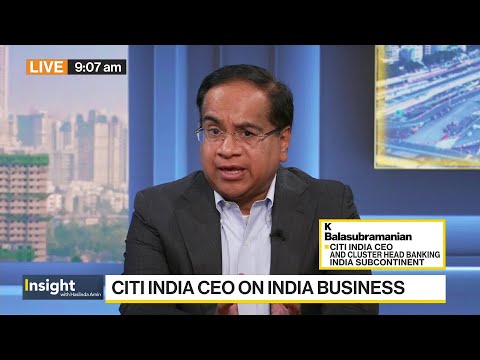
I want to pick up on some of the points that Ianto was making there and ask you what Citibank's sell. Citi's focus is for India for the next couple of years. Thanks, Paul, for inviting me to the Studio City actually has been in India for more than 23 years.In fact, next year we're going to be celebrating our 1/25 year in India. And as you know, we exited the retail business three years back, and we're actually going to be focused on our core domain, which is the institutional banking business. And if you lo ...


亚洲经济分析- 越南未来 5 年:力争实现两位数增长-Asia Economics Analyst_ Vietnam’s Next 5 Years_ Striving for Double-digit Growth
2026-02-10 03:24
Summary of Vietnam's Economic Development Plan (2026-2030) Industry Overview - The report focuses on Vietnam's economic development plan for the period 2026-2030, aiming for an average real GDP growth of 10% or more, as endorsed by the 14th National Party Congress [2][3][4]. Core Points and Arguments 1. **Growth Target**: The government targets an average real GDP growth of 10% or more, a significant increase from the previous target of 6.5%-7.0% [4][5]. 2. **Investment Focus**: Development investment spending is projected to rise by 42% year-on-year in 2026, indicating a strong fiscal tilt towards capital formation [2][28]. 3. **Labor Productivity**: The plan aims for labor productivity growth of approximately 8.5% per year, up from 6.7% in the previous five years, emphasizing human-capital upgrading [10][11]. 4. **Infrastructure Investment**: Vietnam prioritizes scaling up infrastructure investment in transportation, energy, logistics, and digital infrastructure to support higher growth [2][28]. 5. **FDI Attraction**: The government is focused on attracting Foreign Direct Investment (FDI) into higher value-added sectors, with FDI inflows averaging around 4% of GDP annually [24][26]. 6. **Macroeconomic Stability**: The plan emphasizes maintaining macroeconomic stability, with a target inflation rate of around 4.5% for 2026 and a public debt limit of 60% of GDP [13][34]. 7. **Demographic Challenges**: Vietnam faces demographic constraints, including a slowing working-age population growth rate, which is projected to remain moderate at around 0.7% over the next five years [10][35]. 8. **Lessons from China**: The report draws parallels with China's early 2000s growth, noting that while Vietnam has a similar urbanization stage, it faces weaker demographic momentum and less supportive global trade conditions [35][36]. Additional Important Content 1. **Investment Composition**: The report highlights that over half of Vietnam's GDP growth in the past decade has come from investment, which is expected to rise to 35%-36% of GDP [11]. 2. **Public Investment**: The state's share of total investment has increased from 24% in 2019 to 27% in 2024, driven by weak private sector investment [34]. 3. **Urbanization Potential**: Vietnam's urbanization rate is around 40%, significantly below the EM Asia average of approximately 60%, indicating substantial potential for urban development [28]. 4. **Property Sector Risks**: The report warns of potential systemic risks in the property sector, similar to China's experience, due to liquidity stress and refinancing pressures for developers [50][51]. 5. **Domestic Value Addition**: Vietnam aims to increase domestic value-added share in exports, with recent surveys indicating a rise in local procurement by foreign firms operating in Vietnam [19][24]. This comprehensive overview captures the key elements of Vietnam's economic development plan, highlighting both the ambitious growth targets and the challenges that lie ahead.

Why the Mexican Peso Could Keep Crushing the U.S. Dollar in 2026
Yahoo Finance· 2026-01-05 19:09
Core Insights - The Mexican Peso has appreciated significantly against the U.S. Dollar, gaining 22% in 2025 due to higher interest rates in Mexico and nearshoring trends [4] - Economic confidence in Mexico is bolstered by strong wage growth, a booming tourism sector, and stable economic conditions under President Sheinbaum [3] - The seasonal analysis indicates that January is the second-best month for the peso, with historical patterns showing strong correlations in peso futures [6][7] Foreign Investment - Continued nearshoring with the U.S. and Canada, along with overall Foreign Direct Investment (FDI) into Mexico, is expected to drive strong demand for pesos [2] Economic Confidence - The tourism sector has set new records for international visitors and revenue, contributing to the peso's strength [3] - Stable economic conditions under the current administration have further supported the peso's performance [3] Seasonal Trends - The Mexican Peso futures have shown high correlation with previous years, particularly in March, indicating potential for new investments [6] - The 15-year seasonal pattern for the peso begins trending up in early January, suggesting favorable trading conditions [8] Trading Opportunities - The USD/MXN spot forex pair is the most popular and liquid way to gain exposure to the Mexican Peso, with futures available on the CME for hedging or speculation [10] - The technical outlook remains positive, with the peso respecting a rising 50-day moving average and seasonal patterns indicating strength in January and March [11]
PSB consolidation to gain momentum in 2026 as govt eyes big, world-class banks
BusinessLine· 2025-12-26 06:08
Consolidation in Public Sector Banks - The government aims to accelerate consolidation in public sector banks to create larger, world-class banks by 2047, as stated by Finance Minister Nirmala Sitharaman [1][2] - Currently, there are 12 public sector banks, with only the State Bank of India (SBI) ranked among the global top 50 banks by assets, positioned at 43rd [2] Historical Context of Consolidation - The government has previously conducted two rounds of consolidation, reducing the number of public sector banks from 27 in 2017 to 12 in 2019 through major mergers [3][4] - Notable mergers include the consolidation of United Bank of India and Oriental Bank of Commerce with Punjab National Bank, and others involving Syndicate Bank, Allahabad Bank, and Andhra Bank [4][5] Financial Performance of Public Sector Banks - In the first half of FY25-26, the 12 public sector banks reported a net profit of ₹93,675 crore, a 10% increase from ₹85,520 crore in the same period of the previous fiscal year [7] - The net profit for public sector banks is projected to exceed ₹2 lakh crore by the end of FY26, following a record profit of ₹1.78 lakh crore in the previous financial year, which was a 26% increase from ₹1.41 lakh crore in FY24 [8] Foreign Investment Trends - The private sector banking space has seen significant foreign capital inflow, exemplified by Sumitomo Mitsui Banking Corporation acquiring a 20% stake in Yes Bank for ₹13,483 crore [9] - Emirates NBD Bank also announced plans to acquire a 60% stake in RBL Bank for ₹26,853 crore, indicating the attractiveness of India's financial institutions to foreign investors [10] Regulatory Developments in the Insurance Sector - The passage of the Sabka Bima Sabki Raksha Bill allows for 100% foreign direct investment in the insurance sector, which is expected to attract new capital and enhance competition [11][12] - The removal of the 18% GST rate on individual policy premiums has improved affordability and access to insurance products [12][13]

Insurance: Lack of legacy distribution network a challenge for foreign cos
Rediff· 2025-12-22 11:04
Core Viewpoint - The Union Cabinet's decision to raise the foreign direct investment (FDI) limit in the insurance sector to 100% is not expected to significantly enhance foreign investment due to the critical role of distribution networks, necessitating partnerships with Indian businesses [1]. Group 1: FDI Limit and Market Dynamics - Interest is anticipated to be higher in general and health insurance compared to life insurance, which relies heavily on distribution networks [2]. - The increase in Net Owned Funds (NOF) for foreign reinsurers from Rs 5,000 crore to Rs 1,000 crore may attract foreign reinsurers to enter through the mainland route, aligning them with the IFSC Insurance Office in GIFT City [2]. - The previous increase of the FDI limit from 49% to 74% in 2021 did not lead to a significant rise in foreign insurers' interest [5]. Group 2: Distribution Challenges - The business model in the insurance sector is deeply rooted in established distribution systems, such as agency networks and bancassurance partnerships, which are not easily replicated [3][4]. - New entrants will need to effectively navigate the distribution landscape to translate interest into meaningful scale [5]. Group 3: Potential for New Entrants - The 100% FDI norm may incentivize foreign players by providing them with authority and management control, particularly in the non-life insurance sector where dependence on agency-driven distribution is lower [8]. - The move is seen as a catalyst for attracting inbound capital and encouraging new market entries, especially in general and health insurance segments [9]. - Foreign entrants in life insurance are likely to prioritize partnerships with Indian players that have established distribution networks [10]. Group 4: Industry Reforms and Future Outlook - The increase in FDI is viewed as a watershed moment for the industry, likely leading to more meaningful foreign players entering the market [11]. - There is an expectation of gradual evolution in distribution methods and further reforms in the insurance sector [12]. - Interest among foreign reinsurers to enter through GIFT City is growing, with several companies already in advanced stages of obtaining licenses [14][15].

At $4.4 bn, Shriram Fin to get India's largest financial-sector FDI
Rediff· 2025-12-20 17:27
Core Viewpoint - MUFG Bank will invest Rs 39,618 crore (approximately $4.4 billion) to acquire a 20% stake in Shriram Finance, marking the largest foreign direct investment in India's financial services sector to date [1][3]. Company Overview - Shriram Finance is the flagship company of the Shriram group and is the second-largest retail non-banking financial company (NBFC) in India, with assets under management exceeding Rs 2.81 trillion [4]. - The company offers a variety of financial products, including commercial vehicle loans, MSME loans, tractor and farm equipment loans, gold loans, personal loans, and working capital finance through 3,225 branches, serving 9.6 million customers [12]. Investment Details - MUFG Bank will acquire over 471 million shares at Rs 840.93 each, translating into a 20% stake on a fully diluted basis [4]. - The investment is subject to shareholder approval, regulatory clearances, and customary closing conditions [5]. - Upon completion, MUFG Bank will be classified as a public shareholder and will have the right to nominate two non-independent directors to Shriram Finance's board [5][4]. Strategic Implications - The investment is expected to enhance Shriram Finance's capital adequacy, strengthen its balance sheet, and provide long-term growth capital [5]. - It will improve access to low-cost liabilities and potentially strengthen Shriram Finance's credit ratings while aligning governance and operational practices with global best standards [6]. - The partnership aims to support the development of India's road transport infrastructure and logistics value chain, contributing to financial inclusion, which is a key policy agenda in India [8]. Market Context - This transaction surpasses previous significant investments in the sector, including Emirates NBD's acquisition of a 60% stake in RBL Bank for $3 billion and SMBC's investment in Yes Bank for $1.6 billion [3]. - Japanese financial institutions have become significant investors in India's financial services sector this year, with notable investments from SMBC and Mizuho Financial Group [14].
India’s financial services companies sees record FDI flowing in
BusinessLine· 2025-12-19 15:13
Core Insights - India's financial services sector, including banks and non-banking finance companies (NBFCs), has experienced record foreign direct investment (FDI) in 2025, indicating strong international interest in the market [1]. Group 1: Major Deals - Shriram Finance has entered into an agreement with MUFG Bank for a 20% stake acquisition valued at ₹39,618 crore, marking the largest FDI in an Indian financial services company [1]. - RBL Bank has signed a deal with Emirates NBD Bank for a 60% stake acquisition through a primary infusion of ₹26,850 crore, aiming to scale its business and enter the big banks league [2]. - Federal Bank's board has sold around 10% stake to Blackstone for ₹6,196.51 crore, further consolidating its position in the market [3]. - YES Bank has secured a deal with Sumitomo Mitsui Banking Corporation (SMBC) for a 20% stake for $1.6 billion, with an additional 4.99% stake acquired later, leading to a rating upgrade for YES Bank [4]. - IDFC FIRST Bank plans to raise up to ₹75 billion from Warburg Pincus and ADIA, which will provide a combined 15% stake in the bank if fully converted [5]. - Sammaan Capital is set to receive a $1 billion investment from Abu Dhabi's IHC for a controlling stake, while Manappuram Finance has secured $508 million from Bain Capital for joint control [6]. Group 2: Market Trends - The Shriram and MUFG deal reflects a trend where global banks prefer partnerships with established NBFCs over pursuing new banking licenses in India, potentially accelerating consolidation in the NBFC sector [7].


Shriram Finance shares in focus ahead of board meet on MUFG’s $4.45 billion investment
The Economic Times· 2025-12-19 03:32
Core Viewpoint - MUFG, Japan's largest bank, is set to acquire a 20% stake in Shriram Finance, valuing the company at Rs 1.63 lakh crore, making it the second-largest non-banking finance company (NBFC) in India after Bajaj Finance [1][5][6] Investment Details - The investment will amount to $4.45 billion (Rs 40,000 crore), with MUFG purchasing shares at Rs 842 each, representing a 3.44% discount to the previous closing price of Rs 869.20 [6] - The capital infusion will not involve any secondary sale of shares [1][6] Stakeholder Impact - Post-investment, MUFG will gain two board seats and may consider increasing its stake further, potentially leading to an open offer in the future [2][6] - The promoters, Shriram Ownership Trust and Sanlam of South Africa, will see their stake diluted from 25.39% to 20.05% due to the expanded capital base [5][6] Market Context - This deal follows MUFG's previous unsuccessful attempt to acquire a $2 billion stake in HDB Financial Services [5][6] - The Reserve Bank of India's recent clarification allowing banks to own equity in NBFCs has expedited this transaction, with discussions fast-tracked since June [5][6] Future Outlook - Industry observers believe this investment could act as a catalyst for a credit rating upgrade for Shriram Finance and may reduce borrowing costs by 50–60 basis points [5][6]

Indian Parliament approves bill raising insurance sector FDI cap to 100%
Yahoo Finance· 2025-12-18 11:19
Core Viewpoint - India's Parliament has approved legislation to raise the foreign direct investment (FDI) cap in the insurance sector from 74% to 100%, aimed at enhancing investment opportunities and regulatory oversight in the industry [1][3]. Group 1: Legislative Changes - The amendment is part of the Sabka Bima Sabki Raksha (Amendment of Insurance Laws) Bill, 2025, which also grants new regulatory authority to the Insurance Regulatory and Development Authority of India (IRDAI) [1][2]. - The bill amends several long-standing acts, including the Insurance Act of 1938, the Life Insurance Corporation Act of 1956, and the Insurance Regulatory and Development Authority Act of 1999 [2]. Group 2: Investment Opportunities - The amendments are designed to open up further investment opportunities in the insurance sector and update market supervision [3]. - A provision in the bill allows non-insurance companies to merge with insurance operators, providing more flexibility for business restructuring [3]. Group 3: Regulatory Authority - The IRDAI now has specific legislative powers to set limits on commissions, remuneration, or rewards paid to agents and intermediaries, as well as regulate payment methods and disclosure rules [3]. - Penalties for acting as an unregistered insurance intermediary can range from a minimum of Rs100,000 ($1,105) to a maximum of Rs100 million for appointing unregistered intermediaries [4].
Shriram Finance board to weigh stake sale to MUFG
The Economic Times· 2025-12-18 00:45
Core Insights - MUFG is in advanced talks to acquire a 20% stake in Shriram Finance for approximately ₹23,200 crore ($2.6 billion), which would mark the largest strategic investment by a foreign lender in the Indian NBFC sector if completed [1][7] - Shriram Finance's stock has surged over 40% from ₹616 to ₹864 per share, leading to a potential valuation of over ₹40,000 crore for the 20% stake at current prices, making it possibly the largest deal in the Indian financial sector [2][7] - The investment by MUFG will be through primary issuance, differing from previous deals like that of SMBC, which involved secondary market transactions [5][6] Company Developments - Shriram Finance's board is set to meet to consider the equity stake sale to MUFG, with options for raising funds including rights issues and preferential allotments [7] - The deal represents heightened interest from Japanese financial services in Indian banks and shadow lenders, following SMBC's investment in Yes Bank earlier this year [5][7] - The promoters of Shriram Finance hold 25.39% of the company, primarily through Shriram Capital, which has a 17.85% stake [6][7] Industry Context - The Shriram Finance deal would be the largest foreign direct investment (FDI) in the Indian NBFC space to date, highlighting the growing foreign interest in this sector [5][7] - MUFG is open to increasing its stake in Shriram Finance over time, potentially leading to a controlling interest, which would require an open offer [6][7]