Neural Network

Search documents
硅谷教父马克·安德森2026开年访谈:AI革命才刚开始,智能的价格正在崩塌
3 6 Ke· 2026-01-12 00:39
Group 1 - The AI revolution is considered the largest technological revolution ever witnessed, surpassing the internet and comparable to electricity and the steam engine, with the industry still in its early stages [4][25][26] - The emergence of AI technologies has been accelerated by the democratization of access, with powerful AI models available to the public through platforms like ChatGPT, Grok, and Gemini [5][6] - The revenue growth of leading AI companies is unprecedented, indicating that the industry is still in its infancy and will continue to evolve significantly over the next five to ten years [6][25] Group 2 - The cost of AI is experiencing "hyper deflation," with unit costs declining faster than Moore's Law, leading to increased demand as prices drop [10][11] - The AI industry operates on two core business models: consumer and enterprise infrastructure, with consumer AI products rapidly deploying to a global audience [7][8] - The pricing model for AI services is shifting towards a "tokens by the drink" approach, which will further drive demand as costs decrease [9][10] Group 3 - The GPU market is expected to transition from a shortage to an oversupply, driven by significant investments in AI infrastructure and the emergence of smaller, efficient models that can replicate the capabilities of larger models [12][14][15] - Companies like DeepSeek and Kimi are emerging as significant players in the AI space, demonstrating that breakthroughs can come from unexpected sources, including smaller firms and open-source models [16][18] - The competitive landscape is evolving, with a mix of large models and smaller models, leading to a diverse range of applications and capabilities in the AI sector [19] Group 4 - Startups in the AI space are not merely "wrappers" around large models; they are developing their own models tailored to specific industry needs, enhancing productivity for professionals [20][21][24] - The pricing strategies of AI startups are more innovative compared to traditional SaaS companies, allowing for better research and development funding [24] - The current state of AI products is still early, with significant improvements expected in the coming years as costs drop and capabilities expand [25][26]


Nature重磅发文:深度学习x符号学习,是AGI唯一路径
3 6 Ke· 2025-12-17 02:12
Core Insights - The article discusses the evolution of AI, highlighting the resurgence of symbolic AI in conjunction with neural networks as a potential pathway to achieving Artificial General Intelligence (AGI) [1][2][5] - Experts express skepticism about relying solely on neural networks, indicating that a combination of symbolic reasoning and neural learning may be necessary for advanced AI applications [18][19][21] Group 1: Symbolic AI and Neural Networks - Symbolic AI, historically dominant, relies on rules, logic, and clear conceptual relationships to model the world [3] - The rise of neural networks, which learn from data, has led to the marginalization of symbolic systems, but recent trends show a renewed interest in integrating both approaches [5][7] - The integration of statistical learning and explicit reasoning aims to create intelligences that are understandable and traceable, especially in high-stakes fields like military and healthcare [7][18] Group 2: Challenges and Opportunities - The complexity of merging neural networks with symbolic AI is likened to designing a "two-headed monster," indicating significant technical challenges [7] - Historical lessons, such as Richard Sutton's "Bitter Lesson," suggest that systems leveraging vast amounts of raw data have consistently outperformed those based on human-designed rules [9][10][13] - Critics argue that the lack of symbolic knowledge in neural networks leads to fundamental errors, emphasizing the need for a hybrid approach to enhance logical reasoning capabilities [16][18] Group 3: Current Developments and Perspectives - Notable examples of neurosymbolic AI systems include DeepMind's AlphaGeometry, which effectively solves complex mathematical problems by combining symbolic programming with neural training [7][33] - The debate continues among researchers regarding the best approach, with some advocating for a focus on effective methods rather than strict adherence to one philosophy [26][28] - The exploration of neurosymbolic AI is still in its early stages, with various technical paths being developed to harness the strengths of both symbolic and neural methodologies [29][32]
X @Elon Musk
Elon Musk· 2025-11-21 14:09
Technology Enhancement - Tesla FSD (Full Self-Driving) v14.2 features an upgraded neural network vision encoder, utilizing higher resolution features [1] - The upgrade aims to improve handling of emergency vehicles, obstacles, and human gestures [1] Team Acknowledgment - The rapid pace of upgrades by the Tesla AI team is acknowledged [1]

神经网络与符号系统大一统!华盛顿大学教授把AI逻辑统一成了张量表示
量子位· 2025-10-16 09:30
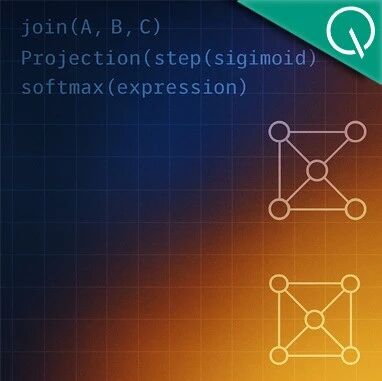
Core Viewpoint - The current programming languages used in the AI field are fundamentally flawed, and a new unified language called Tensor Logic is proposed to bridge the gap between logic reasoning and neural computation [1][10][18]. Group 1: Critique of Current AI Programming Languages - Pedro Domingos criticizes existing AI programming languages, particularly Python, stating it was "never designed for AI" and lacks support for automated reasoning and knowledge acquisition [11][12]. - Other languages like LISP and Prolog, while enabling symbolic AI, suffer from scalability issues and lack learning support [15]. - The attempt to combine deep learning with symbolic AI in neural-symbolic AI is deemed a poor integration of both approaches [16][17]. Group 2: Introduction of Tensor Logic - Tensor Logic aims to provide a unified framework for expressing neural networks and symbolic reasoning, allowing learning, reasoning, and knowledge representation to unfold within the same mathematical framework [18][19]. - The equivalence between logical rules and tensor operations suggests that traditional symbolic reasoning can be transformed into tensor computations, eliminating the need for specialized logic engines [21]. Group 3: Implementation of Tensor Logic - Tensor Logic utilizes tensor equations to represent various AI methods, including neural networks, symbolic AI, kernel methods, and probabilistic graphical models [33][40]. - Each statement in Tensor Logic is a tensor equation, facilitating automatic differentiation and eliminating the distinction between program structure and model structure [28][25]. - The language allows for a continuous transition from precise reasoning to fuzzy analogy by adjusting the temperature parameter of activation functions, balancing logical reliability and neural network generalization [31].
X @Avi Chawla
Avi Chawla· 2025-09-22 19:59
Dropout Mechanism - During training, the average neuron input is significantly lower compared to inference, potentially causing numerical instability due to activation scale misalignment [1] - Dropout addresses this by multiplying inputs during training by a factor of 1/(1-p), where 'p' is the dropout rate [2] - For example, with a dropout rate of 50%, an input of 50 is scaled to 100 (50 / (1 - 0.5) = 100) [2] - This scaling ensures coherence between training and inference stages for the neural network [2] Training vs Inference - Consider a layer with 100 neurons, each with an activation value of 1, and a weight of 1 from each neuron to neuron 'A' in the next layer [2] - With a 50% dropout rate, approximately 50 neurons are active during training [2] - During inference, all 100 neurons are active since Dropout is not used [2]
X @Avi Chawla
Avi Chawla· 2025-09-22 06:39
Here's a hidden detail about Dropout that many people don't know.Assume that:- There are 100 neurons in a layer, and all activation values are 1.- The weight from 100 neurons to a neuron ‘A’ in the next layer is 1.- Dropout rate = 50%Computing the input of neuron ‘A’:- During training → Approx. 50 (since ~50% of values will be dropped).- During inference → 100 (since we don't use Dropout during inference).So essentially, during training, the average neuron input is significantly lower than that during infer ...
Predicting Space Weather Using AI | Jinxing Li | TEDxCSTU
TEDx Talks· 2025-09-10 15:52
[Music] We used to think that the space is empty and silent. But the first American satellite discovered that our earth have two radiation bells full of high energy particles close to the speed of light and making the space very active and not only that later satellites discovered many other particles protons oxygens and today I'm going to take you on a journey to space and I'm going to show you what's out there how the space environment impact ours on earth and most of all how We use AI to make predictions ...
X @Avi Chawla
Avi Chawla· 2025-08-25 06:30
Neural Network Performance - Removing 74% of neurons from a neural network only decreased accuracy by 0.50% [1]
The AlphaGO Moment for AI Models...
Matthew Berman· 2025-07-31 18:08
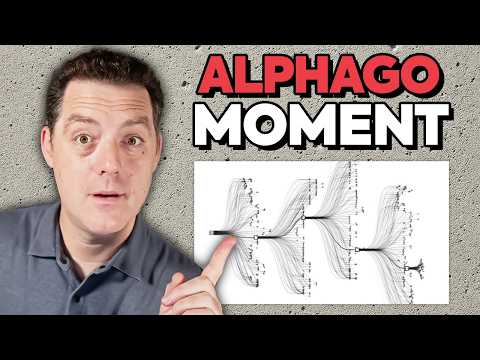
AI Model Architecture Discovery - The AI field is approaching an era where AI can discover new knowledge and apply it to itself, potentially leading to exponential innovation [1][3] - The current bottleneck in AI discovery is human innovation, limiting the scaling of AI advancements [2][3] - The "AlphaGo moment" for model architecture discovery involves AI self-play to hypothesize, code, test, and analyze new model architectures [3][12] - The key to this approach is AI's ability to learn without human input, discovering novel solutions unconstrained by human biases [8] ASI Arch System - The ASI Arch system uses a researcher, engineer, and analyst to autonomously propose, implement, test, and analyze new neural network architectures [13][14][15][16] - The system learns from past experiments and human literature to propose new architectures, selecting top performers as references [14] - The engineer component self-heals code to ensure new approaches are properly tested [15] - The analyst reviews results, learns insights, and maintains a memory of lessons learned for future generations of models [16] Experimental Results and Implications - The system ran 1,700 autonomous experiments over 20,000 GPU hours, resulting in 106 models that outperformed previous public models [17][18] - The potential for exponential improvement exists by increasing compute resources, such as scaling from 20,000 to 20 million GPU hours [19] - The self-improving AI system can be applied to other scientific fields like biology and medicine by increasing compute resources [20] - The open-sourced paper and code have significant implications, with multiple companies publishing similar self-improving AI papers [21]
Why GPT-4.5 Failed
Matthew Berman· 2025-07-03 16:04
Model Performance - GPT 4.5% is considered much smarter than previous versions, specifically 40 and 4.1% [1] - Despite its intelligence, GPT 4.5% is deemed not very useful due to being too slow and expensive [1] - Overparameterization caused GPT 4.5% to memorize data excessively during initial training, hindering generalization [2] Development Challenges - OpenAI encountered a bug within PyTorch during GPT 4.5%'s development, which they identified and fixed [2] - The bug fix on GitHub received positive reactions from approximately 20 OpenAI employees [3]