Share dilution

Search documents
Don't Even Think About Buying Tilray Stock Until You Read This Warning
Yahoo Finance· 2026-02-22 21:48
Core Viewpoint - Tilray Brands is struggling to achieve profitability despite its diverse product offerings in the beverage, cannabis, and wellness industries, with significant competition and ongoing losses impacting its financial performance [1][4]. Group 1: Financial Performance - Tilray Brands' stock price has decreased by 99% from its all-time high, reflecting investor fatigue over the company's inability to generate profits [4]. - The company has been expanding aggressively into other areas, particularly alcohol, but this strategy has not yet resulted in positive earnings [4]. Group 2: Revenue Growth and Strategy - Tilray is focusing on revenue growth through aggressive brand acquisitions since 2021, which has led to increased revenue and potential synergies [5]. - However, the rising share count due to stock sales for cash or acquisitions is diluting existing shareholders and complicating profit generation [6]. Group 3: Investment Risks - The ongoing losses and aggressive acquisition strategy present high risks for investors, with the company having to take write-downs across all divisions [7]. - Investors are advised to be cautious and may benefit from observing the company's performance before committing capital [7].

Anthony Scaramucci-linked AVAX One tumbles 32% on uncertainty around shareholder sales
Yahoo Finance· 2026-01-27 15:59
Core Viewpoint - AVAX One's shares dropped over 32% following the registration of nearly 74 million insider-held shares for potential resale, raising concerns about dilution among investors [1][2]. Group 1: Company Actions - AVAX One disclosed the registration of nearly 74 million shares held by insiders, which could soon be available for sale on the public market [1]. - The company announced a plan to buy back up to $40 million of its own shares to support share prices if the net asset value of its holdings falls below its market cap [2]. Group 2: Market Reaction - The market reaction indicates significant investor concern regarding potential dilution from the registered shares, which may lead to a decrease in stock prices, particularly in illiquid stocks [2]. - The registration of shares for resale is often interpreted as a signal that previously restricted stock may soon enter the market, further contributing to price declines [2]. Group 3: Industry Trends - Buybacks are increasingly common among crypto-native public firms, with AVAX One's strategy reflecting similar approaches taken by other digital asset treasuries like BitMine and KindlyMD, which are also experiencing stock price pressures [3].
5 Arguments Dismantling Tom Lee’s Case for BitMine’s Share Expansion
Yahoo Finance· 2026-01-04 18:15
Core Viewpoint - Investors are pushing back against Tom Lee's proposal to expand BitMine's authorized share count, raising concerns about dilution risk, governance, and misaligned incentives [1][2]. Group 1: Shareholder Concerns - The proposal to increase authorized shares from 500 million to 50 billion has alarmed investors, who see it as excessive and potentially undermining governance [5]. - Critics argue that the urgency of the proposal contradicts BitMine's current share structure, as there are already approximately 426 million shares outstanding, leaving limited room for maneuver [4]. - There is a growing rift among investors regarding whether the structure and timing of the proposal truly protect shareholder value [3]. Group 2: Governance and Incentives - The proposal eliminates the need for future shareholder approvals, which critics argue removes an important governance checkpoint [5]. - Executive compensation tied to total ETH holdings rather than ETH per share raises concerns that it encourages growth at the expense of shareholder value [6][7].
Virgin Galactic Restructures Its Debt. How Bad Is This News, Exactly?
The Motley Fool· 2026-01-03 10:05
Core Viewpoint - Virgin Galactic's announcement of a capital realignment plan has led to a significant drop in its stock price, raising concerns among investors about potential dilution and increased debt costs [1][10]. Group 1: Capital Realignment Plan - The capital realignment plan aims to reduce Virgin Galactic's debt from $425 million to $273 million, potentially saving on interest payments [4]. - The company plans to roll over existing debt, postponing the due date to December 31, 2028, with hopes of resuming commercial spaceflights by then [4][5]. - Virgin Galactic has sold approximately 800 tickets for space tourism, with plans to increase ticket prices to $600,000 by 2028, targeting annual revenue of $450 million [6]. Group 2: Financial Implications - The company intends to raise $46 million by selling new stock, which will result in a significant dilution of existing shares, increasing shares outstanding from 63.2 million to 104.1 million, equating to a 65% dilution [8][10]. - The new debt issued will carry a 9.8% interest rate, significantly higher than the 2.5% rate on the convertible notes being retired, likely leading to increased interest costs despite a lower total debt load [11][12]. - The potential for delays in the Delta-class spaceflights and revenue generation raises further concerns about the feasibility of the capital realignment plan [13].


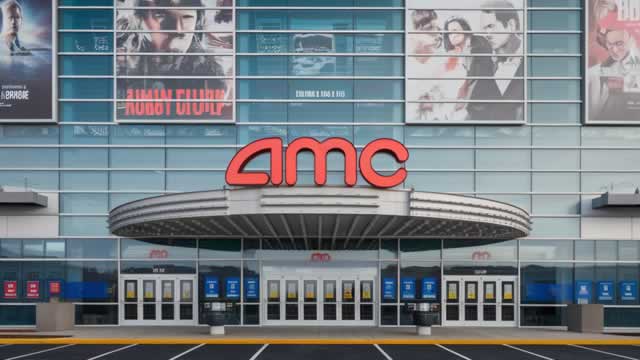
3 Things AMC Stock Must Do to Bounce Back in 2026
The Motley Fool· 2025-12-02 11:15
Core Viewpoint - AMC Entertainment is struggling to recover from significant stock declines and needs to implement strategic changes to improve its financial health and shareholder value Group 1: Current Performance and Market Context - AMC entertained 5.5 million guests during Thanksgiving week, marking its strongest weekly performance of the year, driven by films like Zootopia 2 and Wicked: For Good [2] - Despite this, AMC's stock has fallen sharply for four consecutive years, with a 41% decline in 2025, following previous annual drops of 85%, 85%, and 35% [3] - From its peak in summer 2021, AMC shares have plummeted by 99.7%, indicating severe challenges for investors [3] Group 2: Financial Metrics and Challenges - Domestic box office receipts are up 1% year-over-year but remain 29% below the $10.3 billion collected in the first 11 months of 2019 [4] - Average admission prices have increased by 23% over the past six years, while ticket sales are down 39% compared to the same period in 2019 [5] - AMC has not turned an annual profit since 2018, while competitors like Cinemark and Imax have been profitable for multiple years [6] Group 3: Share Count and Debt Issues - AMC's long-term debt has been declining, but interest expenses have been rising for three consecutive years, posing a significant financial burden [7] - AMC's share count has ballooned from 11.8 million to 440.6 million since 2019, a 37-fold increase, leading to shareholder dilution [8][9] Group 4: Strategic Initiatives and Future Directions - AMC has previously implemented creative strategies such as reserved seating and private screen rentals, but these measures have not been sufficient [10] - Revenue has declined by 4% last year and has dipped in two of the first three quarters of this year, with adjusted net losses widening [11] - The company needs to pursue more disruptive innovations beyond mergers and acquisitions to revitalize its business model [12][13]

A group of Tesla investors is urging shareholders not to confirm Elon Musk's $1 trillion pay package
Business Insider· 2025-10-03 09:28
Core Viewpoint - A coalition of unions, state treasurers, and institutional investors is urging Tesla shareholders to reject CEO Elon Musk's proposed $1 trillion pay package due to concerns over the board's independence and the vagueness of performance goals [1][2]. Group 1: Investor Concerns - The investor group includes notable entities such as SOC Investment Group and the American Federation of Teachers, who have previously criticized Tesla's board for its lack of independence from Musk [1][2]. - The letter highlights that the performance goals tied to Musk's compensation are not as rigorous as they seem, questioning the clarity and demands of these targets [2]. Group 2: Compensation Package Details - To access the full $1 trillion payout, Musk must increase Tesla's market capitalization to $8.5 trillion within the next decade and achieve several ambitious product milestones, including annual earnings of $400 billion and delivering around 12 million EVs by 2035 [3]. - The letter points out that the average annual delivery target of 1.2 million EVs is significantly lower than Tesla's sales in 2024, raising doubts about the feasibility of these goals [3]. Group 3: Board and Performance Issues - The shareholder group criticizes Tesla's board for not ensuring Musk's commitment to focus on Tesla, given his involvement in multiple companies, and warns that the pay package could result in share dilution for existing shareholders [8]. - Tesla's performance has been volatile, with sales and revenue declining in the first half of the year due to increased competition and backlash against Musk's political activities [8]. Group 4: Tesla's Response - In response to the criticisms, Tesla's board argues that the compensation package is designed to create trillions of dollars in value for shareholders and to promote global prosperity [9]. - The company emphasizes that Musk will not receive any compensation if he fails to deliver results, reinforcing the performance-based nature of the pay package [10].


NIO’s Dilution Confirms The Bear Case (NYSE:NIO)
Seeking Alpha· 2025-09-10 20:49
Core Insights - The analysis concludes that NIO is likely to continue burning cash and diluting shareholders, which justifies a sell rating [1] Company Analysis - NIO is facing significant financial challenges, with a high probability of ongoing cash burn [1] - The potential for shareholder dilution is a critical concern for investors [1] Investment Perspective - The analysis is rooted in fundamental value investing, focusing on identifying undervalued stocks with growth potential [1]

Why Oklo Stock Tumbled by Almost 4% on Thursday
The Motley Fool· 2025-09-04 22:43
Core Viewpoint - Oklo is facing shareholder concerns regarding stock dilution due to its decision to increase the capital raised from a share issue, leading to a nearly 4% drop in its stock price [1][2]. Group 1: Capital Raising - Oklo plans to expand its recent secondary common share issue to a total of just under $540 million, adding almost $140 million to the offering [2]. - The initial gross proceeds from the first portion of the share issue were around $400 million, achieved by selling nearly 5.46 million shares [2]. Group 2: Sales Agents and Use of Proceeds - The stock sale is being facilitated by sales agents including Bank of America Securities, Goldman Sachs, B. Riley, and TD Securities, who will earn commissions of up to 2.5% [4]. - Oklo intends to use the net proceeds from the share issue for general corporate purposes, working capital, capital expenditures, and potential future investments, although specifics were not provided [4]. Group 3: Market Context and Investor Sentiment - Oklo is benefiting from a favorable environment for next-generation nuclear energy technology, supported by a push from the U.S. government [5]. - Despite the positive market conditions, concerns about share dilution are causing hesitation among investors, even though the dilution impact is relatively small compared to the company's market cap of over $10 billion [5].

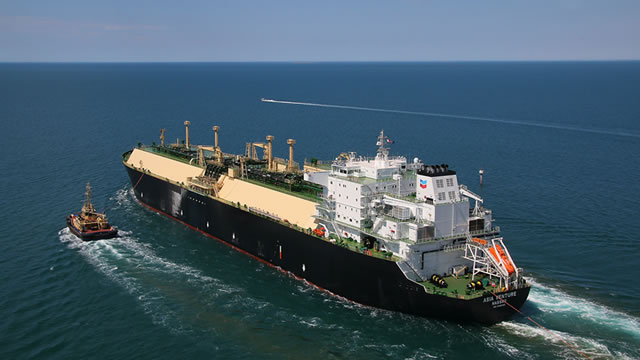
Post Q2 Earnings, Is Chevron a Name to Watch or One to Chase?
ZACKS· 2025-08-07 13:11
Core Insights - Chevron Corporation's Q2 earnings exceeded expectations with adjusted EPS of $1.77, surpassing the Zacks Consensus Estimate of $1.70, but down from $2.55 a year ago, indicating a complex operational environment [1][21] - The company achieved record oil-equivalent production, yet faced challenges from volatile commodity prices and margin compression [1][10] Financial Performance - Chevron's stock increased by 5.7% over the past year, outperforming peers like ExxonMobil and Shell, reflecting the company's resilience [2] - In Q2, Chevron generated $8.6 billion in operating cash flow and nearly $5 billion in free cash flow, returning $6 billion to shareholders [2] - The company paid $2.9 billion in dividends and repurchased $2.7 billion in shares during Q2, with expectations for full-year shareholder distributions to exceed 2024 levels [14][15] Acquisition and Integration - The acquisition of Hess has closed, adding valuable assets including a 30% stake in the Stabroek block in Guyana, expected to contribute 500,000 barrels per day and $1 billion in free cash flow by year-end [5] - The deal introduces approximately 301 million new shares, raising dilution concerns, which management is addressing through an aggressive buyback program [6][7] Production and Market Dynamics - Chevron's upstream production reached a record 3.396 million oil-equivalent barrels per day in Q2, but earnings from this segment declined by 39% year-over-year due to lower liquids realizations [10] - U.S. crude prices fell over 20% to $47.77 per barrel, impacting overall earnings despite improved natural gas pricing [10][11] Refining and LNG Challenges - The downstream segment saw a profit increase of 23.5% year-over-year to $737 million, but refining margins are expected to remain challenged [12] - International LNG pricing is subdued due to lower global demand and rising supply, negatively affecting Chevron's gas earnings [13] Strategic Outlook - Chevron aims to exceed 1 million BOE/d from the Permian Basin by 2027, supported by strong well performance [19] - The company is pursuing $2-3 billion in cost savings by 2026 through AI-driven initiatives [15] - Regulatory uncertainties surrounding Chevron's renewables strategy and potential legislative changes could impact future growth [20]

Is Tilray Brands a Millionaire Maker?
The Motley Fool· 2025-04-05 09:17
Group 1: Company Overview - Tilray Brands went public in 2018 and has since faced significant challenges, with the stock losing nearly all its value despite the U.S. cannabis market exceeding $38 billion last year [1][2] - The company has evolved into a global cannabis business, initially focusing on medical cannabis and later expanding into recreational cannabis, hemp foods, and beverages [4][5] - Tilray currently sells over 40 brands of cannabis products and generated $829 million in sales last year, with projected revenue growth to $893 million this year and $943 million next year [5][6] Group 2: Financial Performance - While sales are not a concern, Tilray has struggled with profitability, reporting a free cash flow of minus $92 million and net losses nearing $250 million last year [7][8] - The U.S. cannabis market is expected to grow over 11% annually through 2030, presenting opportunities for Tilray's diverse product portfolio [6] Group 3: Challenges and Risks - The company has faced operational challenges due to varying legal statuses of cannabis across states in the U.S., leading to pricing pressures and competition from the black market [8] - Tilray's rapid expansion has resulted in a 348% increase in diluted share count since 2018, which negatively impacts revenue and profit distribution among shareholders [9][10] - Despite potential future growth, the stock is unlikely to yield significant returns for investors due to ongoing losses and share dilution [11]