Trade Policy

Search documents
LPL Research Team Releases Midyear Outlook 2025: Pragmatic Optimism, Measured Expectations
Globenewswire· 2025-07-08 13:00
Core Insights - The Midyear Outlook 2025 presents a data-driven perspective on the economic and market landscape, emphasizing the need for investors to adapt to ongoing challenges such as inflation and trade uncertainties [2][3][7] - The report suggests that while the economic environment may face adverse effects from trade policies, there are emerging investment opportunities as policy-driven uncertainties begin to stabilize [4][7] Economic Environment - The report indicates that the second half of 2025 will likely see slower economic growth, reduced labor demand, and a slight increase in inflation due to the delayed effects of trade policies [7] - Concerns regarding debt, trade uncertainties, and a cautious Federal Reserve are expected to keep Treasury yields within a range, with a focus on income generation through intermediate-term bonds [7] Investment Strategies - The stock market's performance in the latter half of the year will depend on various factors including trade negotiations, advancements in AI, interest rate fluctuations, and tax policies [7] - Investors are advised to consider market pullbacks as potential opportunities to selectively increase equity positions, despite anticipated volatility in a challenging macroeconomic environment [7] Trends and Opportunities - Tactical portfolios should balance risk management with the pursuit of emerging opportunities, emphasizing diversification across asset classes, regions, and alternative investments to enhance resilience [7] - Staying vigilant during periods of market volatility may provide timely chances to acquire equity at more favorable valuations [7]



A Relaxing Week Ahead in the Stock Market?
ZACKS· 2025-07-07 15:16
Market Overview - The stock market experienced a significant week with major events including the signing of a historic tax cut bill on July 4th and the release of monthly and weekly jobs reports [1][2] - Major indexes closed at weekly highs, reaching levels not seen since late February, with the Dow up 17%, S&P 500 up 20%, Russell 2000 up 21%, and Nasdaq up 27% from April 9th lows [2][4] Trade Policies - The deadline for U.S. trading partners to negotiate new trade policies has been extended from July 9th to August 1st, raising concerns about potential tariffs if no agreement is reached [2][3] - The situation indicates a potentially contentious trade issue, with significant tariffs set to go into effect if negotiations fail [3] Economic Indicators - The Federal Open Market Committee (FOMC) has maintained interest rates at 4.25-4.50% throughout 2025, with no major economic reports expected this week [6] - Upcoming economic reports include the Consumer Price Index (CPI), Producer Price Index (PPI), and monthly Retail Sales figures, which are anticipated to provide insights into economic conditions [7] Earnings Reports - Delta Air Lines is set to report Q2 earnings, marking the unofficial start of the Q2 earnings season, with major banks like JPMorgan, Citigroup, and Wells Fargo reporting the following week [8]


X @Investopedia
Investopedia· 2025-06-28 00:01
President Donald Trump upended the outlook for trade policy again Friday when he said he was ending negotiations with Canada due to the country's adoption of a Digital Services Tax. https://t.co/yJEpF54mfE ...
瑞银:6 月美联储FOMC_美联储的新展望
瑞银· 2025-06-23 02:09
Investment Rating - The report does not explicitly provide an investment rating for the industry or specific companies within it Core Insights - The FOMC left rates unchanged but revised projections for GDP growth and inflation, indicating a more comfortable stance on inflation than previously anticipated [2][3] - The median projected GDP growth was marked down for 2025 and 2026, with a return to trend growth expected in 2027 [3] - Unemployment rates are projected to remain at 4.5% for 2025 and 2026, dipping slightly to 4.4% in 2027 [2][8] - Core PCE inflation is expected to decrease from 3.1% in 2025 to 2.1% in 2027, but neither headline nor core inflation is projected to return to target levels [2][8] Summary by Sections Economic Projections - Change in real GDP is projected at 1.4% for 2025, 1.6% for 2026, and 1.8% for 2027, with long-run growth also at 1.8% [8] - Unemployment rate projections are 4.5% for 2025 and 2026, and 4.4% for 2027, with a long-run projection of 4.2% [8] - PCE inflation is projected at 3.0% for 2025, 2.4% for 2026, and 2.1% for 2027, with a long-run projection of 2.0% [8] - Core PCE inflation is projected at 3.1% for 2025, 2.4% for 2026, and 2.1% for 2027 [8] - Federal funds rate projections are 3.9% for 2025, 3.6% for 2026, and 3.4% for 2027, with a long-run projection of 3.0% [8]
BERNSTEIN:供应链检查_提前拉动_全球物流
2025-06-23 02:09
Summary of Key Points from the Conference Call Industry Overview: Global Logistics - **Trade Policy Instability**: The current trade policy landscape is characterized by significant instability, with potential conflicts in the Middle East affecting logistics and transshipment hubs. Multinationals and logistics partners are forced to adapt continuously [1][4] - **Q1 Volume Performance**: Strong Q1 volumes were reported, with ocean volumes increasing by 6% year-over-year (YoY) in April. However, there are concerns about potential risks to trade volumes in the second half of the year [1][3] - **Airfreight Revenue Growth**: The international airfreight industry is experiencing low single-digit revenue growth, with recent data indicating a slight decline in yields due to lower fuel surcharges [1][5] Key Metrics and Trends - **Global Trade Volumes**: Global trade volumes rose by 5.9% YoY in March, primarily driven by a 30% increase in US imports, likely due to demand pull forward ahead of tariff threats [2] - **Spot Rates**: Spot rates for ocean freight have spiked significantly, with the Shanghai Containerized Freight Index (SCFI) up by 41% and the World Container Index (WCI) up by 59% since mid-May [3] - **PMI Indicators**: Recent Purchasing Managers' Index (PMI) data shows a decline in China (-2.1 points to 48.3), while the US stabilized and Europe improved [2] Company-Specific Insights DSV - **Rating**: Outperform, Target Price (TP) DKK 1,650.00 - **Acquisition of DB Schenker**: DSV is expected to become the largest freight forwarder post-acquisition, with anticipated EPS of DKK 100+ by 2028 [9] DHL - **Rating**: Outperform, TP €43.00 - **Earnings Exposure**: Approximately 80% of EBIT is tied to e-commerce and world trade, with a significant portion coming from the Express division [10] Kuehne+Nagel - **Rating**: Market-Perform, TP CHF 190.00 - **Performance Issues**: The company has underperformed peers in volume growth, attributed to deep headcount reductions impacting commercial capabilities [11][12] A.P. Moller - Maersk - **Rating**: Underperform, TP DKK 9,350.00 - **Challenges in Container Shipping**: Spot rates are down approximately 40% year-to-date, with expectations of declining volumes and a challenging supply-demand balance [13] UPS - **Rating**: Outperform, TP $133.00 - **Cost Savings Initiatives**: UPS is targeting $3.5 billion in cost savings through restructuring, which includes significant workforce reductions [24] FedEx - **Rating**: Market-Perform, TP $249.00 - **Network Integration Risks**: The company faces challenges due to policy uncertainty and complex network integration, which may impact earnings [25] Investment Implications - **European Logistics**: DSV and DHL are rated as Outperform, while Kuehne+Nagel and Maersk are rated as Market-Perform and Underperform, respectively [8] - **North American Logistics**: UPS is rated as Outperform, while FedEx is rated as Market-Perform [8] Additional Considerations - **Geopolitical Risks**: Ongoing conflicts in the Middle East may complicate logistics and trade routes, particularly affecting the Strait of Hormuz and key ports like Jebel Ali [4] - **Market Sentiment**: There is a cautious outlook on companies like Kuehne+Nagel and CSX due to execution challenges and macroeconomic uncertainties [12][18] This summary encapsulates the critical insights and metrics from the conference call, highlighting the current state of the global logistics industry and specific company performances.


Goodwin: The Fed will do as little as possible for as long as possible
CNBC Television· 2025-06-18 12:10
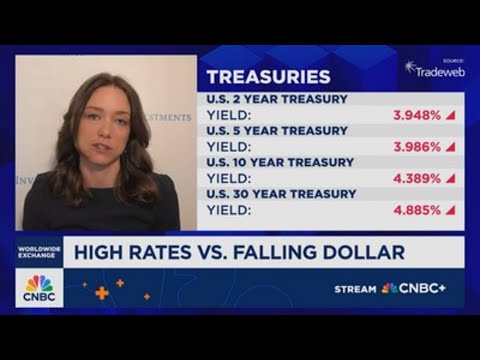
Fed Policy & Interest Rates - The CNBC Fed survey projects the Fed funds rate to be at 389% by the end of the year [1] - The base case expectation is that the Fed will cut rates one to two times this year, aligning with the Fed's communication [2] - The Fed's policy statement is expected to remain unchanged, with any news potentially emerging from the statement of economic projections [3] - The Fed is expected to maintain its current stance, awaiting further data to clarify inflation expectations [7] Economic Uncertainty & Geopolitical Factors - There's increased uncertainty due to the Middle East situation, reciprocal tariffs, and unclear US-China relations [4][5] - Geopolitics is playing a bigger role in inflation expectations [6] - The Fed's tools are limited in addressing changes in trade policy, the political environment, and geopolitical factors [6] US Dollar & Treasury Market - The dollar has shown weakness, with a temporary rebound as a flight to safety [8] - Foreign buyers have reduced their holdings of US Treasuries, decreasing from 50% to 30% over the past decade [8] - Dollar depreciation is anticipated to continue marginally, with treasury market volatility expected, especially in the long end [13] Investor Sentiment & Market Dynamics - Investors, including sophisticated institutional investors, are questioning their geographic allocation to US assets [10] - The depth and liquidity of US markets, including treasuries, the dollar, and private assets, remain robust [11] - There is still no alternative to the US dollar [12] - A transition is occurring that matters for flows and valuations, but it is marginal from a geopolitical perspective at the moment [12]
GOP races to finalize Trump-backed budget
Yahoo Finance· 2025-06-10 17:13
Tax & Healthcare Policy Revisions - Senate Republicans are expected to propose revisions to key tax and healthcare policies, aiming for completion by July 4th [1] - Revisions may include adjustments to Medicaid savings (slowing growth, not cuts), discussions on SALT (State and Local Tax) deductions, and the Inflation Reduction Act [4] Economic Growth & Tax Rates - Locking in lower tax rates permanently, including low corporate tax, is crucial for job creation and innovation [7] - Fully restoring key business provisions (expensing, R&D, interest deductibility) and making the small business Main Street tax deduction of 20% permanent are seen as pro-growth measures [7] Deficit & Revenue - Estimates suggest the bill could add $2.5 trillion (Congressional Budget Office estimate) to the US deficit over a decade [8][9] - Growth can significantly impact revenue, as seen in 2017 when lowering the corporate tax rate from 35% to 21% resulted in higher revenue collection than projected [10] Tariff Policy & Trade - The speaker is generally not in favor of tariffs, except as a remedy for unfair trade practices, as they can drive up costs, slow the economy, and invite retaliation [14] - Anchoring crucial security-critical supply lines in the US and running them through reliable trading partners is important [15] - Canada and Mexico buy five times more "Made in America" products than China, highlighting the importance of positive trade relationships with these countries [17] Foreign Investment - Republicans generally believe in the growth and importance of foreign direct investment, which constitutes a sixth of the US economy [19] - A provision was added to deter OECD countries from implementing global minimum tax pillar 2, which could weaken US growth incentives and sovereignty over tax law [21]
T. ROWE PRICE RELEASES 2025 MIDYEAR INVESTMENT OUTLOOK
Prnewswire· 2025-06-09 17:00
Core Viewpoint - The midyear outlook for global financial markets indicates a shift towards deglobalization, a reconfiguration of global trade due to tariffs, and an expansion of stock market opportunities beyond U.S. equities and mega-cap tech stocks, alongside a bond market regime change driven by trade policy and German fiscal expansion [1][2]. Economic Outlook - The global economy is facing pressures from trade war fallout, which could slow growth, with U.S. fiscal and tax policy expected to be significant in the latter half of the year [6]. - The likelihood of a global recession has increased, particularly with the U.S. leading the downturn, resulting in a longer period of subpar growth characterized by higher unemployment and inflation [5][7]. Equity Market Insights - There is an anticipated broadening of equity markets, reducing the concentration on U.S. and mega-cap stocks, favoring value stocks and select emerging markets [4][6]. - Active management is expected to outperform in the current challenging market environment, which includes higher interest rates and increased volatility [2]. Fixed Income Landscape - The U.S. tariffs and significant German fiscal expansion have altered the global fixed income landscape, leading to a weaker outlook for developed market sovereign bonds while improving prospects for credit and some emerging markets [5][6]. - Above-target inflation is noted in some developed markets, particularly the U.S., affecting corporate bonds which are entering an economic downturn with historically high credit quality [6]. Multi-Asset Strategy - T. Rowe Price emphasizes inflation protection and equity diversification in its multi-asset portfolios, suggesting that inflation-protected bonds and real assets can serve as effective hedges against expected inflation [6]. - More attractive valuations are leading to a preference for international and value equities in multi-asset portfolio allocations [6].


CrowdStrike Earnings Beat But Weak Outlook Has Shares Lower
Forbes· 2025-06-04 13:35
Company Performance - CrowdStrike Holdings shares are down nearly 7% after reporting a beat on earnings and meeting revenue expectations but providing a weak outlook [4] - Dollar Tree shares are down nearly 1.5% due to warnings that tariffs could impact future earnings [4] - Hewlett Packard Enterprise shares are up by 7.5% in premarket trading despite lowering its top-end sales outlook, indicating a stabilization in its outlook [4] - Wells Fargo shares are indicated higher by 2.5% after the Federal Reserve lifted restrictions on the bank's asset cap following a scandal involving fake customer accounts [4] Economic Indicators - The latest ADP Employment reading showed only 37,000 new jobs added, significantly below the forecast of 111,000, which may jeopardize estimates for the upcoming official employment report [5] - Markets are currently quiet, with investors awaiting the next employment report on Friday [5][6] Trade Policy and Market Sentiment - President Trump has set a deadline for countries to submit their best trade proposals, with the administration planning to review and counter these proposals to settle trade disputes before the next month's deadline [2] - The market is looking for a deal with a major trading partner, as the current trade surplus with the UK was around $11.9 billion in 2024, which may empower companies to forecast growth [3] - Overall market sentiment remains cautious as investors await clarity on trade proposals and potential tariff decisions from Washington [8]


President Trump Delivers Worrying News to Apple Stock Investors
The Motley Fool· 2025-06-04 01:28
Core Viewpoint - Apple is facing significant challenges, particularly due to President Trump's trade policies, which could impact its manufacturing and pricing strategies [1][4][5] Group 1: Trade Policies and Manufacturing - Apple primarily manufactures its products in China, making it vulnerable to tariffs imposed by the U.S. government [4] - President Trump has stated that unless Apple manufactures iPhones in the U.S., it will incur tariffs of at least 25% [5][6] - The logistics of shifting production to the U.S. would be complex and costly for Apple, potentially leading to increased prices for consumers [8] Group 2: Market Reaction and Uncertainty - Following Trump's announcement regarding tariffs, Apple’s stock experienced a drop but later recovered [9] - The unpredictability of Trump's trade policies poses a challenge for Apple, as the market generally reacts negatively to uncertainty [9] Group 3: Long-term Prospects - Despite short-term challenges related to iPhone sales, Apple's long-term growth is expected to be driven by its services segment, which has high margins and strong customer loyalty [10][11] - Apple has over a billion paid subscriptions, indicating a robust revenue stream from its services [11] - The company's strong brand allows it to maintain pricing power, which may help mitigate the impact of increased production costs [12] Group 4: Valuation Considerations - Apple's forward price-to-earnings (P/E) ratio is 27.9, slightly above the industry average of 27.1, suggesting that while the stock may seem expensive, it could still be a viable long-term investment [14] - The stock is currently down 20% from the beginning of the year, presenting a potential buying opportunity for long-term investors [14]