
Inflation

Search documents
How Trump's attacks on Powell and the Fed could actually bring more inflation
MarketWatch· 2026-01-13 12:45
Core Viewpoint - The article emphasizes that if the White House undermines public confidence in the Federal Reserve's commitment or capability to maintain low and stable inflation, it could lead to unpredictable economic consequences [1] Group 1 - The potential erosion of trust in the Federal Reserve is highlighted as a critical issue for economic stability [1] - The relationship between government actions and public perception of the Federal Reserve's effectiveness is underscored [1] - The implications of diminished trust could affect market behavior and economic forecasts [1]


Aether Holdings, Inc. (NASDAQ:ATHR) Is Building the AI-Fueled Investor Toolbox
Accessnewswire· 2026-01-13 12:00
Core Insights - Global markets are entering 2026 with mixed macroeconomic signals, indicating uncertainty in economic conditions [1] - There is a shifting investor sentiment, reflecting changes in how investors perceive market conditions and opportunities [1] - Ongoing debates around inflation, labor strength, and geopolitical risk are influencing market dynamics [1] - The velocity of information is increasing, leading to quicker market narratives and a focus on data interpretation rather than sheer data volume [1]

Morning Bid: Inflation test focuses Fed row
Yahoo Finance· 2026-01-13 11:58
Market Overview - The market's modest reaction to threats against Federal Reserve independence is attributed to a flood of information impacting investors, with inflation and corporate earnings updates expected soon [1][6] - Wall Street stocks remain at record highs despite a chaotic news environment since the start of the year, indicating strong investor confidence [2][7] Central Bank Developments - Global central bank officials are preparing a coordinated statement to support U.S. Federal Reserve Chair Jerome Powell, emphasizing the importance of independent central banking [3] Corporate News - UBS CEO Sergio Ermotti, who led the emergency takeover of Credit Suisse, is set to step down in April 2027 [4] - U.S. President Donald Trump announced that countries engaging in trade with Iran will face a 25% tariff on their trade with the U.S., potentially impacting international business relations [4] Economic Indicators - Crude oil prices have reached their highest levels in nearly two months due to rising tensions in Iran, while Japan's yen and bonds have declined amid speculation of snap elections [2][7]
Dow Futures Inch Down Ahead of Inflation Data, Bank Earnings
Yahoo Finance· 2026-01-13 11:56
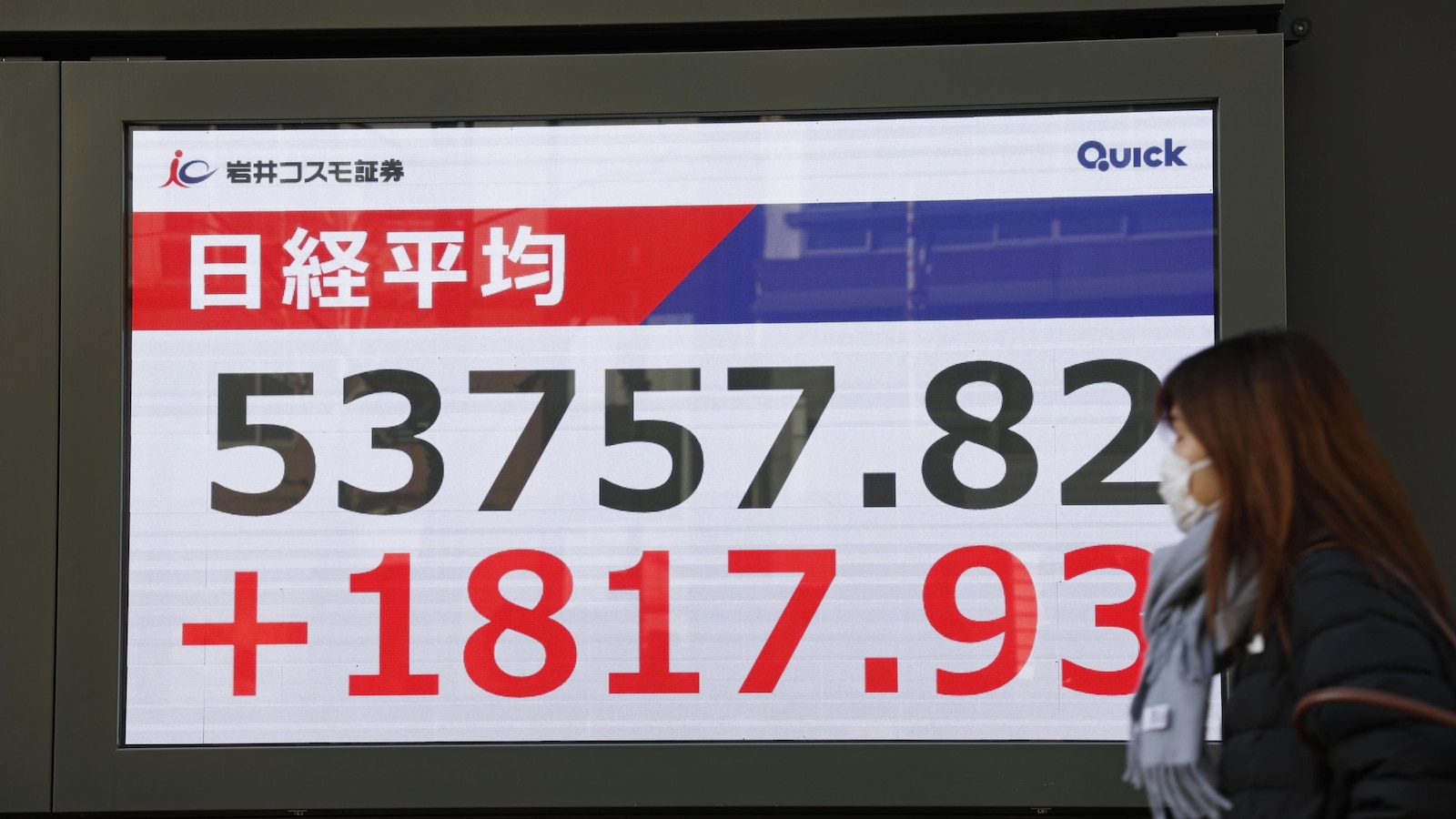
Group 1 - Major bank earnings reports will begin with JPMorgan Chase, coinciding with the release of December's consumer-price index at 8:30 a.m. ET [1] - Economists predict a 2.7% year-over-year increase in headline prices, remaining unchanged from November, while core CPI is expected to accelerate [1] Group 2 - Stock futures have slightly decreased amid investor concerns regarding the investigation into Federal Reserve Chair Jerome Powell, although these anxieties appear to be easing [2] - Major global central banks have expressed support for Powell, emphasizing the importance of maintaining the Fed's independence [2] Group 3 - Oil futures have increased following President Trump's announcement of a 25% tariff on countries conducting business with Iran, with potential military measures being considered in response to protests [3] Group 4 - The 10-year Treasury yields have risen to approximately 4.2% [4] - Japan's Nikkei 225 index has reached a record close, influenced by expectations of a snap election next month, while the yen and government bonds have declined [4]

S&P Futures Muted as Investors Weigh JPMorgan Earnings, U.S. Inflation Data in Focus
Yahoo Finance· 2026-01-13 11:14
Central Banks and Federal Reserve - A group of central banks expressed support for Fed Chair Jerome Powell, emphasizing the importance of central bank independence for economic stability [1] Trade and Tariffs - President Trump announced a 25% tariff on trade with any country doing business with Iran, impacting U.S. trade relations [2] Interest Rates and Economic Outlook - New York Fed President John Williams stated that interest rates are well-positioned to stabilize the labor market and achieve the Fed's 2% inflation target, highlighting the benefits of the Fed's independence [3] - Market expectations indicate a 95% chance of no rate change and a 5% chance of a 25 basis point rate cut at the January FOMC meeting [2] Stock Market Performance - Wall Street's main stock indexes closed higher, with the S&P 500 reaching a new record high, driven by gains in data storage companies like Western Digital and Seagate Technology [4] - Walmart's stock rose 3% after being announced as a new addition to the Nasdaq 100 Index [4] - Credit card companies and bank stocks declined following Trump's proposal for a cap on credit card interest rates [4] Earnings Reports and Market Reactions - JPMorgan Chase reported better-than-expected Q4 results, leading to a 0.5% rise in its stock during pre-market trading [16] - Intel and Advanced Micro Devices saw stock increases after being upgraded by KeyBanc [17] Inflation Data and Economic Indicators - The U.S. consumer inflation report is anticipated to show a December CPI of 2.7% year-over-year, unchanged from November, with core CPI expected to rise slightly to 2.7% [6] - New Home Sales data for October is expected to show sales of 716K, incorporating previously delayed September figures [8] International Market Trends - Asian stock markets showed mixed results, with Japan's Nikkei 225 Index closing sharply higher amid speculation of a snap election [11][13] - China's Shanghai Composite Index retreated from a 10-year high, with significant turnover indicating potential market overheating [12]
Navigating a Cautious Tuesday: CPI Looms as Earnings Season Kicks Off
Stock Market News· 2026-01-13 11:07
Market Overview - U.S. stock futures are showing a slight dip as investors prepare for critical economic data and the start of the fourth-quarter earnings season [1] - Major U.S. indexes closed at record highs on Monday, with the S&P 500 rising 0.16% to 6,977.27 points, the Dow Jones Industrial Average gaining 0.17% to 49,590.20 points, and the Nasdaq Composite advancing 0.26% to 23,733.90 points [3] Economic Indicators - The Consumer Price Index (CPI) data for December 2025 is set to be released, with expectations of an annual inflation rate stable at 2.7% and a monthly pace of 0.3% for both total and core CPI [4] - The U.S. 10-year Treasury yield is up to approximately 4.19% [2] Corporate Earnings - The fourth-quarter earnings season begins today, with major companies like JPMorgan Chase & Co. expected to report total revenue of $46.25 billion and earnings per share of $5.02 [6] - Other companies reporting include Bank of New York Mellon Corporation and Delta Air Lines [6] Notable Corporate News - Alphabet Inc. reached a market value of over $4 trillion after Apple announced the integration of Google's Gemini AI into Siri, with Alphabet up 0.68% in premarket trading [7] - Xpeng Inc. ADR dropped 2.63% in premarket despite plans for localized supply chain teams in Europe and ASEAN [7] - Valeura Energy Inc. reported Q4 2025 performance in line with guidance and provided a positive outlook for 2026 [11] - Maple Leaf Foods Inc. announced 2026 financial guidance and a dividend increase [11]




World shares are mixed and Tokyo hits a record, tracking fresh highs on Wall Street
ABC News· 2026-01-13 11:01
Market Overview - World shares exhibited mixed performance with U.S. futures declining slightly ahead of the U.S. consumer price update [1] - In early European trading, the FTSE 100 rose less than 1% while Germany's DAX and France's CAC 40 fell by 0.2% and 0.5% respectively [2] Inflation and Consumer Prices - U.S. consumer prices are expected to have risen by 2.6% in December compared to the previous year, according to economists' estimates [2] - Inflation pressures are likely to remain high due to increased costs in electricity, groceries, and clothing [3] Regional Market Performance - Asian shares mostly gained, with Japan's Nikkei 225 surging 3.1% to a record close of 53,549.16, driven by technology-related stocks [3] - Hong Kong's Hang Seng index advanced 0.9% to 26,848.47, while shares of GigaDevice Semiconductor jumped 54% in its trading debut [5] - South Korea's Kospi closed 1.5% higher at a record 4,692.64, and Australia's S&P/ASX 200 gained nearly 0.6% [5] U.S. Federal Reserve and Interest Rates - Concerns over the Federal Reserve's independence in setting interest rates were somewhat mitigated by investor expectations of potential rate cuts [6] - Tensions between President Trump and Fed Chair Jerome Powell escalated following a subpoena from the Department of Justice regarding Powell's testimony [7] - Trump has advocated for further interest rate cuts, which could benefit stock prices by lowering borrowing costs [8] Company-Specific Developments - Alphabet, Google's parent company, saw a 1% increase in market value, surpassing $4 trillion, following a deal with Apple to enhance Siri using Google's technology [8] - Credit card companies faced losses after Trump proposed a cap on credit card interest rates, impacting their profit margins [9]
Best high-yield savings interest rates today, January 13, 2026 (Earn up to 4% APY)
Yahoo Finance· 2026-01-13 11:00
Core Insights - High-yield savings account rates have been declining, yet some accounts still offer rates above 4% APY, necessitating research to find competitive offers [1] Group 1: Current Savings Rates - The average interest rate on traditional savings accounts is currently 0.39% as per FDIC data, while high-yield accounts can offer significantly higher rates [2] - As of January 13, 2026, the highest savings account rate available from partners is 4% APY, provided by SoFi, Valley Bank Direct, and Barclays [2] Group 2: Historical Trends - Savings account interest rates have varied over the past decade, with rates from 2010 to 2015 remaining low at around 0.06% to 0.10% due to the 2008 financial crisis and the Federal Reserve's near-zero target rate [3] - From 2015 to 2018, interest rates began to rise gradually but remained low historically; the COVID-19 pandemic in 2020 caused another sharp decline, bringing rates down to approximately 0.05% to 0.06% by mid-2021 [4] Group 3: Recent Developments - Since mid-2021, savings account rates have improved significantly due to the Federal Reserve's interest rate hikes in response to rising inflation; however, the Fed lowered the federal funds rate towards the end of 2024 and throughout 2025, leading to a steady decline in deposit rates [5] Group 4: Account Suitability - High-yield savings accounts are suitable for short-term savings goals such as emergency funds or vacations, allowing easy access to funds; other deposit accounts like money markets and CDs may offer competitive rates but with withdrawal restrictions [6]
Canadians' Financial Outlook Divided as Inflation and Recession Fears Appear to Shape Behaviours – TransUnion Canada Study
Globenewswire· 2026-01-13 11:00
Core Insights - Canadians' financial optimism is declining due to rising living costs, with 53% stating their household income is not keeping pace with inflation [1][5] - A significant portion of Canadians (31%) are pessimistic about their financial situation in the next year, despite 20% reporting an income increase in the last three months [1][5] - Economic uncertainty is prompting Canadians to adjust their spending habits, with 67% seeking sales and discounts more frequently [4][5] Financial Strain - 25% of Canadians are unable to pay at least one current bill or loan in full, with credit card payments (63%) and personal loans (55%) being the most affected [2][3] - Over half (51%) of Canadians have cut back on discretionary spending, while 19% plan to reduce contributions to retirement funds [4][5] Recession Sentiment - 27% of Canadians believe the country is currently in a recession, and 32% expect one within the next year, leading 84% to prepare for potential economic downturns [3][4] Spending Adjustments - Canadians are increasingly prioritizing essential goods, with 85% changing shopping habits in response to economic conditions [5] - Common adjustments include reducing spending (61%), building savings (38%), and shopping at more affordable retailers (44%) [6] Credit Access and Intentions - 82% of Canadians view access to credit as essential for achieving financial goals, but only 56% feel they have sufficient access [7][10] - 21% plan to apply for new credit or refinance existing credit, with younger generations (47% of Gen Z and 31% of Millennials) leading this trend [8][9] Fraud Concerns - Nearly half (46%) of Canadians reported being targeted by fraud in the past three months, with younger Canadians being the most vulnerable [12][13] - Despite the risks, 36% of Canadians took no action to address cybersecurity concerns, highlighting a need for better education on fraud prevention [13]


每日机构分析:1月13日
Sou Hu Cai Jing· 2026-01-13 10:53
Group 1 - The independence of the Federal Reserve is crucial for maintaining the United States' AA+ sovereign rating, as highlighted by Fitch, which will continue to monitor governance developments and potential political interference [2] - S&P emphasizes that the credibility of the Federal Reserve is a core advantage for the U.S. sovereign rating, supporting the dollar's reserve currency status and monetary policy flexibility. Continued political pressure that undermines the central bank's independence could lead to downward pressure on the U.S. sovereign rating [2] - BlackRock's survey indicates that by 2026, investors are shifting their focus from U.S. tech giants to energy and infrastructure sectors for AI investments, with over half of EMEA institutions favoring data center power suppliers [2] Group 2 - Analysts from Rabobank warn that the Bank of England may cut interest rates in March, which could lead to further declines in the GBP/EUR exchange rate, suggesting that the current exchange rate is undervalued [3] - Swiss Bank economists note that the Japanese yen's movement is decoupling from interest rate trends, reflecting market concerns over the new government's expansionary fiscal policies and high public debt, leading to a downward revision of the yen's forecast against the dollar [2]