Cloud Computing

Search documents
Nokia, EBB Team Up to Upgrade AI Data Centers Across Malaysia
ZACKS· 2025-09-02 15:45
Core Insights - Nokia has secured a contract with Extreme Broadband (EBB) and its subsidiary Open DC to enhance AI data centers in Malaysia, aligning with the National Cloud Computing Policy and catering to the banking and financial services sector [1] - The initiative will interconnect six Open DC facilities across Malaysia, providing a reliable and secure network to support EBB's vision of "Innovating Connectivity" [2] - A Memorandum of Understanding (MoU) has been signed between Nokia and EBB to collaborate on data center solutions and quantum-safe networks, focusing on AI and data center connectivity [3] Group 1: Contract and Collaboration - The contract aims to improve performance and security of Open DC's AI data centers, reinforcing EBB and Open DC's positions in Malaysia's digital infrastructure [1] - The deployment will utilize Nokia's advanced IP network solutions to connect six facilities, ensuring high reliability and security [2] - The MoU includes joint strategies for enterprise connectivity, multi-cloud integration, and DDoS protection, along with testing Nokia's Data Center Gateway and security solutions [3] Group 2: Technology and Infrastructure - Nokia's modernization efforts will leverage its Data Center Fabric, Data Center Gateway, and quantum-safe networking technologies, ensuring scalability and sustainability for Open DC [4] - The collaboration is expected to enhance Nokia's role in Malaysia's growing data center industry, providing unmatched reliability and efficiency [5] - Nokia's recent projects, such as upgrading Vortex Group's network in India, demonstrate its commitment to improving broadband speeds and connectivity [6] Group 3: Market Outlook - Nokia anticipates strong sales growth in the Network Infrastructure, Cloud, and Network Services segments by 2025, while expecting stable sales from Mobile Networks [8] - The company faces challenges from the cyclical nature of the telecommunications industry and competition in the wireless equipment market [8] - Currently, Nokia holds a Zacks Rank 4 (Sell), with its stock down 1.8% over the past year compared to a 27.9% growth in the Wireless Equipment industry [9]




ChowChow Cloud International(CHOW) - Prospectus(update)
2025-09-02 12:52
As publicly filed with the Securities and Exchange Commission on September 2, 2025 Registration No. 333-286296 UNITED STATES SECURITIES AND EXCHANGE COMMISSION WASHINGTON, D.C. 20549 FORM F-1 Amendment No. 3 REGISTRATION STATEMENT UNDER THE SECURITIES ACT OF 1933 ChowChow Cloud International Holdings Limited (Exact name of Registrant as specified in its charter) Not Applicable (Translation of Registrant's name into English) Cayman Islands 7372 Not Applicable (State or other jurisdiction of incorporation or ...
Should You Invest in the First Trust Cloud Computing ETF (SKYY)?
ZACKS· 2025-09-02 11:21
Core Insights - The First Trust Cloud Computing ETF (SKYY) is designed to provide broad exposure to the Technology - Cloud Computing segment of the equity market, launched on May 27, 2011 [1] - The ETF has accumulated over $3.03 billion in assets, making it one of the larger ETFs in its category [3] - SKYY seeks to match the performance of the ISE Cloud Computing Index, which tracks companies in the cloud computing industry [3] Fund Details - The ETF has an annual operating expense ratio of 0.6%, which is competitive within its peer group [4] - The fund has a significant allocation of approximately 84.1% in the Information Technology sector, with Telecom and Consumer Discretionary also being notable sectors [5] - The top three holdings include Arista Networks, Inc. (6.2% of total assets), Oracle Corporation, and Alphabet Inc. (class A) [6] Performance Metrics - As of September 2, 2025, the ETF has gained about 7.09% year-to-date and approximately 30.26% over the past year [7] - The ETF has a beta of 1.23 and a standard deviation of 28.19% over the trailing three-year period, indicating medium risk [7] - The ETF effectively diversifies company-specific risk with around 62 holdings [7] Investment Alternatives - SKYY holds a Zacks ETF Rank of 1 (Strong Buy), indicating strong potential for investors seeking exposure to Technology ETFs [8] - Other ETFs in the cloud computing space include Global X Cloud Computing ETF (CLOU) and WisdomTree Cloud Computing ETF (WCLD), with assets of $313.01 million and $341.46 million respectively [9]

PVA TePla (TPE) 2025 Earnings Call Presentation
2025-09-02 08:00
CAPITAL MARKETS DAY LONDON | SEPTEMBER 2, 2025 TODAY'S SPEAKERS Jalin Ketter CEO Dr. Peter Czurratis Vice President Metrology Dr. Jan Pfeiffer Vice President Research & Development 2 Carl Markus Groß CFO Dr. Udo Broich Vice President Material Solutions 12.45-14.00 | GET TOGETHER & LUNCH 09.00-09.15 | INTRODUCTION & OVERVIEW 09.15-10.00 | Strategy 11.30-12.00 | FINANCIALS 12.00-12.45 | Q&A 10.00-10.30 | COFFEE BREAK 10.30-11.30 | MARKETS AGENDA 3 COMPANY OVERVIEW 4 INTRODUCING: PVA TODAY A GLOBAL PROVIDER OF ...
躺在风口上的硅谷教授,身家180亿不离讲台,捧出7家AI创企
3 6 Ke· 2025-09-02 07:20
Core Insights - Databricks has achieved a valuation exceeding $100 billion, positioning it as one of the highest-valued AI unicorns globally, drawing attention to its co-founder Ion Stoica's dual role in academia and industry [1][2] - Stoica has been instrumental in founding and managing several significant research labs at UC Berkeley, contributing to 118 research projects in big data, cloud computing, and AI [1][2] - Despite his commercial success, Stoica remains committed to education and research, continuing to teach undergraduate courses [2][29] Group 1: Entrepreneurial Ventures - Stoica has co-founded or incubated at least seven notable startups, including Databricks, Anyscale (valued at $1 billion), LMArena (valued at $600 million), and Conviva (valued at $300 million) [2][10] - Databricks, which emerged from the open-source project Spark, has raised a total of $20.8 billion and serves over 60% of Fortune 500 companies [10][12] - Conviva, founded in 2006, focuses on real-time video stream analysis and has raised $110 million across seven funding rounds [8][12] Group 2: Research Contributions - Stoica has played a key role in the establishment of three major labs at UC Berkeley, including the AMP lab, which produced influential open-source projects like Apache Spark and Alluxio [9][10] - The RISE lab, which Stoica helped create, has contributed over 41 open-source projects, with the distributed execution framework Ray being a notable success that led to the founding of Anyscale [19][20] - The Sky Computing Lab, established in 2022, has produced 52 projects, including the vLLM inference engine and the LMArena evaluation platform [24][25] Group 3: Funding and Sponsorship - Stoica has secured sponsorship from major companies like NVIDIA, Meta, and Google for his labs, allowing for extensive research funding [2][28] - His entrepreneurial ventures have also provided financial support for his research activities, with Stoica investing part of his personal wealth into lab operations [28][29] - The collaborative nature of his labs has attracted significant industry partnerships, enhancing the practical application of academic research [28][31] Group 4: Educational Impact - Stoica has mentored over 80 students, many of whom have gone on to work in academia or start their own companies, including several who are now at Databricks [29][31] - His commitment to education is evident as he continues to teach and guide students, emphasizing the importance of innovation and exploration in research [29][31] - Stoica's approach demonstrates the potential for academic research to translate into substantial commercial value, particularly in the AI sector [31]

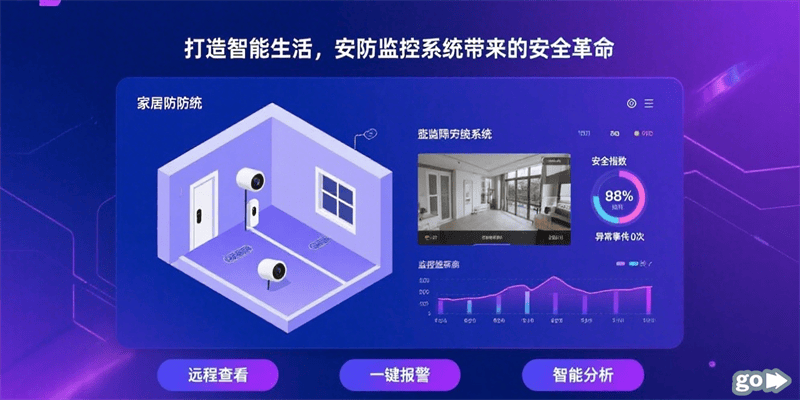
打造智能生活,安防监控系统带来的安全革命
Sou Hu Cai Jing· 2025-09-02 03:44
Core Insights - The article emphasizes the growing importance of security monitoring systems as a crucial component of smart living, enhancing safety and convenience for households and communities [2][10] Group 1: Structure and Functionality of Security Monitoring Systems - Security monitoring systems consist of front-end devices, transmission equipment, smart terminals, and control and display systems, enabling real-time monitoring and data recording [3] - High-resolution cameras act as sensitive "eyes" deployed in key areas, while intelligent video analysis technology enhances efficiency and accuracy in identifying behaviors and tracking objects [3] Group 2: Applications in Various Scenarios - In home settings, security monitoring systems provide peace of mind through features like smart doorbells and indoor cameras, allowing remote monitoring and immediate alerts in case of unusual activities [4] - Community safety is significantly improved with the implementation of security monitoring systems, including facial recognition access control and comprehensive surveillance of public areas [5] - In public spaces such as malls, schools, and hospitals, security monitoring systems play a vital role in monitoring foot traffic, ensuring safety, and maintaining order [6][7] Group 3: Driving Factors Behind Security Reform - The integration of advanced technologies like artificial intelligence, big data, and cloud computing is identified as the core driver of the security revolution facilitated by monitoring systems [8] - AI enables automatic video content analysis, reducing the burden of manual monitoring, while cloud computing enhances data management and sharing capabilities [8] Group 4: Expanding Applications and Impact - Security monitoring systems have evolved from traditional safety measures to encompass various sectors, including home, community, transportation, education, and healthcare, promoting proactive safety management [9] - The diverse applications have raised awareness of the benefits of security monitoring, shifting the perception of safety from passive prevention to active alertness and intelligent management [9] Group 5: Future Development and Integration - The powerful functionalities and innovative applications of security monitoring systems are transforming lives and driving comprehensive safety reforms, making them an indispensable part of smart living [10] - Continuous technological advancements and increased applications are expected to further energize the integration of smart living and safety protection [10]
阿里巴巴_2026 财年第一季度营收同比增长 10%_剔除分拆影响_经调整 EBITANP_低于共识预期
2025-08-31 16:21
Summary of Alibaba Group Holding (BABA.N) FY1Q26 Earnings Call Company Overview - **Company**: Alibaba Group Holding - **Ticker**: BABA.N - **Fiscal Quarter**: FY1Q26 - **Date of Call**: August 29, 2025 Key Financial Metrics - **Total Revenue**: Rmb247.7 billion, +2% YoY, below estimates of Rmb252.6 billion and consensus of Rmb253.2 billion [1][2] - **Like-for-Like Revenue Growth**: +10% YoY when excluding deconsolidated revenues [1] - **Non-GAAP Net Income**: Rmb35.3 billion, -12.4% YoY, above estimate of Rmb32.1 billion but below consensus of Rmb37.6 billion [1][2] - **Adjusted EBITDA**: Rmb45.7 billion, -11% YoY, with a margin of 18% [1] - **Adjusted EBITA**: Rmb38.84 billion, -14% YoY, with a margin of 15.7% [2] Segment Performance - **Alibaba China E-commerce Group**: Revenue of Rmb140.1 billion, +10% YoY; Adjusted EBITA declined -21% YoY to Rmb38.4 billion [1][2] - **Ali International Digital Commerce Group**: Revenue of Rmb34.7 billion, +19% YoY, slightly below estimate [1] - **Cloud Intelligence Group**: Revenue of Rmb33.4 billion, +26% YoY, beating expectations [1][2] - **All Others**: Revenue of Rmb58.6 million, -28% YoY [1] Margins and Expenses - **Sales and Marketing Expenses**: Increased by 63% YoY to Rmb53.2 billion, 21% higher than forecast [2] - **Adjusted EBITA Margins**: - Alibaba China E-commerce Group: 27.4%, down from 38% YoY [1] - Cloud Intelligence Group: 8.8%, flat YoY [1] Notable Highlights - **Taobao App MAU**: Increased by 25% YoY in the first three weeks of August [2] - **88VIP Members**: Reached 53 million, indicating strong customer loyalty [2] - **Capital Expenditures**: Rmb38.67 billion, exceeding the estimate of Rmb27 billion [2] Management Insights - **Investment Focus**: Management emphasized investment in quick commerce and food delivery, indicating a competitive landscape [6][7] - **Cloud Demand**: Positive outlook on customer demand and revenue growth in the cloud segment [7] - **Regulatory Environment**: Management discussed the impact of intensified competition and regulatory scrutiny [7] Risks and Concerns - **Execution Risks**: Potential failure in executing the new retail strategy and pressure on investment spending and margins [12] - **Market Conditions**: Risks associated with a slowdown in user traffic, online GMV, and economic conditions [12] Valuation and Target Price - **Current Price**: US$119.57 - **Target Price**: US$148.00, representing a potential upside of 23.8% [4][11] Conclusion - The earnings call presented a mixed financial performance for Alibaba, with strong growth in cloud and international commerce but challenges in the domestic e-commerce segment. The management's focus on investment in quick commerce and cloud services indicates a strategic direction aimed at maintaining competitiveness in a challenging market environment.

4 "Ten Titans" Stocks Are Already in the Dow Jones. Could the Rest Join by 2030?
The Motley Fool· 2025-08-30 13:30
Core Insights - Megacap growth stocks are significantly influencing traditional blue-chip indexes like the Dow Jones Industrial Average, which consists of 30 leading U.S. companies across various sectors [1][2] - The Dow's composition has shifted to reflect the U.S. economy, with financials and technology now being the most represented sectors, rather than industrials [2][3] - The Dow is price-weighted, meaning the stock price, rather than market capitalization, determines a company's weight in the index, allowing for a more balanced representation of high-value stocks [6][8] Dow Composition Changes - Over the past five years, six companies have changed in the Dow, including Salesforce replacing ExxonMobil and Nvidia taking Intel's place [2] - The current Dow includes four of the "Ten Titans" (Nvidia, Amazon, Microsoft, and Apple), which collectively account for 38% of the S&P 500's value [3][4] - The remaining six Titans not yet in the Dow include Alphabet, Meta Platforms, Broadcom, Tesla, Oracle, and Netflix [3] Potential Additions and Replacements - Alphabet is seen as a strong candidate for inclusion, potentially replacing Verizon Communications, which is the lowest weighted component in the Dow [12][13] - Meta Platforms could replace Honeywell, especially as Honeywell is splitting into three companies, making it a candidate for removal [14][15] - Netflix is suggested to replace Disney, although this is less likely due to Disney's broader economic representation [16][17] - Broadcom is proposed to replace Cisco Systems, as it offers a more diversified business model compared to Cisco [18][19] - Oracle could replace International Business Machines (IBM), although IBM's strong position in quantum computing and AI may hinder Oracle's inclusion [20][22] - Tesla is considered for inclusion, potentially replacing Nike, to enhance the representation of the automotive sector in the Dow [24][25] Future Outlook - The Dow's current underperformance compared to the S&P 500 and Nasdaq highlights the need for potential changes in its composition to better reflect market dynamics [26] - It is anticipated that at least a few of the Ten Titans, particularly Alphabet and Broadcom, may be added to the Dow by 2030 [27]



透视阿里云Q2财报:AI收入占比超两成,全栈布局显成效?
Xin Lang Ke Ji· 2025-08-30 04:02
Core Insights - Alibaba's cloud computing business, Alibaba Cloud, achieved external commercial revenue growth of 26% year-over-year, reaching 33.398 billion yuan, marking the highest growth rate in three years [2][5] - AI-related product revenue has seen triple-digit year-over-year growth for eight consecutive quarters, now accounting for over 20% of external commercial revenue, becoming a core driver of growth [2][3] - The company has significantly increased its capital expenditure (Capex) for AI and cloud to 38.6 billion yuan, a 220% year-over-year increase, primarily for data center construction and AI product development [3][5] Revenue Growth and AI Impact - The explosive growth in AI demand has not only directly boosted cloud computing revenue but also driven collaborative growth in traditional computing and storage products [3][7] - Alibaba Cloud's revenue growth has shown a clear acceleration trajectory, with year-over-year increases rising from 7.1% to 13.1%, 17.7%, and reaching 26.0% in the latest quarter [5][7] Technological Advancements - Alibaba has released over 300 open-source large models, with global downloads exceeding 400 million, and the Qianwen series has over 140,000 derivative models, making it the largest open-source model family globally [3][7] - Recent breakthroughs include the launch of multiple AI models, such as the Qianwen 3 non-thinking base model and the Wan2.2 video generation model, which lower the development threshold for AI applications [3][7] Infrastructure Expansion - Alibaba Cloud has added eight new data centers this year to meet the growing global demand for cloud and AI services, now operating 89 availability zones across 29 regions worldwide [4][5] - The company plans to invest over 380 billion yuan in cloud and AI hardware infrastructure over the next three years, indicating a significant increase in annual capital expenditure for AI infrastructure [5][7] Strategic Partnerships and Applications - Alibaba Cloud's full-stack service model, from large models to cloud infrastructure, provides a unique competitive advantage in the AI era, enabling the scaling of AI-driven market opportunities [7][8] - Strategic collaborations with global enterprise software giant SAP aim to integrate SAP's ERP systems with Alibaba Cloud's AI capabilities, promoting digital transformation in various markets [7][8]
China Doesn't Need Nvidia Anymore: Alibaba's New Chip Is A Challenge To Washington
Benzinga· 2025-08-29 15:48
Core Viewpoint - Alibaba Group has launched a new AI chip to reduce dependence on Nvidia, highlighting China's efforts to develop homegrown technology amid U.S. restrictions [1][3]. Group 1: AI Chip Development - Alibaba's new processor is designed for AI inference, allowing compatibility with Nvidia's software ecosystem, enabling Chinese engineers to use existing programs without major modifications [3]. - The chip's introduction comes as U.S. export rules impact Nvidia's H20, the most powerful AI processor allowed in China, leading to a competitive landscape with other Chinese companies like MetaX and Huawei also developing advanced chips [4]. Group 2: Financial Implications - Alibaba's cloud computing revenue surged by 26% in the April–June quarter, driven by increasing AI demand, prompting the CEO to commit at least $53 billion in cloud and AI investments over the next three years [5]. - The chip initiative reflects a broader challenge in China's semiconductor production capabilities, as U.S. tech bans hinder mass production of cutting-edge chips, leading companies to innovate with existing technologies [6]. Group 3: Competitive Landscape - Other Chinese firms, including MetaX and Huawei, are also racing to develop competitive AI chips, with MetaX's upcoming chip featuring larger memory than Nvidia's H20 and Huawei claiming high performance with its Ascend chips [4][6].