Technical analysis

Search documents
Buying The Dip On Leverage
Seeking Alpha· 2025-10-14 14:33
Core Insights - The individual investor adopts a contrarian investment style, focusing on high-risk, illiquid options and shares, with a balanced portfolio of approximately 50% in each [1] - The investment strategy emphasizes buying stocks that have recently experienced sell-offs due to non-recurrent events, particularly when insiders are purchasing shares at lower prices [1] - Fundamental analysis is employed to assess the health of companies, including leverage and financial ratios compared to sector and industry averages [1] - Technical analysis is utilized to determine optimal entry and exit points, using multicolor lines for support and resistance levels on weekly charts [1] Investment Strategy - The investor's timeframe for holding positions typically ranges from 3 to 24 months [1] - A thorough professional background check is conducted on insiders who purchase shares following a sell-off [1] - The investor occasionally buys shares to maintain a balanced portfolio and avoid being categorized as a "degen" by peers [1]
U.S. and China Trade Tensions, "Dead Cat Bounce" Underway?
Youtube· 2025-10-13 12:38
Market Overview - The market experienced volatility with a significant drop on Friday, where the S&P 500 fell over 2% due to tariff talks between the US and China, which served as a catalyst for traders to derisk ahead of the weekend [2][3] - Following the drop, E-mini S&P futures declined by approximately 0.7% after hours on Friday, but a bounce back was observed at the start of the week [3][5] Sector Performance - The semiconductor sector showed resilience, with companies like Seagate and Micron experiencing upward movement, partly due to tariff risks associated with China restricting rare earth minerals [4][5] - The materials sector rallied, supported by US government initiatives to gain equity stakes in industries and the Pentagon's efforts to purchase rare earth minerals, pushing related stocks higher [7][9] - Defensive sectors such as utilities and staples are performing well, indicating a potential flight to safety amid market volatility, with staples being less susceptible to fluctuations [11][12] Rare Earth Minerals - The US has resources for rare earth minerals but faces challenges in processing them, which is expected to be a bottleneck in the coming years [8][9] - China currently processes around 75% of all rare earth minerals, highlighting the strategic importance of these resources in the ongoing trade tensions [9][10] Gold and Other Metals - Gold futures have seen a notable increase, trading around 4100, benefiting from both risk-off and risk-on sentiments, with central banks continuing to buy gold amid inflationary risks [14][16] - Other metals like silver, platinum, and copper are also gaining traction, indicating positive inflows and interest in the metals trade [17] Technical Analysis - Key technical levels for the E-mini S&P 500 futures include a 50-day moving average, with resistance at 6,700 and support at 6,550, indicating a wide range of potential movement [19][20] - The market is closely monitoring for any selling into strength as it opens, which could impact the overall market direction [20][21]


Q2 results, Tata stocks and gold-silver rush among 10 factors that'll steer D-St this week
The Economic Times· 2025-10-12 15:57
Market Overview - Indian benchmark indices ended the week with gains of 1.6%, supported by strength in IT and healthcare stocks. The Nifty closed 103.55 points, or 0.41%, higher at 25,285.35, breaking out of a recent consolidation range [1][19]. Earnings Reports - Over 200 BSE-listed companies are set to announce their September quarter results this week, including major players like HCL Technologies, Tech Mahindra, Axis Bank, HDFC Life Insurance, Infosys, Nestle India, Wipro, JSW Steel, Reliance Industries, HDFC Bank, ICICI Bank, and UltraTech Cement [2][19]. - Non-Nifty companies such as IDFC First Bank, Yes Bank, Indian Railway Finance Corporation (IRFC), IndusInd Bank, and HDB Financial Services are also expected to report results [5][19]. - The market will react to DMart's earnings announced on Saturday [6][19]. Market Influences - U.S. President Donald Trump's threat to impose additional 100% tariffs on China may impact Asian markets, including India, following China's aggressive export curbs on rare earth minerals [7][19]. - U.S. equities fell sharply on Friday, with the Dow Jones Industrial Average down 878.82 points (1.90%), the S&P 500 down 182.60 points (2.71%), and the Nasdaq Composite down 820.20 points (3.5%) [8][19]. IPO Activity - The primary market is expected to remain quiet, with only one new mainboard IPO, Midwest, opening for subscription. Bidding will conclude for three ongoing mainboard issues and three SME offerings [9][19]. - Anticipated listings include Tata Capital and LG Electronics, scheduled for Monday and Tuesday, respectively, along with eight other companies set to debut during the week [9][19]. Corporate Actions - Key corporate actions include the record date for the 1:10 stock split of Tata Investment Corporation and the rights issue of Utkarsh Small Finance Bank on October 14, and the interim dividend of Rs 11 per share for Tata Consultancy Services (TCS) on October 15 [10][19]. Institutional Activity - Foreign institutional investors (FIIs) were net buyers last week, purchasing equities worth Rs 3,603 crore over five sessions, with Friday's purchases totaling Rs 459.20 crore [11][19]. - Domestic institutional investors (DIIs) also turned net buyers at Rs 8,391.2 crore for the week, with Friday's purchases amounting to Rs 1,707.83 crore [11][19]. Technical Analysis - Nifty formed a sizable bullish candle with a higher high and higher low on the weekly chart, indicating a continuation of the uptrend. The index closed above its short-term moving averages, retracing over 80% of its previous decline [12][19]. - The index is expected to maintain a positive bias, potentially heading towards 25,450, with further upside towards the June 2025 high of 25,670 if it moves above 25,450 [13][19]. Currency and Commodities - The Indian rupee closed stronger at 88.6850 against the U.S. dollar, compared to 88.7825 in the previous session, aided by RBI intervention [14][19]. - Brent and U.S. crude futures fell sharply, with U.S. WTI crude settling at $58.24 (down $3.27 or 5.32%) and Brent futures around $62.73 (down $3.13 or 4.80%) [16][19]. Investment Trends - With Diwali approaching, there is rising investor interest in gold and silver, while equities have seen pressure, with net inflows into equity mutual funds declining for a second straight month to Rs 30,422 crore in September, a 9% drop from August [17][19]. - In contrast, record sums were poured into gold exchange-traded funds (ETFs), with inflows rising fourfold to Rs 8,363 crore, marking the highest-ever monthly inflow for the category [18][19].

What Will Friday's Market Meltdown Mean For Monday
ZeroHedge· 2025-10-12 14:30
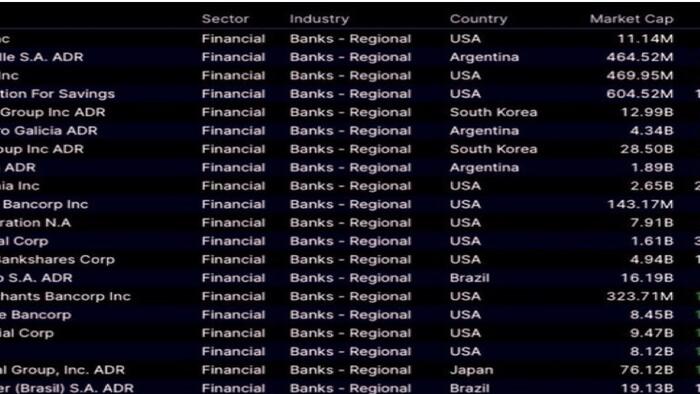
Market Overview - The market experienced a significant downturn, erasing nearly an entire month of gains within eight trading hours, illustrating the volatility of stock movements [2][4] - The current market conditions are precarious, with high levels of leverage and margin debt, leading to potential cascading declines if buying the dip fails [6][7] Geopolitical Factors - President Trump's response to China's restrictions on rare earth exports involved increasing tariffs to 100%, contributing to market declines [4][5] - The situation raises concerns about a potential economic conflict between the U.S. and China, particularly regarding the U.S. dollar's status [5] Sector-Specific Risks - There are looming issues in subprime auto loans, private credit, commercial real estate, and overvalued tech stocks, which could lead to significant market disruptions [3][13] - Regional banks are particularly vulnerable, with many experiencing substantial declines in stock prices, indicating potential systemic risks [11][12] Investment Recommendations - The current recommendation is to avoid sectors such as subprime auto, overpriced tech equities, regional banks, and commercial real estate, as they are likely to face the most significant impacts from ongoing market chaos [13] - Specific companies identified as high-risk include Apollo Global Management, Blackstone, Carvana, Upstart, SoFi, and the SPDR S&P Regional Banking ETF [13]
TSMC: Ultra Bullish Going Into Q3 Earnings
Seeking Alpha· 2025-10-11 09:26
Core Insights - The investor adopts a contrarian investment style, focusing on high-risk, illiquid options and shares, with a balanced portfolio of approximately 50% in each [1] - The investment strategy involves identifying stocks that have recently experienced sell-offs due to non-recurrent events, particularly when insiders are buying shares at lower prices [1] - Fundamental analysis is employed to assess the health of companies, their leverage, and to compare financial ratios with sector and industry averages [1] - Technical analysis is utilized to optimize entry and exit points, using multicolor lines for support and resistance levels on weekly charts [1] Investment Strategy - The investor's timeframe for holding positions typically ranges from 3 to 24 months [1] - A professional background check is conducted on each insider who purchased shares after a recent sell-off to ensure credibility [1] - The investor screens through thousands of stocks, primarily in the US, but may also invest in companies from less stable economies [1]

History Shows the Silver Market May Now Be in Trouble
Yahoo Finance· 2025-10-10 15:54
Group 1 - The fundamentals for silver remain strong due to global geopolitical tensions driving safe-haven demand, easier central bank monetary policies, and increased hoarding of rare-earth minerals by major industrialized countries [1] - Recent price action in December silver futures indicates a bearish "key reversal" pattern, suggesting a potential near-term market top for silver [2] - Historical price patterns suggest that while current fundamentals are bullish, the major bull market run in silver may be nearing its end, as markets often price in expected future events ahead of time [6] Group 2 - Silver reached a high of $49.965 this week, surpassing the previous high of $49.52 set in 2011, marking a significant milestone in its price history [4] - Historical context shows that silver prices have experienced significant volatility, with past peaks followed by sharp declines, indicating potential risks for current price levels [5]
Gold market analysis for October 9 - key intra-day price entry levels for active traders
KITCO· 2025-10-09 12:04
Core Insights - Jim Wyckoff has over 25 years of experience in stock, financial, and commodity markets, including roles as a financial journalist and market analyst [1][2] - He has covered all futures markets traded in the U.S. and has worked with various financial news and advisory services [1][2] Company and Industry Summary - Jim Wyckoff operates the "Jim Wyckoff on the Markets" service, which provides analytical, educational, and trading advisory content [2] - He has held positions as a technical analyst for Dow Jones Newswires and as a senior market analyst with TraderPlanet.com [2] - Wyckoff is also a consultant for the "Pro Farmer" agricultural advisory service and was the head equities analyst at CapitalistEdge.com [2] - He studied journalism and economics at Iowa State University, which supports his expertise in market analysis [2] - Daily updates and technical analysis are provided by Wyckoff on Kitco.com, indicating his active engagement in market commentary [3]

Marvell Technology: ASICs/XPU Space Is Getting Hot (NASDAQ:MRVL)
Seeking Alpha· 2025-10-09 10:07
Core Insights - The investor adopts a contrarian investment style, focusing on high-risk, illiquid options and shares, with a balanced portfolio of approximately 50% in each [1] - The investment strategy emphasizes buying stocks that have recently experienced sell-offs due to non-recurrent events, particularly when insiders are purchasing shares at lower prices [1] - Fundamental analysis is utilized to assess the health of companies, their leverage, and to compare financial ratios with sector and industry averages [1] - Technical analysis is employed to optimize entry and exit points, using multicolor lines for support and resistance levels on weekly charts [1] Investment Strategy - The investor's timeframe for holding positions typically ranges from 3 to 24 months [1] - A thorough screening process is conducted to identify potential investment opportunities, primarily focusing on stocks in the US but also considering international options [1] - Professional background checks are performed on insiders who buy shares post-sell-off to ensure credibility and potential for recovery [1]


Marvell Technology: ASICs/XPU Space Is Getting Hot
Seeking Alpha· 2025-10-09 10:07
Core Insights - The investor adopts a contrarian investment style, focusing on high-risk, illiquid options and shares, with a balanced portfolio of approximately 50% in each [1] - The investment strategy is centered around identifying stocks that have recently experienced sell-offs due to non-recurrent events, particularly when insider buying is observed at lower prices [1] - Fundamental analysis is employed to assess the health of companies, including leverage and financial ratios compared to sector and industry averages [1] - Technical analysis is utilized to determine optimal entry and exit points, using multicolor lines for support and resistance levels on weekly charts [1] Investment Strategy - The investor's timeframe for holding positions ranges from 3 to 24 months [1] - A thorough screening process is conducted to filter through thousands of stocks, primarily in the US, with occasional investments in less stable markets [1] - Professional background checks are performed on insiders who purchase shares following sell-offs, adding an additional layer of due diligence [1] Analytical Approach - The use of fundamental analysis focuses on company health, leverage, and financial ratios [1] - Technical analysis involves drawing trend lines and identifying support and resistance levels to optimize trading decisions [1] - The investor expresses a strong preference for straightforward communication, avoiding jargon and unnecessary complexity in investment discussions [1]

Micron: HBM On Rocket Fuel And NAND Shortage Tailwinds
Seeking Alpha· 2025-10-08 03:45
Core Viewpoint - The individual investor adopts a contrarian investment style, focusing on deep value opportunities, particularly in stocks that have recently experienced sell-offs due to non-recurrent events, while also considering insider buying as a positive signal [1] Investment Strategy - The investment portfolio is split approximately 50%-50% between shares and call options, indicating a balanced approach to risk and return [1] - The investor's timeframe for holding positions typically ranges from 3 to 24 months, suggesting a medium-term investment horizon [1] - Fundamental analysis is employed to assess the health of companies, including their leverage and financial ratios compared to sector and industry averages [1] Stock Selection Criteria - The investor screens for stocks that have undergone recent sell-offs, particularly when there is insider buying at the new lower price, indicating potential recovery [1] - Professional background checks are conducted on insiders who purchase shares post-sell-off, adding a layer of due diligence to the investment process [1] Technical Analysis - Technical analysis is utilized to optimize entry and exit points, with a focus on support and resistance levels on weekly charts, employing multicolor lines for clarity [1] - Trend lines are drawn in multicolor patterns to assist in visualizing market movements and potential price actions [1]