
边缘AI

Search documents
2025边缘AI报告:实时自主智能,从范式创新到AI硬件的技术基础
3 6 Ke· 2025-03-28 11:29
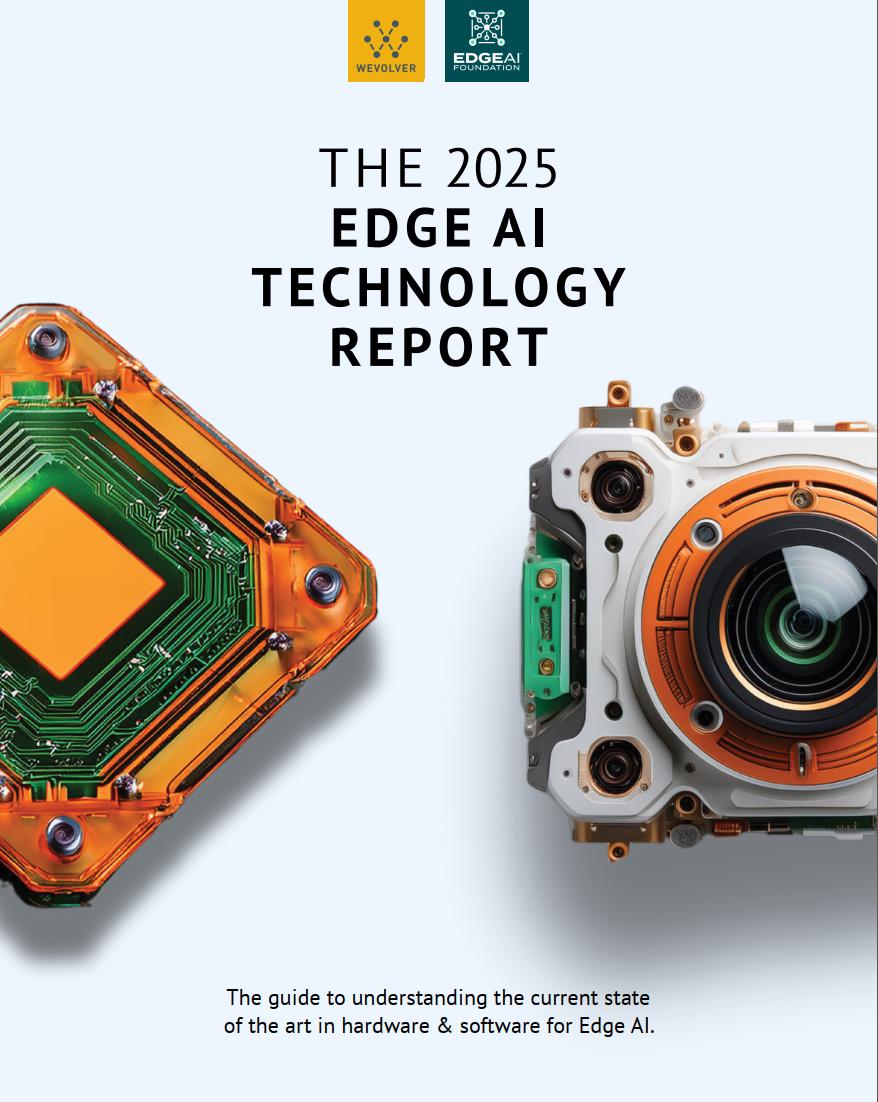
Core Insights - The Edge AI Foundation has rebranded from the TinyML Foundation and released the "2025 Edge AI Technology Report," highlighting the maturity and real-world applications of TinyML [1][3]. Group 1: Edge AI Technology Drivers - The report discusses advancements in hardware and software that support Edge AI deployment, focusing on innovations in dedicated processors and ultra-low power devices [3]. - Edge AI is transforming operational models across various industries by enabling real-time analysis and decision-making capabilities [3]. Group 2: Industry Applications of Edge AI - In the automotive sector, Edge AI enhances safety and response times, with examples like Waymo and NIO utilizing real-time data processing for improved performance [7][8]. - Manufacturing benefits from Edge AI through predictive maintenance, quality control, and process optimization, with reported reductions in maintenance costs by 30% and downtime by 45% [9][12]. - In healthcare, localized AI accelerates diagnostics and improves patient outcomes by analyzing medical data directly on devices [14]. - Retail operations are optimized through real-time behavior analysis and AI-driven systems, reducing checkout times by 30% [16]. - Logistics is enhanced by integrating Edge AI with IoT sensors, allowing for immediate analysis of data and optimization of supply chain operations [18]. - Smart agriculture utilizes Edge AI for precision farming, reducing water usage by 25% and pesticide use by 30% [21]. Group 3: Edge AI Ecosystem and Collaboration - The Edge AI ecosystem relies on collaboration among hardware vendors, software developers, cloud providers, and industry stakeholders to avoid fragmentation [24]. - A three-layer architecture is recognized for Edge AI, distributing workloads across edge devices, edge servers, and cloud platforms [24][25]. - Cross-industry partnerships are increasing, with companies like Intel and Qualcomm collaborating to enhance Edge AI deployment [26][27]. Group 4: Emerging Trends in Edge AI - Five emerging trends are reshaping Edge AI, including federated learning, quantum neural networks, and neuromorphic computing [30]. - Federated learning is expected to enhance model adaptability and collaboration across industries, with a projected market value of nearly $300 million by 2030 [31]. - Quantum computing is set to redefine Edge AI capabilities, enabling faster decision-making and real-time processing [34][36]. - AI-driven AR/VR applications are evolving with Edge AI, allowing for real-time responses and improved energy efficiency [39]. - Neuromorphic computing is gaining traction for its energy efficiency and ability to handle complex tasks without cloud connectivity [41].

Arm发布最小的CPU
半导体行业观察· 2025-02-27 01:50
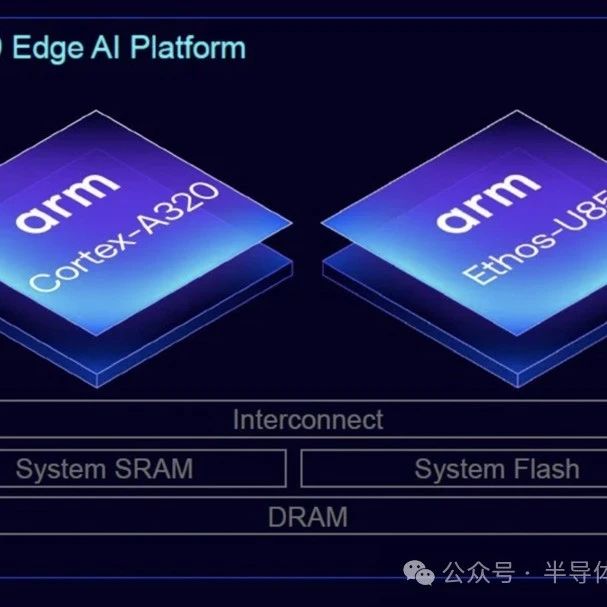
Core Viewpoint - Arm predicts that AI inference will soon be ubiquitous, enhancing its embedded platform with the first 64-bit Armv9 CPU core designed for edge workloads [1][2]. Group 1: Product Introduction - Arm has launched the Cortex-A320 CPU core, which is the first ultra-efficient Cortex-A processor based on the Armv9 architecture, designed for edge AI applications [7][14]. - The Cortex-A320 is described as the "smallest Armv9 implementation," featuring an AArch64 instruction set and a relatively simple single-issue, out-of-order, eight-stage core [2][3]. Group 2: Performance Enhancements - The new Cortex-A320 offers over eight times the machine learning performance compared to last year's platform and can handle large AI models with over one billion parameters [3][13]. - Compared to the Cortex-A520, the Cortex-A320 achieves more than 50% efficiency improvement through various microarchitecture updates [7][8]. Group 3: Memory and Efficiency - The Cortex-A320 is designed to address the increasing memory size requirements driven by the demand for efficient execution of larger networks, supporting more addressable memory than Cortex-M based platforms [4][10]. - It is reported to be the most energy-efficient processor in the Armv9 series, using only half the power of the Cortex-A520 in some reference designs [4][11]. Group 4: Software and Ecosystem Support - Arm provides support for new edge hardware through its Arm Kleidi library, which includes computing kernels for AI frameworks and computer vision applications [4][6]. - The Cortex-A320 supports real-time operating systems like FreeRTOS and Zephyr, as well as Linux, enhancing its flexibility for various applications [5][12]. Group 5: Security Features - The Cortex-A320 incorporates advanced security features from the Armv9 architecture, including memory tagging extensions for enhanced memory safety and pointer authentication to mitigate programming attacks [11][14]. - It also supports secure EL2 for improved software isolation in edge devices, contributing to the overall security of IoT and embedded systems [11][14]. Group 6: Market Applications - The Cortex-A320 is suitable for a wide range of applications, including IoT devices, smart wearables, and server infrastructure management controllers [5][11]. - Its design allows for scalability from single-core to quad-core configurations, making it adaptable for various performance needs [9][10].
商汤-W(00020) - 2024 Q2 - 业绩电话会
2024-08-27 08:00
Financial Data and Key Metrics Changes - Group revenue for the first half of 2024 reached RMB 1,740 million, representing a 21.4% increase year-on-year [6] - Generative AI revenue surged to RMB 1,050 million, accounting for 60% of total group revenue, up from 21% last year [12] - EBITDA loss reduced by 26.5% and overall loss decreased by 21.2% in the first half of 2024 [8][42] - Gross profit margin remained at 44%, consistent with the previous year [42] Business Line Data and Key Metrics Changes - Generative AI revenue increased by 256% year-on-year, becoming the primary driver of revenue growth [39] - Sensors revenue doubled to RMB 1,168 million, accounting for 10% of group revenue [12] - Traditional AI revenue was RMB 520 million, contributing 30% of group revenue, indicating a decline [40] Market Data and Key Metrics Changes - Overseas market revenue grew by 40% year-on-year, now accounting for 18% of total revenue [13][41] - The Chinese intelligent computing services market is projected to grow at a CAGR of over 50% for the next five years, reaching nearly RMB 200 billion by 2028 [21] Company Strategy and Development Direction - The company is focused on generative AI, leveraging deep synergies between large models and infrastructure to enhance model capabilities and reduce costs [7][39] - The strategic pivot towards generative AI has been more successful than anticipated, with significant growth in various sectors including intelligent hardware, electric vehicles, and finance [10][12] - The company aims to expand its operational computing power to 25,000 petabytes by the end of the year [19] Management Comments on Operating Environment and Future Outlook - Management expressed optimism about the generative AI market, highlighting its rapid growth and the need for companies to invest in large models [9][76] - The competitive landscape is described as fierce, with significant investments required to maintain competitiveness [8][39] - Management emphasized the importance of balancing long-term growth with short-term investments [8] Other Important Information - The company has deployed over 50,000 GPUs, with total computing power exceeding 20,000 petabytes, positioning it as a key player in the AI infrastructure market [18] - The SESNOVA large model series has shown significant improvements, with version 5.5 released in July 2024, enhancing capabilities and real-time interaction [24][25] Q&A Session Summary Question: What are the potential applications for edge AI in collaboration with smartphone manufacturers? - Management is optimistic about edge AI prospects, emphasizing the growth of the user base and the potential for new application models beyond smartphones, including IoT devices [52][54] Question: How is the company planning to scale computing power resources? - The company is focusing on improving operational efficiency while expanding computing power, adopting a strategic approach to maintain competitiveness [58][59] Question: What are the core capabilities of the next generation large model? - Management discussed the importance of reasoning and high-order data in enhancing model capabilities, emphasizing the need for better data and model architecture [63][66] Question: Which products or services predominantly contribute to the increase in generative AI revenue? - The company is focusing on the commercialization of its technological expertise in AI infrastructure and large models, which has led to significant growth in generative AI revenue [72][76] Question: What is the current progress in commercializing end-to-end algorithms in the autonomous driving sector? - The company is dedicated to a pure visual technology path for autonomous driving, leveraging its computational resources to support automakers in developing advanced driving technologies [81][84]