
边缘AI

Search documents
汇顶科技20260327
2026-03-30 05:15
Company and Industry Summary Company: 汇顶科技 (Goodix Technology) Key Industry Insights - **Market Penetration of Ultrasonic Fingerprint Technology**: The penetration rate of ultrasonic fingerprint technology in the Android market is expected to reach approximately 10% by 2025, with a potential doubling to 20% within 2-3 years. By 2026, this product is conservatively estimated to account for over 40% of the company's fingerprint revenue [2][4][6]. - **Gross Margin Improvement**: The company anticipates a gradual increase in gross margin, with a year-on-year improvement of 1.3% in 2024 and 0.4% in 2025, driven by product iteration and scale to offset cost pressures [2][4]. - **eSIM Business Development**: The company has achieved dual top-tier security certifications (GSMA and CC), becoming the first in China to do so. The "NFC + eSE + eSIM" three-in-one architecture aims to enhance unit value and expand global market reach [2][6][7]. Core Business Strategies - **Diversification of Product Lines**: The company is extending its strategy from solely mobile phones to include PCs, automotive, and AI hardware, leveraging edge AI and security chip technology to address privacy protection needs [2][3][11]. - **Response to Market Conditions**: The company is closely monitoring the cautious demand outlook for downstream terminals (mobile phones, PCs, automotive) and is prepared to adapt its strategies accordingly. It aims to maintain competitiveness through technological innovation and product iteration [3][4][9]. Product Development and Market Position - **Ultrasonic Fingerprint Product Performance**: In 2025, the revenue from fingerprint products is projected to be around 2 billion RMB, with ultrasonic fingerprint sales surpassing optical and capacitive fingerprint sales. The competitive advantages of ultrasonic fingerprint technology include superior performance in challenging conditions and a thin design that enhances user experience [4][5][9]. - **OLED TDDI Chip Development**: The first generation of OLED TDDI chips has been taped out, with successful validation expected in 2026. The company has made significant strategic investments in this area [2][8]. International Market Expansion - **Milestone in Overseas Market**: The company has successfully entered the supply chain for Samsung's foldable flagship devices, indicating significant progress in expanding its overseas customer base. The collaboration is expected to enhance the company's brand recognition and technical capabilities internationally [2][8][9]. - **Growth Opportunities in North America**: The company is actively pursuing opportunities in the North American market, particularly in AI-related devices, and is expanding its engagement with previously unreachable clients [8][9]. Future Growth Opportunities - **Focus on AI and Privacy Protection**: As AI technology proliferates, the company sees significant growth potential in providing security and biometric solutions that address increasing consumer concerns about privacy [11][12]. - **Long-term Strategic Vision**: The company aims to leverage its technological innovations to provide value to customers while maintaining a user-centric approach to enhance service and collaboration capabilities [11][12]. Conclusion 汇顶科技 is strategically positioned to capitalize on emerging trends in the technology sector, particularly in biometric security and AI applications. The company's focus on product innovation, international expansion, and addressing privacy concerns will be critical to its growth trajectory in the coming years.

爱芯元智2025年营收5.6亿元、新兴业务发展迅猛:智能汽车业务收入增618%
IPO早知道· 2026-03-27 12:23
Core Viewpoint - Aixin Yuan Zhi (0600.HK) has reported significant growth in its emerging business segments, particularly in smart automotive and edge AI inference, indicating a strong strategic transformation and future growth potential [2][4][5]. Financial Performance - For the year ending December 31, 2025, Aixin Yuan Zhi achieved total revenue of 562 million RMB, representing an 18.8% year-on-year increase. The gross profit reached 121 million RMB, with a stable gross margin of 21.6% [4]. - The emerging business segments have rapidly increased their share of overall revenue, with smart automotive business revenue reaching 48.17 million RMB, a substantial growth of 618.2% year-on-year, and edge AI inference revenue at 43.6 million RMB, up 134.6% year-on-year [4][5]. Smart Automotive Business - Aixin Yuan Zhi's smart automotive SoC shipments exceeded 630,000 units in 2025, marking a significant milestone. The M55H chip has entered mass production with several OEMs, while the M57 SoC has been selected by multiple international Tier 1 suppliers for global market deployment [6]. - The M97 chip, designed for high-level assisted driving, is set to meet advanced driving requirements and is expected to be in production by February 2026 [6]. - The company has established over 25 new project partnerships in 2025, including collaborations with more than 15 OEM brands, enhancing its market presence [6]. Edge AI Inference Business - The edge AI inference segment has shown remarkable growth, with revenue increasing by 134.6% year-on-year to 43.6 million RMB. This growth is attributed to the rising demand for local real-time inference and low-latency solutions [7]. - Aixin Yuan Zhi's AX8850N chip has successfully adapted to major AI models, enabling local processing capabilities for AI agents, which has opened new market opportunities in industrial cameras, drones, and mobile robots [7]. Terminal Computing Segment - The terminal computing segment has solidified Aixin Yuan Zhi's leading position in the global visual terminal chip market, with significant sales growth in its "Black Light" series SoC chips [10]. - The newly launched AX615 series integrates advanced AI-ISP and video encoding technologies, supporting the growth of key customer projects and laying a foundation for continued expansion in 2026 [10]. Research and Development - In 2025, Aixin Yuan Zhi invested 596 million RMB in R&D, focusing on perception and computation technologies, which has significantly enhanced its R&D efficiency and supported the development of multiple high-end SoCs [11]. - The company has strengthened its technological moat with 81 new patent applications and 69 new granted patents in 2025, bringing the total to 643 applications and 317 granted patents [11]. Future Outlook - Looking ahead to 2026, Aixin Yuan Zhi plans to further enhance its R&D investments, focusing on computational power, energy efficiency, and software usability to meet the demands of next-generation AI applications [12]. - The company aims to leverage the integration of artificial intelligence with the real economy to promote the widespread adoption of intelligent computing solutions, driving sustainable value creation [12].

四大巨头,重金投向这家DRAM厂
半导体行业观察· 2026-03-26 00:36
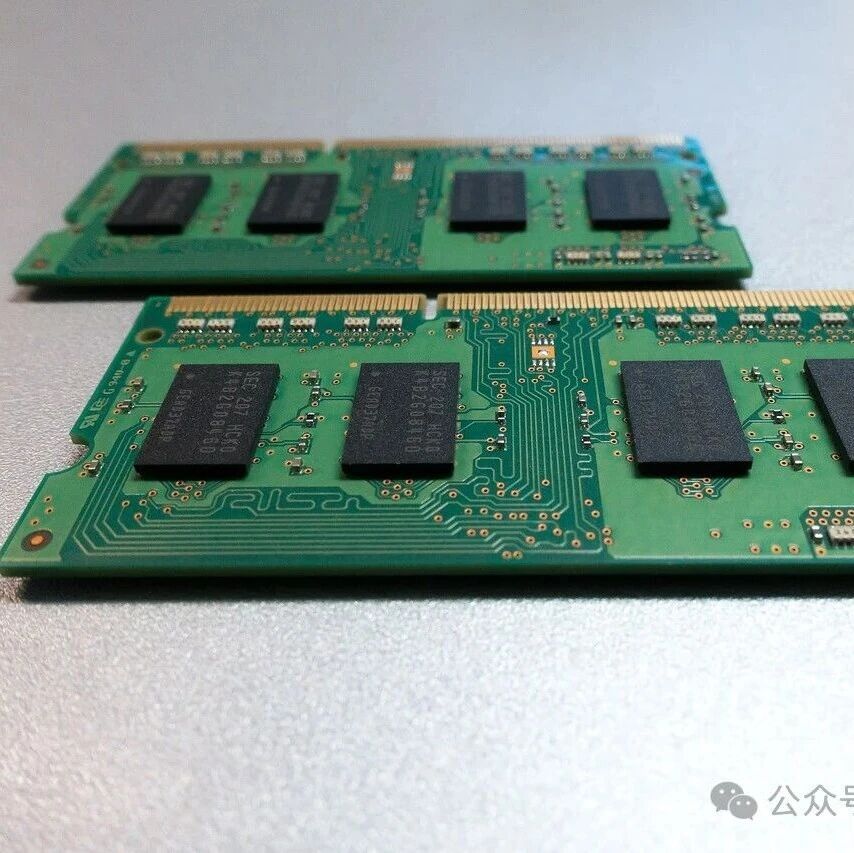
Core Viewpoint - Nanya Technology announced a private placement of 351.578 million shares, raising a total of NT$78.718 billion, with participation from major players in the DRAM and NAND flash memory sectors, indicating strong confidence in the long-term prospects of the DRAM market [1][2]. Group 1: Private Placement Details - The pricing for the private placement was set at NT$223.9 per share, reflecting a discount of only 1.15% compared to the closing price of NT$226.5, showcasing the optimism of the subscribing companies regarding the DRAM market [2]. - The specific subscription amounts from the four companies are as follows: Kioxia 70 million shares, SanDisk 138.685 million shares, Solidigm 71.393 million shares, and Cisco 71.5 million shares, corresponding to ownership stakes of 2%, 4%, 2%, and 2% respectively [2]. Group 2: Market Outlook and Strategic Initiatives - Despite some market discrepancies regarding DDR4 memory pricing, Nanya expects memory prices to continue to rise steadily throughout the year [2]. - The company is advancing new technologies such as Wafer on Wafer to meet the growing computational demands of edge AI applications, anticipating that the demand for memory in various terminal devices will continue to increase as AI applications extend from cloud to edge [2].
恩智浦押注边缘AI,联手英伟达重构机器人底座
半导体芯闻· 2026-03-18 10:15
Core Viewpoint - The article discusses the evolution of edge AI, emphasizing its transition from simple local inference to autonomous systems capable of perception, judgment, collaboration, and action, with NXP Semiconductors positioning itself as a key player in this space [2][5][25] Group 1: Edge AI Value and Drivers - Edge AI is being revalued due to four main drivers: bandwidth pressure, real-time demands, energy efficiency optimization, and trust and security concerns [5][6][14] - The need to process data locally reduces reliance on cloud bandwidth and enhances system efficiency, especially in scenarios requiring immediate responses [5][6] - Local data processing minimizes exposure of sensitive information, aligning with stricter security and compliance requirements [6][14] Group 2: NXP's Strategic Positioning - NXP aims to transition from a component supplier to a provider of comprehensive edge AI systems, offering a robust hardware foundation, reliable software, and efficient AI toolkits [6][11][23] - The company has integrated Kinara's high-performance architecture to enhance its processing capabilities and provide flexible performance increments for demanding applications [10][11] - NXP's eIQ software framework connects various hardware levels, facilitating customer deployment of AI use cases [11][13] Group 3: Autonomous Systems and Use Cases - NXP's edge AI systems are designed to operate autonomously, coordinating multiple subsystems without needing cloud access, as illustrated by factory scenarios involving leak detection and emergency response [13][14] - The company is focusing on five application areas: healthcare, power, factories, buildings, and robotics, showcasing the versatility and necessity of edge AI across different sectors [23][24] - In healthcare, NXP collaborates with GE Healthcare to monitor newborns' vital signs in real-time without cloud connectivity [23] Group 4: Robotics and Collaboration with NVIDIA - NXP identifies robotics, particularly humanoid robots, as a critical application for edge AI, requiring complex systems that integrate various capabilities [17][18] - The partnership with NVIDIA aims to enhance the development of physical AI systems, focusing on the integration of sensor data and real-time decision-making [18][21] - NXP's role is to provide the control, connectivity, and security layers within robotic systems, similar to its historical role in automotive electronics [23]


Peraso(PRSO) - 2025 Q4 - Earnings Call Transcript
2026-03-16 21:32
Financial Data and Key Metrics Changes - Total net revenue for Q4 2025 was $2.9 million, down from $3.2 million in the prior quarter and $3.7 million in Q4 2024 [22] - Full year 2025 net revenue was $12.2 million, compared to $14.6 million in the prior year [22] - GAAP gross margin for Q4 2025 was 52.2%, down from 56.2% in the prior quarter and 56.3% in the same quarter a year ago [24] - Full year 2025 GAAP gross margin was 58%, up from 51.7% in 2024 [24] - GAAP net loss for Q4 2025 was $1.2 million, or a loss of $0.13 per share, compared to a net loss of $1.2 million or a loss of $0.17 per share in the prior quarter [27] - Full year 2025 GAAP net loss was $4.8 million, or a loss of $0.67 per share, compared to a net loss of $10.7 million or a loss of $3.57 per share in 2024 [28] Business Line Data and Key Metrics Changes - Product revenue in Q4 2025 was $2.8 million, down from $3.1 million in the prior quarter and $3.7 million in Q4 2024 [22] - Millimeter wave product revenues were $2.4 million in Q4 2025, compared to $3 million in the prior quarter and $0.2 million in Q4 2024 [23] - Full year 2025 millimeter wave product sales increased to $9.1 million from $1.3 million in 2024 [23] Market Data and Key Metrics Changes - Fixed wireless access remains the largest market, driving millimeter wave revenue growth in 2025 [7] - The company has seen a broad recovery in customer demand and order trends throughout the year, particularly for the DUNE platform and Perspectus modules [7][8] - Tactical communications marked a significant step forward, with initial customer engagements transitioning to a new market vertical with high growth potential [10] Company Strategy and Development Direction - The company aims to broaden its customer base and pipeline of design wins across fixed wireless access and tactical communications while pursuing high-growth opportunities in adjacent markets such as edge AI [20] - The focus remains on disciplined expense management to support continued year-over-year growth in millimeter wave revenue [20] Management's Comments on Operating Environment and Future Outlook - Management expressed optimism about the future prospects of the overall business despite a temporary supplier logistics issue impacting Q1 revenue [21] - The company expects total net revenue for Q1 2026 to be approximately $1.2 million, reflecting lower visibility into future demand due to irregular order patterns [33] Other Important Information - The company has approximately $2.9 million in cash as of December 31, 2025, compared to $1.9 million as of September 30, 2025 [30] - The strategic review process for potential mergers or asset sales continues in coordination with financial advisors [31] Q&A Session Summary Question: When should revenues from the INTACT deal start coming in? - Management indicated that production revenue is expected to shift in the second half of 2026, with current revenue primarily from non-recurring engineering [37][38] Question: Can you quantify the number of customers in active conversations for adjacent market opportunities? - Management mentioned they are in discussions with three to five household name companies, with potential for production orders by the end of the year [41][42] Question: What is the expected impact of the large order delay on order patterns for the remainder of the year? - Management expects the delay to have a minor impact, with orders anticipated to be replenished in Q3 and Q4 [56][57] Question: Will there be an increase in investment for R&D due to new opportunities? - Management stated that customers are contributing significantly to engineering costs, and the company is not in a position to invest heavily without customer backing [59][60]

Lantronix 借助基于 MediaTek 的嵌入式计算扩展,推进平台规模化战略
Globenewswire· 2026-03-05 12:00
Core Insights - Lantronix Inc. is expanding its embedded computing platform through a new system-on-module (SOM) solution based on MediaTek's Genio series, enhancing its capabilities in edge AI and IoT markets [1][2][3] Strategic Expansion - The strategic expansion reinforces Lantronix's multi-silicon platform strategy, broadening its market coverage and accelerating growth in industrial IoT and edge AI sectors [1][3] - The integration of MediaTek's SOM modules allows Lantronix to meet high-capacity, energy-efficient edge AI deployment needs, significantly increasing its total addressable market [3][12] Competitive Positioning - The multi-silicon expansion strategy enhances Lantronix's competitiveness in various design cycles and global OEM projects, including industrial automation, robotics, smart cameras, and commercial IoT platforms [4][5][12] - The collaboration with MediaTek strengthens supply chain resilience and reduces dependency risks, allowing Lantronix to protect and optimize profit margins across performance tiers [5][12] Market Dynamics - Lantronix's scalable computing product portfolio positions the company to capitalize on long-term growth opportunities in industrial and commercial markets, with the global industrial IoT market projected to exceed $1 trillion by the end of 2030 [7][12] - The global drone market is expected to reach $57.8 billion by 2030, highlighting the ongoing demand for scalable and secure edge computing solutions [7] Investor Highlights - The new SOM platform will support NVIDIA TAO framework, simplifying AI model development and deployment across various edge environments, thus providing advanced multimedia capabilities and industrial-grade performance [6][12] - Lantronix will showcase its drone technology in collaboration with Teledyne FLIR at the Embedded World 2026 exhibition, emphasizing real-time edge intelligence in visual-driven workloads [9]


台媒:MCU将涨价
半导体芯闻· 2026-03-05 09:36
Core Viewpoint - The MCU market, which has faced two years of challenging conditions, is showing signs of recovery with recent price increases, raising questions about whether this is a temporary spike or a genuine turnaround for investors [1][3]. Group 1: MCU Market Overview - The MCU (Microcontroller Unit) is likened to an "all-around housekeeper," integrating computing, memory, and I/O functions into a single chip, and is essential in various applications, particularly in automotive systems [1][2]. - The global MCU market is highly concentrated, with the top six suppliers, including STMicroelectronics, Microchip, NXP, Renesas, Infineon, and Texas Instruments, holding over 80% market share, focusing on high-end, high-margin applications [2]. Group 2: Market Dynamics and Trends - The MCU market is projected to grow from $34.75 billion in 2025 to $57.25 billion by 2030, with a compound annual growth rate (CAGR) of 10.5%, driven by demand from electric vehicles, IoT, and edge AI [3]. - Recent price increases announced by Chinese semiconductor firms, ranging from 15% to 50%, signal a shift in the market dynamics, indicating that even low-cost competitors are feeling the pressure and may no longer sustain aggressive pricing strategies [3]. Group 3: Future Outlook - The potential for increased demand and the ability to negotiate price increases with clients could provide Taiwanese manufacturers with a competitive edge, marking a possible end to the two-year price-cutting nightmare [3]. - While the current price increases are driven by rising costs rather than demand, the industry must focus on expanding high-end or niche products to significantly transform operations and escape prolonged competitive pressures [3].

联发科豪掷约9000万美元入股Ayar Labs,锁定6G网络红利
Sou Hu Cai Jing· 2026-02-28 03:28
Core Insights - Media reports indicate that MediaTek is entering the silicon photonics technology sector by investing approximately $90 million in the startup Ayar Labs, acquiring about 2.4% of the company’s shares [1][2] Group 1: Investment Details - MediaTek, through its subsidiary Digimoc Holdings Limited, invested around $90 million (approximately 618 million RMB) in Ayar Labs, gaining 1.72 million shares of special stock [1] - This investment positions MediaTek alongside other major players like NVIDIA, Intel, and AMD, who have previously invested in Ayar Labs, indicating MediaTek's intent to secure a foothold in the next-generation chip manufacturing landscape [1] Group 2: Technology Overview - Silicon photonics technology integrates optical functions such as generation, modulation, and detection directly with traditional electronic circuits on a silicon substrate, utilizing waveguides to guide infrared light for constructing photonic circuits [1] - The technology promises higher bandwidth, lower latency, and significantly reduced energy consumption in data packet transmission due to the superior speed of light signals compared to electrical signals [1] Group 3: Impact on Industry - Ayar Labs focuses on developing optical I/O solutions aimed at replacing traditional copper-based electrical interconnects between computer chips, which could significantly impact AI data centers and MediaTek's core mobile application processor business [2] - The deployment of optical links can reduce I/O power consumption by up to 80%, unlocking higher data throughput for edge AI and the upcoming 6G cellular networks [2] - Silicon photonics technology can also be applied in co-packaged optics (CPO), integrating optical engines directly within SoC packages to shorten electrical routing and reduce latency and heat generation [2]
高通发布2026财年Q1财报,AI芯片业务加速布局
Jing Ji Guan Cha Wang· 2026-02-13 21:24
Core Viewpoint - Qualcomm reported its Q1 FY2026 earnings, meeting expectations but facing margin pressure, while accelerating its AI chip initiatives and completing several acquisitions to enhance edge AI capabilities [1] Financial Performance - Qualcomm's Q1 FY2026 revenue was $12.25 billion, a 5% year-over-year increase, aligning with market expectations, but gross margin was 54.6%, down 1.2 percentage points year-over-year, primarily due to storage shortages [2] - Mobile business revenue reached $7.8 billion, growing 3.3% year-over-year, but the growth rate has slowed; automotive and IoT segments grew by 14.6% and 9%, respectively [2] - The company provided Q2 FY2026 revenue guidance of $10.2 to $11 billion, below the market expectation of $11.2 billion, and Non-GAAP EPS guidance of $2.45 to $2.65, also below expectations, indicating potential ongoing pressure from storage shortages [2] Business Developments - Qualcomm is accelerating its AI strategy, planning to begin mass production of the AI200 chip in 2026, and has partnered with Saudi AI startup Humain to deploy 200 MW of computing power, which is expected to create potential revenue opportunities [3] - The company is focusing on the AI PC and data center markets, launching the Snapdragon X2 series PC platform to explore new growth avenues [3] Project Progress - In 2025, Qualcomm completed several acquisitions, including the integration of Alphawave and the acquisition of Arduino, aimed at enhancing its edge AI hardware and software stack, thereby improving competitiveness in smart automotive and IoT sectors [4] Fundamental Issues - The storage shortage issue has escalated from "price increase" to "out of stock," which may directly limit mobile business shipment volumes; the company anticipates a year-over-year decline of approximately 13% in mobile revenue for the next quarter, posing a key challenge for the upcoming quarters [5] Institutional Views - Morgan Stanley reinstated a "reduce" rating on Qualcomm on February 10, 2026, with a target price of $132, reflecting market concerns regarding short-term performance [6]

安霸股价受AI概念驱动反弹,机构看好边缘AI业务前景
Jing Ji Guan Cha Wang· 2026-02-13 21:18
Group 1: Core Insights - The main focus for Ambarella (AMBA.OQ) in the past week (February 7 to 13, 2026) has been a significant rebound in stock price, driven by a recovery in sentiment around edge AI concepts and optimistic expectations from institutions [1] Group 2: Stock Performance - Over the past week, the stock price exhibited a fluctuating upward trend, with a total increase of 4.04% over five trading days (February 9 to 13), and a trading range of 10.67%. The highest price reached was $68.30 on February 10, while the lowest was $61.51 on February 9. The total trading volume during this period was approximately $216 million, indicating active turnover [2] - Daily closing prices were as follows: February 9: $65.25 (up 2.53%), February 10: $66.26 (up 1.55%, with an intraday high of $68.30), February 11: $66.87 (up 0.92%), February 12: $65.92 (down 1.42%), and February 13: $66.21 (up 0.44%, with a volatility of 5.10%). During the same period, the Nasdaq index fell by 2.10%, and the semiconductor sector slightly declined by 0.33%, indicating Ambarella's outperformance relative to the broader market [2] Group 3: Institutional Perspectives - Institutions maintain an optimistic outlook on Ambarella's edge AI business prospects, with the latest ratings showing an average target price of $97.45, representing an upside potential of approximately 47.2% from the closing price on February 13. In the latest ratings from February 2026, 64% of institutions recommend buying or adding to positions, while 36% suggest holding, with no sell recommendations [3] - Analysts from firms like Morgan Stanley highlight strong demand in the IoT and automotive AI sectors, but caution about potential pressure on gross margins due to changes in the product mix [3]