Dividend yield

Search documents
How To Earn $500 A Month From Jabil Stock Ahead Of Q3 Earnings
Benzinga· 2025-06-16 12:30
Earnings Report - Jabil Inc. is set to release its third-quarter earnings results on June 17, with analysts expecting earnings of $2.30 per share, an increase from $1.89 per share in the same period last year [1] - The company projects quarterly revenue of $7.03 billion, compared to $6.76 billion a year earlier [1] Dividend Information - Jabil has signed a memorandum of understanding with AVL Software and Functions GmbH, which may attract investor interest in its dividends [2] - The current annual dividend yield is 0.18%, translating to a quarterly dividend of $0.08 per share, or $0.32 annually [2] - To generate $500 monthly from dividends, an investment of approximately $3,297,000 or around 18,750 shares is required [3] - For a more modest income of $100 per month, an investment of $659,400 or about 3,750 shares is needed [3] Dividend Yield Dynamics - Dividend yield can fluctuate based on changes in the stock price and dividend payments [4][5] - For example, if a stock's price increases, the dividend yield decreases, and vice versa [5] - Changes in dividend payments also affect yield; an increase in dividends raises the yield if the stock price remains constant [6] Stock Performance - Jabil's shares fell by 1.8%, closing at $175.84 on the previous Friday [6]



南京银行:CB Conversions Solidify Capital, Offer Dividend & Growth Potential-20250611
华泰金融· 2025-06-11 05:48
Investment Rating - The investment rating for Bank of Nanjing is maintained at BUY with a target price of RMB 13.29, indicating a potential upside of 17% from the closing price of RMB 11.35 as of 9 June 2025 [1][6]. Core Insights - The conditional redemption clause of the convertible bonds (CBs) has been triggered, which is expected to enhance the capital strength of Bank of Nanjing and support further business expansion [2]. - The unconverted balance of the CBs is approximately RMB 5.2 billion, accounting for about 4% of the company's total market capitalization, suggesting limited share-capital dilution while maintaining a solid dividend profile and growth potential [3]. - Bank of Nanjing has demonstrated steady earnings growth, with a year-on-year increase in revenue and net profit of 6.5% and 7.1% respectively in 1Q25, outperforming peers [4]. Financial Performance - Revenue is projected to grow from RMB 45,160 million in 2023 to RMB 61,209 million by 2027, with a compound annual growth rate (CAGR) of approximately 7.27% [12]. - Net profit attributed to the parent is expected to increase from RMB 18,502 million in 2023 to RMB 26,113 million in 2027, reflecting a steady growth trajectory [12]. - The estimated dividend yield for 2025 is 5.02%, which remains attractive even after accounting for potential dilution from the CB conversion [3][12]. Valuation Metrics - The forecasted earnings per share (EPS) for 2025 is RMB 1.86, with a price-to-earnings (PE) ratio of 6.10x, indicating a favorable valuation compared to peers [10][12]. - The book value per share (BVPS) is estimated at RMB 14.77 for 2025, with a price-to-book (PB) ratio of 0.77x, suggesting that the stock is undervalued relative to its intrinsic value [10][12]. - The core capital adequacy ratio is expected to improve by 0.57 percentage points to 9.46% following the full conversion of the CBs, enhancing the bank's capital position [2].

Why Enbridge's Low-Risk Customer Base is a Win for Shareholders
ZACKS· 2025-06-10 15:00
Core Insights - Enbridge Inc. (ENB) reports that over 95% of its customers possess an investment-grade credit profile, indicating strong creditworthiness and suggesting stable income for the company [1][7] - The predictable cash flow from long-term contracts with high-credit clients reduces ENB's vulnerability to oil and natural gas price volatility [2][7] - ENB has a history of rewarding shareholders with consecutive dividend increases for three decades, currently offering a dividend yield of nearly 6%, which is higher than the industry average of 5.2% [3][7] Business Model and Stability - ENB's stable business model is supported by long-term contracts and a customer base with high credit ratings, ensuring lower exposure to market fluctuations [2][5] - Other midstream energy companies like Kinder Morgan (KMI) and Enterprise Products Partners LP (EPD) also exhibit stable business models and higher dividend yields compared to the oil-energy sector, with EPD offering a yield of 6.8% [4][5] Financial Performance - ENB's shares have appreciated by 37.6% over the past year, outperforming the industry composite stocks, which saw a 34.9% increase [6] - The company's current valuation shows an enterprise value to EBITDA (EV/EBITDA) ratio of 15.20X, above the industry average of 13.93X [9]


Should You Buy Pfizer Stock Right Now?
The Motley Fool· 2025-06-07 10:30
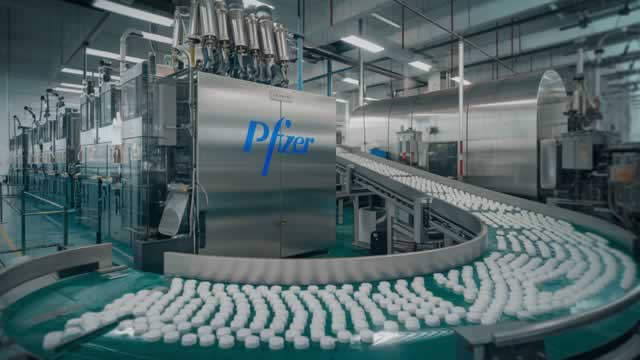
Core Viewpoint - Pfizer is a pharmaceutical company with solid growth potential and a high dividend yield, making it a stock worth considering for investment [1][6]. Company Overview - Pfizer has a market value of approximately $133 billion and has been in operation since 1849, offering multiple treatments and a robust pipeline of products [3]. - The company currently has 108 candidates in its pipeline, with 47 in phase 1, 28 in phase 2, and 30 in phase 3, focusing significantly on oncology and various vaccines [4]. Current Products - Major medications include the COVID-19 vaccine, Paxlovid, Prevnar, Ibrance, and Xtandi [5]. Investment Considerations Reasons to Invest - The stock offers a dividend yield of 7.3%, generating around $730 for every $10,000 invested, with a commitment to maintain and grow this dividend over time [6][9]. - Pfizer's valuation is low, with a forward-looking P/E ratio of 8, below its five-year average of 10, and a price-to-sales ratio of 2.1, lower than its five-year average of 3.1 [11]. - The company has strong growth prospects, particularly in oncology, bolstered by the acquisition of Seagen for $43 billion [11]. Reasons Against Investment - The payout ratio is 122%, indicating that the company is paying out more than its earnings in dividends, which may not be sustainable [11]. - Pfizer has experienced average annual losses of 18.6% over the past three years, with revenue declining from $100.3 billion in 2022 to $63.6 billion in 2024 [11]. - Several key products are losing patent protection, and concerns have arisen regarding the safety of its weight-loss drug candidate [11]. - Ongoing tariff wars and government efforts to lower drug costs may pose additional challenges for the company [11].

Best Stock to Buy Right Now: Realty Income vs. Agree Realty
The Motley Fool· 2025-05-31 07:45
Group 1: Company Overview - The S&P 500 offers a yield of 1.3%, while the average REIT yield is around 4.1%, with Agree Realty at 4.1% and Realty Income at 5.8% [1][8] - Both Agree Realty and Realty Income focus on net lease properties, where a single tenant is responsible for most operating costs, reducing risk for landlords [3][4] Group 2: Portfolio Comparison - Realty Income is the largest net lease REIT with over 15,600 properties, while Agree Realty has approximately 2,400 properties, indicating a significant size difference [4] - Agree Realty focuses on retail assets in the U.S., whereas Realty Income's portfolio is about 75% retail, with the remainder in industrial and other diversified assets, including vineyards and data centers [5][6] Group 3: Business Fundamentals - Agree Realty is smaller and focused on core growth, while Realty Income is larger and more diversified, leading to different valuations [7] - Realty Income is considered a bellwether in the net lease space due to its size, making it a choice for maximizing income [8] Group 4: Dividend Analysis - Agree Realty has a dividend yield of 4.1%, while Realty Income offers a higher yield of 5.8%, indicating a premium price for Agree Realty [8] - Agree Realty projects adjusted FFO growth of 3.6% for 2025, compared to Realty Income's 2.1%, suggesting faster growth potential for Agree Realty [9] - Realty Income's dividend has increased by an average of 4.3% annually over the past 30 years, while Agree Realty has increased its dividend by around 5.5% annually over the past decade, indicating stronger growth potential for Agree [10][11] Group 5: Investment Considerations - Both Realty Income and Agree Realty are financially strong net lease REITs, but they serve different investor needs [12] - Realty Income is preferable for those seeking yield and diversification, while Agree Realty is better for investors looking for faster-growing businesses and dividends [12]


Kemper (KMPR) Could Be a Great Choice
ZACKS· 2025-05-26 16:51
Company Overview - Kemper is an insurance holding company based in Chicago, operating in the Finance sector, with a year-to-date share price change of -6.79% [3] - The company currently pays a dividend of $0.32 per share, resulting in a dividend yield of 2.07%, which is higher than the Insurance - Multi line industry's yield of 1.72% and the S&P 500's yield of 1.6% [3] Dividend Analysis - Kemper's annualized dividend of $1.28 has increased by 3.2% from the previous year, with two dividend increases over the last five years, averaging an annual increase of 0.69% [4] - The company's current payout ratio is 20%, indicating that it pays out 20% of its trailing 12-month earnings per share as dividends [4] Earnings Growth Expectations - For the fiscal year, Kemper anticipates solid earnings growth, with the Zacks Consensus Estimate for 2025 projected at $6.34 per share, reflecting a year-over-year growth rate of 7.64% [5] Investment Considerations - Dividends are favored by investors as they enhance stock investing profits, reduce overall portfolio risk, and offer tax advantages [6] - While high-growth firms and tech start-ups typically do not provide dividends, established companies like Kemper are viewed as attractive dividend options [7] - Kemper is recognized as a compelling investment opportunity, holding a Zacks Rank of 2 (Buy) [7]


AGNC Vs STWD: Which mREIT Has Stronger Income Potential?
ZACKS· 2025-05-26 16:16
Core Viewpoint - AGNC Investment Corp. and Starwood Property Trust, Inc. are two prominent players in the mortgage real estate investment trusts (mREITs) sector, both providing attractive long-term returns and substantial dividend yields. The analysis aims to determine which company presents a better investment opportunity at this time. AGNC Investment Corp. - AGNC Investment employs an active portfolio-management strategy, focusing on re-evaluation and adjustments to its portfolio while utilizing hedges to navigate interest rate and mortgage market fluctuations [2][22] - As of March 31, 2025, AGNC maintained a significant interest rate hedge covering 91% of its outstanding balance, which may enhance cash flow stability and support long-term growth [3][22] - The company holds $77.9 billion in Agency mortgage-backed securities (MBS), which are considered safer investments due to government guarantees, contributing to favorable long-term investment prospects [4][5] - AGNC's liquidity, including unencumbered cash and Agency MBS, was $6 billion as of March 31, 2025, with a modest increase in leverage to 7.5X [6] - The company has a dividend yield of 16.29%, significantly higher than the industry average of 11.29%, making it attractive for income-seeking investors [17][23] - AGNC's earnings estimates for 2025 and 2026 have remained stable, indicating consistent analyst expectations [20] Starwood Property Trust, Inc. - Starwood Property specializes in commercial mortgage-backed securities (CMBS) and related commercial real estate assets, with a diversified portfolio valued at $1.02 billion as of March 31, 2025 [7] - The company has engaged in strategic acquisitions and divestitures, including the sale of 16 retail properties for $387.1 million, which reflects its focus on portfolio optimization [8][9] - As of March 31, 2025, Starwood's liquidity position is weaker, with cash and cash equivalents of $692 million and long-term debt of $18.4 billion, raising concerns about its financial stability in a challenging macroeconomic environment [10] - Starwood's earnings estimates for 2025 and 2026 have been revised downward, indicating a more cautious outlook from analysts [21] Comparative Analysis - Over the past year, STWD shares have increased by 13.6%, while AGNC shares rose by 6.3%, outperforming the industry growth of 1.9% [11] - In terms of valuation, AGNC is trading at a forward P/E of 5.39X, lower than the industry average of 7.78X, making it a more appealing option for value investors [14][17] - AGNC's management has implemented a proactive hedging strategy, significantly reducing interest rate and prepayment risks, while STWD's earnings are more sensitive to commercial real estate market dynamics [22] - Despite STWD's stronger recent price performance, AGNC offers more consistent cash flows and better liquidity, supporting its long-term growth potential [24]


Kinross Gold Rallies 39% in 3 Months: Should You Buy the Stock Now?
ZACKS· 2025-05-26 12:46
Core Viewpoint - Kinross Gold Corporation (KGC) has experienced a significant share price increase of 38.5% over the past three months, outperforming the Zacks Mining – Gold industry and the S&P 500, driven by better-than-expected earnings and higher gold prices [1]. Price Performance - KGC's shares have outperformed its peers, with Barrick Mining Corporation, Newmont Corporation, and Agnico Eagle Mines Limited gaining 7.2%, 27.4%, and 23.7% respectively during the same period [1]. Technical Indicators - KGC has been trading above the 200-day simple moving average (SMA) since March 6, 2024, indicating a bullish trend, with the stock also above its 50-day SMA [4]. Development Projects - KGC has a strong production profile with key development projects like Great Bear in Ontario and Round Mountain Phase X in Nevada, which are expected to enhance production and cash flow [9]. - The commissioning of the Manh Choh project has commenced production, contributing to increased cash flow at the Fort Knox operation [9]. Major Assets - Tasiast and Paracatu are KGC's largest assets, with Tasiast being the lowest-cost asset and achieving record production and cash flow in 2024 [10]. - Paracatu has shown strong performance in the first quarter, with production rising due to improved grades and mill recoveries [10]. Financial Health - KGC ended the first quarter with a liquidity position of approximately $2.3 billion and generated record free cash flows of around $1.3 billion in 2024, more than doubling year-over-year to $370.8 million in the first quarter [11]. - The company repaid $800 million of debt in 2024, reducing net debt to around $540 million, with a long-term debt-to-capitalization ratio of 14.4% [12]. Gold Price Outlook - Higher gold prices, currently above $3,300 per ounce, are expected to enhance KGC's profitability, despite a decline from April 2025 highs [13]. - Gold prices have increased by approximately 28% this year, influenced by global trade tensions and central banks accumulating gold reserves [14]. Dividend Information - KGC offers a dividend yield of 0.8% with a payout ratio of 14%, indicating a sustainable dividend backed by strong cash flows [15]. Analyst Sentiment - Earnings estimates for KGC have been rising, with the Zacks Consensus Estimate for 2025 earnings at $1.09, reflecting a year-over-year growth of 60.3% [16]. Valuation - KGC is trading at a forward price/earnings ratio of 12.93X, which is a 6.5% discount compared to the industry average of 13.83X [17]. Investment Recommendation - KGC presents a compelling investment case due to its strong development pipeline, solid financial health, and favorable gold pricing environment, making it a recommended stock for accumulation [20].


How To Earn $500 A Month From Dick's Sporting Goods Stock Ahead Of Q1 Earnings
Benzinga· 2025-05-23 12:49
Group 1 - Dick's Sporting Goods, Inc. is set to release its first-quarter earnings results on May 28, with analysts predicting earnings of $4.33 per share and revenue of $3.6 billion [1] - The company has recently announced a definitive deal to acquire Foot Locker, Inc., valuing Foot Locker's equity at approximately $2.4 billion and its enterprise at about $2.5 billion [1] - The current annual dividend yield for Dick's Sporting Goods is 2.81%, translating to a quarterly dividend of $1.21 per share, or $4.85 annually [2] Group 2 - To generate a monthly income of $500 from dividends, an investment of around $213,259 or approximately 1,237 shares is required, while a more modest goal of $100 per month would need about $42,583 or 247 shares [2] - The dividend yield is calculated by dividing the annual dividend payment by the stock's current price, which can fluctuate based on changes in stock price [3] - Changes in dividend payments also affect the yield; an increase in dividends raises the yield if the stock price remains constant, while a decrease lowers it [4] Group 3 - Shares of Dick's Sporting Goods experienced a decline of 2%, closing at $172.40 [4]


Why Hershey's Bitter Stock Performance Could Become Much Sweeter
The Motley Fool· 2025-05-18 07:25
Core Viewpoint - Hershey faces significant challenges due to rising cocoa prices and supply shortages, leading to a stock decline of over 40% in the past two years, but there are reasons for optimism regarding its future performance [1][4][12] Group 1: Challenges Faced by Hershey - Cocoa prices have surged from below $2,000 per metric ton in fall 2022 to around $10,000 per metric ton currently, significantly impacting margins [4][5] - The majority of cocoa is produced in countries like Ivory Coast, where crop yields have been affected by disease and adverse weather, contributing to the price increase [5] - Hershey's candy sales in North America accounted for 82% of its revenue in Q1 2025, but net sales fell 14% to $2.8 billion during the same period [5][6] Group 2: Reasons for Optimism - Hershey projects a net sales gain of at least 2% for 2025, indicating customer loyalty despite high cocoa prices [8] - The top three cocoa producers reported a 20% increase in supply this season, providing some relief to Hershey [8] - Hershey has maintained a dividend of $5.48 per share, with a 3.4% yield, significantly higher than the S&P 500 average of 1.3%, and has increased its dividend for 15 consecutive years [9][10] Group 3: Financial Performance and Valuation - Despite challenges, Hershey generated over $1.9 billion in free cash flow in 2024, allowing it to sustain its dividend payments [10] - The stock trades at 20 times earnings, below its five-year average P/E ratio of 25, suggesting potential for recovery as cocoa shortages ease [11]