Inflation

Search documents
One bullish outlook for stocks in 2026, cybersecurity risks and AI
Yahoo Finance· 2025-12-16 22:17
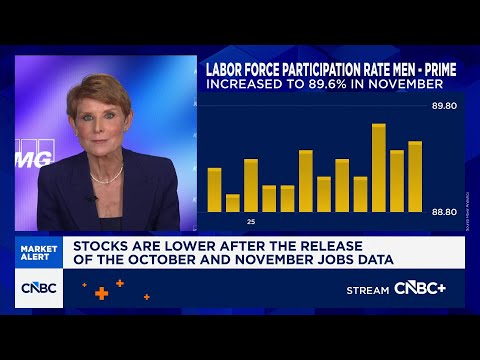
[Music] Investors are sorting through a mixed picture of updates on the labor market, but our next guest still optimistic on the road ahead for the economy and markets. Bank of America senior investment strategist Lauren Sanfalippo joins me here now to discuss. Lauren, it is good to see you.Let's start in the macro. Lauren, uh, you're all calling for real GDP growth to accelerate nominal over 5%. What gives you the confidence to make that call.>> Well, I think we'll find out more on Thursday on the inflatio ...


Stocks Settle Mixed on Soft US Economic News
Yahoo Finance· 2025-12-16 21:33
Economic Indicators - The US Dec S&P manufacturing PMI fell by -0.4 to a 5-month low of 51.8, weaker than expectations of 52.1 [1] - US Oct retail sales were unchanged month-over-month, weaker than expectations of +0.1%, while retail sales excluding autos rose by +0.4%, stronger than expectations of +0.2% [2] - US Nov average hourly earnings rose by +0.1% month-over-month and +3.5% year-over-year, which is the smallest year-on-year increase in 4.5 years, and weaker than expectations of +0.3% month-over-month and +3.6% year-over-year [2] Employment Data - US Nov nonfarm payrolls rose by +64,000, stronger than expectations of +50,000, while Oct nonfarm payrolls fell by -105,000, weaker than expectations of -25,000 [3] - The Nov unemployment rate rose by +0.1 to a 4-year high of 4.6% [3] Stock Market Performance - Stock indexes settled mixed, with the S&P 500 falling to a 3-week low, while the Nasdaq 100 rose by +0.26% due to strength in technology stocks [5][6] - Energy producers faced significant sell-offs, with WTI crude oil falling more than -2% to a 4.75-year low, impacting stocks like Phillips 66 and Baker Hughes [5][14] Company-Specific Movements - Booz Allen Hamilton Holding Corp closed down more than -7% after announcing the resignation of its CFO [16] - Humana closed down more than -6% after forecasting full-year adjusted EPS below consensus [16] - Pfizer Inc closed down more than -3% after forecasting 2026 revenue below consensus [16] - Comcast closed up more than +5% after speculation of activist investor involvement [17] - Cognex closed up more than +5% after a double-upgrade from Goldman Sachs [18]
If Fed eases further, S&P 500 could pass 8,000 in 2026, says JPMorgan's Lakos
CNBC Television· 2025-12-16 21:12
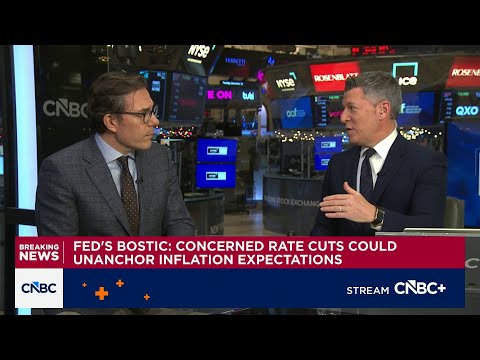
Market Outlook - JP Morgan suggests S&P 500 could surpass 8,000 next year if the Fed eases further due to improving inflation dynamics [2] - The base case is S&P 500 reaching 7,500, driven by one more Fed easing and a prolonged pause [3] - A stronger-than-expected economy, even with Fed rate cuts, should prime the market to perform well [3][4] Sector Analysis - The AI trade is undergoing a digestion period, but broadening out is expected tactically in Q1 [6] - Low-end consumer segments, such as cruise lines, restaurants, and the Las Vegas strip, could see a tactical lift [8][9] - For the medium-term (2026), AI remains central, benefiting big tech hyperscalers, utilities, big banks, and certain parts of healthcare like pharma [10] Risks - The biggest risk is the Fed closing the door to future easing earlier than expected, which could negatively impact markets and the broadening out trade [10][11] - The energy sector is becoming increasingly decoupled from weakening oil prices and is expected to be under downward pressure [11] - Pockets of staples, parts of industrials, and financials outside of banks may not fare well [11]
X @Bloomberg
Bloomberg· 2025-12-16 21:08
Chile’s central bank cut its key interest rate by a quarter point for the second time this year, pushing it back into the neutral range, as inflation edges back toward the target https://t.co/cqns7MLon6 ...
Pass through of tariff costs to consumer has been slow, says Mastercard's Meyer
CNBC Television· 2025-12-16 20:30
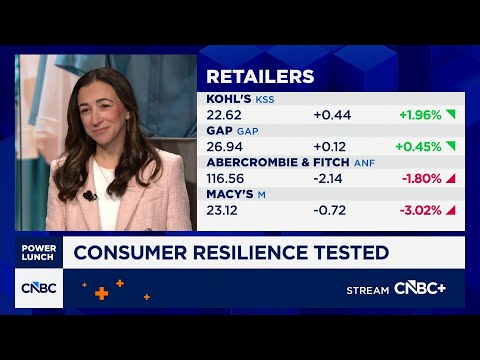
Consumer Spending Trends - Consumer spending remains engaged, with retail sales excluding autos up 41% driven by double-digit growth in e-commerce during Black Friday [2] - Overall spending is running at approximately 4% [3] - Inflation in the holiday basket is around 2%, slightly above last year's deflationary levels [6] Economic Factors and Uncertainty - The unemployment rate climbed to 46% in November, the highest in over four years [1] - Companies stockpiled inventory in advance and shifted supply chains to mitigate price adjustments [8] - Uncertainty around trade changes and the global realignment of trade impacts workforce allocation [11] - Uncertainty surrounding AI investments also influences workforce decisions [12] Labor Market Dynamics - Churn in the workforce is lower, indicating a slowdown in the hiring rate [10] - Companies are cautious in allocating dollars towards the workforce due to uncertainty [11] - There is no increase in firing, which is a positive sign [12]
Where is the Dollar Index Heading in 2026?
Yahoo Finance· 2025-12-16 20:00
Core Viewpoint - The dollar index is currently in a neutral trend, consolidating near the lower end of its recent trading range, with a bearish outlook expected to continue into 2026 [1][2]. Group 1: Dollar Index Trends - The dollar index has been trading around the 100 pivot point since mid-April 2025, primarily remaining below this level since late May [4]. - As of mid-December 2025, the dollar index was trading just below the 98.30 level, indicating it is within the established trading range [4]. - The index is expected to continue its sideways pattern into late 2025 [3]. Group 2: Federal Reserve Interest Rate Outlook - The U.S. Federal Reserve reduced the short-term Fed Funds Rate by 25 basis points for the third time in 2025, bringing it to a midpoint of 3.625% going into 2026 [5]. - Factors likely to lead to further rate cuts in 2026 include stable inflation around 3% and increasing unemployment data, which may favor lower interest rates [7]. - A potential replacement for current Chairman Jerome Powell, who is expected to favor a dovish monetary policy, could further lower the Fed Funds Rate in 2026 [7]. Group 3: Interest Rate Differentials - Interest rate differentials play a significant role in influencing the dollar index against other world reserve currencies, with the euro comprising 57.6% of the index [6]. - The current short-term euro rate is 1.93%, and a decline in U.S. dollar interest rates is likely to favor a lower dollar index due to a narrowing rate differential [6].
Reasons to stay optimistic but be balanced, says Northern Trust's Tanious
Youtube· 2025-12-16 19:39
Core Viewpoint - There is a growing excitement about investment opportunities in 2026, driven by fiscal stimulus and accommodative monetary policy, despite concerns about market concentration and inflation [2][5]. Group 1: Market Outlook - Anticipated earnings growth is expected to be at a double-digit rate, indicating a broadening market participation beyond just big tech [3]. - The current market sentiment shows high excitement levels, but there are underlying concerns about potential bubbles, particularly in technology and AI sectors [4][9]. Group 2: Investor Sentiment - Many investors are experiencing anxiety about their significant gains over the past three years, leading to discussions about whether to sell or hold investments [6][7]. - There is a notable trend of some investors moving to cash preemptively, reflecting uncertainty about the sustainability of market gains [7][8]. Group 3: Economic Factors - Inflation is expected to rise in the early part of the year, which may impact the Federal Reserve's monetary policy decisions [5]. - The risks in the market have reportedly decreased compared to previous months, suggesting a more favorable environment for investors [5].


Reasons to stay optimistic but be balanced, says Northern Trust's Tanious
CNBC Television· 2025-12-16 19:39
Your first guest today might agree with that. He's been saying on this show for a while to diversify beyond just big tech. So, let's see what he has to say about that.What to buy, what to own next year. Joe Tennuse is chief investment strategist at Northern Trust and he joins us now. I know that's not you.You're not Bank of America, but >> but I'm not surprised. >> Okay. Are you seeing similar types of data at Northern Trust.>> We are. I think there's genuinely a lot of excitement about the opportunity ahea ...
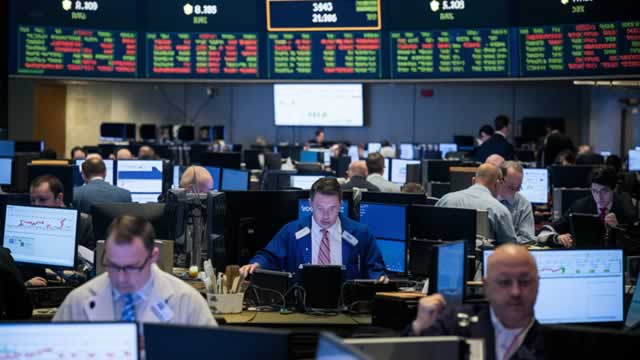
AI talent war continues in tech without generating many jobs, says KPMG's Swonk
Youtube· 2025-12-16 18:56
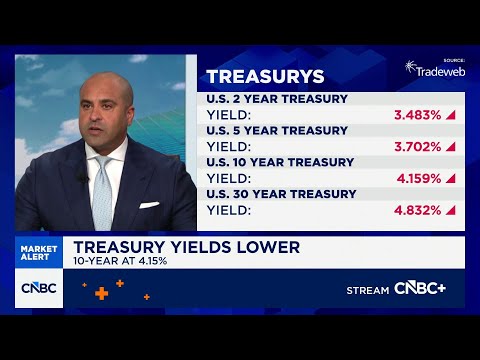
Economic Overview - Consumers are still spending despite an early chill for the holiday season, with core retail sales up 0.9%, indicating stronger performance than the headline figure suggests [1] - The labor market has shown stagnation in payroll since April, with the unemployment rate affected by government shutdowns leading to temporary layoffs [2] Holiday Season Insights - The holiday season is compressed into December, which previously resulted in strong job gains, suggesting a potential repeat this year [3] Future Economic Indicators - Anticipated rate cuts by the Fed and expansions to tax cuts retroactive to 2025 may lead to double-digit gains in tax refunds, which consumers often treat as windfall gains, potentially affecting inflation data [4] Inflation and Labor Market Dynamics - The labor market is currently driven by healthcare and social assistance sectors, with concerns about the stickiness of inflation persisting even with potential improvements in employment [6][7] - There is a normalization of inflation occurring over five years, with sequential tariff-related increases contributing to this trend [8] Fed's Position and Market Sentiment - The Fed faces a divide between those advocating for lower rates and those concerned about inflation, with the current economic data suggesting that price stability has not been achieved [5][9]
AI talent war continues in tech without generating many jobs, says KPMG's Swonk
CNBC Television· 2025-12-16 18:46
Diane, how would you describe uh this. Is it abnormal. Is it funky.Are we just in a waiting period of transition. What What do you say is going on here. >> Well, it certainly is an early chill for the holiday season, but I think you know consumers are still spending, which is ironic.The core retail sales, which goes into the GDP calculation for the retail sales data, actually was up 0.9%. So much better than that headline figure suggested. and data for September and August were revised up.So, we came into t ...