Inflation

Search documents
AI talent war continues in tech without generating many jobs, says KPMG's Swonk
Youtube· 2025-12-16 18:56
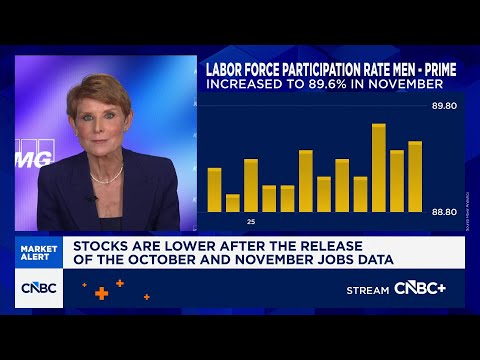
Economic Overview - Consumers are still spending despite an early chill for the holiday season, with core retail sales up 0.9%, indicating stronger performance than the headline figure suggests [1] - The labor market has shown stagnation in payroll since April, with the unemployment rate affected by government shutdowns leading to temporary layoffs [2] Holiday Season Insights - The holiday season is compressed into December, which previously resulted in strong job gains, suggesting a potential repeat this year [3] Future Economic Indicators - Anticipated rate cuts by the Fed and expansions to tax cuts retroactive to 2025 may lead to double-digit gains in tax refunds, which consumers often treat as windfall gains, potentially affecting inflation data [4] Inflation and Labor Market Dynamics - The labor market is currently driven by healthcare and social assistance sectors, with concerns about the stickiness of inflation persisting even with potential improvements in employment [6][7] - There is a normalization of inflation occurring over five years, with sequential tariff-related increases contributing to this trend [8] Fed's Position and Market Sentiment - The Fed faces a divide between those advocating for lower rates and those concerned about inflation, with the current economic data suggesting that price stability has not been achieved [5][9]


AI talent war continues in tech without generating many jobs, says KPMG's Swonk
CNBC Television· 2025-12-16 18:46
Diane, how would you describe uh this. Is it abnormal. Is it funky.Are we just in a waiting period of transition. What What do you say is going on here. >> Well, it certainly is an early chill for the holiday season, but I think you know consumers are still spending, which is ironic.The core retail sales, which goes into the GDP calculation for the retail sales data, actually was up 0.9%. So much better than that headline figure suggested. and data for September and August were revised up.So, we came into t ...
What Happens to Social Security’s Cost of Living Adjustment (COLA) If the Fed Raises Rates Next Time?
Yahoo Finance· 2025-12-16 18:36
SHVETS production from Pexels and Kameleon007 from Getty Images Signature Quick Read Social Security beneficiaries will receive a 2.8% COLA in 2026. The Fed is not expected to raise interest rates in 2026 due to easing inflation and stable unemployment. Fed rate changes do not directly impact COLAs but can influence them through inflation effects. A recent study identified one single habit that doubled Americans’ retirement savings and moved retirement from dream, to reality. Read more here. ...
AMREP Stock Dips Post Q2 Earnings as Land Sales Slide, Margins Improve
ZACKS· 2025-12-16 18:16
Core Viewpoint - AMREP Corporation (AXR) has experienced significant declines in both net income and revenue for the second quarter of fiscal 2026, primarily due to a sharp drop in land sale revenues, while home sale revenues showed improvement [2][4][8]. Financial Performance - For Q2 fiscal 2026, AMREP reported a net income of $1.2 million, or $0.22 per diluted share, a 70.3% decrease from $4 million, or $0.75 per diluted share, in the same quarter last year [2]. - Revenue for the quarter fell 21.1% year over year to $9.4 million from $11.9 million [2]. - For the first six months of fiscal 2026, net income totaled $5.9 million, or $1.09 per diluted share, down 27.3% from $8.1 million, or $1.51 per diluted share, in the prior-year period, while revenue declined 12.1% to $27.3 million from $30.9 million [3]. Segment Performance - Land sale revenues plummeted 85.9% in Q2 and 45.3% for the six-month period, attributed to fewer land transactions [4]. - Home sale revenues increased by 44.8% in Q2 and 20.7% for the six months, driven by a higher number of homes sold [4]. - Other revenues, including landscaping and rental-related income, rose 18.6% in Q2 and 11.6% for the six-month period [4]. Profitability Metrics - Land sale gross margins improved to 80% in Q2 and 70% for the six-month period, compared to 60% and 52% respectively a year earlier [5]. - Home sale gross margins also improved to 25% from 20% in both comparable periods, despite higher input costs [5]. - Operating income declined 64.4% to $1.1 million in Q2 from $3.1 million a year earlier, reflecting lower land sale activity and higher cost pressures [6]. Management Insights - Management cited ongoing challenges such as municipal entitlement delays and infrastructure issues affecting land development and homebuilding activities [7]. - The company has adjusted its operating strategy by offering sales incentives, reducing certain home prices, slowing housing starts, and leasing completed homes to address demand softness [7]. Market Influences - The decline in earnings was mainly due to a significant reduction in land sale revenues, while homebuilding activity improved but faced pressure from higher construction costs [8]. - Interest income, although a positive contributor, declined 20.3% on a quarterly basis [8]. Future Outlook - AMREP did not provide formal earnings or revenue guidance but indicated that revenues and margins may continue to fluctuate due to market uncertainty and affordability constraints [9]. - The company expects reduced land sale revenues in fiscal 2026 compared to fiscal 2025, given a scaled-back development pipeline [9]. Strategic Developments - AMREP amended its revolving line of credit, extending the maturity to August 2028 and increasing the borrowing capacity to $6.5 million [10]. - The company expanded its portfolio of leased homes, ending the quarter with 28 homes rented to residential tenants, up from 21 at the end of the prior fiscal year [10].


X @Bloomberg
Bloomberg· 2025-12-16 18:08
Governor Tiff Macklem says the Bank of Canada’s review of its framework next year must assess whether it gives the central bank the best chance of keeping inflation low and stable in a “more shock-prone world.” https://t.co/Irh5X2qz3e ...
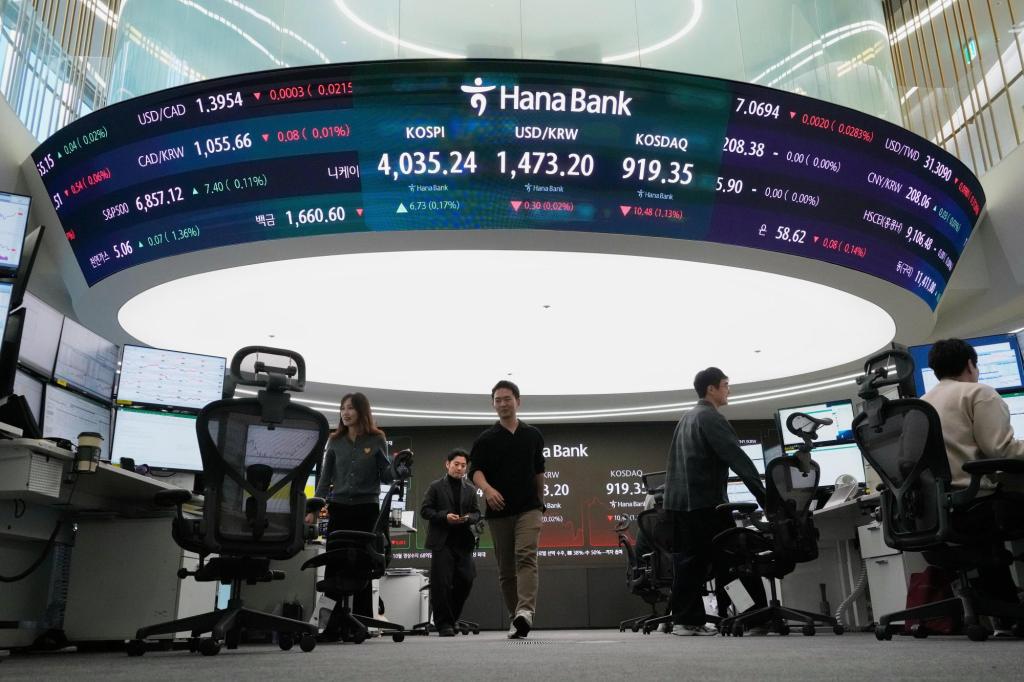
Wall Street loses ground following mixed data on the economy
San Diego Union· 2025-12-16 17:17
By STAN CHOE, AP Business WriterNEW YORK (AP) — The U.S. stock market is slipping on Tuesday following mixed data on the economy’s strength, which did little to clear uncertainty about where interest rates may be heading. The S&P 500 fell 0.6% in afternoon trading and remains a bit below its all-time high set last week. The Dow Jones Industrial Average was down 342 points, or 0.7%, as of 12:45 p.m. Eastern time, and the Nasdaq composite was 0.3% lower.Treasury yields eased a bit, following a larger initial ...

Mohamed El-Erian on why we 'should look through' the November jobs report
Youtube· 2025-12-16 17:11
Labor Market Analysis - The unemployment rate has increased for the fourth consecutive month, reaching 4.6%, indicating a potential weakening labor market [1] - The report suggests that the labor market is decoupling from GDP growth, with solid GDP growth expected despite a weakening labor market [5][6] - The private sector is particularly affected, with significant job losses in government sectors, while health and education are the only areas showing strength [3][5] Economic Drivers - AI-related spending is identified as a major driver of economic activity, but it lacks the same multiplier effect as traditional spending [6] - Low-income consumers are facing more difficulties, raising concerns about the future as AI transitions from a demand issue to a supply issue [7] - Companies like Accenture and Walmart emphasize the labor enhancement potential of AI, although there is a risk of labor displacement [7][8] Future Economic Scenarios - There are two potential scenarios for the economy: a non-inflationary boom driven by AI productivity or stagflation if the bond market tightens [11][12] - The central scenario of solid growth above 2% is considered compelling but only has a 50% probability, with significant risks on either side [10][12] Treasury and Bond Market - The bond market is facing increased supply from both public and private sectors, with a notable deficit of 6% of GDP [20][21] - There is concern that the bond market may not be pricing in risk adequately, which could lead to a tightening of conditions [21] Fed Chair Speculation - Betting odds indicate a shift in favor of Kevin Worsh as a potential next Fed chair, reflecting market sentiment influenced by political statements [22][23] - Worsh is viewed as a more favorable candidate due to his understanding of Fed reforms and balance sheet issues compared to Kevin Hassett [24]

3 Key Signs You’re Keeping Too Much Money in Your Checking Account
Yahoo Finance· 2025-12-16 17:07
Core Insights - The article emphasizes that having a large balance in a checking account may not be beneficial, as it can lead to missed opportunities for growth and financial security [1][2]. Group 1: Risks of Holding Too Much Cash - A significant warning is that consistently holding more than one to two months' worth of expenses in a checking account can lead to losing value due to inflation and earning little to no interest [3][4]. - It is recommended to cap checking reserves at one to two months' worth of essential expenses, with any excess needing to be invested to avoid stagnation [4]. Group 2: Importance of Compounding - Money in a checking account does not grow, and for long-term goals like retirement or travel, it is crucial to invest that money in higher-yield options [4][5]. - The difference between idle cash and invested money can be substantial, as invested dollars can earn returns that compound over time, while cash in checking accounts loses value due to inflation [5]. Group 3: Misconceptions About Financial Health - Many individuals equate a large checking account balance with financial health, but this can mask a lack of financial progress if they are not contributing to retirement or investment accounts [7].
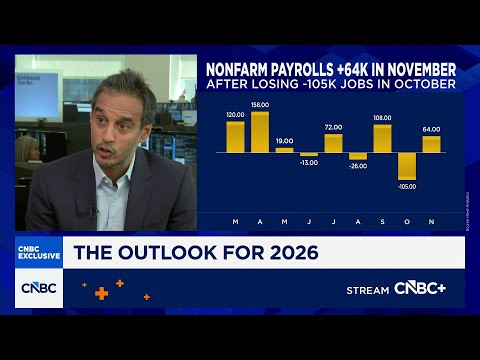
Goldman Sachs' Ashok Varadhan says he is 'very optimistic for 2026', expects more rate cuts
Youtube· 2025-12-16 16:58
Here with me now at the Goldman Sachs trading floor in a CNBC exclusive is Goldman's co-head of global markets and banking Ashook Verdon. It's become a little bit of a tradition to do this at the end of the year. >> Yeah, welcome back to the trading floor call.>> Thanks for having us Ashook. So the Hasset view is kind of rhymes with what you what you what you believe will happen in 26 and that is growth can accelerate and we'll we can get back to target. >> Absolutely.uh you know maybe for a little bit diff ...


Goldman Sachs' Ashok Varadhan says he is 'very optimistic for 2026', expects more rate cuts
CNBC Television· 2025-12-16 16:58
Here with me now at the Goldman Sachs trading floor in a CNBC exclusive is Goldman's co-head of global markets and banking Ashook Verdon. It's become a little bit of a tradition to do this at the end of the year. >> Yeah, welcome back to the trading floor call.>> Thanks for having us Ashook. So the Hasset view is kind of rhymes with what you what you what you believe will happen in 26 and that is growth can accelerate and we'll we can get back to target. >> Absolutely.uh you know maybe for a little bit diff ...