Supply Chain

Search documents
Data Center Expansion in Asia
Bloomberg Technology· 2025-07-17 19:52
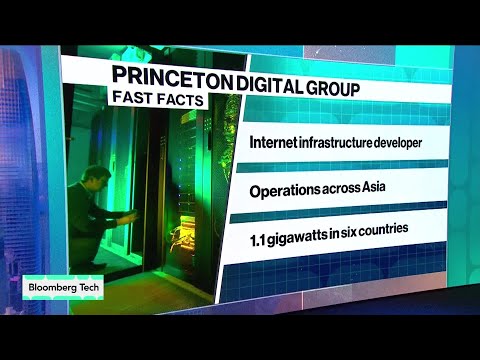
Investment & Growth Strategy - The company secured investment from Blackstone, an infrastructure investor, to enhance growth optionality [2] - Warburg Pincus remains interested in further growth with the company after seven years [3] - The company aims to consolidate its market position through mergers and acquisitions to scale up and become a market leader in Asia [4] - Stone Peak provided a solution aligned with the company's objectives, positioning it to capture growth in Asia [4] Market Expansion & Customer Focus - The company prioritizes partners with a proven execution track record and deep capital resources, aligning with the needs of large hyperscalers [7] - The company plans to deepen its presence in existing markets like Japan and India, while also expanding into new markets such as Australia and South Korea [8] - The company aims to be a trusted partner for U S hyperscalers expanding in Asia [9] Supply Chain & Cost Management - The company has secured its supply chain for the next couple of years [10] - A significant portion of the company's supply chain manufacturing is located in Asia, providing a cost advantage [10] - The company is not currently experiencing cost pressures and sees opportunities to build large-scale data centers near sources of excess power at reasonable costs [11] Future Prospects - The company is considering an IPO or a trade sale [12] - The company aims to consolidate the market through acquisitions in the next 3 to 4 years to achieve a larger scale before potentially going public [13]

How Clean Gold Can Change Africa | Dr. Chad Michael Altieri Esq | TEDxSTU
TEDx Talks· 2025-07-16 15:58
Problem & Impact - Conflict minerals, especially Colton, are smuggled across borders and enter international supply chains, funding child labor, human exploitation, and rape [5][6] - Current international regulations like Dodd-Frank and traceability initiatives like ITSCI are failing to prevent conflict minerals from entering the marketplace [5] - This exploitation leads to human suffering, including preventing young girls from attending school and forcing people into backbreaking labor [3][4] Proposed Solutions - Empowering local mining communities through education, technology, and mechanization to transition to semi-industrial mining operations [7][8] - Implementing traceability bagging systems and blockchain technology to create a permanent, immutable record of each gram of mineral back to its source [8][9][14] - Forming an African Federation of Artisanal Miners, similar to the National Federation of Coffee Growers in Colombia, to offer best practices, equipment, and formalization support [20][21][22] Implementation & Results - The speaker coordinated with a US-funded initiative to construct a supply chain management system compliant with OECD, Dodd-Frank, and ICGLR in the UAE [12] - The speaker assisted the federal government in instituting the first artisanal mining publication system and performed on-site inspections in the DRC [16] - The speaker successfully imported the first clean and traceable artisanal gold export from Congo to Dubai, selling it to an LBMA refinery [17][18] Future Vision & Benefits - Creating socially responsible smartphones and clean gold jewelry lines using ethically sourced and traceable components from thriving communities [25] - Strengthening ties between exporting nations and trade partners, fostering respect, stability, and economic partnerships [26] - Transforming Africa from a source of conflict minerals to a key player in ethical trade and sustainability [26]

Gary Cohn on Trump tariff revenue: There's no free lunch
CNBC Television· 2025-07-16 15:00
One point is there is a understanding or view in this country that we need to control certain parts of our essential supply chain. You know I I always say if co taught us nothing else it surely taught us how vulnerable we are on essential parts of our supply chain. So the fact that we're trying to move some of our you know most vulnerable pieces of our supply chain that can shut down our US economy and move them back to the United States.I I think the vast majority of Americans and the vast majority of econ ...

Former NEC Director Gary Cohn on state of the economy, Trump's tariff agenda & Fed's inflation fight
CNBC Television· 2025-07-16 13:08
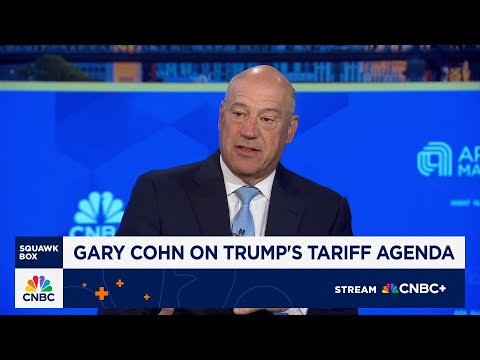
Joining us now, Gary Conn, IBM vice chairman, former director of the National Economic Council, joins us on set as he really should um exclusively um from time to time. Thank you, Joe. It's always nice to be here with you. Always good to see you.What an introduction, right. Yeah, you s I don't I don't Nice introduction. It's not nice to be It's No, it's not. It's not nice to be wanted that I want you here instead of somewhere else.It's not Would you rather say, "Gosh, I wish you were on another show." No, y ...
Increased tariffs going to flow through supply chain and inflation data, says Bleakley's Boockvar
CNBC Television· 2025-07-11 21:45
Inflation & Tariffs - Tariffs are contributing to inflation, with import prices (excluding food and energy) rising 04% in May after a 05% increase in April [3] - Companies with pricing power will pass tariff costs to consumers, while those without will absorb costs via margin cuts [4] - Helen of Troy plans to raise consumer prices by 7% to 10% this summer, while ConAgra faces 7% cost increases due to commodity, labor, steel, and aluminum inflation [4][5] - Levi's anticipates only a 2% to 3% price increase, mitigating most tariff impacts, suggesting a separation of winners and losers based on pricing power [6] - Even if Levi's absorbs costs, someone in their supply chain is still bearing the tariff burden [7] Commodity & Industrial Metals - The CRB raw industrials index matched its March level, the highest since January 2023, indicating rising industrial metal prices [10] - Silver reached its highest level since 2011, and platinum is up about 30% in the past few months, reflecting a global rise in industrial metals [10][11] - The rise in metal prices is attributed to preemptive buying ahead of potential tariffs and the strategic importance of critical minerals in a multi-polar world [11] - Higher metal prices will flow through the supply chain, impacting inflation regardless of whether consumers absorb the costs [12] Company Strategies - Some companies can mitigate tariff effects, while others face margin pressure or need to raise prices [6][7] - Companies are trying to get their hands on metals ahead of potential tariffs [11]
X @Bloomberg
Bloomberg· 2025-07-11 11:02
One US shoemaker is finding out why it’s so hard to leave China for other production hubs — even as she faced 190% tariffs. https://t.co/XcpLaldD5y ...
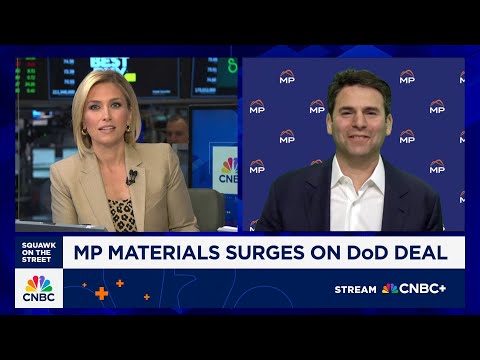
MP Materials CEO on deal with the Defense Department
CNBC Television· 2025-07-10 16:27
Deal Overview - MP Materials announces a major deal with the Department of Defense (DoD) to fund the expansion of its magnets facility, targeting a 10x increase in capacity [1] - The DoD will become MP Materials' largest shareholder after investing $400 million in newly created preferred equity [1] - The deal includes convertible preferred equity, warrants, loans, price floor, and offtake commitments extending more than a decade [2] Strategic Rationale - The partnership aims to establish a full rare earth supply chain in the US, addressing national security concerns and reducing reliance on Chinese rare earth production [5][6] - The deal is structured to ensure a fair return on capital, enabling accelerated investment in downstream magnet production [13] - The price floor is necessary because Chinese entities set prices below levels that allow for adequate returns on capital in the free market [4][12] Economic Impact - The US taxpayer will participate in the upside of both the commodity and magnet economics, indicating a potential return on investment [6][11] - The deal is expected to accelerate the development of the entire supply chain, benefiting MP Materials shareholders, the US government, and commercial industry [5] - Rare earth magnets are essential for physical AI, including robotics, and securing the supply chain is crucial to maintaining trillions of dollars in potential economic value [14][15] Geopolitical Context - The deal is a response to Chinese mercantilism, which poses a challenge to US strategic supply chains [9][10] - The Trump administration and the Pentagon are credited with recognizing the challenge and implementing a solution to onshore the supply chain [3][10]

Could Australia Reshape the Critical Mineral Supply Chain?
Bloomberg Television· 2025-07-08 06:33
Critical Minerals Market Dynamics - Surging demand for critical minerals is reshaping global dynamics, with China's dominance posing a challenge for Western nations [1] - The US and EU are trying to catch up and reduce their reliance on Beijing and Australia [1] - Australia holds some of the world's richest reserves of critical minerals, including nickel, lithium, and rare earths [3] - China is the dominant force in the processing and refining of critical minerals, representing a choke point in the supply chain [6] Australia's Strategic Opportunities and Challenges - Australia faces a defining choice: remain a raw material exporter or strategically invest in downstream processing and advanced manufacturing [4] - Strategic investment in processing, refining, and advanced manufacturing is required to achieve supply chain security and diversification away from China [7] - Nickel mines in Australia have gone into care and maintenance due to China's dominance pushing down prices [10] - Creating a national critical mineral stockpile is essential for the strategic protection of mining, processing, and refining projects [5][11] International Collaboration and Policy - The US critical minerals policy has been consistent across administrations, focusing on reshoring and building domestic supply chains [15][16] - There is potential for the US and Australia to integrate their economies to support each other in critical minerals development [8][17]

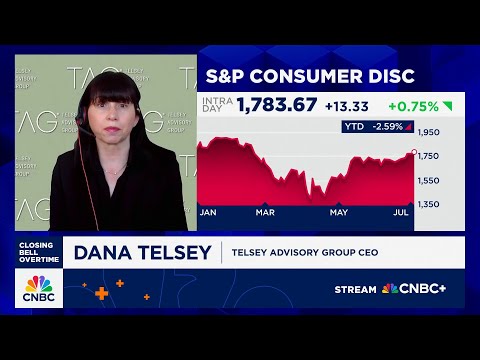
The level of tariffs will dictate retail stock price sentiment, says Dana Telsey
CNBC Television· 2025-07-03 17:57
Sector Performance & Rebound Potential - Consumer discretionary sector is the worst performing sector this year, but may rebound in the second half [1] - Product newness and tariff implementation will dictate the sentiment in the second half of the year [3] Consumer Behavior & Retailer Strategy - Customers are trading down, with Walmart's biggest growth coming from higher-income consumers [4] - Companies are being more cautious with inventory for the holiday season due to tariffs [4] - Value, discounters, and brand leaders are key, with revivals also contributing to growth, such as Wolverine Worldwide's Sakin up 30% [7] Brand & Product Dynamics - Brand leaders with newness drive demand, like Birkenstock's closed-toe shoes and collaborations such as Levi's and Nike [5] - Unique items allow for better pricing, but overall price upticks have been limited [5][6] Trade & Tariffs - Vietnam tariffs include a 20% tariff on exports to the US and a 40% transshipment tariff on goods from third countries, potentially targeting China [8][9] - Supply chain dynamics are challenging, with freight expenses as a headwind and potential price increases in the mid to high single-digit range [9] - Retailers can navigate tariffs by diversifying sourcing, sharing costs with manufacturers, and raising prices to consumers [10] - Companies suspended earnings guidance due to uncertainty about tariff impacts on margins and costs [10] - Shifting sourcing away from North America due to high labor costs, with tariff levels dictating stock prices [11]