
Inflation

Search documents
Here’s Why Bitcoin is Falling Despite the Fed's Rate Cut
Yahoo Finance· 2025-12-11 12:13
Core Viewpoint - Bitcoin continues to trend lower despite a 25 basis point interest rate cut by the U.S. Federal Reserve, indicating a complex macroeconomic environment ahead [1][4]. Group 1: Market Reaction to Fed Actions - The Federal Reserve's recent actions, including a planned purchase of $40 billion in T-Bills, mark its first balance sheet expansion since mid-2022, reflecting a shift in monetary policy [2]. - Despite the rate cut, Bitcoin has declined by 2% in the past 24 hours, trading just under $90,200, with market sentiment indicating a bearish outlook [3]. - Prediction markets show a mere 17% chance of a "Santa rally" for Bitcoin in 2025, with a 5% decrease in the likelihood of Bitcoin reaching $100,000 compared to dropping to $69,000 [3]. Group 2: Economic Concerns and Future Outlook - Analysts express concern that the potential for further easing by the Fed is diminishing, as indicated by downward revisions in rate-cut expectations for 2026 [5]. - The upcoming midterm elections in 2026 may necessitate looser fiscal policies and a more dovish Fed to sustain economic growth, which could lead to a temporary mix of fiscal stimulus and monetary easing [6]. - However, this combination poses risks of rekindling inflation and increasing long-term interest rates, which could negatively impact global risk assets, including Bitcoin [7].
'STIFF': Trump blames Fed for killing America's economic boom
Youtube· 2025-12-11 12:01
Core Viewpoint - President Trump emphasizes a strong economy and criticizes the Democratic affordability narrative as a "hoax," attributing high inflation and prices to their policies [1][4][11]. Economic Performance - The U.S. economy is described as having the lowest rates globally, with President Trump asserting that without the U.S. economy, there is no global economy [3]. - Inflation is reported to be approximately 3% year-over-year, indicating that prices are not decreasing but rather increasing [6]. Affordability and Wages - Real wage growth has been positive every month during President Trump's terms, contrasting with negative growth during President Biden's administration [8]. - The real measure of affordability is suggested to be real wage growth compared to expenses, rather than the inflation rate itself [7][9]. Policy Recommendations - There is a call for lower interest rates to enhance housing affordability and enable businesses to hire more people, which would further improve economic conditions [10]. Political Context - Treasury Secretary Scott Bessent criticizes blue states for obstructing tax relief measures, claiming this exacerbates financial burdens on low and middle-income households [5]. - The messaging from the Trump administration is seen as needing refinement to better communicate economic improvements and affordability [6][9].


'Pet poverty' strikes 1 in 7 pet owners as lifetime cost of cats and dogs exceeds $30K. Are pets now only for the rich?
Yahoo Finance· 2025-12-11 11:59
Core Insights - The rising costs of pet ownership are leading many Americans to reconsider their ability to care for pets, with a significant portion experiencing financial strain related to pet care [1][3]. Group 1: Financial Impact on Pet Owners - A 2025 survey by MetLife found that 15% of U.S. pet owners experience "pet poverty," struggling to meet both their own basic needs and those of their pets [1]. - The average lifetime cost of owning a dog for 10 years is nearly $35,000, while for a cat over 16 years, it is around $32,000 [2]. - 22% of pet owners carry at least $2,000 in pet-related debt, indicating a significant financial burden [1]. Group 2: Changing Attitudes Towards Pet Ownership - A 2024 LendingTree survey revealed that 23% of pet owners have considered giving up their pets due to costs, and 39% believe their current pet will be their last [3]. - 12% of Americans reported surrendering a pet because they could no longer afford its care, highlighting the impact of financial constraints on pet ownership [3]. Group 3: Inflation and Rising Costs - Approximately 85% of pet owners attribute rising costs to inflation, with 76% noting increased pet food prices, 56% citing higher veterinary care costs, and 40% reporting more expensive necessary supplies [4]. - Veterinary prices in the U.S. have increased by about 60% over the last decade, further straining pet owners' finances [5].
X @Bloomberg
Bloomberg· 2025-12-11 10:04
The Swiss National Bank kept its interest rate at zero, judging that a weakened inflation outlook doesn’t yet justify a return to negative borrowing costs https://t.co/1wfubF7lLa ...
Dollar Stays Weak After Fed Cuts Rates
Barrons· 2025-12-11 08:59
Core Viewpoint - The dollar is under pressure after reaching a seven-week low due to the Federal Reserve's decision to cut interest rates and indicate potential further cuts [1] Group 1: Federal Reserve Actions - The Federal Reserve implemented a 25 basis-point rate reduction as expected [1] - The Fed's communication suggested a less cautious approach towards further policy easing than anticipated [1] Group 2: Economic Outlook - Fed Chair Jerome Powell indicated that the risks of higher inflation are perceived to be less severe compared to the risks associated with a weaker labor market [1]
Swiss central bank holds interest rate at 0% as inflation cools; European markets dip
CNBC· 2025-12-11 08:58
Group 1: Market Overview - European stocks opened slightly lower, with the pan-European Stoxx 600 down around 0.1% as investors reacted to the U.S. Federal Reserve's latest rate cut and the Swiss central bank's decision to hold rates at 0% due to lower-than-expected inflation [1][2] - The U.S. Federal Reserve cut the Federal Funds rate by 25 basis points to a range of 3.5%-3.75%, indicating a cautious approach to future rate reductions [2][3] Group 2: Economic Insights - The Swiss National Bank noted stronger-than-expected global economic growth in Q3, despite challenges from U.S. tariffs and trade policy uncertainty [2] - European inflation is considered neutral, with expectations that the European Central Bank will not cut rates in the near future [4] Group 3: Sector Performance - The Stoxx 600 Aerospace and Defense index has gained 52% year-to-date, reflecting strong performance in the defense sector [5] - Shares in German defense firm Rheinmetall rose by 1.3% following reports of a new bid for competitor KNDS NV [6]
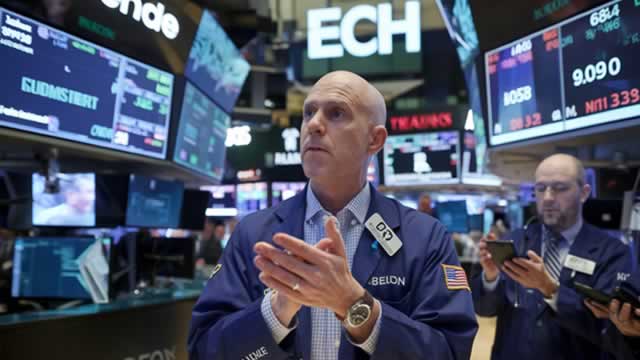
Long-awaited Fed decision now in
Youtube· 2025-12-11 08:20
The CNBC app, global market news in one place. Customizable sections and personalized alerts, stocks tracking, interactive charts and market insights, all in your hands. Stay connected, stay informed, download the CNBC app today. >> Oh, I'm very excited to be back in the studio. More excited the fact that I've got Juliana Talib leading the show. How are you. >> I'm doing well. Good to have you back. >> It's great to be back, I have to say. Right. Welcome to the scorebox Europe with Juliana Tattlebound. Uh a ...

Peter Schiff Slams Federal Reserve's Plan For Buying Treasury Bills: 'QE By Any Other Name Is Still Inflation' - Invesco QQQ Trust, Series 1 (NASDAQ:QQQ), SPDR S&P 500 (ARCA:SPY)
Benzinga· 2025-12-11 07:29
Core Viewpoint - The Federal Reserve's decision to cut interest rates and resume purchasing Treasury bills has sparked a debate about the U.S. economy's future, with contrasting views from analysts and economists [1]. Group 1: Economic Perspectives - Economist Peter Schiff warns that the Fed's new liquidity measures represent a dangerous return to quantitative easing, predicting that this policy will lead to rising long-term interest rates [2]. - In contrast, institutional investors express optimism, with LPL Financial's Chief Economist Jeffrey Roach stating that the Fed's actions indicate a successful balance of its dual mandate, leading to a "Goldilocks" scenario for the economy [3]. - Gina Bolvin from Bolvin Wealth Management supports this optimistic view, suggesting the Fed is shifting focus from fighting inflation to managing economic risks [4]. Group 2: Fed's Actions and Market Reactions - The Fed plans to purchase approximately $40 billion per month in shorter-maturity Treasuries to smooth volatility in short-term funding markets, a move that has drawn criticism from Schiff [4][5]. - Bill Adams, Chief Economist for Comerica Bank, notes that the Fed is operating in a "data vacuum" due to delayed economic releases and anticipates a leadership change when Chair Powell's term ends in May 2026 [5]. - Chris Zaccarelli of Northlight Asset Management cautions that the current optimistic sentiment may diminish if investors realize that the path to lower rates is slower than expected [6]. Group 3: Market Performance - The S&P 500 index has increased by 17.35% year-to-date, while the Dow Jones index has returned 13.36%, and the Nasdaq Composite has gained 22.68% in the same period [7]. - The SPDR S&P 500 ETF Trust (NYSE:SPY) closed at $687.57, up 0.66%, while the Invesco QQQ Trust ETF (NASDAQ:QQQ) closed at $627.61, up 0.41% [8].
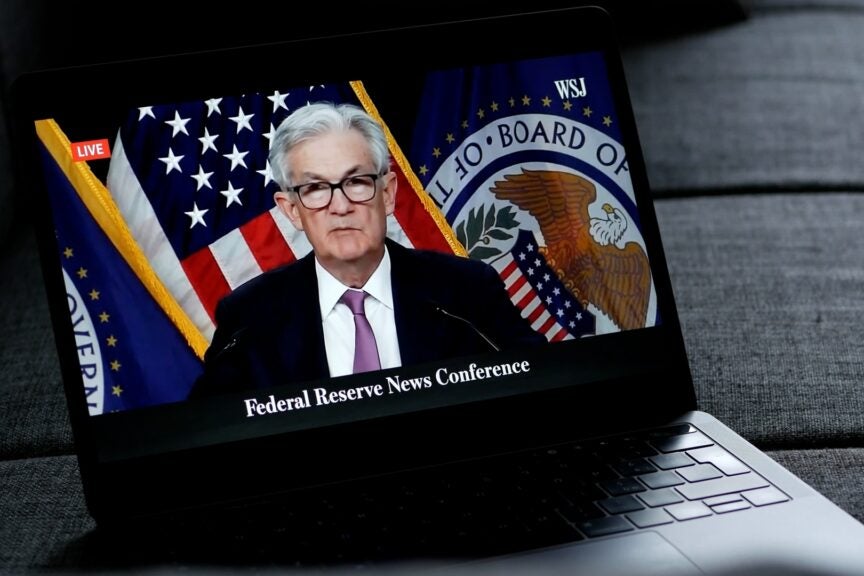
Will Fed’s Latest Rate Cut Be Powell’s Last?
Yahoo Finance· 2025-12-11 05:01
Core Viewpoint - The Federal Reserve's Open Market Committee (FOMC) cut the key overnight borrowing rate to 3.5%-3.75%, aligning with market expectations, but future rate cuts may be limited due to inflation concerns [1][2][3] Group 1: Federal Reserve Actions - The FOMC's decision to cut rates was a 9-3 vote, indicating a division among members regarding the need for further cuts to support the labor market versus concerns about inflation [2] - The Fed's preferred inflation gauge is currently at 2.8%, above the 2% target, with expectations to decrease to approximately 2.4% by the end of 2026 [2] - The FOMC's dot plot suggests only one rate cut is anticipated in 2026, indicating a higher threshold for future cuts [3] Group 2: Market Reactions - Rate-sensitive investments saw a rally, with the small-cap Russell 2000 index increasing by 1.3% and the State Street SPDR S&P Homebuilders ETF rising by 3% [5] - Historical data indicates that stocks perform well during non-recession periods when the Fed cuts rates, averaging a 15% annualized return since 1970 [5] - Some analysts caution that optimism regarding the pace of future rate cuts may be overstated, suggesting that the anticipated timeline for lower interest rates could be longer than expected [5]
Economist reveals what 'surprised' people about Powell's rate cut
Youtube· 2025-12-11 05:00
Economic Outlook - The American economy is not overheating, and there are no immediate signs of a hot economy that would lead to significant inflation [1][2] - The Employment Cost Index (ECI) report suggests that inflation is not being driven by a tight labor market [2][3] Federal Reserve Actions - The Federal Reserve announced a mild quantitative easing (QE) program, starting with Treasury bill purchases, which was above market expectations [3][4] - There is a shift from quantitative tightening (QT) to QE, indicating a more accommodative monetary policy [4][11] Inflation and Tariffs - Powell indicated that the effects of tariffs on inflation are temporary, and if no new tariffs are imposed, inflation could decrease in the latter half of next year [5][8] - The recognition that tariff impacts are one-time increases rather than ongoing inflationary pressures is seen as a positive development [10] Employment Data - Powell suggested that payroll numbers may be revised to show slight negative growth, which aligns with recent ADP data [11][12] - The discussions within the Fed are characterized as thoughtful and respectful, reflecting a range of opinions on monetary policy direction [18] Corporate Engagement - President Trump is engaging with CEOs from major companies like IBM and Qualcomm to discuss the impact of AI on the economy, which Powell acknowledged as beneficial [13]
