
产业链供应链稳定畅通

Search documents
习言道|越是风高浪急,越要同舟共济
Zhong Guo Xin Wen Wang· 2025-10-31 05:24
Core Viewpoint - The speech by President Xi Jinping at the APEC meeting emphasizes the need for a collaborative approach to address the increasing instability and uncertainty in the Asia-Pacific region, advocating for an inclusive and open economic framework [1][5]. Group 1: Key Suggestions - The first suggestion is to jointly maintain a multilateral trade system [6]. - The second suggestion is to create an open regional economic environment [6]. - The third suggestion focuses on maintaining the stability and smooth operation of industrial and supply chains [6]. - The fourth suggestion promotes the digital and green transformation of trade [6]. - The fifth suggestion encourages inclusive and equitable development [6]. Group 2: Development Philosophy - The speech underscores a people-centered development philosophy aimed at addressing development imbalances and promoting a more inclusive and sustainable economic globalization that benefits all people in the region [12]. Group 3: Commitment to Openness - China reaffirms its commitment to keeping its doors open for foreign investment and trade, emphasizing the importance of cooperation over isolation [16].

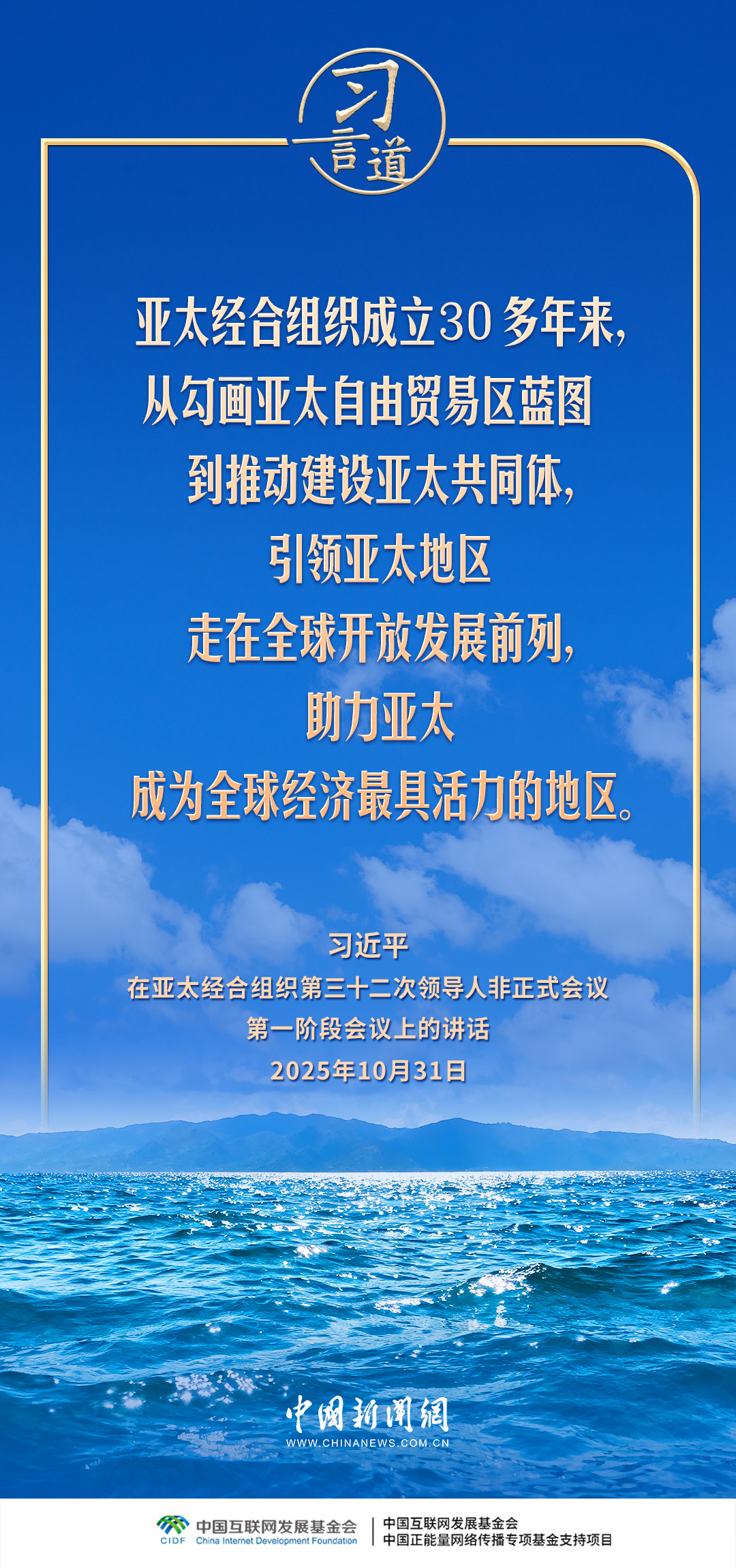
习近平在亚太经合组织第三十二次领导人非正式会议第一阶段会议上的讲话(全文)
中国能源报· 2025-10-31 03:39
Core Viewpoint - The article emphasizes the importance of building an inclusive and open Asia-Pacific economy through cooperation and multilateralism, particularly in the context of the evolving global landscape and increasing uncertainties [2][3]. Group 1: Multilateral Trade and Economic Cooperation - The need to jointly maintain a multilateral trade system is highlighted, advocating for true multilateralism and the authority of the World Trade Organization (WTO) [3][4]. - There is a call for continuous promotion of trade and investment liberalization, as well as deepening financial cooperation to advance regional economic integration [4][5]. Group 2: Supply Chain Stability - The article stresses the importance of maintaining stable and smooth supply chains, advocating for collaboration rather than disconnection, and seeking more points of mutual benefit [4][5]. Group 3: Digital and Green Trade - The promotion of digitalization and greening of trade is emphasized, with a focus on leveraging digital technologies for cross-border trade and breaking down green barriers [5][6]. Group 4: Inclusive Development - The article advocates for a people-centered development approach to address imbalances and promote sustainable globalization that benefits all people in the region [5][6]. - China's commitment to opening its economy is reiterated, with significant foreign trade and investment figures presented, including over $700 billion in foreign investment attracted in the past five years [6].

习近平:破除各种绿色壁垒,拓展绿色产业、清洁能源和绿色矿产合作
Xin Hua She· 2025-10-31 03:15
Core Points - Xi Jinping emphasized the importance of promoting digital and green trade within the Asia-Pacific Economic Cooperation (APEC) framework, advocating for practical cooperation in areas such as paperless trade and smart customs [4][5][6] - The speech highlighted the need to eliminate various green barriers and expand cooperation in green industries, clean energy, and green minerals [5][6] - China has initiated the establishment of the APEC Demonstration Electronic Port Network and the Green Supply Chain Network, which have become significant platforms for regional trade digitalization and greening [5][6] Summary by Sections APEC's Role and Current Challenges - APEC has played a crucial role in shaping the Asia-Pacific free trade area and promoting regional economic integration over the past 30 years [4] - The current global landscape is marked by instability and uncertainty, necessitating collective efforts to maintain economic growth and enhance people's well-being [4] Recommendations for APEC Cooperation - Maintain a multilateral trade system and uphold the authority of the World Trade Organization (WTO) [4][5] - Foster an open regional economic environment by promoting trade and investment liberalization and deepening financial cooperation [5] - Ensure the stability and smooth operation of supply chains by focusing on collaboration rather than fragmentation [5] Digital and Green Trade Initiatives - Leverage digital technology to enhance cross-border trade, promoting initiatives like paperless trade and smart customs [5] - Address green barriers and expand cooperation in green industries and clean energy [5][6] Inclusive Development - Emphasize a people-centered development approach to address imbalances and promote sustainable globalization [6] - China has committed to providing zero-tariff treatment on 100% of products for least developed countries that have diplomatic relations with it [6] China's Commitment to Openness - Over the past five years, China has maintained a leading position in global trade and attracted over $700 billion in foreign investment [7] - The country continues to reduce its foreign investment negative list and expand its unilateral openness, with 22 free trade pilot zones aligning with international high-standard trade rules [7]
习近平出席亚太经合组织第三十二次领导人非正式会议并发表重要讲话
证监会发布· 2025-10-31 02:53
Core Viewpoint - The article discusses the importance of cooperation in the Asia-Pacific region, emphasizing the need for inclusive and open economic development amidst global uncertainties, as articulated by President Xi Jinping during the APEC meeting [2][3]. Summary by Sections APEC Meeting Overview - The 32nd APEC Leaders' Informal Meeting took place in Gyeongju, South Korea, with President Xi Jinping delivering a significant speech on building an inclusive and open Asia-Pacific economy [2][3]. Key Suggestions from Xi Jinping - **Maintaining Multilateral Trade System**: Emphasizes the need for true multilateralism and enhancing the authority and effectiveness of the WTO to protect the rights of developing countries [4]. - **Creating an Open Regional Economic Environment**: Advocates for the liberalization and facilitation of trade and investment, deepening financial cooperation, and advancing regional economic integration [4]. - **Stabilizing Supply Chains**: Encourages collaboration to maintain stable supply chains, focusing on connectivity and mutual benefits rather than fragmentation [4]. - **Promoting Digital and Green Trade**: Highlights the role of digital technology in cross-border trade and the importance of overcoming green barriers to expand cooperation in green industries and clean energy [5]. - **Fostering Inclusive Development**: Stresses a people-centered development approach to address imbalances and promote sustainable globalization that benefits all [5]. Meeting Theme - The meeting was hosted by South Korean President Yoon Suk-yeol, with the theme "Building a Sustainable Tomorrow" [6].

习近平在亚太经合组织第三十二次领导人非正式会议第一阶段会议上的讲话(全文)
证监会发布· 2025-10-31 02:46
Core Viewpoint - The article emphasizes the importance of building an inclusive and open Asia-Pacific economy through cooperation and multilateralism, particularly in the context of the evolving global landscape and increasing uncertainties in the region [3][4]. Group 1: Multilateral Trade and Economic Cooperation - The need to jointly maintain a multilateral trade system, enhancing the authority and effectiveness of the World Trade Organization (WTO) while upholding fundamental principles such as most-favored-nation treatment and non-discrimination [5]. - The call for creating an open regional economic environment by promoting trade and investment liberalization, deepening financial cooperation, and advancing regional economic integration [5]. - The emphasis on maintaining stable and smooth industrial and supply chains, advocating for collaboration rather than disconnection, and enhancing connectivity within the Asia-Pacific region [6]. Group 2: Digital and Green Trade Initiatives - The promotion of trade digitization and greening, leveraging digital technologies to facilitate cross-border trade, and addressing green barriers to expand cooperation in green industries and clean energy [6]. - The establishment of platforms such as the Asia-Pacific Demonstration Electronic Port Network and the Green Supply Chain Network to support regional trade digitalization and greening efforts [6]. Group 3: Inclusive Development and Global Cooperation - The focus on promoting inclusive development by addressing imbalances and ensuring that economic globalization benefits all people in the region [6]. - China's commitment to high-quality cooperation in the Belt and Road Initiative and the provision of zero-tariff treatment for products from least developed countries that have diplomatic relations with China [6][7]. - The assertion that China will continue to open its economy further, with significant foreign trade and investment figures, and a commitment to high-level openness [7][8].

习近平在亚太经合组织第三十二次领导人非正式会议第一阶段会议上的讲话(全文)
第一财经· 2025-10-31 02:40
Core Points - The article emphasizes the importance of building an inclusive and open Asia-Pacific economy, highlighting the need for cooperation amidst global uncertainties [2][3] - It outlines five key suggestions for promoting economic growth and welfare in the Asia-Pacific region [3] Group 1: Multilateral Trade and Economic Environment - The need to jointly maintain a multilateral trade system, enhancing the authority and effectiveness of the World Trade Organization (WTO) [3][4] - The promotion of an open regional economic environment through trade and investment liberalization, and the deepening of financial cooperation [4] - The importance of maintaining stable and smooth industrial and supply chains, advocating for collaboration rather than disconnection [4] Group 2: Digital and Green Trade - The promotion of trade digitalization and greening, leveraging digital technologies to facilitate cross-border trade and eliminate green barriers [4] - The establishment of networks for electronic ports and green supply chains as platforms for regional cooperation in trade digitalization and greening [4] Group 3: Inclusive Development - The focus on inclusive development, addressing imbalances, and ensuring that economic globalization benefits all people in the region [5] - China's commitment to supporting developing countries and providing zero-tariff treatment for products from least developed countries [5] Group 4: China's Role in Global Trade - China's position as a leader in global trade, with the largest scale of goods and services trade, and significant foreign investment attraction [6] - The ongoing expansion of China's open-door policy, including the reduction of foreign investment access negative lists and the establishment of free trade zones [6]

全文来了!习近平在亚太经合组织第三十二次领导人非正式会议第一阶段会议上的讲话
券商中国· 2025-10-31 02:36
Core Viewpoint - The article emphasizes the importance of building an inclusive and open Asia-Pacific economy through cooperation and multilateralism, particularly in the context of the evolving global landscape and increasing uncertainties in the region [2][4]. Group 1: Multilateral Trade and Economic Cooperation - The need to jointly maintain a multilateral trade system, enhancing the authority and effectiveness of the World Trade Organization (WTO), and ensuring the protection of developing countries' rights [2]. - The promotion of an open regional economic environment by advancing trade and investment liberalization, and deepening financial cooperation [3]. - The importance of maintaining stable and smooth industrial and supply chains, advocating for collaboration rather than disconnection [3]. Group 2: Digital and Green Trade - The article highlights the role of digital technology in facilitating cross-border trade, promoting initiatives like paperless trade and smart customs [4]. - It calls for the removal of green barriers and the expansion of cooperation in green industries, clean energy, and green minerals [4]. Group 3: Inclusive Development - The focus on a people-centered development approach to address imbalances and promote sustainable globalization that benefits all people in the region [4]. - China's commitment to providing zero-tariff treatment on 100% of products for least developed countries that have diplomatic relations with it, aiming to foster shared prosperity [4]. Group 4: China's Economic Engagement - Over the past five years, China has maintained its position as a global leader in goods and services trade, attracting over $700 billion in foreign investment [5]. - The continuous reduction of the negative list for foreign investment and the expansion of visa-free access reflect China's commitment to opening its economy further [5]. - The upcoming "15th Five-Year Plan" is seen as an opportunity for China to deepen reforms and expand high-level openness, providing new opportunities for the Asia-Pacific and the world [6].

习近平在亚太经合组织第三十二次领导人非正式会议第一阶段会议上的讲话(全文)
21世纪经济报道· 2025-10-31 02:24
Core Viewpoint - The article emphasizes the importance of building an inclusive and open Asia-Pacific economy through cooperation and multilateralism, particularly in the context of current global uncertainties and challenges [2][3]. Group 1: Multilateral Trade and Economic Cooperation - The need to jointly maintain a multilateral trade system, enhancing the authority and effectiveness of the World Trade Organization (WTO) while upholding fundamental principles such as most-favored-nation treatment and non-discrimination [3][4]. - The promotion of an open regional economic environment by advancing trade and investment liberalization, deepening financial cooperation, and steadily progressing regional economic integration [4][5]. Group 2: Supply Chain Stability and Digital Trade - The importance of maintaining stable and smooth industrial and supply chains, advocating for collaboration rather than fragmentation, and actively seeking points of mutual interest [4][5]. - The push for digital and green trade, leveraging digital technologies to facilitate cross-border trade, and promoting cooperation in green industries and clean energy [5][6]. Group 3: Inclusive Development and China's Role - The commitment to promoting inclusive development by addressing imbalances and ensuring that economic globalization benefits all people in the region [5][6]. - China's significant role in global trade, being the largest in goods and second in services trade over the past five years, with over $700 billion in foreign investment attracted and an annual foreign investment growth rate exceeding 5% [6].

外资企业深耕中国意愿强烈信心坚定
Ren Min Ri Bao Hai Wai Ban· 2025-08-29 00:42
Group 1 - The number of newly established foreign-invested enterprises in China continues to grow year-on-year in the first half of this year, indicating strong interest and confidence from foreign companies despite external uncertainties [1] - The China Council for the Promotion of International Trade (CCPIT) has engaged with nearly 100 multinational company leaders and organized 274 delegations to 55 countries and regions to strengthen international cooperation in supply chains and support foreign investment in China [1][2] - A survey by the German Chamber of Commerce reveals that 92% of German companies are willing to continue investing in China, with over half planning to increase their investments in the next two years [2] Group 2 - The CCPIT is focused on optimizing the business environment and promoting localized production in the pharmaceutical industry, holding 10 meetings to address foreign enterprises' needs and facilitate solutions [2] - The upcoming Shanghai Cooperation Organization summit in 2025 will be held in Tianjin, with various economic and trade activities planned to enhance cooperation among member states [2][3] - The number of foreign-invested entities in Yiwu, Zhejiang has surpassed 10,000, showcasing the growing foreign investment landscape in the region [4]

赵乐际同瑞士联邦议会联邦院议长卡罗尼会谈
Xin Hua She· 2025-08-26 13:23
Group 1 - The core viewpoint emphasizes the 75-year relationship between China and Switzerland, highlighting the spirit of "equality, innovation, and win-win" cooperation [1] - China expresses willingness to enhance the strategic partnership with Switzerland, leveraging the 75th anniversary of diplomatic relations to implement leaders' consensus and deepen mutual understanding [1][2] - The importance of the China-Switzerland Free Trade Agreement (FTA) is noted, with a call to accelerate negotiations for its upgrade to further boost bilateral trade and investment [1][2] Group 2 - The meeting underscores the significance of legislative exchanges between the National People's Congress of China and the Swiss Federal Assembly, aiming to deepen cooperation across various fields [2] - Both countries share similar development philosophies, focusing on innovation, coordination, green development, openness, and sharing, which can contribute to global stability [2] - Switzerland reaffirms its commitment to the One China policy and expresses a desire to strengthen friendly exchanges and cooperation in multiple sectors, including economy, technology, and education [2]