产业链供应链稳定畅通

Search documents
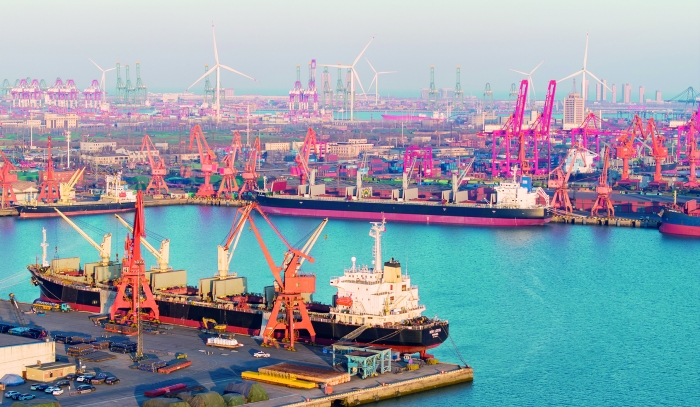
抓建设揽订单 港口航运公司忙出新气象
Shang Hai Zheng Quan Bao· 2026-01-06 17:56
Group 1: Port Industry - Tianjin Port achieved a cargo throughput growth of 6.4% and a container throughput growth of 3.8% during the New Year period, indicating a strong start for 2026 [3] - Ningbo-Zhoushan Port is set to complete a cargo throughput of over 1.4 billion tons in 2025, aiming to maintain its position as the world's largest port for 17 consecutive years [3] - The Shanghai International Shipping Research Center reported that port enterprises are optimistic about industry development in 2026, with improved liquidity and reduced financing difficulties [3] Group 2: Shipping and Shipbuilding - China Merchants Energy Shipping announced a contract for two dynamic positioning shuttle tankers worth approximately 1.79 billion yuan, with 16 tankers scheduled for delivery between 2026 and 2028 [6] - COSCO Shipping Specialized Carriers plans to build four 40,000-ton multi-purpose heavy-lift vessels, with a total price of 1.492 billion yuan, enhancing fleet suitability for advanced manufacturing [6] - Hengli Heavy Industry set a global record by launching six 82,000-ton bulk carriers simultaneously, showcasing its advanced shipbuilding capabilities [7] Group 3: Aviation Industry - Shanghai Pudong Airport's fourth-phase expansion is underway, with the first phase expected to be operational in the first half of 2026, aiming to establish a comprehensive international aviation hub [8] - Hainan Airport is expanding its capacity, with the Sanya Phoenix International Airport's third-phase expansion project recently passing inspection, expected to handle 30 million passengers annually [8] - The Baiyun Airport's phase three expansion is projected to achieve an annual cargo throughput of 3.8 million tons by 2030, with future plans to increase capacity to over 6 million tons [8]

中国推动全球林木业产业链供应链稳定畅通
Zhong Guo Xin Wen Wang· 2025-11-22 11:38
Group 1 - The Chinese government aims to enhance cooperation with countries and international organizations along the "Belt and Road" initiative, focusing on technology research and development, digital applications, standard recognition, and green trade [1][2] - China has a forest coverage rate of 25.09%, making it the fastest-growing country in terms of greening efforts globally [1] - The annual international trade volume of China's forestry industry exceeds $180 billion, positioning it as the world's largest producer, consumer, and trader of forest products [1] Group 2 - The 2025 World Forestry Conference in Nanning includes various high-level exchange activities, such as the International Trade Promotion Conference for Forest Products and the China-ASEAN Forestry Education Integration Development Conference [2] - A total of 36 key forestry industry projects were signed during the opening ceremony of the conference [2] - The concurrent 2025 Guangxi International Forest Products and Wood Products Exhibition attracted leading industry enterprises from countries like Brazil, Finland, Germany, Indonesia, Malaysia, and Russia [2]
新华时评:引领亚太开放合作 续写共同发展新篇
Xin Hua She· 2025-11-04 06:45
Core Points - The APEC (Asia-Pacific Economic Cooperation) meeting emphasized the importance of regional cooperation and the need for collective action to promote economic growth and shared prosperity in the face of global uncertainties [1][2] - President Xi Jinping proposed the "Five Common" principles to enhance multilateral trade, create an open regional economic environment, maintain stable supply chains, promote digital and green trade, and foster inclusive development [2] - China aims to deepen reforms and expand high-level opening-up, positioning itself as a responsible member of the Asia-Pacific community and a favorable investment destination [3] Summary by Sections APEC Meeting Outcomes - The APEC meeting highlighted the need for unity and cooperation among member economies to navigate challenges posed by a disrupted multilateral trade system [1] - Xi Jinping's call for a "shared future" and the importance of collaboration resonated with participants, reinforcing the commitment to inclusive economic globalization [1] Proposed Initiatives - Xi Jinping's "Five Common" principles focus on maintaining multilateral trade systems, fostering an open economic environment, ensuring supply chain stability, advancing trade digitization and sustainability, and promoting inclusive growth [2] - Recommendations for leveraging digital empowerment, adhering to green and low-carbon practices, and ensuring equitable sharing of benefits were also presented [2] China's Role and Commitment - China, as the host of APEC in 2026, is committed to enhancing cooperation and expanding opportunities for all member economies, emphasizing its role in regional and global development [3] - The recent CPC Central Committee meeting outcomes were highlighted as a framework for China's ongoing reforms and its commitment to providing a conducive environment for business and investment [3]
新华时评|引领亚太开放合作 续写共同发展新篇
Xin Hua She· 2025-11-04 02:09
Core Points - The APEC (Asia-Pacific Economic Cooperation) meeting emphasized the importance of regional cooperation and shared development in the face of global uncertainties [1][2] - President Xi Jinping proposed five key areas for common development, including maintaining a multilateral trade system and promoting inclusive growth [2][3] - China aims to deepen reforms and expand high-level opening-up, positioning itself as a responsible member of the Asia-Pacific community [3] Group 1 - APEC has played a crucial role in leading the Asia-Pacific region towards global open development over the past 30 years, making it a major engine of world economic growth [1] - The meeting highlighted the need for collective action to ensure economic growth benefits everyone, with a call for cooperation in the "2025 APEC Leaders' Declaration" [1][2] - Xi's emphasis on "holding hands" rather than "letting go" reflects China's commitment to regional collaboration and stability in supply chains [1][2] Group 2 - The five common goals proposed by Xi include maintaining a stable multilateral trade system and fostering an open regional economic environment [2] - Xi's suggestions for leveraging digital empowerment, adhering to green low-carbon principles, and ensuring inclusive development align with current global trends [2] - As the host of APEC in 2026, China is committed to expanding cooperation and creating a larger collaborative framework in the Asia-Pacific region [3]
新华时评丨引领亚太开放合作 续写共同发展新篇
Xin Hua She· 2025-11-03 15:22
Group 1 - The core message emphasizes the importance of multilateral cooperation in the Asia-Pacific region, particularly in the context of increasing global uncertainties and challenges to the multilateral trading system [1][2] - China positions itself as a proactive advocate for Asia-Pacific cooperation, promoting the idea of shared opportunities and mutual benefits through open development [1][3] - The "Five Common" principles proposed by President Xi Jinping focus on maintaining a multilateral trade system, creating an open regional economic environment, ensuring stable supply chains, promoting digital and green trade, and fostering inclusive development [2] Group 2 - Xi Jinping's suggestions for sustainable development include enhancing digital empowerment, adhering to green and low-carbon practices, and ensuring equitable sharing of benefits [2] - The recent discussions and policies reflect China's commitment to deepening reforms and expanding high-level openness, aiming to provide new opportunities for the Asia-Pacific and the world [3] - As the host of APEC in 2026, China aims to collaborate with all parties to enhance Asia-Pacific cooperation and build a shared community [3]
商务部部长王文涛会见日本经济产业大臣赤泽亮正
Zheng Quan Shi Bao Wang· 2025-11-02 12:45
Core Viewpoint - The meeting between China's Minister of Commerce Wang Wentao and Japan's Minister of Economy, Trade and Industry Akira Amari highlights the importance of maintaining stable and constructive economic relations between China and Japan amidst rising unilateralism and protectionism in international trade [1] Group 1: Economic Relations - Wang Wentao emphasized the need for both countries to work together to counter the impacts of unilateralism and protectionism on international economic order [1] - The Chinese side urged Japan to remove relevant Chinese entities from the export control end-user list as a step towards improving bilateral trade relations [1] Group 2: Trade Mechanisms - Both parties discussed the importance of utilizing export control dialogue mechanisms to ensure the stability and smooth operation of industrial and supply chains [1] - Akira Amari expressed Japan's commitment to developing constructive and stable economic relations with China, indicating a willingness to engage in policy dialogue to enhance mutual understanding and trust [1] Group 3: Multilateral Trade System - Both sides reaffirmed their commitment to maintaining a multilateral trading system centered around the World Trade Organization (WTO) [1] - The discussion included a focus on promoting regional economic cooperation to inject more stability into the global economy [1]
和音:汇聚合力 共享机遇
Ren Min Ri Bao· 2025-11-01 23:53
Group 1 - The core message emphasizes the importance of multilateral cooperation and the establishment of an open Asia-Pacific economy, with Xi Jinping proposing five key suggestions for mutual benefit and shared opportunities [1][2] - The suggestions include maintaining a multilateral trade system, creating an open regional economic environment, ensuring stable supply chains, promoting digital and green trade, and fostering inclusive development [1] - The successful implementation of agreements like the Regional Comprehensive Economic Partnership and the expansion of the Comprehensive and Progressive Agreement for Trans-Pacific Partnership highlight the collective efforts of Asia-Pacific economies towards open cooperation [1] Group 2 - The second phase of the meeting focused on the challenges posed by the new technological revolution, with Xi proposing three suggestions: enhancing digital empowerment, adhering to green and low-carbon principles, and ensuring inclusive sharing of benefits [2] - China proposed the establishment of a World Artificial Intelligence Cooperation Organization to provide AI public goods and promote initiatives that benefit health and women's digital literacy in the Asia-Pacific region [2] - The commitment to deepening reforms and expanding high-level opening-up in China is reiterated, emphasizing the country's role in providing new opportunities for the Asia-Pacific and the world [2] Group 3 - The upcoming "China Year" at APEC will see China hosting the 33rd informal leaders' meeting in Shenzhen, aiming to strengthen the Asia-Pacific community and promote regional growth and prosperity [3] - This initiative is positioned as a significant opportunity for collaboration among Asia-Pacific nations to create a better future [3]
以中国式现代化新成就为亚太和世界提供新机遇——习近平主席重要讲话为共建开放型亚太经济指引方向汇聚力量
Xin Hua She· 2025-10-31 17:09
Core Viewpoint - The speech by President Xi Jinping at the APEC meeting emphasizes the importance of building an inclusive and open Asia-Pacific economy, advocating for regional cooperation and mutual benefits amidst increasing uncertainties in the region [1][2]. Group 1: Regional Cooperation and Economic Development - Xi Jinping's speech highlights the need to uphold the original intention of APEC to promote economic growth and enhance people's well-being, advocating for shared opportunities and win-win outcomes through open development [2][3]. - The speech is seen as a significant contribution to regional cooperation, providing a roadmap for overcoming current challenges and achieving the ultimate goal of an Asia-Pacific community [3][4]. - The emphasis on maintaining stable supply chains and promoting digital and green trade aligns with the need for a resilient economic environment in the Asia-Pacific region [4][5]. Group 2: Specific Recommendations - Xi Jinping proposed five key recommendations: maintaining a multilateral trade system, creating an open regional economic environment, ensuring stable supply chains, advancing trade digitalization and greening, and promoting inclusive development [3][4]. - The call for collective action against unilateralism and hegemony resonates with the need for unity among economies to safeguard common interests and stabilize supply chains [4][6]. Group 3: China's Role and Commitment - China's commitment to high-level opening-up and reform during the 14th Five-Year Plan period is highlighted as a response to rising global protectionism, signaling a continued path towards openness [6][7]. - The establishment of the Asia-Pacific Demonstration Electronic Port Network and Green Supply Chain Network is noted as a significant step towards enhancing regional trade cooperation [4][7]. - The Belt and Road Initiative is presented as a means to support developing countries in achieving modernization and sustainable development, thereby contributing to global growth [5][8].

详讯 | 习近平会见日本首相高市早苗
财联社· 2025-10-31 13:33
Core Viewpoint - The meeting between Chinese President Xi Jinping and Japanese Prime Minister Fumio Kishida emphasizes the importance of maintaining a stable and constructive Sino-Japanese relationship, aligning with the expectations of both nations and the international community [1][2]. Summary by Sections Opportunities and Challenges - Xi Jinping highlighted the coexistence of opportunities and challenges in Sino-Japanese relations, urging the new Japanese cabinet to adopt a correct understanding of China and to value the efforts of past political leaders in fostering bilateral ties [2]. Key Principles for Cooperation - The following key principles were outlined for enhancing cooperation: - Adherence to important consensus, including "comprehensively advancing strategic mutual benefit" and "mutual cooperation without threats" [2]. - Commitment to historical reflection and acknowledgment of past grievances, as emphasized in the "Murayama Statement" [2]. - Promotion of win-win cooperation across various sectors such as high-end manufacturing, digital economy, green development, and healthcare [2]. - Encouragement of people-to-people exchanges to improve national sentiments [2]. - Strengthening multilateral collaboration based on mutual respect and non-interference [2]. - Proper management of differences to avoid defining the relationship by conflicts [2]. Japan's Position - Fumio Kishida acknowledged the significant responsibility both nations hold for regional and global peace and prosperity, expressing Japan's willingness to maintain high-level exchanges and deepen cooperation with China [3].

金句海报|共建普惠包容的开放型亚太经济 习近平主席这样论述
Xin Hua She· 2025-10-31 13:01
Core Points - President Xi Jinping emphasized the importance of building an inclusive and open Asia-Pacific economy during the APEC informal leaders' meeting [1][2] Group 1: Multilateral Trade System - The need to practice true multilateralism and enhance the authority and effectiveness of the multilateral trading system centered around the World Trade Organization (WTO) was highlighted [3] - Commitment to reforming the WTO while maintaining fundamental principles such as most-favored-nation treatment and non-discrimination was reiterated [3][4] Group 2: Regional Economic Integration - Continuous promotion of trade and investment liberalization and facilitation, along with deepening financial cooperation, was stressed to advance regional economic integration [8] - The importance of high-quality implementation of trade agreements, such as the Comprehensive and Progressive Agreement for Trans-Pacific Partnership, was mentioned as a means to foster connectivity and integration [9] Group 3: Supply Chain Stability - The focus on stabilizing and ensuring smooth supply chains was emphasized, advocating for collaboration to find more points of mutual interest [12][13] - The 10th anniversary of the APEC Connectivity Blueprint was noted as an opportunity to strengthen hard, soft, and emotional connectivity in the region [13] Group 4: Digital and Green Trade - The role of digital technology in promoting cross-border trade, including initiatives like paperless trade and smart customs, was highlighted [14] - Efforts to eliminate green barriers and expand cooperation in green industries, clean energy, and green minerals were discussed [14] Group 5: Inclusive Development - A people-centered development approach was advocated to address imbalances in development and promote more inclusive and sustainable economic globalization [16] - China's commitment to providing zero-tariff treatment on 100% of products to least developed countries was reiterated, along with plans to implement similar measures for African countries [19][20] Group 6: Trade and Investment Statistics - Over the past five years, China has ranked first and second globally in goods and services trade, attracting over $700 billion in foreign investment [22]