低波因子

Search documents
低波因子继续成为共振因子—— 量化资产配置月报202504
申万宏源金工· 2025-04-02 03:00
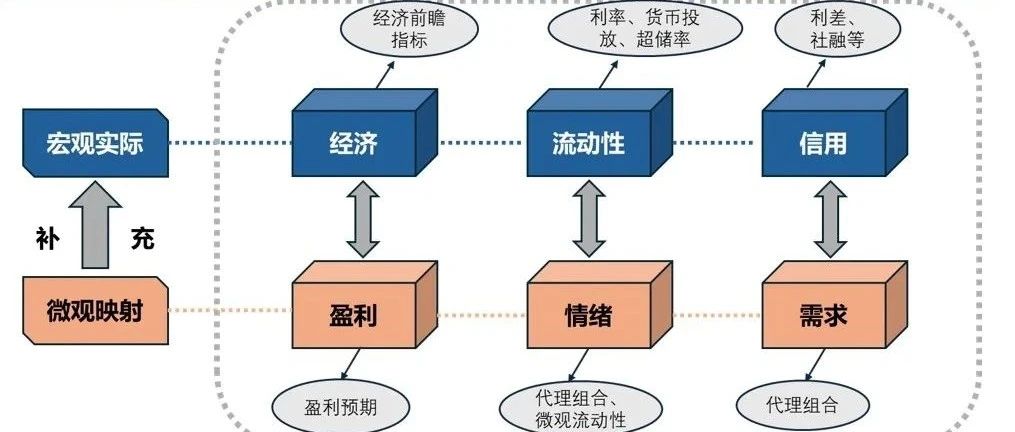
Group 1 - The core viewpoint emphasizes the continued significance of low volatility factors as resonance factors in investment strategies, integrating macroeconomic quantitative insights with factor momentum [1][2] - The analysis indicates that the economic recovery is ongoing, liquidity is returning to a neutral-tight state, and credit indicators are improving, with no need for adjustments based on micro mappings [1][2] - The stock pool configurations for various indices such as CSI 300 and CSI 1000 show a consistent preference for low volatility and growth factors, with value factors also being selected in the CSI 500 index [2] Group 2 - Economic leading indicators are positioned in the late stage of an upward trend, with expectations of reaching a peak by June 2025 and entering a downward cycle by December 2025 [3][8] - Specific indicators such as PMI and fixed asset investment are showing positive trends, suggesting continued economic growth in the near term [3][9] - The liquidity environment is tightening, with short-term interest rates rising above their moving averages, indicating a shift towards a tighter monetary policy [11][15] Group 3 - Credit indicators have shown improvement, with social financing stock increasing for two consecutive months, reflecting a more favorable credit environment [16][18] - The asset allocation strategy suggests reducing bond and US stock positions while increasing allocations in A-shares and commodities, reflecting a bullish outlook on domestic markets [18][22] - The focus on liquidity as a key variable driving market performance indicates that fluctuations in liquidity will significantly impact stock volatility and overall market dynamics [19][22]

先锋标普500 ETF稳居第一大ETF位置——海外创新产品周报20250324
申万宏源金工· 2025-03-25 06:51
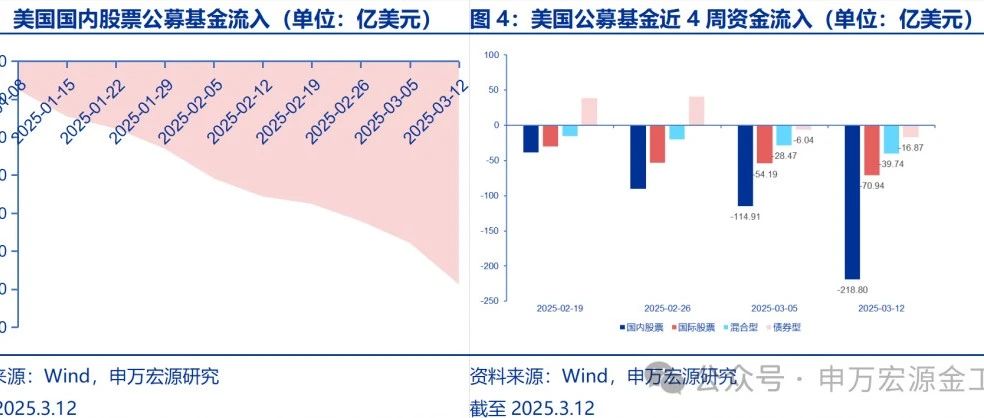
Group 1 - The core viewpoint of the article highlights the recent developments in the U.S. ETF market, particularly the introduction of innovative products such as the Solana futures ETF and the significant inflow of funds into domestic equity products [1][2][3]. Group 2 - The U.S. ETF market saw a total of 10 new products launched last week, with a notable issuance of a municipal bond index product by BlackRock, reflecting strong demand for tax-exempt municipal bonds [1]. - Individual leveraged products have gained popularity, with Defiance and Leverage Shares issuing four 2x leveraged products linked to companies like Robinhood, Palo Alto Networks, and Adobe [1]. - Fortuna launched a Bitcoin strategy product that primarily invests in Bitcoin futures and employs options strategies, including Covered Calls, to provide a safety net [1]. - MarketDesk introduced a high-concentration momentum product that selects stocks based on quality and momentum factors, emphasizing strong performance over the past six months [1]. - Invesco launched a futures strategy product that invests in various futures, including stock index, bond, and foreign exchange futures, with a relatively pessimistic outlook on U.S. stocks [1]. Group 3 - The inflow into U.S. domestic equity products exceeded $60 billion last week, indicating a stabilization in overall U.S. stock performance [3]. - There were significant differences in fund flows among the three major S&P 500 ETFs, with State Street's SPDR S&P 500 ETF experiencing outflows, while Vanguard and BlackRock's products saw substantial inflows [5][8]. - The top inflow products included iShares Core S&P 500 ETF (IVV) with $173.38 million and Vanguard S&P 500 ETF (VOO) with $163.53 million, while SPDR S&P 500 ETF Trust (SPY) faced outflows of $222.23 million [6]. Group 4 - The performance of U.S. ETFs has shifted, with low volatility factors emerging as the strongest performers this year, while growth and quality styles have seen significant pullbacks [9]. - Despite the strong performance of low volatility factors, there has been no significant inflow into these products, whereas dividend products have seen more pronounced inflows [9].
冷门红利指数研究系列——中证沪港深红利低波动指数
雪球· 2025-02-26 09:49
Core Viewpoint - The article discusses the "CSI Hong Kong-Shenzhen Dividend Low Volatility Index," emphasizing its unique characteristics and potential as a stable investment option across the Hong Kong, Shanghai, and Shenzhen markets [2][17]. Index Compilation Overview - The index selects 100 stocks from the mainland and Hong Kong markets that exhibit high liquidity, continuous dividends, high dividend yields, and low volatility, using a dividend yield weighting method [4]. - The index was established on November 14, 2014, with a base point of 3000 and is adjusted annually [4]. - The index includes stocks with a cash dividend yield greater than 0 over the past three years and has a selection process that prioritizes high dividend yield and low volatility [4]. Sample & Industry Composition - The index has a diverse sample weight ranging from 0.535% to 3.587%, with no excessive concentration in the banking sector [7]. - The financial sector accounts for over 36% of the index, which is relatively low compared to similar indices, indicating good industry diversification [8]. - The index leans towards Hong Kong stocks, with a sample weight of 58% from the Hong Kong Stock Exchange, while still maintaining representation from the mainland markets [10]. Historical Returns & Volatility Data - The total return of the index from May 29, 2015, to February 20, 2025, is 51.78%, outperforming the CSI Dividend Index and significantly better than the CSI 300 Index, which had a return of -1.14% [13]. - The annualized volatility over the past year, three years, and five years is 16.63%, 16.16%, and 16.02%, respectively, which is notably lower than the CSI Dividend Index and the CSI 300 Index [15]. Current Valuation - The current price-to-earnings ratio of the index is 8.16, with a dividend yield of 6.42%, indicating low valuation and high dividend characteristics [16]. Summary - The CSI Hong Kong-Shenzhen Dividend Low Volatility Index is characterized by a reasonable compilation method, normal historical returns, diversified sample and industry weights, and strong internal stability, making it suitable for conservative investors seeking stable dividends [17].