
低波因子

Search documents
低波因子表现回归、形成共振——量化资产配置月报202602
申万宏源金工· 2026-02-04 01:03
Group 1 - The core viewpoint of the article indicates a return of low volatility factors, forming a resonance in the current economic environment, which is characterized by weakening economic indicators, slightly loose liquidity, and a contraction in credit [1][5][6] - The macroeconomic dimensions suggest a consistent direction of weak economy, loose liquidity, and credit contraction, aligning with previous assessments [5][6] - The article emphasizes the selection of factors that are insensitive to economic changes but sensitive to liquidity and credit, with a notable absence of clear preferences for growth or value factors [6][9] Group 2 - The asset allocation perspective suggests a slight allocation to US stocks, with a positive outlook on bonds despite low overall positions influenced by other assets [21][22] - The economic leading indicators maintain a downward judgment, with predictions indicating a continued decline into early 2026, supported by recent PMI data showing a decrease [9][12] - The liquidity environment is assessed as slightly loose, with short-term interest rates declining and monetary supply showing a neutral signal, while excess reserves continue to decrease [16][19] Group 3 - The article highlights that the market's focus remains on PPI, which has gained prominence over economic indicators, indicating heightened attention to future demand recovery [22][24] - Industry selection continues to favor sectors that are less sensitive to economic fluctuations, particularly TMT (Technology, Media, and Telecommunications) and consumer sectors [24][25] - The analysis of macroeconomic indicators suggests that industries such as electronics, retail, and computing are currently positioned favorably based on their sensitivity to liquidity and credit [25]


——量化资产配置月报202602:低波因子表现回归、形成共振-20260202
Shenwan Hongyuan Securities· 2026-02-02 06:26
Group 1 - The report indicates a return of low volatility factors, forming a resonance in the current market environment, with economic indicators showing a weakening trend, liquidity slightly easing, and credit indicators remaining weak [2][8][11] - The report emphasizes the selection of factors that are insensitive to economic changes but sensitive to liquidity and credit, highlighting the low volatility factor in the CSI 300 as a key resonant factor [5][9][11] - The macroeconomic outlook suggests a continued downtrend in economic indicators, with the economic forecast model indicating that February 2026 is at the beginning of a decline that started in December 2025 [11][12][13] Group 2 - The liquidity environment is assessed as slightly easing, with short-term interest rates declining and monetary supply showing a neutral signal, while excess reserves are decreasing [18][21][23] - Credit indicators are showing a weakening trend, with credit spreads widening and overall credit metrics declining, indicating a contraction in credit availability [24][25] - The asset allocation strategy suggests a slight allocation to US stocks, with a neutral stance on A-shares and a positive outlook on gold based on momentum [26][28] Group 3 - The report identifies PPI as the most closely monitored variable, with inflation concerns rising and liquidity becoming a significant focus for the market [28] - The industry selection is biased towards TMT (Technology, Media, and Telecommunications) and consumer sectors, based on macroeconomic indicators and their sensitivity to economic changes [29]
量化资产配置月报202602:低波因子表现回归、形成共振-20260202
Shenwan Hongyuan Securities· 2026-02-02 04:11
Group 1 - The report indicates a return of the low volatility factor, forming a resonance with macroeconomic indicators showing a weakening economy, slightly loose liquidity, and a contraction in credit [2][5][8] - The report emphasizes the selection of factors that are insensitive to economic conditions, sensitive to liquidity, and insensitive to credit, with a focus on low volatility factors in the CSI 300 and small-cap stocks in the CSI 500 [5][9] - The overall asset allocation viewpoint suggests a slight allocation to US stocks, with a neutral stance on A-shares and a positive outlook on gold despite recent declines [29][30] Group 2 - Economic leading indicators maintain a downward judgment, with the PMI and new orders showing declines, indicating the economy is in an early stage of a downward cycle since December 2025 [12][18] - Liquidity is assessed as slightly loose, with short-term interest rates declining and monetary supply showing a neutral signal, while excess reserves continue to decrease [21][26] - Credit indicators show a widening credit spread and weakening credit price indicators, with a general decline in comprehensive credit indicators [27] Group 3 - The market focus remains on PPI, which has gained attention as inflation expectations rise, particularly after September 2024, indicating a heightened concern for future demand recovery [31] - The industry selection continues to favor TMT (Technology, Media, and Telecommunications) and consumer sectors, based on macroeconomic indicators [32]
申万金工因子观察第1期20260125:为何2026年以来中证500指数难以战胜?
Shenwan Hongyuan Securities· 2026-01-25 11:08
1. Report Industry Investment Rating Not provided in the content 2. Core Viewpoints of the Report - Since 2026, the CSI 500 Index has performed prominently among major broad - based indices, breaking the historical monotonicity of performance based on market - value factors. Whether this phenomenon will continue requires further observation. The concentration of hot industries and a small number of stocks contributing a large portion of the index's gains have made it difficult to outperform the index. Also, factor inefficiencies, especially the reversal of price - volume factors, have led to the underperformance of index - enhancement products and quantitative strategies [1][4]. - The current market situation is an extreme case in factor performance. Although no single factor has reached its historical worst, the combined performance of multiple factors is the worst in history. However, based on historical experience, factor logic will return as market volatility decreases, usually within two months [1][40]. - Looking ahead, the situation of factor inefficiency or reversal is not expected to last long, so major model adjustments are not advisable at present. In the long run, a detailed risk - control framework for CSI 500 index enhancement should be established, and the construction of price - volume factors should be optimized [1][70]. 3. Summary According to the Table of Contents 3.1 2026 Year - to - Date CSI 500 Index Performance Highlights - As of January 23, 2026, the CSI 500 Index has risen 15.06%, outperforming the SSE 300, CSI 1000, and CSI 2000 indices during the same period, breaking the historical monotonicity of broad - based index performance related to market - value factors [4]. - The index's strong performance is due to its concentration in sectors that have performed well in 2026, such as electronics, non - ferrous metals, and national defense and military industries. A small number of stocks have contributed significantly to the index's gains; the top 5 stocks contributed 1.47% of the increase, and the top 40 stocks contributed nearly half of the increase [7][11]. 3.2 Factor Perspective: Why Is It Difficult to Outperform the CSI 500 Index? 3.2.1 Index - Enhancement Funds Collectively Underperform the Index - All CSI 500 index - enhancement funds have underperformed the CSI 500 Index in 2026, with an average underperformance of 2.5%. The best - performing product underperformed by 0.12%, and the worst by 7.93%. Active quantitative quasi - index - enhancement products were more affected, with an average underperformance of 3.91%, the best - performing product underperforming by 2.07%, and the worst by 7.61% [13][15]. 3.2.2 Factor Changes within the CSI 500 Index - Since 2017, the market - value factors in the SSE 300, CSI 500, and CSI 1000 indices have shown continuous reversal and decline. The market - value factor in the CSI 1000 index rebounded strongly in 2021, while those in the CSI 500 and SSE 300 indices only had a weak rebound [16]. - In 2026, many factors in the CSI 500 Index showed significant anomalies. Fundamental factors such as profitability, dividend yield, and valuation were negative, and price - volume factors such as liquidity, reversal, market value, and volatility not only reversed but also had larger IC values. The short - term rapid market rise and overheated market led to the continued rise of theme stocks with fast short - term gains, high turnover, and high volatility, causing the reversal and ineffectiveness of price - volume factors [19][20]. - The long - term winning rates of factors such as valuation, momentum, reversal, market value, and liquidity are poor, around 50% or lower. In 2026, there was a concentrated reversal of price - volume factors, and the low - volatility factor, which had a high long - term winning rate, also reversed in January 2026 [26]. - The changes in the four price - volume factors (market value, reversal, low liquidity, and low volatility) generally started in the third quarter of 2025, gradually flattening or reversing. The top - performing stocks in 2026 generally ranked low in these price - volume factors, making it difficult for traditional multi - factor frameworks to select them [35]. 3.3 Historical Similar Situations Review and Future Outlook 3.3.1 The Current Market Is an Extreme Case in Factor Performance - In January 2026, no single factor reached its historical worst IC value. However, the combined performance of the four price - volume factors was the worst in history, and when considering all nine factors, it was the second - worst, only after June 2022 [39][40]. 3.3.2 Historical Similar Situations of the CSI 500 and Subsequent Developments - Similar extreme situations in factor performance have occurred in June 2018, August 2025, etc. Market fluctuations are an important factor affecting factor effectiveness. When the market fluctuates significantly, factors are likely to become ineffective, and when the market stabilizes, factor logic tends to return. Historical experience shows that factor inefficiency usually does not last more than two months [42][69]. 3.3.3 Future Outlook - The situation of factor inefficiency or reversal is not expected to last long, so major model adjustments are not recommended at present. - In the long run, a detailed risk - control framework for CSI 500 index enhancement should be established, including differential constraints on individual stocks with different excess - volatility characteristics and industry - constraint frameworks based on industry - scoring models. - The construction of price - volume factors should be optimized to improve their winning rates and reduce non - linear characteristics [70][71].
市场创新高,红利慢半拍?2026年还能投吗?
Sou Hu Cai Jing· 2026-01-07 06:29
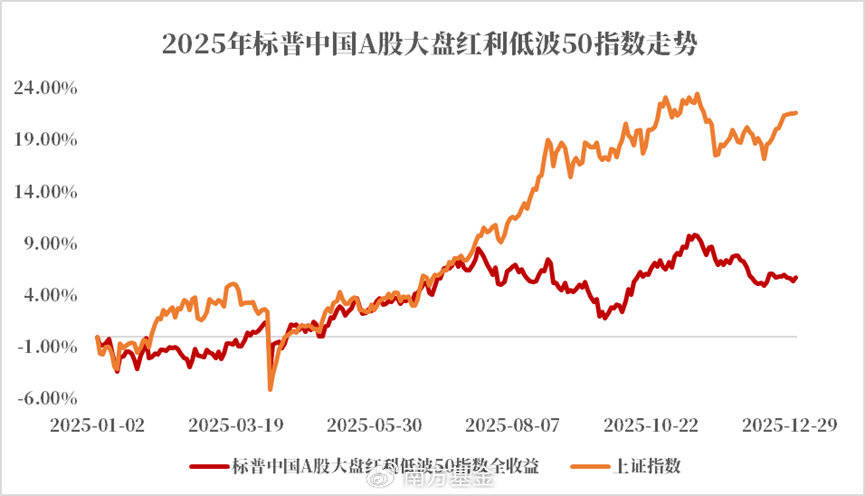
Core Viewpoint - The performance of dividend strategies in the A-share market has been relatively muted in 2025, despite the overall market reaching new highs, raising questions about the effectiveness of these strategies as a stable investment option [1][3]. Group 1: Performance Analysis - Over the past decade, major dividend indices have shown annualized returns between 10% and 15%, indicating solid long-term performance [3]. - In 2025, the Shanghai Dividend Index recorded a return of only 0.41%, while the CSI Dividend Index performed slightly better at 3.76% [4][5]. - The muted performance in 2025 can be attributed to two main factors: a digestion phase following a significant rise in 2024 and a market dominated by growth stocks, particularly in AI and technology sectors [5][6]. Group 2: Influencing Factors - Three key factors have influenced the dividend strategy's performance in 2025: 1. Style rotation suppression, as the A-share market has been dominated by a growth style since 2024, leading to a decline in interest for value-oriented dividend strategies [6]. 2. Increased uncertainty in geopolitical and policy environments, which can enhance the appeal of dividend strategies as a defensive measure during market volatility [6]. 3. Changes in government bond yields, where rising yields have reduced the attractiveness of dividends relative to bonds, impacting the dividend strategy's appeal [6]. Group 3: Future Outlook for 2026 - The future performance of dividend strategies in 2026 will depend on several factors: 1. The duration of the growth style's dominance in the market, with a potential need for a shift in market conditions for dividend strategies to recover [8]. 2. The ongoing performance of the "low volatility" factor, which may underperform in the early stages of a bull market but could regain traction as market conditions evolve [9]. 3. Internal differentiation within dividend strategies based on macroeconomic conditions, where sectors like manufacturing may benefit in a recovering economy, while stable high-dividend sectors may perform better in a low-rate environment [10]. Group 4: Investment Considerations - The underlying logic of dividend strategies remains focused on stable cash flow and long-term returns, while adaptability to macroeconomic and market style fluctuations is essential [11]. - The dividend yield of the S&P China A-share Large Cap Dividend Low Volatility 50 Index has returned to over 5%, indicating a potential favorable investment opportunity following recent market corrections [11].
港股四季度策略展望:寻找港股新路标
Huaxin Securities· 2025-10-09 07:03
Group 1: Southbound Capital - Southbound capital has significantly flowed into the Hong Kong stock market in 2025, with a cumulative net purchase of 979 billion HKD from January to August, surpassing the total of 807.9 billion HKD for the entire year of 2024 [2][24]. - Despite the increasing transaction share of southbound capital, its net purchases have shown little predictive power for the future movements of the Hang Seng Index, with a negative correlation observed between daily net purchases and index fluctuations [2][24]. - The top 10% of stocks by net purchase amount from southbound capital yielded an annualized return of 12.08%, significantly higher than the average of 2.61% and the bottom 10% group which saw a return of -2.94% [3][29]. Group 2: Industry Rotation - The analysis of industry rotation indicates that the southbound net purchase amount has a poor monotonicity across industries, but after adjusting for transaction amounts, the excess returns for bullish positions significantly improve, with the top three industries showing an annualized return of 11.64% [4][32]. - The retail sector, particularly represented by Alibaba, has been the most favored by southbound capital, with a net purchase scale significantly outperforming other sectors [4][32]. - The report highlights the effectiveness of style factors in guiding industry allocation, with growth and long-term momentum factors showing particularly strong performance in the Hong Kong market [6][65]. Group 3: IPO Trends - The Hong Kong stock market has experienced a surge in IPO activity in 2025, with 43 companies listed by June 30, raising a total of 106.71 billion HKD, which is significantly higher than the 88.15 billion HKD raised in 2024 [7][38]. - Notable IPOs include Heng Rui Pharmaceutical and Ningde Times, which raised 11.3 billion HKD and 41 billion HKD respectively, indicating a strong market interest and improved liquidity [7][38]. - The new IPO regulations implemented in August 2025 aim to enhance the attractiveness of the Hong Kong market by reducing public shareholding requirements and shortening the listing review process [7][38]. Group 4: Real Estate Market - The Hong Kong real estate market is showing signs of stabilization following the government's removal of property control measures, which has significantly reduced transaction costs for residential properties [11][12]. - High-frequency data indicates a rebound in private residential price indices since March 2025, suggesting a recovery in market sentiment and price stabilization [12][11]. - The low-interest environment and financial wealth effects are contributing to the improved outlook for the real estate sector, with transaction volumes increasing significantly [11][12].
最近确实很难跑赢上证指数
表舅是养基大户· 2025-08-12 13:27
Group 1 - The article discusses the recent volatility in the A-share market, particularly highlighting the impact of the announcement regarding the extension of tariff suspensions by the U.S. government, which has led to increased market speculation and trading activity [3][4][5] - The focus on domestic chip manufacturers, particularly Cambrian (寒武纪), is emphasized, with market expectations for its revenue in 2026 projected to reach between 30 billion to 40 billion yuan, resulting in a significant stock price increase [5][6] - The article notes that the Shanghai Composite Index has shown strong performance, with a year-to-date increase of 11.6%, driven by the growth of the STAR Market (科创板) and its contribution to the overall index [7][9] Group 2 - The article provides a comparison of the top market capitalization stocks in the Shanghai Composite Index and the STAR Market, indicating that while traditional banks have driven the main index, the STAR Market has seen significant gains from high-growth stocks [10] - It highlights the performance of the Hang Seng Technology Index, which has struggled recently, particularly due to the underperformance of automotive companies within the index [11][13] - The article discusses the recent performance of Hong Kong dividend stocks, which have shown resilience with gains exceeding 16% over the past three months, contrasting with the struggles of the broader technology sector [14][15]

各现金流指数差异在哪?哪种指数与传统资产相关性更低?——A股自由现金流指数比较
申万宏源金工· 2025-08-08 08:03
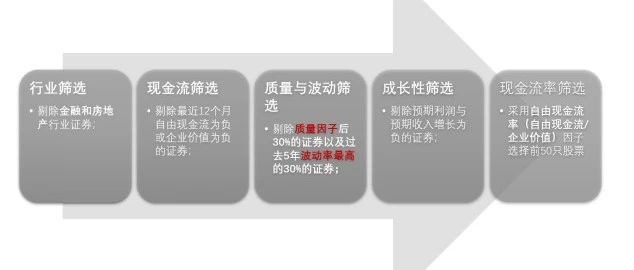
Group 1 - The core viewpoint of the article emphasizes that free cash flow has become a high-potential investment direction in the domestic ETF market, with significant growth observed in overseas markets [1] - The development of cash flow ETFs in overseas markets is mature, with the largest US free cash flow ETF, COWZ, exceeding $20 billion in size as of April 25, 2025 [1][5] - Various index compilation schemes for overseas free cash flow products exist, with a focus on selecting stocks with the highest free cash flow yield [3][4] Group 2 - Domestic cash flow strategies are expected to be effective in the long term, as companies shift from growth-oriented to cash flow-focused management strategies [7] - The performance of large-cap stocks has outperformed small-cap stocks in the US cash flow products, with COWZ showing a widening lead over CALF since 2024 [6] - The domestic cash flow index has seen steady growth since 2014, with a focus on companies with high cash flow returns, leading to significant excess returns compared to broad market indices [7] Group 3 - The FTSE China A-Share Free Cash Flow Focus Index has a larger average market capitalization compared to other domestic cash flow indices, indicating a focus on large and mid-cap stocks [19][21] - The FTSE cash flow index has a higher dividend yield and lower valuation compared to its peers, making it an attractive investment option [33] - The FTSE cash flow index has shown a strong risk-return profile, outperforming traditional dividend indices since 2014 [36][37] Group 4 - The FTSE cash flow index benefits from a dual filtering approach that includes quality and low volatility factors, enhancing its risk management and long-term value [50][55] - The index's composition is heavily weighted towards consumer and cyclical sectors, with significant allocations in household appliances, non-ferrous metals, and food and beverage industries [26][27] - The index has a high overlap with major broad-based indices, which positions it well to benefit from future market management policies [31][32]
机构:价值、低波、红利等因子有效性或提升,300红利低波ETF(515300)最新规模创近1年新高!
Sou Hu Cai Jing· 2025-05-15 03:03
Group 1 - The CSI 300 Dividend Low Volatility Index decreased by 0.07% as of May 15, 2025, with mixed performance among constituent stocks [1] - China Shenhua led the gains with an increase of 1.48%, followed by China Life Insurance at 1.21% and Hangzhou Bank at 0.85%, while GF Securities experienced the largest decline [1] - The CSI 300 Dividend Low Volatility ETF (515300) saw a trading volume of 32.31 million yuan during the session, with an average daily trading volume of 114 million yuan over the past week [1] Group 2 - The latest size of the CSI 300 Dividend Low Volatility ETF reached 5.631 billion yuan, marking a one-year high [1] - Over the past five trading days, there were net inflows on four days, totaling 66.32 million yuan [1] - As of April 30, 2025, the top ten weighted stocks in the index accounted for 37.43% of the total, including China Shenhua, Gree Electric, and China Petroleum [1] Group 3 - Huatai Securities anticipates that a series of policies aimed at stabilizing the market and expectations will support risk appetite, with resilient inflation and export data for April [2] - The recent issuance of the "Action Plan for Promoting High-Quality Development of Public Funds" by the CSRC is expected to reshape the A-share market ecosystem [2] - Sectors such as large-cap stocks, financials, public utilities, and oil & petrochemicals are likely to benefit from the guidance towards long-term capital inflow and asset allocation [2]






价值、低波、红利等因子有效性或提升,红利低波ETF(512890)值得关注
Xin Lang Ji Jin· 2025-05-12 06:43
Group 1 - The core viewpoint of the articles highlights the active trading of the Dividend Low Volatility ETF (512890) and the supportive policies from the China Securities Regulatory Commission (CSRC) aimed at enhancing market stability and investor confidence [1][2] - The CSRC's new action plan includes 25 measures to shift the focus of the public fund industry from "scale" to "returns," which is expected to have a medium to long-term impact on the A-share market ecosystem [2] - The recent economic data, including resilient inflation and export figures, suggests a short-term favorable outlook, although the risk-reward ratio may decline, leading to a more structural market trend [1] Group 2 - The new regulations are expected to accelerate the trend towards indexation of public fund products and emphasize the performance benchmark constraints for fund products, potentially increasing allocations to low-risk equity funds and dividend assets [2] - Investment firms recommend maintaining current positions in the market while adjusting the portfolio structure, favoring sectors like large financials and dividend stocks over previously high-performing technology and growth sectors [1] - The MACD golden cross signal indicates positive momentum in certain stocks, suggesting potential investment opportunities [4]