依恋理论

Search documents
信“心”心理问答|“变质”的朋友,厌恶感背后,藏着哪些未被看见的心理真相
Jing Ji Guan Cha Bao· 2025-05-30 00:45
Core Insights - The letter discusses the emotional turmoil experienced in a long-term friendship that has become strained, highlighting feelings of confusion and self-doubt regarding the relationship [1][2] - The author seeks to understand the reasons behind the shift from intimacy to aversion in the friendship, questioning whether this is a natural evolution or a sign of irreconcilable differences [2][3] Group 1: Emotional Dynamics - The concept of "familiarity" in friendships can lead to "aversion" due to psychological mechanisms such as the mere exposure effect, where overexposure can result in emotional numbness and misinterpretation of neutral behaviors as negative [3][4] - Attachment theory suggests that when a close relationship loses its comforting role, defensive mechanisms may trigger feelings of aversion as a way to protect oneself from perceived emotional neglect [3][4] - Value conflicts may also contribute to feelings of aversion, as differing perspectives on social validation can create tension and resentment within the friendship [3][4] Group 2: Assessing Relationship Status - Evaluating the emotional value of the relationship is crucial; healthy relationships allow for conflict resolution and understanding, while deteriorating ones often lead to silence and unresolved tension [4][5] - Growth potential in friendships is another indicator; healthy relationships foster new perspectives and acceptance of differences, whereas failing ones become rigid and focused on changing each other [4][5] - Respecting personal space is essential; healthy relationships maintain a balance of independence, while deteriorating ones may exhibit excessive dependence or control, leading to feelings of suffocation [4][5] Group 3: Navigating Change - Accepting the legitimacy of conflicting emotions is important; acknowledging feelings of loss can facilitate the process of distancing oneself from the friendship [5][6] - Establishing gentle boundaries can help manage the transition; practical steps like reducing social media interactions and communicating feelings without blame can ease the process [5][6] - Focusing on self-reconstruction through new social experiences can help fill emotional voids and reshape memories of the old relationship, promoting personal growth [6][7]
为什么糟糕家庭中长大的孩子,反而更单纯?
Hu Xiu· 2025-05-23 05:45
Group 1 - The core idea is that childhood experiences, particularly those involving parental relationships, significantly influence an individual's social skills and emotional management in adulthood [2][11][32] - Children raised in controlling or emotionally neglectful environments often struggle with self-confidence and social interactions [3][4][13] - The impact of family conflict on children's social abilities is profound, leading to avoidance behaviors and difficulties in forming stable relationships [23][24][30] Group 2 - The article identifies three main reasons for social difficulties stemming from parental influence: lack of social skills in parents, family conflict, and distorted personality development [5][14][25] - Parents who lack social skills may restrict their children's social interactions, leading to social anxiety in adulthood [6][12][13] - Children exposed to family conflicts often develop a confused understanding of relationships and may avoid intimacy due to fear [18][20][24] Group 3 - A real case study illustrates the effects of a controlling and emotionally abusive family environment on an individual's self-esteem and social capabilities [40][41][47] - The case highlights the concept of insecure attachment, where children learn to distrust themselves and others due to unstable parental support [48] - Strategies for overcoming these challenges include understanding the impact of one's upbringing, practicing communication, and engaging in self-affirmation exercises [51][53][56]
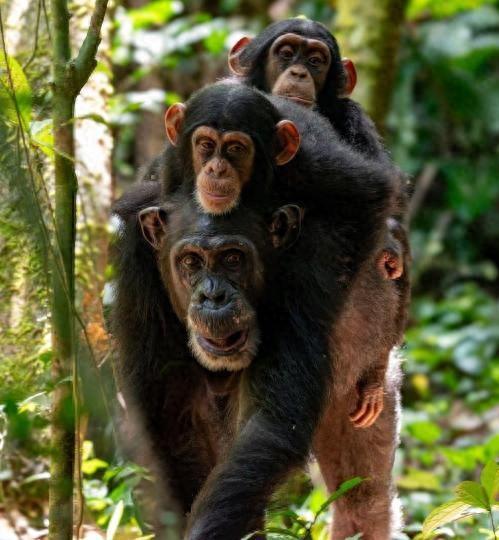
野生黑猩猩母婴关系如何联结?最新研究称依恋模式或与人类相似
Huan Qiu Wang Zi Xun· 2025-05-13 06:43
Core Insights - The study published in the journal "Nature Human Behavior" indicates that maternal-infant bonding in wild chimpanzees may resemble the secure and insecure-avoidant attachment patterns observed in humans, enhancing the understanding of maternal attachment in closely related species [1][3]. Group 1: Attachment Theory - Attachment theory was originally developed to understand the relationship between human infants and caregivers, suggesting that early bonding experiences influence psychological development and social interactions [3]. - Organized attachment is characterized by clear and consistent connections, while disorganized attachment occurs when behaviors are random or conflicting, with approximately 23% of human infants across different cultures exhibiting disorganized attachment [3]. Group 2: Research Findings - The research involved 3,795 hours of observation of 30 wild chimpanzees aged 0-10 years in Taï National Park, Côte d'Ivoire, focusing on their responses to threatening events [3][5]. - No evidence of disorganized attachment behaviors was found, such as infants displaying aggression towards their mothers. However, secure and insecure-avoidant attachment patterns were observed in immature chimpanzees during non-targeted threat events [3][5]. - Immature chimpanzees preferred to whimper and seek proximity to their mothers during threats, with this response decreasing as they aged. In 75 out of 78 cases, whimpering ceased after threats, regardless of maternal proximity, but always stopped when mothers were close [5]. Group 3: Evolutionary Implications - The authors conclude that certain characteristics of organized attachment have deep evolutionary roots, while disorganized attachment patterns are shaped by environmental factors [7]. - Although the sample size was small, the findings may inform future research on the environmental factors contributing to higher rates of disorganized attachment in captive great apes and humans [7].