元认知

Search documents
6小时复刻AI IMO金牌成果,蚂蚁多智能体新进展已开源
量子位· 2025-08-02 08:33
Core Insights - The article discusses the advancements in multi-agent systems, particularly through the AWorld project, which has demonstrated the potential of collaborative AI in solving complex mathematical problems like those presented in the International Mathematical Olympiad (IMO) 2025 [1][2][23]. Group 1: Multi-Agent Collaboration - AWorld's multi-agent framework successfully replicated and open-sourced DeepMind's results for 5 out of 6 IMO problems within 6 hours, showcasing the efficiency of collaborative AI systems [2][15]. - The core advantage of multi-agent systems lies in their ability to dynamically construct high-quality input information, surpassing the limitations of single-agent models [8][11]. - AWorld's experiments indicate that the intelligence ceiling of multi-agent collaboration may exceed that of individual models, as evidenced by their ability to solve complex problems through iterative dialogue between problem solvers and validators [6][10][24]. Group 2: Limitations of Single-Agent Models - Single-agent models, such as Gemini 2.5 Pro, struggle to solve IMO-level problems due to their inability to reason effectively in a single attempt, revealing the limitations of traditional models in handling complex tasks [7][9]. - AWorld's data highlights that single-agent attempts often fail, while multi-agent collaboration can lead to successful solutions through iterative refinement and feedback [10][14]. Group 3: System Architecture and Functionality - AWorld employs an event-driven architecture that allows asynchronous communication between agents, enabling complex real-time interactions that traditional frameworks cannot support [16][17]. - The system features a dual-agent dialogue mechanism, where one agent generates solutions while the other validates them, enhancing the quality and accuracy of problem-solving [19][20]. - AWorld's design includes robust context and memory management, ensuring agents maintain state during long-term tasks, which is crucial for complex problem-solving [21]. Group 4: Future Directions and Implications - The AWorld team is exploring the combination of multi-agent systems with formal verification methods, aiming for advancements in mathematical proof systems [25]. - The article suggests that the current capabilities of multi-agent systems may surpass 99% of human competitors in mathematical problem-solving, indicating a significant shift in the landscape of AI and mathematics [23][24]. - The potential for multi-agent collaboration to unlock higher levels of collective intelligence is emphasized, with future developments expected to further enhance AI capabilities [24][26].

ChatGPT大更新推出学习模式!“一夜之间1000个套壳应用又死了”
量子位· 2025-07-30 00:24
Core Viewpoint - OpenAI has launched a new "Study Mode" for ChatGPT, designed to enhance learning by guiding users through problem-solving rather than simply providing answers [1][2]. Summary by Sections Introduction of Study Mode - The Study Mode is now available for free, Plus, Pro, and Team users, with ChatGPT Edu users to gain access in the coming weeks [2]. Educational Impact - Leah Belsky, OpenAI's VP of Education, emphasizes that using ChatGPT for teaching can significantly improve student learning outcomes, while merely using it as an "answer machine" may hinder critical thinking [4]. - Approximately one-third of college students are using ChatGPT to assist with their studies, raising concerns among educators and parents about potential academic dishonesty [4]. Learning Mode Features - The Study Mode does not provide direct answers; instead, it poses guiding questions to encourage users to think through problems and summarize concepts in their own words [12][15]. - The design of the Study Mode is a result of collaboration with educators and experts in teaching methodologies, incorporating long-term research in learning science [15]. Interactive Learning - Key features include: - Interactive questioning that promotes active learning through Socratic questioning and self-reflection prompts [16]. - Scaffolding responses that organize information into understandable parts, highlighting key connections between topics [16]. - Knowledge checks through quizzes and open-ended questions, providing personalized feedback to support knowledge retention [17]. Customization and Flexibility - The Study Mode adapts to the user's skill level and past interactions, breaking down complex information into manageable modules while maintaining contextual relevance [18]. - Users can toggle the Study Mode on or off based on their learning objectives [19]. Future Developments - OpenAI views the current Study Mode as an initial step, with plans to refine the model based on real student feedback and to incorporate clearer visual representations for complex concepts [23][24]. - Future improvements may include cross-dialogue goal setting and deeper personalization based on individual student needs [24]. Strategic Intent - OpenAI's CEO, Sam Altman, expresses skepticism about traditional education, suggesting a potential shift in educational paradigms over the next 18 years [26][28]. - This perspective indicates a strategic intent to fundamentally reshape future educational models through AI [28].

虚假相关性:很多看似相关的事情之间根本无关
3 6 Ke· 2025-07-25 07:14
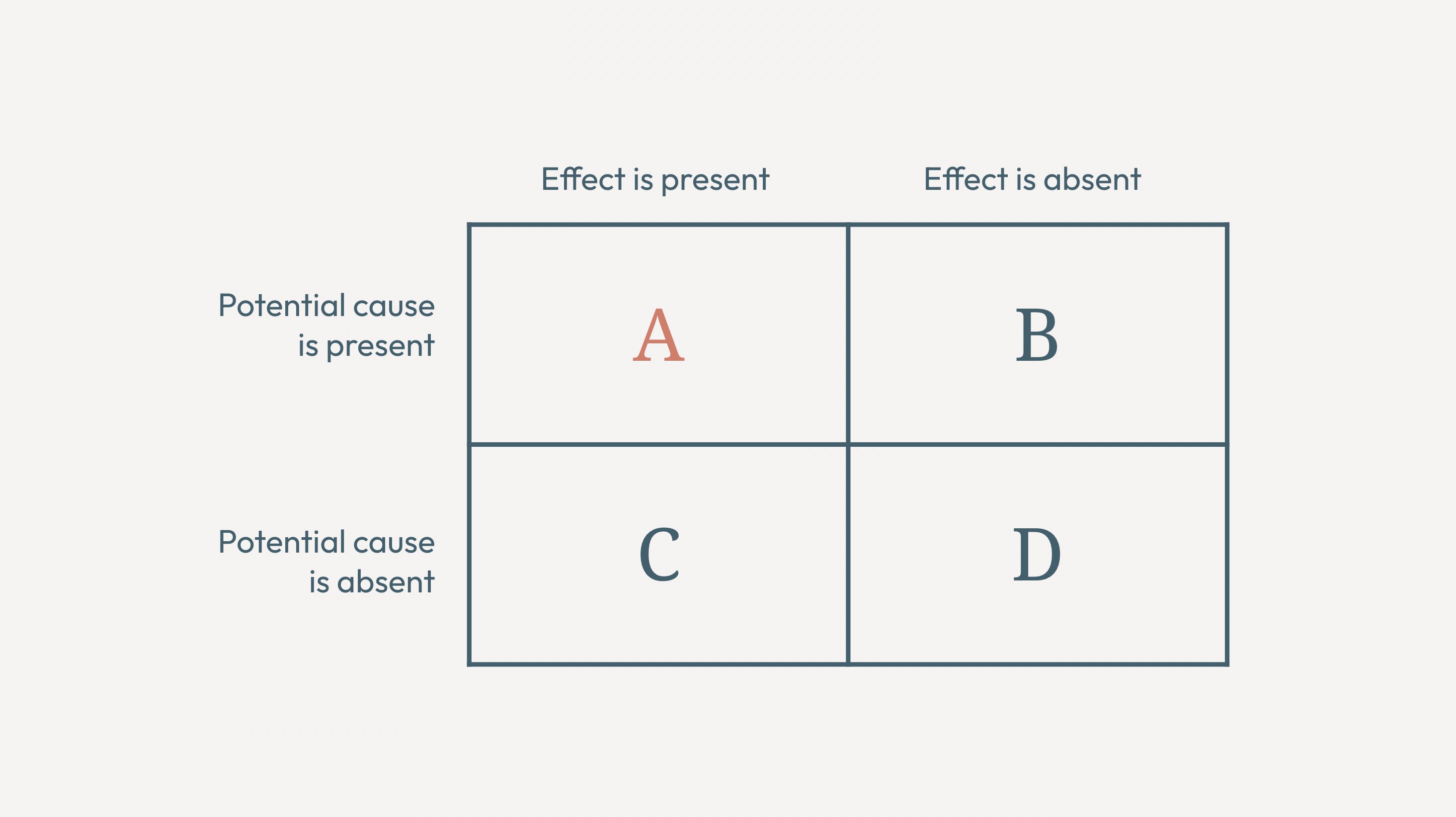
Group 1 - The article discusses the concept of "illusory correlation," which refers to the tendency to overestimate the relationship between two variables even when no such relationship exists [1][2] - Illusory correlations are prevalent in decision-making processes, especially in high-pressure environments where individuals rely on mental shortcuts to make quick judgments [2][3] - The article emphasizes the importance of challenging assumptions to uncover hidden cognitive patterns that drive thinking, particularly when making significant decisions [8] Group 2 - The article provides examples of illusory correlations, such as believing that wearing a specific item of clothing leads to success in competitions or that certain days are unlucky for interviews [5][7] - It introduces a contingency table as a method to identify when individuals are most susceptible to illusory correlations, highlighting that the presence of both an outcome and a potential cause is crucial for forming these false associations [3][7] - The article suggests that recognizing and questioning these illusory correlations can lead to better decision-making and a deeper understanding of one's cognitive biases [8]