南海问题

Search documents
新华时评:维护二战后国际秩序 共促南海稳定繁荣
Xin Hua She· 2025-08-22 08:21
Core Viewpoint - The report titled "South China Sea Truth" emphasizes China's historical and legal basis for sovereignty over the South China Sea islands, while calling for regional cooperation to address disputes without external interference [1][2]. Group 1: Historical Context - The report outlines China's restoration of sovereignty over the South China Sea islands post-World War II, highlighting its role as a key ally in the fight against fascism and militarism [1]. - It references international legal documents such as the Cairo Declaration and the Potsdam Proclamation, asserting that China's claims are integral to the post-war international order [1]. Group 2: Current Challenges - The report identifies external powers that exacerbate tensions in the South China Sea, accusing them of spreading false narratives and engaging in military threats [2]. - It notes that certain claimant countries, like the Philippines, are provoking tensions with the support of external forces, undermining the collective desire for peace established since World War II [2]. Group 3: China's Position and Actions - China maintains a consistent and clear stance on its territorial sovereignty and maritime rights in the South China Sea, advocating for resolution through negotiation and cooperation [3]. - The country has signed the Declaration on the Conduct of Parties in the South China Sea with ASEAN nations and is actively promoting consultations on the "Code of Conduct" [3]. - China has engaged in cooperative agreements with relevant claimant countries for joint development in overlapping maritime areas and has provided public goods like tsunami warning services to regional nations [3].
“南海真相”系列中英文智库报告发布
Xin Hua She· 2025-08-21 17:16
Core Viewpoint - The report series "South China Sea Truth" systematically clarifies China's historical and legal basis for territorial sovereignty and maritime rights in the South China Sea, revealing the truth about external forces' interference in the South China Sea issue and interpreting China's efforts to promote the South China Sea as a sea of peace, friendship, and cooperation [1][2]. Group 1: Report Content - The series includes three sub-reports: "Deep Blue Contains China - Historical and Legal Basis of China's Sovereignty and Maritime Rights in the South China Sea," "Provocation, Threats, Lies - The Truth About External Forces' Interference in the South China Sea Issue," and "China's Practice of Making the South China Sea a Sea of Peace, Friendship, and Cooperation" [1]. - The report emphasizes that 80 years ago, China restored its sovereignty over the South China Sea islands based on international legal documents such as the Cairo Declaration and the Potsdam Proclamation, which are part of the post-World War II international order [1]. Group 2: External Forces and Regional Stability - The report argues that external forces have initiated "great power competition" targeting China in the so-called "Indo-Pacific region," using the South China Sea issue as a tool to provoke related claimants like the Philippines, which escalates tensions in the region [2]. - It calls for recognition of the various tactics employed by Western powers to provoke, threaten, and sow discord regarding the South China Sea issue, advocating for the maintenance of regional peace and stability [2]. Group 3: Publication and Research Direction - On the same day, the book "Deep Blue Contains China - South China Sea Truth," which includes the "South China Sea Truth" series of reports, was published by Xinhua Publishing House [3]. - The Xinhua National High-end Think Tank focuses on public policy and international policy research, conducting forward-looking, strategic, and reserve research on significant domestic and international issues, resulting in numerous influential research outcomes [3].
“南海真相”系列智库报告引发热议
Xin Hua She· 2025-08-21 14:44
Core Viewpoint - The "South China Sea Truth" series of reports released by the Xinhua News Agency emphasizes China's historical and legal basis for sovereignty over the South China Sea islands and its maritime rights, while exposing the interference of external forces in the South China Sea issue [1][2]. Group 1: Report Overview - The series includes three reports: "The Historical and Legal Basis of China's Sovereignty and Maritime Rights in the South China Sea," "The Truth About External Forces Interfering in the South China Sea Issue," and "China's Practice of Making the South China Sea a Sea of Peace, Friendship, and Cooperation" [1]. - The report highlights that China's restoration of sovereignty over the South China Sea islands is part of the post-World War II international order and is protected by international law, including the United Nations Charter [1]. Group 2: Expert Opinions - Experts believe the report effectively outlines the historical process of China's sovereignty over the South China Sea islands, reinforcing the legitimacy of China's claims and showcasing its contributions to maintaining post-war international order and regional stability [2]. - The report calls for awareness of the provocations and threats posed by external forces in the South China Sea, advocating for the maintenance of regional peace and stability [2]. Group 3: Advocacy for Peace and Cooperation - The report advocates for making the South China Sea a sea of peace, friendship, and cooperation, highlighting China's ongoing efforts to support peace and prosperity in the region [3]. - It emphasizes the importance of cross-cultural communication to ensure that the "South China Sea Truth" is understood and recognized globally [3].
新华社国家高端智库发布“南海真相”系列中英文智库报告
Xin Hua She· 2025-08-21 02:32
Core Viewpoint - The report series "South China Sea Truth" systematically clarifies China's historical and legal basis for territorial sovereignty and maritime rights in the South China Sea, revealing the truth about external forces' interference in the "South China Sea issue" and interpreting China's efforts to promote the South China Sea as a sea of peace, friendship, and cooperation [1][2]. Group 1: Report Content - The series includes three sub-reports: "The Deep Blue Holds China - Historical and Legal Basis of China's Sovereignty and Maritime Rights in the South China Sea," "Provocation, Threats, Lies - The Truth About External Forces' Interference in the South China Sea Issue," and "China's Practice of Making the South China Sea a Sea of Peace, Friendship, and Cooperation" [1]. - The sub-report "China's Practice of Making the South China Sea a Sea of Peace, Friendship, and Cooperation" was previously released on June 8, coinciding with World Oceans Day [2]. - The report emphasizes that 80 years ago, China restored its sovereignty over the South China Sea islands based on international legal documents such as the Cairo Declaration and the Potsdam Proclamation, which are part of the post-World War II international order [2]. Group 2: External Forces and Regional Stability - The report argues that external forces have initiated "great power competition" against China in the so-called "Indo-Pacific region," using the South China Sea issue as a tool to provoke related claimants like the Philippines, thereby escalating tensions in the region [2]. - It highlights that the actions of external forces to undermine and contain China reflect a modern Western strategic view centered on hegemony and competition [2]. - The report calls for recognition of the various tactics employed by Western powers to provoke, threaten, and sow discord over the South China Sea issue, advocating for regional peace and stability, and collective prosperity [2].
中国驻菲律宾使馆发言人:敦促菲方有关人士停止不实炒作和政治作秀
人民网-国际频道 原创稿· 2025-08-01 05:41
Core Viewpoint - The Chinese Embassy in the Philippines responded to recent comments by Philippine Defense Secretary Teodoro regarding China's claims in the South China Sea, emphasizing that China's position is clear and based on historical and legal grounds [1] Summary by Relevant Sections China's Position on South China Sea - The Chinese Embassy stated that China's claims in the South China Sea are well-documented in government statements, white papers, and other official documents, asserting that these claims are supported by historical and legal evidence [1] - The Embassy refuted the notion that China claims sovereignty over all waters within the "nine-dash line," suggesting that such interpretations are misrepresentations of China's stance [1] Philippine Defense Secretary's Comments - Philippine Defense Secretary Teodoro emphasized that a key aspect of protecting national interests involves resisting China's claims in the South China Sea, which he argues are broader than the Philippines' claims under the United Nations Convention on the Law of the Sea [1] Diplomatic Relations and Tensions - The Chinese Embassy accused certain Philippine officials of distorting China's claims to exacerbate tensions and mislead public perception, labeling the Philippines as a "troublemaker" in the South China Sea [1] - The Embassy urged Philippine officials to cease what it described as unfounded speculation and political posturing, advocating for actions that would benefit bilateral relations and regional stability [1]
驻菲律宾使馆发言人就菲律宾防长涉海言论答记者问
news flash· 2025-08-01 02:37
Core Viewpoint - The spokesperson of the Chinese Embassy in the Philippines responded to comments made by Philippine Defense Secretary Teodoro regarding China's claims in the South China Sea, emphasizing that China's stance is clear and consistent, supported by historical and legal evidence [1] Group 1: China's Position on South China Sea - China's territorial sovereignty and maritime rights in the South China Sea are based on long-standing historical practices and have sufficient historical and legal basis, aligning with international law, including the United Nations Convention on the Law of the Sea [1] - The Chinese Embassy criticized the Philippine side for misinterpreting and attacking China's claims, suggesting that such actions are aimed at escalating tensions and misleading external perceptions [1] Group 2: Philippine Defense Secretary's Statements - Philippine Defense Secretary Teodoro stated that a crucial aspect of safeguarding national interests is resisting China's claims in the South China Sea, which he argues extend beyond sovereignty rights to include all waters within the "nine-dash line" [1] - The Chinese response indicates that the Philippine side's comments are seen as attempts to create trouble and danger in the South China Sea, urging them to cease unfounded speculation and political posturing [1]
外交部:反对以南海问题为借口 强化军事同盟
证券时报· 2025-07-29 09:15
Group 1 - The ongoing economic talks between China and the United States in Sweden are still in progress, and updates can be expected [2] - The Philippines and the United States have announced military cooperation during President Marcos's visit to the U.S., reaffirming the applicability of the Mutual Defense Treaty in the South China Sea [2] - China opposes the strengthening of military alliances under the pretext of South China Sea issues, stating that such actions do not resolve problems and contradict the aspirations of Asia-Pacific countries for peace and development [2] Group 2 - China appreciates Malaysia's role as the ASEAN chair in mediating the ceasefire agreement between Cambodia and Thailand, which is seen as a significant step towards calming the situation [3] - China supports all efforts that enhance mutual trust and promote reconciliation in the region, emphasizing its commitment to maintaining close communication with Cambodia and Thailand [3]

外交部:反对以南海问题为借口 强化军事同盟
Yang Shi Xin Wen Ke Hu Duan· 2025-07-29 08:35
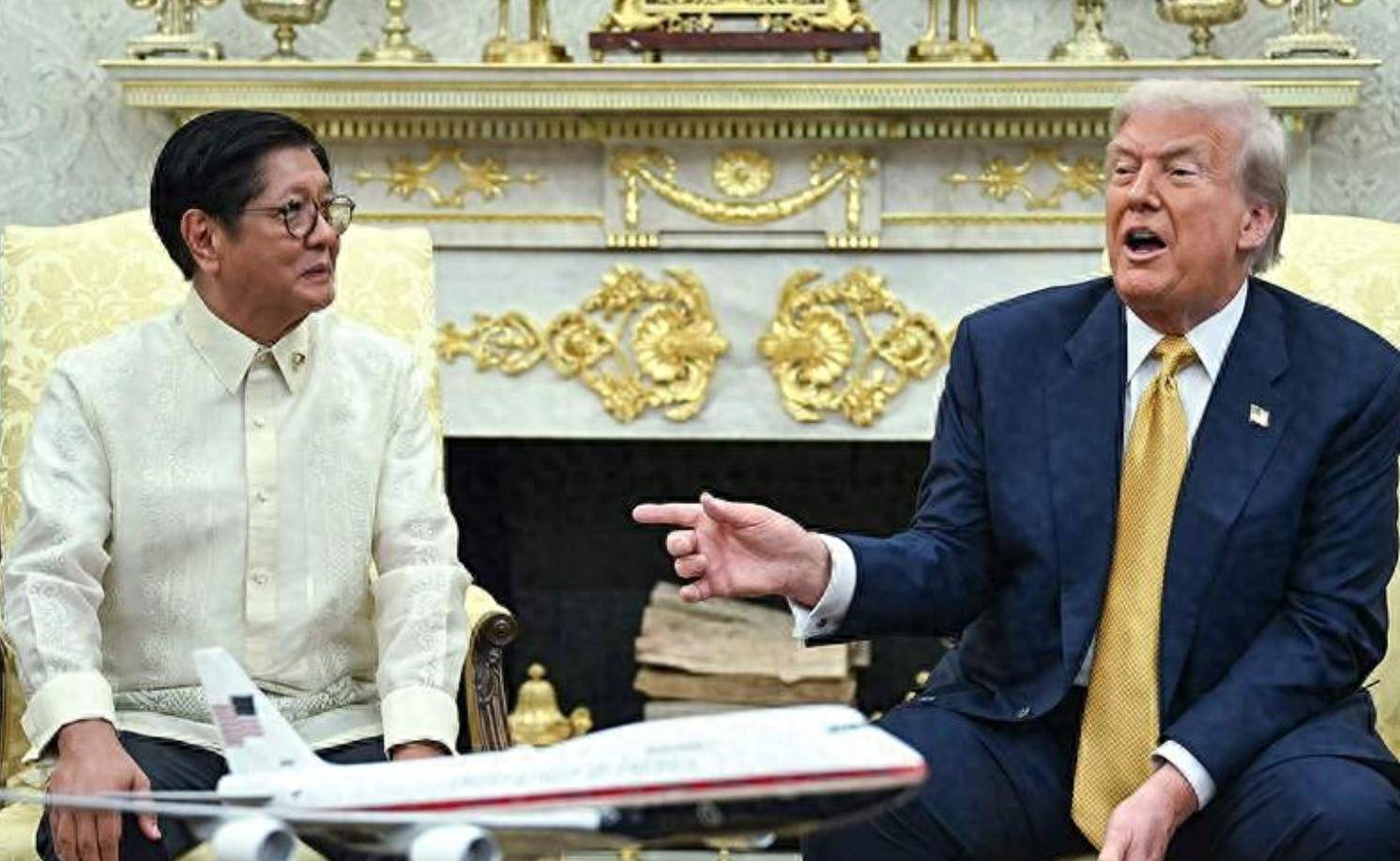
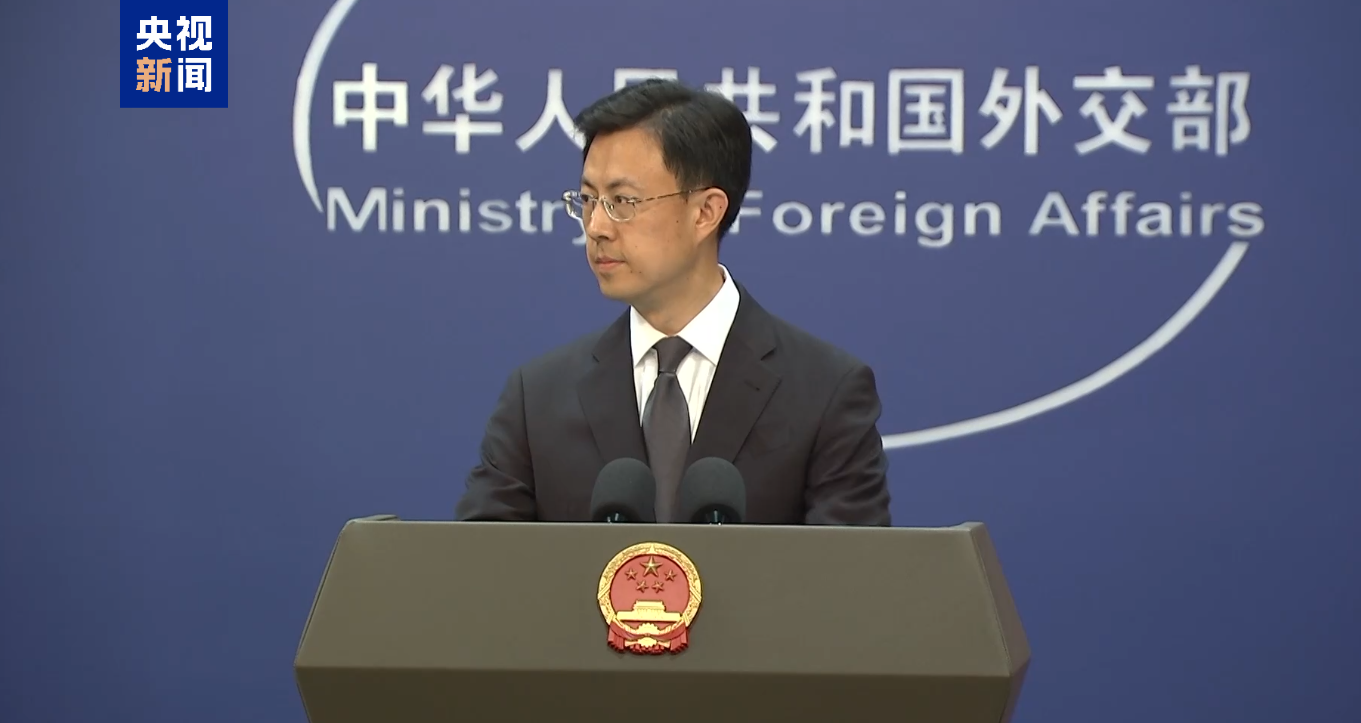
Group 1 - The Philippines and the United States announced military cooperation during President Marcos's visit to the U.S., reaffirming that the Mutual Defense Treaty applies to the South China Sea [1] - President Marcos stated that the modernization of the Philippine military is a direct response to changes in the South China Sea situation, with U.S. deployments of intermediate-range missiles and joint ammunition bases being preparations for potential future events [1] - Japan is reportedly selling six "Abe" class frigates to the Philippines, indicating a strengthening of defense ties in the region [1] Group 2 - The Chinese Foreign Ministry expressed opposition to the strengthening of military alliances under the pretext of the South China Sea issue, stating that such actions do not resolve problems and do not intimidate China [3] - The Ministry emphasized that the Philippines should not engage in defense cooperation targeting third parties or exacerbate regional tensions, urging the Philippines to act independently and maintain regional peace and stability [3] - The statement reflects a broader concern regarding the involvement of external powers in regional disputes and the potential for increased military tensions in the South China Sea [3]
马科斯史上最短国情咨文没敢提中国,只觉“亏欠”美国
Guan Cha Zhe Wang· 2025-07-29 07:34
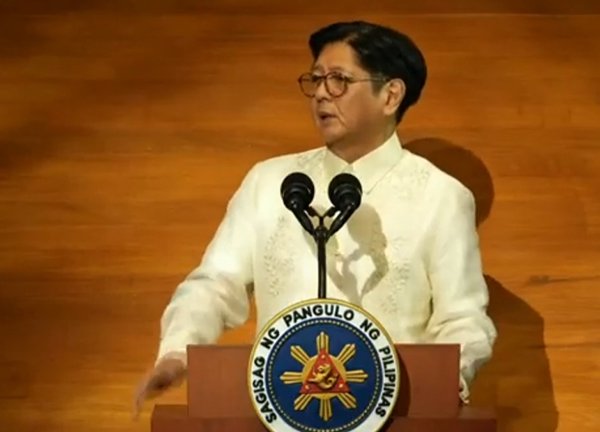
Group 1 - President Marcos delivered his fourth State of the Nation Address, acknowledging growing public dissatisfaction with his government while avoiding direct mention of China [1][3] - Marcos emphasized strengthening alliances, particularly with the United States, and expressed gratitude for U.S. support in modernizing the Philippine military and police [1][3] - The speech was marked by a lack of discussion on the Philippines' tensions with China, indicating a strategic shift to consolidate domestic support and avoid escalating international conflicts [1][3] Group 2 - The Philippine government has been increasing military ties with the U.S. and other Western nations, which has led to heightened tensions with China [3][4] - Defense Secretary Teodoro openly called for resisting China, highlighting a focus on external defense [4] - Marcos's recent visit to Washington resulted in the Philippines facing a 19% tariff while opening its market to the U.S. with zero tariffs, indicating a complex economic relationship [4] Group 3 - Marcos criticized government officials and private contractors for corruption, pledging to audit flood control projects amid recent natural disasters affecting over 600 million people [5][7] - He announced plans to prosecute those involved in corruption and to publicly disclose audit findings [7][8] - Despite his anti-corruption rhetoric, skepticism remains regarding the sincerity of his efforts, given his family's controversial financial history [8][9]
中国阅兵给美国留了座,特朗普证实或很快访华,还送马科斯一句话
Sou Hu Cai Jing· 2025-07-28 03:38
Group 1 - The core purpose of President Marcos's visit to the U.S. is to negotiate a trade agreement and strengthen the security alliance between the U.S. and the Philippines to counter China [1] - During the visit, President Trump announced a "significant trade agreement" that resulted in a 19% tariff on the Philippines, which is a slight concession from the previously threatened 20% [1] - Marcos attempted to assert the Philippines' independent foreign policy while emphasizing the U.S. as the "strongest ally," indicating a strategy to build alliances against perceived threats, particularly from China [3] Group 2 - Trump's interruption during Marcos's statement about balancing relations with the U.S. and China suggests a desire for the U.S. to maintain a behind-the-scenes role in the South China Sea issues, rather than being overtly confrontational [5] - Trump's comments about not minding the Philippines' relationship with China indicate a potential diplomatic strategy to ease tensions ahead of his planned visit to China [5]