反补贴措施

Search documents
国务院关税税则委员会根据商务部的建议作出决定:对原产于欧盟的进口相关乳制品实施临时反补贴措施
Zheng Quan Shi Bao Wang· 2025-12-22 07:20
人民财讯12月22日电,商务部发布公告,公布对原产于欧盟的进口相关乳制品反补贴调查的初步裁定, 根据《反补贴条例》第二十九条和第三十条的规定,商务部向国务院关税税则委员会提出对原产于欧盟 的进口相关乳制品采取临时反补贴措施的建议。国务院关税税则委员会根据商务部的建议作出决定,自 2025年12月23日起,采取临时反补贴税保证金的形式对原产于欧盟的进口相关乳制品实施临时反补贴措 施。 ...
国务院关税税则委员会根据商务部的建议作出决定,自2025年12月23日起,采取临时反补贴税保证金的形式对原产于欧盟的进口相关乳制品实施临时反补贴措施
Mei Ri Jing Ji Xin Wen· 2025-12-22 07:20
Group 1 - The core point of the article is that the State Council Tariff Commission has decided to implement temporary countervailing measures on imported dairy products originating from the European Union starting from December 23, 2025, based on recommendations from the Ministry of Commerce [1] Group 2 - The measures will take the form of temporary countervailing duty deposits [1] - This decision reflects ongoing trade dynamics and potential protectionist measures affecting the dairy industry [1] - The implementation date indicates a strategic timeline for stakeholders in the dairy market to prepare for the changes [1]
RCEP转口贸易加速升温:高反倾销压力下,中国出口企业迎来降本增效的新解法
Sou Hu Cai Jing· 2025-12-19 04:41
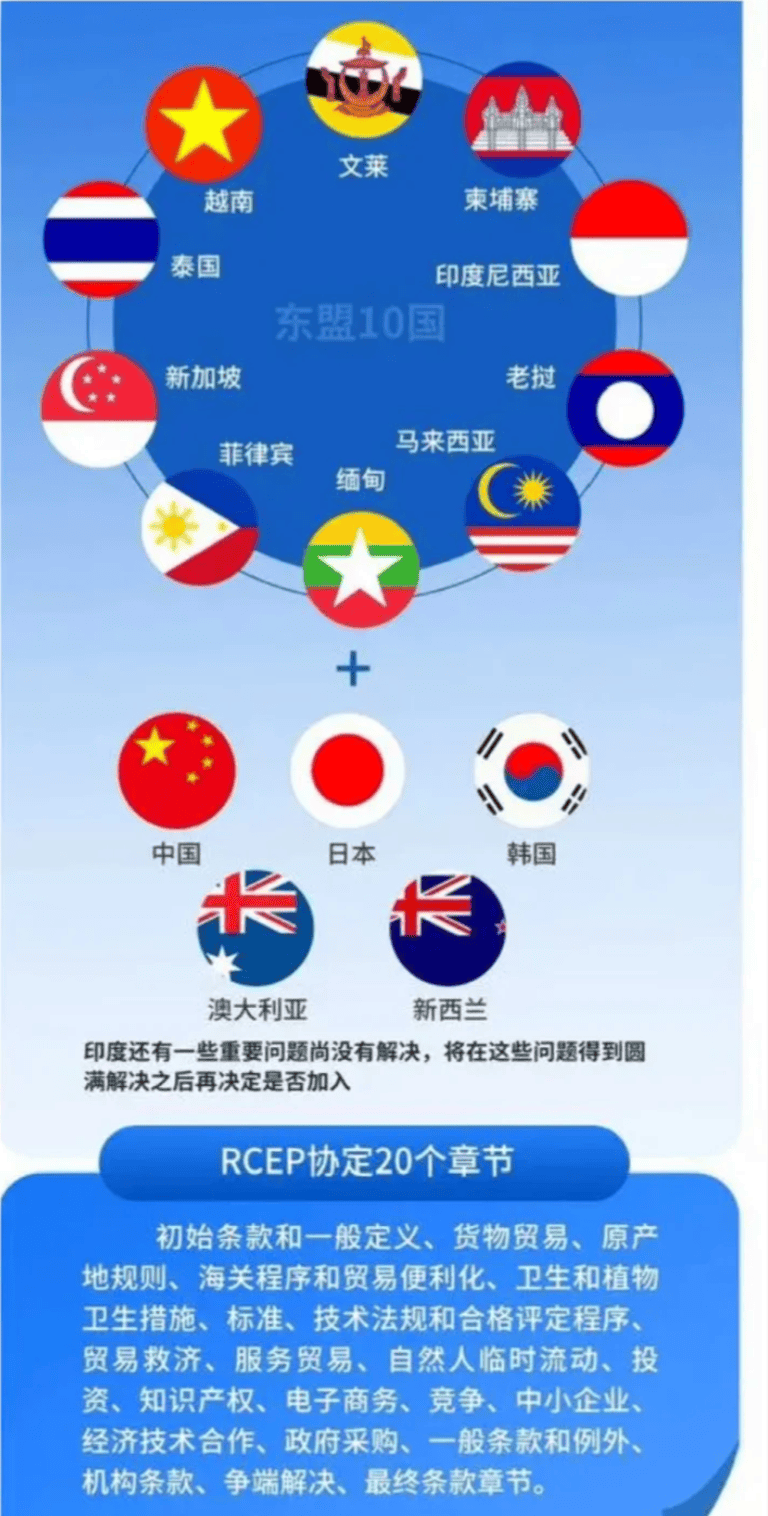
Core Viewpoint - The rise of global trade protectionism is leading to anti-dumping and anti-subsidy measures becoming a long-term norm, prompting Chinese export companies to utilize RCEP transshipment trade as a vital tool for restructuring international channels [1]. Group 1: RCEP Institutional Benefits - The Regional Comprehensive Economic Partnership (RCEP) has simplified origin rules, expanded regional accumulation scope, and reduced tariff barriers among members, resulting in structural changes in regional trade models [4]. - According to RCEP origin rules, products with over 30% cumulative value added within member countries can be recognized as RCEP-origin products, significantly lowering the threshold for "origin transformation" [4]. - By 2025, intermediate goods trade within the RCEP region is projected to reach 68.3%, indicating the rapid formation of a regional supply chain characterized by processing, transshipment, and redistribution [4]. Group 2: Southeast Asia as a Transshipment Hub - Southeast Asian countries are emerging as crucial transshipment hubs due to their industrial capacity and advantageous tariff structures, connecting China with global markets [6]. - Average tariff levels for exports to Europe and the U.S. range from 5% to 15%, making Southeast Asia an attractive option for intermediate processing and value addition [6]. - The domestic "zero tariff" policy in Hainan Free Trade Port, covering approximately 6,600 items, further reduces costs for transshipment and regional distribution, facilitating a multi-stage export pathway of "domestic—RCEP—third market" [6]. Group 3: Back-to-Back Certificates Enhancing Feasibility - A key innovation of RCEP is the issuance of back-to-back certificates of origin, effectively addressing the challenge of maintaining origin qualifications in transshipment trade [8]. - In practice, goods transiting between RCEP member countries can have their origin certificates reissued as long as they retain their origin attributes and meet agreement conditions, allowing subsequent exports to benefit from tariff reductions [8]. - For instance, in the first seven months of 2025, enterprises in Qingdao utilized RCEP certificates to achieve an export value of 7.26 billion yuan, a year-on-year increase of 21.8% [8]. Group 4: Upgrading Transshipment Trade - Current RCEP transshipment trade is evolving from simple "logistics transshipment" or "label changes" to a more compliant, processed, and structured approach [9]. - The processing phase is increasingly focused on substantial value addition, with stricter verification of origin rules and higher compliance requirements for documentation [9]. - Transshipment pathways are becoming integrated into long-term supply chain planning for enterprises, indicating that transshipment trade is transitioning from an "emergency measure" to a systematic export solution [9]. Group 5: Future Outlook - With the long-term trend of anti-dumping measures and detailed origin reviews, the core of future export competition will hinge on the ability to establish regional supply chain layouts, familiarity with RCEP origin rules, and the capacity to achieve identity transformation under compliance [11]. - RCEP transshipment trade is expected to continue expanding in the coming years, becoming a key pathway for Chinese export companies to tackle high tariff barriers, diversify market risks, and enhance export resilience [11]. - In the context of reshaping global trade rules, RCEP serves not only as a tariff reduction agreement but also as a tool for reconstructing regional industrial chains and export pathways [11].