反倾销

Search documents
成材:随原料波动,钢价整理运行
Hua Bao Qi Huo· 2026-04-01 03:01
Report Industry Investment Rating - The report gives a rating of "oscillating operation" for the industry [3] Core Viewpoint - The steel price is currently oscillating and weakening, mainly dragged down by coking coal on the raw material side. The steel price is temporarily following the changes in the raw material side, and the subsequent focus is on the downstream demand situation [2][3] Summary by Related Catalog Industry Data - In March, China's manufacturing, non - manufacturing, and comprehensive PMI output indices all returned to the expansion range, at 50.4%, 50.1%, and 50.5% respectively, up 1.4, 0.6, and 1 percentage points from the previous month [2] - In March, the actual production of tube billet steel mills was 1.3393 million tons, a month - on - month increase of 85,000 tons and a year - on - year increase of 107,600 tons. The estimated output in April is 1.3542 million tons [2] - On March 31, the average cost of 76 independent electric arc furnace construction steel mills was 3,410 yuan/ton, a daily increase of 2 yuan/ton. The average profit was a loss of 86 yuan/ton, and the off - peak electricity profit was 21 yuan/ton [2] Industry Events - On March 30, the UK Trade Remedies Authority announced an anti - absorption review of the anti - dumping measures applicable to imported excavators from China to decide whether to maintain or adjust the current anti - dumping duty rate [2]
钢材&铁矿石日报:原料表现偏强,钢价震荡企稳-20260317
Bao Cheng Qi Huo· 2026-03-17 10:31
1. Report Industry Investment Rating - No information provided in the report. 2. Core Views - **Rebar**: The main contract price of rebar fluctuated, recording a daily increase of 0.41% with decreasing volume and open interest. Currently, rebar supply has rebounded to a relatively high level while demand has seasonally improved. Under the situation of both supply and demand increasing, the improvement in fundamentals is limited, and steel prices continue to face pressure. The relatively positive factor is the cost support brought by the strong raw materials. It is expected that the steel price will continue to fluctuate steadily. Attention should be paid to the demand performance [5][39]. - **Hot - rolled coil**: The main contract price of hot - rolled coil fluctuated, recording a daily increase of 0.58% with decreasing volume and open interest. At present, the fundamentals of hot - rolled coils have improved under the situation of weak supply and increasing demand. Coupled with the cost support brought by the strong raw materials, the price of hot - rolled coils continues to fluctuate steadily. However, the resilience of demand is questionable, and cautious attention should be paid to the price trend under the high - inventory situation. Attention should be paid to the demand performance [5][39]. - **Iron ore**: The main contract price of iron ore was strong, recording a daily increase of 1.81% with decreasing volume and increasing open interest. Currently, the previous favorable factors have supported the iron ore price to return to a high level. However, under the situation of stable supply and weak demand, the fundamentals of the iron ore market have not improved, and the upward driving force is not sustainable. It is expected that the iron ore price will shift to high - level oscillation. Attention should be paid to the performance of steel products [5][40]. 3. Summary by Directory 3.1 Industry Dynamics - **Fiscal policy**: In 2026, China will continue to implement a more proactive fiscal policy, mainly reflected in five aspects, including expanding fiscal expenditure, optimizing government bond tools, improving the efficiency of transfer payment funds, optimizing the expenditure structure, and strengthening fiscal - financial cooperation [7]. - **Power consumption**: From January to February 2026, the total social power consumption was 1654.6 billion kWh, a year - on - year increase of 6.1%. The power consumption of the primary, secondary, and tertiary industries increased by 7.4%, 6.3%, and 8.3% respectively, and the power consumption of urban and rural residents increased by 2.7% [8]. - **Anti - dumping ruling**: Ukraine made a positive final ruling on the third sunset review of anti - dumping on steel wire ropes and steel cables originating from China, deciding to continue to levy an anti - dumping duty of 123% on the products involved for five years [9]. 3.2 Spot Market - **Steel products**: The spot prices of rebar in Shanghai, Tianjin, and the national average were 3,220, 3,200, and 3,341 respectively; the spot prices of hot - rolled coils in Shanghai, Tianjin, and the national average were 3,290, 3,220, and 3,311 respectively. The price of Tangshan steel billet was 2,970, and the price of Zhangjiagang heavy scrap was 2,200. The spread between hot - rolled coils and rebar was 70, and the spread between rebar and scrap was 1,020 [10]. - **Iron ore**: The price of PB fines at Shandong ports was 795, and the price of Tangshan iron concentrate was 772. The ocean freight rates from Australia and Brazil were 13.64 and 29.73 respectively. The SGX swap price (current month) was 106.42, and the iron ore price index (61% FE, CFR) was 108.80 [10]. 3.3 Futures Market | Variety | Active Contract | Closing Price | Daily Change (%) | High Price | Low Price | Volume | Volume Change | Open Interest | Open Interest Change | | --- | --- | --- | --- | --- | --- | --- | --- | --- | --- | | Rebar | - | 3,148 | 0.41 | 3,150 | 3,134 | 592,481 | - 143,412 | 1,549,534 | - 24,530 | | Hot - rolled coil | - | 3,313 | 0.58 | 3,315 | 3,291 | 279,583 | - 12,461 | 1,179,948 | - 3,908 | | Iron ore | - | 816.5 | 1.81 | 819.0 | 804.5 | 210,056 | - 109,973 | 461,728 | 2,876 | [12] 3.4 Related Charts - **Steel inventory**: The report provides charts on the weekly changes and total inventory (steel mills + social inventory) of rebar and hot - rolled coils [14][15][17]. - **Iron ore inventory**: Charts on the inventory of 45 ports in China, the inventory of 247 steel mills, and the inventory of domestic mine iron concentrate are provided [23][24][27]. - **Steel mill production**: Charts on the blast furnace operating rate, capacity utilization rate, and profitability of 247 sample steel mills, as well as the operating rate and profitability of 94 independent electric furnace steel mills in China are provided [31][33][35]. 3.5 Market Outlook - **Rebar**: Supply and demand continue to recover seasonally. Supply pressure is increasing as production is active, and inventory is relatively high. Although demand has improved, the subsequent improvement is questionable. With cost support from strong raw materials, the price is expected to continue to fluctuate steadily [39]. - **Hot - rolled coil**: The supply - demand pattern has changed. Supply is contracting, and demand is showing signs of support. However, demand resilience is questionable due to downstream contradictions and export pressure. The price is expected to continue to fluctuate steadily with caution [39]. - **Iron ore**: The supply - demand pattern has changed little. Demand improvement is limited due to restricted production and poor profitability of steel mills, while supply is stable with a slight increase. The price is expected to shift to high - level oscillation [40].
山东锌下游调研:冲突暗涌,出口变局渐进
Dong Zheng Qi Huo· 2026-03-17 03:44
1. Report Industry Investment Rating - Zinc: Volatile [5] 2. Core Viewpoints of the Report - In the short - term, zinc downstream exports still have resilience, but may face pressure in the medium - term. Most manufacturers are cautiously optimistic about the future market. It is necessary to monitor whether regions like Europe, Japan, South Korea, and Australia can fill the demand gap after the shrinkage of Middle - East orders due to geopolitical disturbances and the release of postponed demand from last year's policy. In the long - term, the cash - flow of companies exporting to the Middle East may face pressure in the second quarter, and anti - dumping measures will affect export orders in the medium - to - long term. Overall, the possibility of weak or pressured export demand is increasing. [3][35] - In terms of trading strategies, for single - side trading, manage positions well in the short - term and focus on buying opportunities during corrections in the medium - term. For arbitrage trading, adopt a wait - and - see approach for monthly spreads and maintain a long domestic - short overseas positive arbitrage strategy in the medium - term. [3][38] 3. Summary According to the Directory 3.1. Research Objects - The research was conducted on galvanizing and zinc oxide enterprises in Weifang and Zibo, Shandong. These enterprises are large - to - medium - sized, with annual galvanized product output of 20 - 290 million tons and annual zinc oxide production capacity of 3 - 10 million tons, comprehensively reflecting the current demand evolution pattern. [12] 3.2. Core Research Conclusions and Analysis - Galvanized and color - coated exports are mainly for civil construction, and overseas requirements for zinc coating thickness are becoming stricter. Overseas markets mainly use zinc products for civil construction, and many countries have set requirements for zinc coating thickness. In contrast, domestic zinc coating thickness is generally lower. Export galvanized products have maintained high - speed growth in the past five years, and the actual zinc consumption per unit may have increased. [17][18] - Orders for large, medium, and small factories are differentiated, and raw material inventories are generally low. Medium - and large - sized enterprises maintain full production with stable orders, while some export - oriented enterprises have over one - month order backlogs but with year - on - year differences. Some orders postponed from last year were released in Q1 2026. Manufacturers are cautious about Q2 demand, and raw material inventories are low, indicating potential upward pressure on zinc and black metal prices. [20] - The probability of export shocks is increasing, with dual pressures from geopolitical conflicts and anti - dumping. The US - Iran conflict has negatively affected exports to the Middle East, with difficulties in customer communication, delayed shipments, and inventory backlogs. Rising freight costs and anti - dumping measures have also impacted exports. However, export orders to Europe, the US, Japan, and South Korea have increased recently. [24][25] - The zinc oxide industry is facing intensified competition, and it is difficult to find a blue ocean overseas. The industry suffers from raw material shortages, thin profits, and is highly affected by zinc price fluctuations, forcing enterprises to expand overseas. But overseas markets are also competitive, with only Indonesia having some room. The domestic capacity expansion willingness is low, and if the raw material shortage persists, the industry will face reshuffling. [28][32] 3.3. Summary and Outlook - In the short - term, zinc downstream exports can maintain some resilience, but medium - term pressure signals are emerging. The cash - flow of companies exporting to the Middle East may face slight pressure in the next quarter, and anti - dumping measures will affect export orders in the medium - to - long term. It is necessary to monitor whether overseas markets can accept price increases due to policies. [35] - Fundamentally, short - term domestic processing fees are rising seasonally, while import processing fees are under pressure. The supply of zinc concentrate remains tight. On the demand side, domestic social inventories have accumulated seasonally, and downstream resumption of work is slow, while overseas inventories are gradually decreasing. [36] - In terms of trading, zinc may enter a volatile adjustment period in the short - term. In the medium - term, it is recommended to buy on dips as geopolitical situations may strengthen the resource attribute of zinc concentrate. [38] 3.4. Research Minutes 3.4.1. Galvanizing Enterprise A - Basic situation: Mainly produces galvanized products, almost all for export. It has 4 production lines and plans to launch a new aluminized zinc line this year. The export market is mainly in Africa, Southeast Asia, South America, and the Middle East, and products are used for civil construction. [43] - Research situation: Operating at full capacity, with order backlogs of over one - and - a - half months. The new aluminized zinc line is in response to overseas demand. Some export orders are delayed due to rising freight costs. The impact of the "buy - order export" policy has basically been eliminated. Near - term orders are expected to be good, but long - term uncertainty is high. Raw materials are mainly sourced from Chihong and Huxin, with a half - month inventory. Profits are thin, and there is little hedging. [44][45][49] 3.4.2. Galvanizing Enterprise B - Basic situation: Produces aluminized zinc and galvanized plates, with 80 - 90% of products for export. It has 3 production lines, with one planned for renovation in 2025. [52] - Research situation: Currently operating two production lines, with order backlogs of 40 - 50 days. Orders have declined compared to last year due to the "buy - order export" policy but are expected to recover. Cautious about Q2 demand. Zinc ingots are mainly sourced from Tianjin and Hebei, and the aluminized zinc profit is higher. Raw material inventory is about 50 - 60 tons, and finished product inventory is about 20,000 tons. [53][54] 3.4.3. Galvanizing and Color - Coating Enterprise C - Basic situation: Produces galvanized, aluminized zinc, zinc - aluminum - magnesium, color - coated, and cold - rolled products. It has large - scale production capacity, and the terminal consumption includes various fields. The export market includes multiple regions, and the recent Middle - East exports are affected. [56] - Research situation: Operating at full capacity, with products mainly for domestic sales. Orders are stable, and the company expects good demand this year. Raw materials are mainly self - produced, and the long - term order ratio is high. Profits are stable, with raw material inventory of 7 - 80,000 tons. Not participating in hedging but concerned about the futures market. [57][58][62] 3.4.4. Galvanizing Enterprise D - Basic situation: Produces galvanized and aluminized zinc products, all for export. It has a galvanizing and an aluminized zinc line, with the aluminized zinc order decreasing in recent years. [65] - Research situation: Order backlogs are 30 - 35 days, a decrease compared to last year. The "buy - order export" policy has little impact. Raw materials are mainly Chihong zinc, and profits are decreasing year by year. There is pressure on short - term cash - flow, and no inventory is maintained. Not participating in hedging. [66][67][68] 3.4.5. Zinc Oxide Enterprise E - Basic situation: A private enterprise with an annual zinc oxide production capacity of 100,000 tons. It has invested in a project in Cambodia and may build a plant in Egypt in the future. The domestic zinc oxide industry is highly competitive, and raw material prices are rising. [70] - Research situation: Operating at full capacity, with an order cycle of about one week. Zinc ingots and zinc slag each account for about 50% of raw materials. Profits are mainly affected by zinc ingots, and the finished product inventory is about 1,000 tons. Not participating in hedging, and the environmental protection is in line with the standards. [71][73] 3.4.6. Resource Comprehensive Recycling Enterprise F - Basic situation: A solid waste and hazardous waste recycling enterprise, mainly for the rubber and tire industries. It has waste treatment capacity and produces zinc alloy and other products. The regeneration - to - primary zinc ratio is about 7:3, and the export demand for zinc powder in zinc - manganese batteries may increase. [74][75] - Research situation: Order backlogs are about one month, and orders are stable. Raw materials are mainly secondary zinc oxide, and the long - term order ratio is about 80%. Profits are thin, with raw material inventory of about 50 - 60 tons and finished product inventory of about 20,000 tons. Not participating in hedging, and the environmental protection pressure is controllable. [76][77][79] 3.4.7. Zinc Oxide Enterprise G - Basic situation: With an annual zinc oxide production capacity of 60,000 tons, the downstream is mainly tire enterprises. It believes that the industry is highly competitive and plans to expand in Indonesia. [81] - Research situation: Operating at full capacity. The long - term tire demand is weak, and domestic production cuts may become a trend. Raw materials are purchased flexibly, and there are no long - term orders. Profits are continuously compressed, with a hedging ratio of about 50 - 60%. The environmental protection pressure is relatively small. [82][83][86] 3.4.8. Zinc Oxide Enterprise H - Basic situation: Mainly produces nano - zinc oxide, mainly for rubber tires and feed additives. It has the capacity to produce high - end products but has low order - taking willingness. The parent company has sulfuric acid production capacity. It has no plan to expand overseas. [87] - Research situation: Operating at full capacity, with order backlogs of 1 - 2 months. Profits are under pressure, and it is cautious about the short - term market but optimistic about the long - term rubber - grade zinc oxide demand. Raw materials are mainly from Hebei, and there is no hedging. The environmental protection meets the standards. [88][89][90]
格林期货早盘提示:钢材-20260226
Ge Lin Qi Huo· 2026-02-26 02:46
1. Report Industry Investment Rating - No information provided 2. Core View of the Report - On Wednesday, rebar and hot-rolled coils closed higher, and also closed higher in the night session. The market logic is that some steel enterprises in North China have been notified to implement phased emission reduction control from March 4th to March 11th during an important meeting, which will cause a phased contraction of regional crude steel supply. The actual supply reduction may be lower than market expectations. The market may digest the emission reduction expectation in advance, which is short-term positive for the futures price, but the medium-term trend still depends on the demand recovery. If the downstream construction site starts and manufacturing procurement during the Two Sessions do not meet expectations and inventory reduction is slow, it will offset the positive impact of supply contraction. The trading strategy is to continue to hold long positions and keep raising the stop-loss line. When the spread between hot-rolled coils and rebar drops to 156, pay attention to the opportunity to go long on hot-rolled coils and short on rebar, preferably when the spread is below 150. [1] 3. Summary by Relevant Catalogs 3.1 Market Review - On Wednesday, rebar and hot-rolled coils closed higher, and also closed higher in the night session. [1] 3.2 Important Information - Shanghai issued the "Shanghai Seven Measures" to further reduce housing purchase restrictions. - On February 25, 2026, the Australian Anti-dumping Commission announced that the Australian Minister for Industry, Innovation and Science approved the final anti-dumping review recommendation on steel reinforcing bars with a diameter of 50 mm or less imported from China, and decided to levy anti-dumping duties on Baowu Group Echeng Iron and Steel Co., Ltd. using the floor price method from the date of the announcement. - On February 16, 2026, the Mexican Ministry of Economy announced that at the request of Mexican producer Ternium México, S.A. de C.V., it launched an anti-dumping investigation on cold-rolled coils originating from China, the United States, and Malaysia, and also launched a countervailing investigation on the products from the United States. The investigation period is from April 1, 2024, to March 31, 2025, and the damage analysis period is from April 1, 2022, to March 31, 2025. The涉案 products are cold-rolled coils with a thickness of less than 4.75 mm, unlimited width, uncoated or unplated, alloy or non-alloy, and unannealed or annealed. [1] 3.3 Market Logic - Some steel enterprises in North China have been notified to implement phased emission reduction control from March 4th to March 11th during an important meeting. The control is based on the principles of independent emission reduction and staggered production, focusing on key emission processes such as blast furnaces. The supply of crude steel in the region will be phased contracted, but the actual supply reduction may be lower than market expectations. The market may digest the emission reduction expectation in advance, which is short-term positive for the futures price, but the medium-term trend still depends on the demand recovery. If the downstream construction site starts and manufacturing procurement during the Two Sessions do not meet expectations and inventory reduction is slow, it will offset the positive impact of supply contraction. [1] 3.4 Trading Strategy - Continue to hold long positions and keep raising the stop-loss line. When the spread between hot-rolled coils and rebar drops to 156, pay attention to the opportunity to go long on hot-rolled coils and short on rebar, preferably when the spread is below 150. [1]
商务部:加拿大油菜籽反倾销案案情复杂,调查期延长
Nan Fang Du Shi Bao· 2026-02-12 09:17
Core Viewpoint - The Chinese Ministry of Commerce addressed the anti-dumping case regarding Canadian canola imports, indicating ongoing negotiations between China and Canada to resolve trade issues in various sectors, including electric vehicles and agricultural products [1] Group 1: Trade Relations - During Canadian Prime Minister's visit to China in January, both countries agreed to address trade issues in electric vehicles, steel and aluminum products, canola, and agricultural products [1] - Canada is expected to make positive adjustments regarding unilateral measures taken against Chinese electric vehicles and steel and aluminum products [1] Group 2: Anti-Dumping Case - The investigation period for the anti-dumping measures on Canadian canola has been extended until March 9, 2026, due to the complexity of the case [1] - The Ministry of Commerce will issue a final ruling before the extended deadline, considering Canada's reasonable requests within the framework of regulations and based on facts and evidence [1]
敬酒不吃 吃罚酒?法国向欧盟提议对中国实施约30%整体关税,中方至少有三招反制措施!
Sou Hu Cai Jing· 2026-02-12 07:01
Core Viewpoint - A French institution has proposed to the EU to impose an overall tariff of approximately 30% on Chinese goods, which is seen as a violation of WTO rules and a declaration of trade war against China [1]. Group 1: Proposed Tariffs - The proposal specifically targets Chinese products, indicating a unilateral approach that could escalate trade tensions [1]. Group 2: Potential Chinese Responses - China may consider launching anti-dumping and anti-subsidy investigations against EU, particularly French wines, as China is a significant market for EU wines, with nearly $700 million in exports expected in 2024, half of which are French wines [3]. - If France persists with its proposal, China could respond to a series of unfriendly measures from France and the EU by initiating anti-discrimination investigations [3]. - In the event of unilateral tariff increases by the EU, China is prepared to retaliate with equivalent tariffs on EU products, while remaining open to communication [3].


玉渊谭天:奉劝法国别酒不醉人人自醉
Xin Lang Cai Jing· 2026-02-11 11:29
Core Viewpoint - France has proposed a 30% overall tariff on Chinese goods, which is seen as a violation of WTO rules and a declaration of trade war against China [1] Group 1: Potential Actions by China - China may consider initiating anti-dumping and countervailing investigations against French wine, as the EU wine exports to China are projected to reach nearly $700 million in 2024, with almost half being French wine [1] - If France continues its unfriendly measures, China could respond with anti-discrimination investigations against France and the EU [1] - In the event of unilateral tariffs imposed by the EU, China is prepared to retaliate with equivalent tariffs on EU products [1]
中集车辆北美业务受美反倾销调查影响,股价短期波动
Jing Ji Guan Cha Wang· 2026-02-11 07:08
Group 1 - The U.S. International Trade Commission has preliminarily ruled that imports of box-type semi-trailers and their components from Mexico, Canada, and China have caused harm to the U.S. industry, leading to upcoming countervailing and anti-dumping preliminary rulings by the U.S. Department of Commerce [1] - CIMC Vehicles (301039) is actively responding through expanding local production capacity in the U.S. to ensure supply chain stability, which may introduce uncertainty in the company's business outlook in the North American market [1] Group 2 - Recent stock price movements have shown volatility, with an initial rise due to the news but followed by a pullback, resulting in a net outflow of major funds; as of the latest data, the stock price has slightly increased, but the cumulative decline over five days exceeds 2%, indicating cautious short-term funding conditions [2] - Dongwu Securities has released a report recommending CIMC Vehicles and other leading companies, expressing optimism about their stable growth in both China and global southern markets; however, it notes that the weak North American market continues to exert pressure on short-term profits despite high growth in the company's new energy product sales [3]
未知机构:韩国对华单模光纤作出反倾销终裁财联社2月10日电据中国贸易救济信息网消息-20260211
未知机构· 2026-02-11 02:15
Summary of Key Points Industry Involved - The document pertains to the optical fiber industry, specifically focusing on single-mode optical fibers produced in China [1]. Core Points and Arguments - On January 22, 2026, the Korea Trade Commission issued a final ruling on anti-dumping measures against single-mode optical fibers originating from China [1]. - The ruling suggests that the Ministry of Economy and Finance of South Korea impose a five-year anti-dumping duty on specific Chinese companies, including: - Hengtong Optic-Electric Co., Ltd. and its affiliates - Yangtze Optical Fibre and Cable Joint Stock Limited Company and its affiliates - Hangzhou Jinxingtong Optical Fiber Technology Co., Ltd. and its affiliates - Other Chinese manufacturers/exporters [1]. - The proposed anti-dumping duty rate is set at 43.35% for the mentioned companies [1]. Other Important Content - The case involves products under South Korea's tax code 9001.10.0000, excluding low-loss fiber bundles, cables, and single-mode optical fibers specified as G.652.D, which are primarily used for optical equipment [2].


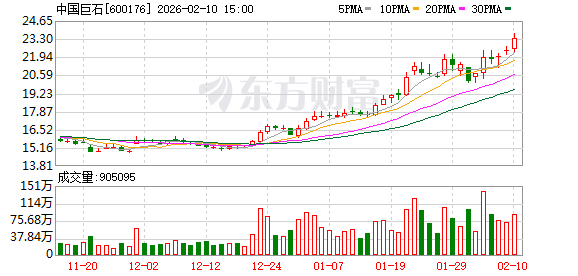
中国巨石:欧盟对原产于埃及的产品的反倾销调查在进行中
Zheng Quan Ri Bao· 2026-02-10 13:11
Group 1 - The core viewpoint of the article is that China Jushi is actively responding to the EU's anti-dumping investigation regarding products originating from Egypt, aiming to protect its legal rights [2] Group 2 - The EU is currently conducting an anti-dumping investigation on products from Egypt [2] - China Jushi is engaged in the legal process to defend its interests during this investigation [2]