乳制品

Search documents
中国必选消费品3月需求报告:春节红利消退,餐饮链修复放缓
Haitong Securities International· 2026-04-01 05:32
Investment Rating - The investment rating for the essential consumer goods sector in China is "Outperform" for multiple companies including Guizhou Moutai, Wuliangye, and Yili [1]. Core Insights - In March 2026, eight essential consumer goods sectors showed mixed performance, with four sectors experiencing growth and four facing declines. The sectors with positive growth included frozen foods, condiments, food services, and soft drinks, while mid-to-high-end baijiu, mass-market baijiu, dairy products, and beer saw negative growth. The overall performance is attributed to the fading of the Spring Festival consumption boost and a weakening recovery in the food service sector [20]. Summary by Sector Baijiu (Mid-to-Premium and Above) - In March, the mid-to-high-end and premium baijiu sector generated revenue of 29.5 billion yuan, a year-on-year decrease of 14.5%. Cumulative revenue for January–March reached 120.5 billion yuan, down 14.3% year-on-year. The sector is facing pressure on both volume and price due to slower-than-expected recovery in business consumption scenarios [21]. Baijiu (Mass-Market and Below) - The mass-market and lower-tier baijiu sector generated revenue of 20.2 billion yuan in March, down 1.0% year-on-year. Cumulative revenue from January to March was 60.5 billion yuan, down 1.5% year-on-year. Demand remains robust, supported by daily personal consumption and family gatherings [22]. Beer - The beer industry generated revenue of 14.0 billion yuan in March, down 1.4% year-on-year. Cumulative revenue for January–March was 46.2 billion yuan, down 1.5% year-on-year. Terminal demand was weak, but the sector is entering a peak season stockpiling cycle as temperatures rise [22]. Condiments - The condiments industry generated revenue of 35.5 billion yuan in March, a 3.0% year-on-year increase. Cumulative revenue for January–March reached 123.9 billion yuan, a 4.0% year-on-year increase. The growth rate slowed due to waning peak season effects and increased discounts [23]. Dairy Products - The dairy industry generated revenue of 33.9 billion yuan in March, down 0.9% year-on-year. Cumulative revenue for January–March reached 118.9 billion yuan, down 1.9% year-on-year. The liquid milk market is in a period of adjustment, with household consumption remaining robust [24]. Frozen Foods - The frozen food sector generated revenue of 10.3 billion yuan in March, up 6.3% year-on-year. Cumulative revenue for January–March reached 39.3 billion yuan, up 7.9% year-on-year. Demand for dining out has improved, significantly boosting the sector [25]. Soft Drinks - The soft drink industry generated revenue of 48 billion yuan in March, up 3.2% year-on-year. Cumulative revenue for January–March reached 194 billion yuan, up 1.9% year-on-year. Discounts in the soft drink market have widened, reflecting intensified competition [27]. Catering - The food service industry generated revenue of 13.8 billion yuan in March, up 3.8% year-on-year. Cumulative revenue for January–March reached 44 billion yuan, up 3.6% year-on-year. The sector has benefited from the recovery of consumption scenarios and policy support [28].





食品饮料行业周报:餐饮供应链边际改善,盈利能力提升-20260331
Donghai Securities· 2026-03-31 07:45
Investment Rating - The industry investment rating is "Overweight" indicating a positive outlook for the sector relative to the broader market [1]. Core Insights - The report highlights that the restaurant supply chain is showing marginal improvement, with Q1 performance expected to demonstrate rapid growth. Retail sales in the restaurant sector increased by 4.8% year-on-year in January-February, and the cessation of the "takeaway war" is expected to lead to a recovery in demand [4][49]. - The beer sector is entering a sales peak, with the upcoming World Cup in June likely to accelerate recovery in on-premise consumption. The report suggests focusing on opportunities within the beer sector, particularly for companies like Yanjing Beer, which is expected to achieve significant growth in production [4]. - The report notes that raw milk prices are stabilizing, with the average price of fresh milk at 3.03 yuan/kg as of March 20, showing a year-on-year decrease of 1.9%. The report anticipates a positive shift in the supply-demand dynamics for meat and dairy prices in 2026 [4]. Summary by Sections 1. Market Performance - The food and beverage sector experienced a decline of 0.99%, underperforming the CSI 300 index by 0.42 percentage points, ranking 18th among 31 sectors [8]. - Among sub-sectors, processed foods saw a notable increase of 4.26% [8]. 2. Key Consumer Goods and Raw Material Prices - As of March 27, the price of fresh milk was 12.20 yuan/liter, with a slight week-on-week decrease of 0.16% [26]. - The price of beef was reported at 66.10 yuan/kg, reflecting a year-on-year increase of 11.09% [26]. 3. Industry Dynamics - The report discusses the end of the "takeaway war," emphasizing the need for the industry to shift from price wars to service and innovation [49]. - It also mentions potential shortages of glass bottles and cans in India due to geopolitical issues affecting raw material costs [49]. 4. Core Company Updates - New Dairy reported a revenue of 11.233 billion yuan for 2025, a year-on-year increase of 5.33%, with a net profit of 731 million yuan, up 35.98% [51]. - Qingdao Beer achieved a revenue of 32.473 billion yuan, reflecting a 1.04% increase year-on-year, with a net profit of 4.588 billion yuan, up 5.60% [51].
春季旅游高景气,关注相关行业基本面改善
SINOLINK SECURITIES· 2026-03-29 08:24
Investment Rating - The report indicates a positive outlook for the duty-free market in Hainan, expecting sustained growth throughout the year [11][27]. Core Insights - The duty-free sales in Hainan reached CNY 15.62 billion with a year-on-year growth of 27.64% as of March 24, driven by high demand for cosmetics, jewelry, and electronics [11]. - The hotel sector, particularly Jinjiang Hotels, showed signs of recovery with a RevPAR of CNY 240.77 in Q4 2025, marking a slight year-on-year increase of 0.14% [12]. - Retail data for January-February 2026 showed a total retail sales of CNY 86,079 billion, growing by 2.8% year-on-year, with service consumption being a key growth driver [13][16]. Summary by Sections Core Insights and Company Dynamics - Duty-free market in Hainan has seen significant growth post-border closure, with sales reaching CNY 15.62 billion and shopping visits totaling 1.9684 million, reflecting a year-on-year increase of 27.64% [11]. - Jinjiang Hotels reported a slight recovery in RevPAR, achieving CNY 240.77 in Q4 2025, with an occupancy rate of 63.48% [12]. Industry Data Tracking - Retail sales in January-February 2026 showed a recovery, with service retail growing by 5.6%, outpacing goods retail [13]. - The restaurant sector demonstrated strong recovery, with revenues of CNY 10,264 billion, a year-on-year increase of 4.8% [13][16]. Market Review - The stock market indices showed declines, with the Shanghai Composite Index down by 1.09% and the retail sector down by 1.10% [20]. - Notable stock performances included Lionhead Co. and Nanjing Commercial Travel, which saw significant gains due to favorable restructuring and tourism policies [20]. Investment Recommendations - The report suggests optimism in the duty-free sector due to improved sales data and expected profit margin growth driven by reduced discounts and currency appreciation [27]. - Recommendations for the gold and jewelry sector include brands like Laopu Gold and Chaohongji, which are expected to benefit from strong consumer acceptance of price increases [27]. - For offline retail, the report highlights Yonghui Supermarket's shift towards a selective retail model, which is anticipated to drive long-term growth [27].
蒙牛乳业旗下马鞍山公司注册资本增至4.75亿元
Zheng Quan Ri Bao· 2026-03-27 07:35
Core Viewpoint - Mengniu Dairy (Ma'anshan) Co., Ltd. has increased its registered capital from 355 million to 475 million yuan, indicating a significant investment in its operations and potential growth in the dairy industry [1] Company Summary - The company was established in 2005 and is fully owned by Inner Mongolia Mengniu Dairy (Group) Co., Ltd. [1] - Its business scope includes the production and sale of dairy products, food production, and the sale of infant formula and other infant food products [1]

蒙牛乳业发布全年业绩 经营现金流等指标创新高
Zhong Guo Jin Rong Xin Xi Wang· 2026-03-26 06:36
Core Viewpoint - Mengniu Dairy reported strong financial performance for the fiscal year 2025, achieving a revenue of 82.24 billion RMB and an operating profit of 6.56 billion RMB, with significant improvements in key financial metrics [1]. Financial Performance - The company achieved a gross margin of 39.9%, operating cash flow of 8.75 billion RMB, and free cash flow of 6.3 billion RMB, all of which are historical highs [1]. - Mengniu announced a shareholder return plan for 2025-2027, aiming for stable increases in dividends per share, with a dividend of 0.520 RMB per share and a total dividend payout of 2.017 billion RMB for 2025 [1]. Strategic Initiatives - Mengniu is focusing on four key capabilities: brand leadership, technological innovation, digital transformation, and channel upgrades to adapt to the complex market environment characterized by strong supply and weak demand [1]. - The company is committed to long-term brand building and innovation-driven productivity enhancement [1]. ESG Commitment - Mengniu has made significant progress in its ESG initiatives, transitioning from passive disclosure to active management and from qualitative descriptions to quantitative decision-making [1]. - The company plans to create greater value by focusing on governance, consumers, partners, and investors [1]. Industry Outlook - The dairy industry is showing signs of stabilization and recovery, and Mengniu aims to align with the national "14th Five-Year Plan" for health-focused development by expanding into basic nutrition, functional nutrition, and medical nutrition sectors [2].
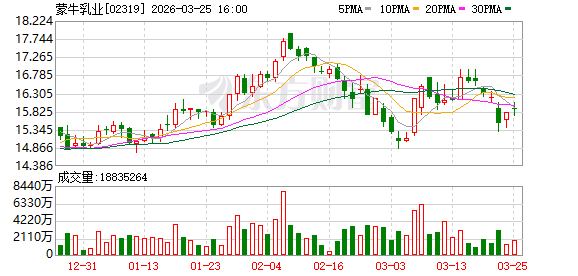
蒙牛乳业旗下马鞍山公司增资至4.75亿元
Mei Ri Jing Ji Xin Wen· 2026-03-25 09:33
Core Viewpoint - Mengniu Dairy (Maanshan) Co., Ltd. has increased its registered capital from 355 million RMB to 475 million RMB, representing an increase of approximately 34% [2]. Company Information - The company was established in February 2005 and is wholly owned by Inner Mongolia Mengniu Dairy (Group) Co., Ltd. [2][4]. - The legal representative of the company is Huang Hua, and its business scope includes the production and sale of dairy products, food production, and sales of infant formula milk powder and other infant formula foods [2]. Capital Change - The registered capital change was officially recorded on March 23, 2026, with the new registered capital being 475 million RMB [3]. - The previous registered capital was 355 million RMB, indicating a significant capital increase [3]. Shareholder Information - Inner Mongolia Mengniu Dairy (Group) Co., Ltd. holds 100% of the shares in Mengniu Dairy (Maanshan) Co., Ltd., with a total subscribed capital of 47.5 million RMB [4].

中国必选消费品3月成本报告:软饮料、方便面成本指数涨超10%
Haitong Securities International· 2026-03-25 05:23
Investment Rating - The report provides various investment ratings for companies in the consumer staples sector, with notable ratings including "Outperform" for Haidilao, China Feihe, and others, while Budweiser APAC is rated "Neutral" [1]. Core Insights - The report highlights a significant increase in cost indices for essential consumer goods, with soft drinks and instant noodles seeing rises of over 10% [1][33]. - The overall trend indicates a rising cost environment across multiple categories, driven by factors such as geopolitical tensions and supply chain disruptions [1][39]. Summary by Category Beer - The spot cost index for beer increased by 2.52% month-on-month, while the futures index rose by 2.9%. Year-to-date, the spot and futures indices have increased by 1.48% and 1.43%, respectively [13][34]. - Glass prices rose by 3.0% month-on-month but fell by 9.1% year-on-year, indicating mixed trends in raw material costs [34]. Condiments - The spot cost index for condiments rose by 9.69% month-on-month, with futures increasing by 6.62%. Year-to-date changes are 9.18% for spot and 9.2% for futures [17][35]. - Soybean prices have shown significant fluctuations, with spot prices increasing by 6.3% month-on-month [35]. Dairy Products - The spot cost index for dairy products increased by 2.92% month-on-month, while the futures index rose by 3.68%. Year-to-date, the indices have changed by 2.69% and 5.65%, respectively [21][36]. - Raw milk prices have decreased to 3.02 yuan/kg, reflecting supply pressures [36]. Instant Noodles - The spot cost index for instant noodles rose by 10.45% month-on-month, with futures increasing by 7.43%. Year-to-date changes are 8.89% for spot and 10.19% for futures [23][37]. - Palm oil prices have increased significantly, impacting overall costs [37]. Frozen Foods - The spot cost index for frozen foods increased by 1.05% month-on-month, while the futures index rose by 1.6%. Year-to-date changes are 0.12% for spot and 2.94% for futures [26][38]. - Vegetable prices have shown a decline, while pork prices continue to trend downward [38]. Soft Drinks - The spot cost index for soft drinks rose by 13.85% month-on-month, with futures increasing by 6.42%. Year-to-date changes are 11.01% for spot and 4.72% for futures [29][39]. - PET chip prices have surged, reflecting tight supply conditions [39].
国泰海通|“远望又新峰”2026春季策略会观点集锦(下)——消费、医药、科技、先进制造、金融
国泰海通证券研究· 2026-03-24 14:00
Group 1: Food and Beverage Industry - The core investment strategy for the food and beverage sector in 2026 emphasizes the importance of price increases, with a focus on resilient segments such as condiments, beer, and beverages [4][5] - The white liquor industry is nearing the end of its adjustment phase, transitioning from a "U-shaped" to a "V-shaped" recovery, with expectations of a quicker bottoming process starting from Q3 2025 [4] - The beer sector is expected to improve due to the stabilization of dining scenarios and a gradual recovery in consumer spending, with historical trends indicating profitability benefits during periods of rising CPI [5] Group 2: Consumer Goods - The consumer goods sector is witnessing a bottoming out, with a focus on companies that can effectively pass on price increases amidst diminishing cost advantages [5] - The demand for condiments is anticipated to recover, with expectations of price increases and improved profitability in the dairy sector as supply and demand cycles align [5] Group 3: Beauty and Personal Care - The beauty and personal care industry is experiencing a recovery in demand, with significant growth in the cosmetics and personal care segments, particularly in online sales [7][8] - The market is seeing a resurgence in high-end and affordable brands, with domestic brands maintaining rapid growth amidst a competitive landscape [8] Group 4: Service Consumption - The service consumption sector is benefiting from favorable policies, with a focus on travel and leisure services, as well as improvements in traditional retail [10][11] - The education sector is expected to see robust demand, particularly in vocational training and skill development, supported by policy initiatives [10] Group 5: Home Appliances - The home appliance industry is awaiting a recovery in domestic demand, with a focus on companies that possess pricing power amidst rising costs [15] - The global supply chain for home appliances is becoming more resilient, with expectations of improved export conditions [15] Group 6: 3D Printing Industry - The 3D printing market is projected to grow significantly, driven by both industrial and consumer demand, with a forecasted CAGR of 18% from 2024 to 2034 [18][19] - The demand for PLA materials in consumer-grade 3D printing is expected to increase, with domestic manufacturers ramping up production capabilities [19] Group 7: Textile and Apparel - The textile and apparel sector is showing signs of recovery, with strong growth in retail sales and exports, particularly in the context of rising cotton prices [23][24] - The market is expected to see a shift towards mid-to-high-end products, with brands focusing on innovation and sustainability [24] Group 8: Agriculture - The agricultural sector is anticipated to benefit from rising commodity prices, with a focus on the recovery of pig farming and the potential for pet product valuations to rebound [27] Group 9: Pharmaceutical Industry - The pharmaceutical sector is witnessing a shift towards innovative drugs, with a focus on oncology and metabolic treatments, as well as improvements in domestic demand for medical devices [30][31] Group 10: Financial Services - The financial services sector is focusing on wealth management and internationalization, with a notable increase in demand for investment consulting services [59][62] - The insurance industry is expected to see stable growth in premium income, driven by savings demand and improved asset-liability management [66]

食品饮料2026年春季投资策略:转折之年
GUOTAI HAITONG SECURITIES· 2026-03-22 07:45
Investment Rating - The industry investment rating is "Overweight" [3] Core Views - The report emphasizes that the turning point is approaching, highlighting the importance of price increases. The white liquor sector is nearing the end of its adjustment phase, with a long-term focus on pricing and continued concentration. The consumer goods sector is bottoming out, with increasing differentiation among segments, while condiments, beer, and beverages show strong resilience [3]. Summary by Sections White Liquor - The industry is transitioning from a "U-shaped adjustment" to a "V-shaped adjustment." Compared to the adjustment period from 2013 to 2016, the current cycle has a smaller adjustment in demand and expectations, with a notably extended adjustment period. The previous cycle saw a rapid clearing of the industry, while the current adjustment is expected to accelerate the bottoming process starting from Q3 2025 [4][16]. Beer & Beverages - With the stabilization of dining scenarios and gradual recovery of consumer spending, the beer industry is expected to improve. Structural upgrades, price increases, and efficiency optimization will continue to drive profitability. Historical trends during CPI recovery periods show that the beer sector generally benefits from expanded gross sales margins and improved profitability [5][45]. Consumer Goods - As cost advantages diminish, there is an increasing focus on companies with strong price transmission capabilities in the consumer goods sector. The report anticipates a turning point for condiments, with expected price increases. The dairy sector is also expected to see a rebound in supply-demand cycles, while the snack segment favors companies with new product categories and channel expansion logic [6][14]. Market Dynamics - The report notes that the white liquor industry is still in an adjustment phase, while soft drinks and snacks are less affected by economic cycles and are expected to lead in growth rates. Beer, dairy products, and condiments are showing marginal improvements after undergoing stress tests, with consumer goods outperforming white liquor [14][30]. Structural Changes - The report indicates that the current cycle will accelerate the concentration process in the industry, with leading brands benefiting from their brand and channel advantages. The differentiation among brands is expected to increase, with high-end brands like Moutai and Wuliangye continuing to lead, while competition intensifies in the mid-range and lower segments [30][39]. Valuation and Returns - The overall valuation of the white liquor industry and individual stocks is currently at historically low levels, reflecting pessimistic expectations. The report suggests that the micro-structure of the industry has improved, with a potential for recovery in valuations ahead of fundamental improvements [36][39]. Dividend Trends - There is an increasing awareness of shareholder returns in the white liquor industry, with leading companies likely to enhance shareholder value through dividends. The report notes that several companies have raised their dividend rates, making them attractive to investors [39][40].

食品饮料行业点评报告:春节提振消费表现,1-2月社零增速环比提升
KAIYUAN SECURITIES· 2026-03-18 08:50
Investment Rating - The industry investment rating is "Positive" (maintained) [1] Core Views - The report highlights a steady recovery in social retail sales data for January-February 2026, with significant growth in essential food and beverage categories, particularly benefiting from concentrated consumption during the Spring Festival [3][4] - The food and beverage sector is currently at a low market expectation and valuation, indicating a likely rebound in capital allocation intentions [3] - Key recommendations include prioritizing leading companies in the liquor sector, such as Kweichow Moutai, Luzhou Laojiao, and Shanxi Fenjiu, while also focusing on snack foods, dairy products, and the restaurant supply chain [3][4] Monthly Observation - In January-February 2026, the total retail sales of consumer goods increased by 2.8% year-on-year, with a month-on-month growth of 1.9 percentage points compared to December 2025 [4] - The food and beverage categories saw year-on-year increases of 10.2% for grain and oil products, 6.0% for beverages, and 19.1% for tobacco and alcohol, with significant month-on-month improvements [4][11][16] Quarterly Observation - It is anticipated that the retail sales data for Q1 2026 will show a good recovery, particularly in grain, oil, and tobacco categories, driven by the Spring Festival consumption [5] - The expected year-on-year growth rates for grain and oil products, beverages, and tobacco in January-February 2026 are 3.9 percentage points, 2.0 percentage points, and 20.1 percentage points, respectively, compared to Q4 2025 [5] Industry Observation - The high-end liquor segment demonstrates strong resilience, with core products from Moutai and Wuliangye showing positive year-on-year sales growth during the Spring Festival [6] - The restaurant sector continues to recover, with stable growth in B-end consumption and solid demand in C-end markets, indicating improved profitability for leading restaurant companies [6]