
声誉风险

Search documents
“他们歧视我”!存款连续被拒,特朗普要“修理”银行
Guo Ji Jin Rong Bao· 2025-08-06 12:28
Core Viewpoint - The controversy surrounding major banks, JPMorgan Chase and Bank of America, refusing to provide deposit services to former President Trump has reignited discussions about political discrimination in banking practices [2][3]. Group 1: Bank Responses - JPMorgan Chase stated that it does not close accounts for political reasons and supports regulatory reforms [3][4]. - Bank of America expressed its willingness to collaborate with the government to clarify related policies and improve the regulatory framework [4]. Group 2: Regulatory Actions - The Trump administration is preparing an executive order to direct regulatory agencies to investigate whether financial institutions are denying services based on political reasons, potentially violating various laws [3][4]. - The executive order may be announced on August 6, with the White House yet to respond at the time of reporting [3]. Group 3: Industry Context - The banking industry has faced scrutiny over claims of refusing service to conservative clients, with banks denying such allegations and emphasizing compliance with federal laws aimed at preventing financial crimes [4][5]. - The concept of "reputational risk" has been a focal point of contention, with banks arguing that excessive regulations and aggressive regulators hinder their operations [5][6]. Group 4: Market Impact - Following Trump's allegations, both JPMorgan Chase and Bank of America experienced a decline of over 1% in their stock prices during afternoon trading [2].


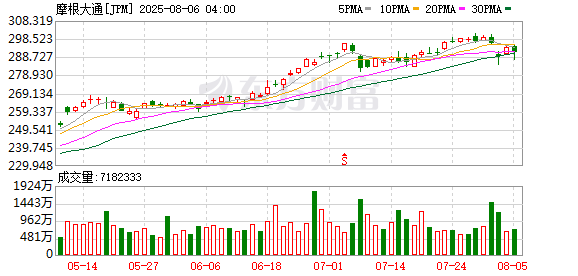
特朗普指责银行歧视:摩根大通要求20天内关账户,美银拒绝他10亿美元存款
Hua Er Jie Jian Wen· 2025-08-05 20:57
Core Points - Trump accuses JPMorgan Chase and Bank of America of ideological discrimination, claiming that the banking industry is biased against him [1] - Trump is seeking help from smaller banks due to the alleged discrimination from larger banks [1] - A proposed executive order will require banks to review the reasons for closing customer accounts within 120 days, with regulatory agencies conducting their own reviews [2] Group 1: Allegations and Responses - Trump claims that JPMorgan Chase demanded he close long-held accounts within 20 days and that Bank of America rejected a deposit request exceeding $1 billion [1] - Both JPMorgan Chase and Bank of America deny closing accounts for ideological reasons, with JPMorgan's spokesperson stating that they support regulatory reform [3] - Bank of America’s CEO agrees with Trump on the need to reassess existing laws and regulations, suggesting that better decisions could be made retrospectively [4] Group 2: Regulatory Environment - The Bank Policy Institute emphasizes the need for revised regulations, pointing out issues of overregulation and discretionary power among regulators [5] - The proposed executive order aims to address concerns over banks terminating customer relationships due to reputational risks [7] - The Federal banking regulators plan to eliminate "reputational risk" as a consideration in bank reviews to prevent forced terminations of customer relationships [7] Group 3: Industry Practices - Conservative groups have long criticized major financial institutions for their "de-banking" practices against certain industries, such as gun manufacturers and fossil fuel companies [6] - Following the 2018 Florida school shooting, Bank of America and Citigroup implemented restrictions on lending to companies selling firearms, although Citigroup recently lifted its restrictions [7]
“去银行化”!美国银行业成为特朗普的下一个目标
Hua Er Jie Jian Wen· 2025-06-24 11:57
Group 1 - Major banks in the U.S. are facing dual pressure from Republican state governments and the Trump administration, which accuse them of discriminating against industries like gun manufacturing and fossil fuels [1][2] - The Trump administration is considering an executive order on "debanking," which could shift federal power towards the banking sector and threaten banks' relationships with the federal government, including core operations like Treasury sales [1][3][4] - Conservative states have blacklisted certain banks, prohibiting them from participating in state contracts, claiming that banks are making business decisions based on political motives rather than traditional risk assessments [2][3] Group 2 - Banks argue that their business decisions are based on financial, legal, and reputational risks, and they have been meeting with state officials to counter accusations of political discrimination [2][3] - Major banks like Goldman Sachs, Morgan Stanley, and Wells Fargo are reconsidering restrictions on coal industry partnerships, with Bank of America lifting its ban on coal companies by the end of 2023 [3] - The Trump administration's involvement has made "bank discrimination" a new focal point, with accusations from conservative groups that banks are refusing services based on political affiliations [3][4] Group 3 - The regulatory environment is shifting, with Republican lawmakers proposing legislation to prevent regulators from considering reputational risk factors in their assessments [5] - Increased meetings between large banks and Republican state governments indicate a growing concern over the political implications of banking decisions [5][6] - Officials like Oklahoma's State Treasurer Todd Russ emphasize the need for banks to act impartially without political or ideological influences in their financial decisions [6]
金融监管新动向:美联储牵头 三大监管机构剔除银行“声誉风险”考核
智通财经网· 2025-06-23 23:33
Core Viewpoint - The Federal Reserve has announced the cessation of incorporating reputational risk assessments in bank reviews, responding to criticisms from banking groups and Republican lawmakers regarding the fairness of this mechanism [1] Regulatory Changes - The Federal Reserve is revising the relevant language in regulatory documents to replace the reputational risk framework with more specific financial risk analyses, while maintaining strict requirements for banks' risk management [1] - This policy shift aligns with Chairman Powell's earlier commitment to remove provisions that allowed regulators to track banks' "controversial statements or activities" [1] Industry Reactions - Critics have pointed out that some bank examiners have used reputational risk to pressure financial institutions to sever ties with clients in the cryptocurrency sector, gun industry, and politically sensitive customers, even when these relationships did not pose a tangible threat to bank asset safety [1] - The term "de-banking," introduced during the Trump administration, has resurfaced, referring to the unilateral termination of services to specific clients by financial institutions, although consumer advocacy groups argue that the severity of this issue is overstated [1] Broader Regulatory Impact - The regulatory reform movement has prompted a chain reaction, with the acting chairman of the FDIC, Travis Hill, stating in March that the agency plans to completely remove reputational risk from the regulatory framework [1] - The OCC also announced earlier this year the removal of related language from its examination manual, indicating a significant shift in the regulatory framework governing the U.S. banking industry [1]
美联储宣布其监管机构在审查银行时将不再考虑“声誉风险”。
news flash· 2025-06-23 18:05
Core Viewpoint - The Federal Reserve has announced that its regulatory agencies will no longer consider "reputational risk" when reviewing banks [1] Group 1 - The decision indicates a shift in the regulatory framework, potentially allowing banks to operate with less concern over public perception [1] - This change may lead to increased risk-taking behavior among banks, as reputational factors will not influence regulatory assessments [1] - The move could impact the overall stability of the banking sector, as banks may prioritize profit over reputation [1]