家族信托

Search documents
郭鹤年102岁,李嘉诚97岁,巴菲特95岁:富可敌国的他们如何传承财富?
Sou Hu Cai Jing· 2025-11-15 02:28
Core Insights - The article discusses the wealth management and legacy planning of three prominent billionaires: Warren Buffett, Li Ka-shing, and Kuok Khoon Hong, highlighting their philosophies and strategies as they approach the end of their lives [1][11]. Group 1: Warren Buffett - Buffett's wealth is primarily concentrated in Berkshire Hathaway stock, which he has allocated to a charitable trust managed by his children, emphasizing that large cash inheritances can be detrimental [3]. - He believes that a good life should not be dominated by money, advocating for stability and the importance of helping others rather than pursuing wealth for its own sake [3]. Group 2: Li Ka-shing - Li Ka-shing has proactively prepared for his retirement by transferring management of his business empire to his eldest son, while he remains a consultant for major decisions [5][6]. - His wealth is structured within a family trust system, aiming for sustainable wealth across generations and avoiding the pitfalls of family disputes over inheritance [6]. - Li emphasizes the importance of creating opportunities and wealth for society, alongside his philanthropic efforts through a foundation [6]. Group 3: Kuok Khoon Hong - Kuok has a pragmatic approach to wealth transfer, planning for his children’s succession while allowing them the freedom to pursue their interests outside the family business [8][9]. - He believes in using his wealth for investment and charitable purposes, aiming to create better opportunities and contribute to humanity [9]. - Kuok's philosophy reflects a belief that excessive wealth can lead to greed, and he prefers to focus on the moral implications of wealth rather than simply passing it down [8][9].


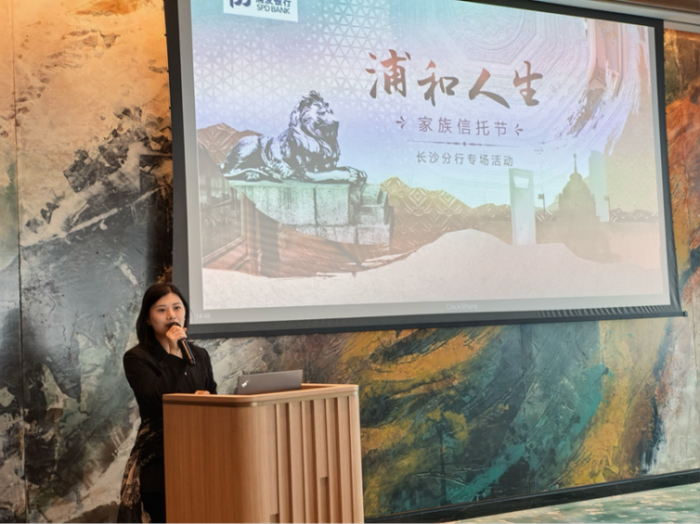
赋能高净值客户财富管理新实践,“浦和人生” 家族信托节举行
Chang Sha Wan Bao· 2025-11-03 10:24
Core Insights - The event "浦和人生" Family Trust Festival focused on new wealth management strategies amid changing times, featuring expert speakers from the insurance and trust sectors [1][3] Group 1: Event Overview - The second customer-focused event of the "浦和人生" Family Trust Festival was successfully held by SPD Bank's Changsha branch [1] - The event aimed to explore new paths for wealth preservation, appreciation, and inheritance [1] Group 2: Expert Presentations - The general manager of the bank's private banking department introduced the core advantages of the "浦和人生" wealth management trust account service system, emphasizing customized solutions for high-net-worth clients [3] - The first speaker, Lu Chen from Sunshine Life Insurance, discussed wealth management strategies in the context of economic cycles and the three distribution systems under the common prosperity framework [3] - The second speaker, Ding Yuxiang from Shanghai International Trust, focused on the domestic family trust sector, analyzing industry development, client demand trends, and key compliance issues [3] Group 3: Future Directions - SPD Bank aims to enhance the brand awareness and market influence of the "浦和人生" wealth management trust business through ongoing events [4] - The bank plans to deepen its "digital intelligence" development strategy, focusing on new ecosystems in the financial sector, and to enrich family trust service applications and functionalities [4]

东南亚华人商业家族传承:传统文化与现代制度如何择善而从 | 基业长青
Jing Ji Guan Cha Wang· 2025-10-31 18:18
Core Insights - Shangri-La Asia announced that its current Chairman and Executive Director, Guo Huiguang, will take over as CEO starting August 1, 2025, marking a significant leadership change in the company [2] - The transition highlights the focus on succession practices within Southeast Asian Chinese business families, particularly in the context of female leadership [2][3] Group 1: Succession Practices - Southeast Asian Chinese business families often adopt modern trust designs and systematic governance for succession, rather than traditional methods that favor male heirs [3][4] - The Guo family, for instance, utilizes family trusts and holding companies to maintain control over their enterprises, ensuring that core assets are managed effectively [5][6] - The Guo family has established a points-based system in their family constitution to evaluate potential successors based on various criteria, including business acumen and charitable contributions [6][10] Group 2: Governance Structures - Governance in these families typically includes a family council, a board of directors, and a management team, with independent directors making up a significant portion of the board [8][9] - The use of professional managers for daily operations allows family members to focus on strategic oversight, ensuring the sustainability of the business [9][10] Group 3: Education and Training of Heirs - Heirs are often required to undergo comprehensive training, including international exposure and practical experience in various business roles [10][12] - The Guo family emphasizes high-quality education, with members attending prestigious institutions and gaining relevant work experience before joining the family business [10][12] Group 4: Cultural Values and Family Dynamics - The influence of traditional Chinese culture is evident in the family values and business practices of Southeast Asian Chinese families, emphasizing collective well-being and social responsibility [13][14] - Family gatherings and ancestral worship play a crucial role in maintaining cultural identity and fostering unity among family members [16][17] Group 5: Lessons for Other Families - The practices of Southeast Asian Chinese business families provide valuable insights for mainland Chinese families facing similar succession challenges, particularly in balancing traditional values with modern governance [18][19] - As the next generation takes over, there is a noticeable trend towards internationalization and diversification of values, which may impact the preservation of traditional cultural elements [20]

传统文化与现代制度如何择善而从
Jing Ji Guan Cha Wang· 2025-10-31 15:46
Core Viewpoint - Shangri-La Asia is undergoing a leadership change with Guo Huiguang, daughter of Malaysian tycoon Kuok Khoon Ean, appointed as CEO starting August 1, 2025, marking a significant moment in the succession practices of Southeast Asian Chinese business families [1] Group 1: Leadership Transition - Guo Huiguang's appointment as CEO signifies a shift in leadership within Shangri-La Group, which operates over 100 hotels and resorts globally [1] - The transition highlights the focus on family succession in Southeast Asian Chinese business families, where leadership often passes to the next generation [1] Group 2: Family Business Succession Practices - Southeast Asian Chinese families typically employ modern trust designs and systematic governance for business succession, contrasting with traditional practices that favor male heirs [2] - The historical context of these families, often established over a century ago, provides valuable lessons for contemporary Chinese family businesses [2] Group 3: Governance and Trust Structures - The use of family trusts and holding companies is common among Southeast Asian Chinese families to maintain control over their businesses [3] - For instance, the Kuok family established a holding company, Kuok Group, which primarily serves as a family investment vehicle, holding stakes in various companies [3][4] Group 4: Advantages of Trust Structures - Family trusts help centralize asset management, prevent dilution of ownership, and establish long-term holding rules [4] - The Kuok family has implemented a points-based system in their family constitution to evaluate potential successors based on various criteria [4] Group 5: Systematic Successor Training - Southeast Asian Chinese families have developed structured training mechanisms for successors, ensuring they possess global perspectives and professional skills [8] - The Kuok family emphasizes high-quality education and practical experience for their children, with Guo Huiguang having a background in finance and management [8] Group 6: Cultural Values and Family Cohesion - The influence of traditional Chinese culture is evident in the family values and business practices of Southeast Asian Chinese families, emphasizing collective well-being and social responsibility [11][12] - Family gatherings and ancestral worship are common practices that reinforce family unity and cultural heritage [13] Group 7: Lessons for Mainland Chinese Families - The integration of Western governance practices with traditional values offers a unique model for succession planning in Chinese family businesses [15][16] - The ongoing challenge for both Southeast Asian and mainland Chinese families is to balance modern practices with the preservation of cultural values [17]
家族办公室的“管家”能力应如何构建
Jing Ji Guan Cha Bao· 2025-10-25 02:19
Core Insights - The event focused on family offices and their role in addressing intergenerational conflicts and enhancing management capabilities [1] Group 1: Intergenerational Conflict Resolution - Intergenerational conflicts in family businesses arise from differences in upbringing and risk preferences between founders and their successors [2] - Solutions include employing professionals with psychological expertise in family offices to facilitate communication between generations [2] - Emphasizing the importance of early exposure for the third generation to family business operations to foster understanding and connection [2][3] Group 2: Family Office Management Capabilities - Family offices should act as a "glue" for family cohesion, especially post-sale of family businesses, by engaging in strategic charitable activities [4] - Not all family businesses require a family office; the effectiveness depends on the core members' ability to set a positive example [4] - Family offices are encouraged to focus on impact investing, balancing financial returns with social benefits, particularly in sectors like environmental protection and healthcare [4][6] Group 3: Strategic Wealth Management - Recommendations for wealth distribution include retaining 70% of core assets under the first generation's control while allocating portions for exploration and philanthropy [3] - Family offices should evolve into "chief architects" that not only promote strategic philanthropy but also support the development of future generations through various tools [4] - The development stages of family offices should align with client needs, focusing on practical family requirements such as education and healthcare [5]
许家印23亿美元家族信托可能被击穿
第一财经· 2025-10-21 13:08
Core Viewpoint - Family trusts, while widely used for wealth inheritance, can become "wealth traps" if not properly understood or misused, as evidenced by the recent court ruling on Xu Jiayin's family trust, which highlights the limitations of such legal structures in asset protection [4][20]. Group 1: Family Trust Functions - Family trusts serve three main functions: wealth transmission and planning, risk isolation and asset protection, and tax planning and privacy protection [3]. Group 2: Xu Jiayin's Family Trust Case - Xu Jiayin established a $2.3 billion family trust before the Evergrande debt crisis, funded by over 50 billion RMB in dividends from 2009 to 2022, aimed at securing family wealth [6]. - The Hong Kong High Court ruled that the trust was invalid due to fraudulent asset transfer, as it was set up with the intent to evade creditors [7]. - The court found that the trust's funding was questionable, as the dividends were derived from a company already showing signs of financial distress [8]. Group 3: Legal Foundations of Family Trusts - The legitimacy of a family trust relies on the lawful source of its assets; if the funds are deemed illegitimate, the trust can be invalidated [12]. - The independence of the trust is crucial; if the grantor retains control over the assets, the trust's protective features may be compromised [13][14]. Group 4: Risks Associated with Family Trusts - Five major risks of family trusts include: 1. Legitimacy of funding sources [12]. 2. Lack of independence leading to loss of protective benefits [13]. 3. Illegitimate motives for establishment, such as evading debts [15]. 4. Cross-jurisdictional legal conflicts and execution challenges [16]. 5. Risks from third-party management leading to asset loss [18]. Group 5: Lessons and Recommendations - The Xu Jiayin case illustrates that the protective function of family trusts is not absolute; flaws in motivation, funding, or independence can lead to legal vulnerabilities [20]. - The case emphasizes that offshore trusts are not immune to legal scrutiny, as international cooperation in asset recovery is increasing [20]. - Effective family business succession relies more on sound institutional frameworks than on reliance on specific financial tools [21].

这家信托董事长任职资格获批!建信信托胜诉!华澳信托股东大动作 |周报
Sou Hu Cai Jing· 2025-10-17 12:51
Group 1 - Huazhong Trust's controlling shareholder, Caixin Group, has made significant progress in its restructuring, with Jiangxi Zhongjiu Natural Gas Group being selected as the investor [1] - Shanghai International Trust has appointed a new chairman, Cui Bingwen, with the approval dated September 29 [2] - Sichuan Financial Regulatory Bureau has approved Li Zhengbin's qualification as the general manager of China Railway Trust [3] Group 2 - Jianxin Trust has won a court case against Huawen Media Investment Group, requiring Huawen Jin Cheng to pay 72.89 million yuan and related fees [4] - The pilot program for real estate trust property registration has expanded to Tianjin, focusing on key scenarios like pension security and asset revitalization [5] - China Construction Investment Trust has successfully launched its first dual trustee family trust project, with a scale of 3.221 billion yuan [6] Group 3 - Aijian Trust has completed its first online CFETS interbank deposit business, marking a significant breakthrough in asset management trust business [7]
许家印家族财富隔离神话是如何破灭的?
Mei Ri Jing Ji Xin Wen· 2025-10-17 12:04
Core Viewpoint - The Hong Kong High Court issued a historic ruling on September 16, 2025, imposing a global injunction against the assets of Evergrande's founder Xu Jiayin, prohibiting the disposal of assets valued up to $7.7 billion (approximately 55 billion RMB) [2] Group 1: Asset Seizure Details - The court allowed the liquidators of China Evergrande to take control of Xu Jiayin's assets, which include properties in Hong Kong, the UK, and the US, as well as luxury items such as private jets and yachts [7] - The assets under seizure involve 33 offshore companies and seven bank accounts directly held by Xu Jiayin, with accounts frozen at major banks including Bank of China Hong Kong, HSBC, and DBS [6][3] Group 2: Family Trust Structure - Xu Jiayin and his wife, Ding Yumei, reportedly established a substantial offshore trust structure for their children before the Evergrande crisis, with a single-family trust fund amounting to $2.3 billion set up around 2019 [8][9] - The trust was designed with strict distribution rules, allowing the eldest son to receive periodic income while preserving the principal for future generations, indicating a strategy for long-term wealth preservation [11] Group 3: Legal Principles Behind the Ruling - The court's ability to penetrate the family trust was supported by four legal principles, including the substance-over-form principle, which examines the true intent and control behind the trust [13] - The fraudulent conveyance principle was applied, as evidence showed that Xu Jiayin transferred significant personal assets to the trust while being aware of Evergrande's financial troubles [17] - The court also highlighted the lack of independence in the trust, determining that Xu Jiayin retained excessive control, undermining the trust's intended asset protection function [19] Group 4: Implications for Offshore Trusts - The ruling challenges the perception of offshore trusts as "absolutely safe," emphasizing that trusts can be vulnerable to legal scrutiny if used to evade debt obligations [20][21] - The case reflects a broader trend where courts are willing to disregard the protective veneer of trusts when they are perceived as tools for asset concealment [24]
西部信托:家族信托助力民营企业基业长青
Sou Hu Wang· 2025-10-16 03:20
Core Insights - The article discusses the critical transition period for private enterprises in China, emphasizing the importance of wealth and business succession planning as the first generation of entrepreneurs approaches retirement [1][2] - Family trusts are highlighted as essential financial tools for ensuring smooth succession and long-term sustainability of family businesses, with significant growth in this sector [1][3] Group 1: Family Trust Growth and Importance - Family trusts are transitioning from a niche option to a mainstream financial solution, with a reported 435% year-on-year growth in family trust business by Western Trust in 2024 [1][2] - The family trust industry in China has seen its total scale exceed 600 billion yuan by the end of 2024, doubling in size over three years [3] Group 2: Policy Support and Market Environment - Private enterprises contribute over 50% of tax revenue, 60% of GDP, and 70% of technological innovations in China, highlighting their significance in the economy [2] - Recent government policies aim to optimize the development environment for private enterprises, focusing on property rights protection and financial support [2] Group 3: Family Trust Structure and Benefits - The family trust structure allows for the separation of ownership, management, and income rights, providing a robust framework for business succession [4][5] - Family trusts can effectively address common succession challenges, such as asset fragmentation and disputes arising from traditional inheritance methods [4][5] Group 4: Customization and Professional Services - Western Trust emphasizes the need for highly customized family trust solutions to meet the unique needs of different families, including support for entrepreneurial ventures and cross-border succession [6][8] - The company offers a comprehensive service model that includes ongoing support and adjustments to trust structures as family and business needs evolve [8][9] Group 5: Recognition and Market Position - Western Trust has received multiple awards for its family trust products, reflecting its professional capabilities and commitment to quality service [7][9] - The company aims to contribute to the high-quality development of the private economy by providing innovative solutions and long-term support for wealth succession [9]
许家印海外家族信托被“击穿”?
Shang Hai Zheng Quan Bao· 2025-10-12 01:41
Core Viewpoint - The recent ruling by the Hong Kong High Court regarding Xu Jiayin's family trust has raised significant concerns in the industry, indicating potential vulnerabilities in trust structures and the importance of compliance and transparency in asset management [1][7][19]. Group 1: Court Ruling and Implications - The Hong Kong High Court has mandated Xu Jiayin and Ding Yumei to disclose assets valued at HKD 50,000 or more and prohibited them from disposing of or diminishing the value of these assets [1][11]. - The court's decision allows the liquidator to take control of Xu Jiayin's assets, including those held in offshore family trusts, suggesting that the offshore family trust has been "pierced" [7][12]. - The ruling highlights that the effectiveness of trusts relies on legality, integrity, and financial health, emphasizing that trusts used for illegal purposes are at risk of being "pierced" [18][19]. Group 2: Trust Structure and Control Issues - Analysts suggest that the ruling does not definitively mean the family trust has been "pierced," but it does indicate that the trust's protective nature is compromised due to retained control by Xu Jiayin [5][12]. - The concept of "bare trust" or "passive trust" is discussed, where the trust lacks real substance and control remains with the settlor, leading to potential vulnerabilities [13][16]. - The court's findings indicate that Xu Jiayin retained significant control over the trust assets, undermining the trust's intended protective function [16][19]. Group 3: Historical Context and Precedents - Previous cases, such as that of Zhang Lan, illustrate that trusts can be "pierced" when the settlor retains too much control, leading to asset recovery by creditors [15][16]. - The ruling serves as a warning to investors and individuals considering establishing family trusts, stressing the need for careful planning and adherence to legal standards [18][19].