离岸信托

Search documents
2025赴港上市2.0:科技赋能与制度创新下的香港资本市场业务新范式
Sou Hu Cai Jing· 2025-11-26 08:38
Core Insights - The report discusses the new paradigm of Hong Kong's capital markets driven by technological empowerment and institutional innovation, focusing on the trends and regulations for mainland companies planning to list in Hong Kong by 2025 [1][24]. Listing Pathways - The report highlights the suitability of H-share direct listings and red-chip indirect listings, with a trend towards A-share to H-share conversions. It emphasizes the importance of compliance issues related to VIE structure dismantling, H-share "full circulation," and offshore trust applications [2][18]. - The new regulatory framework established in 2023 has simplified the H-share listing process and optimized the "full circulation" mechanism, providing a more efficient cross-border financing path for large state-owned and mature private enterprises [18][24]. Practical Issues - The report identifies key legal issues for companies planning to list in Hong Kong, including the design of equity incentives, tax planning, and information disclosure, which are critical for executives to manage effectively [2][20]. - The Hong Kong Stock Exchange has introduced initiatives like the "Tech Company Fast Track" to enhance the attractiveness of the market for technology firms, aiming to facilitate their listing processes [2][10]. Hot Industries - The report categorizes key industries such as hard technology, biomedicine, and new consumption, each facing unique compliance challenges. Hard tech companies must navigate intellectual property and export control issues, while biomedicine firms focus on data security and human genetic resource protection [2][22]. - New consumption enterprises face multiple compliance tests, including third-party payment regulations and store licensing management, while domestic chain enterprises must pay attention to franchise compliance and fund management [2][22]. Market Dynamics - By 2025, Hong Kong's capital market is projected to regain its position as the world's top fundraising destination, with over 90% of the companies being from mainland China, driven by institutional innovations that facilitate access to global capital [1][24]. - The report emphasizes that the new regulatory environment and the establishment of a comprehensive filing system mark a significant shift in the cross-border listing landscape, enhancing the market's appeal for innovative enterprises [24].


550多亿元遭全球冻结!许家印 “海外梦” 碎了!离岸信托不再安全
Sou Hu Cai Jing· 2025-10-15 14:23
Core Insights - The Hong Kong High Court's landmark ruling on September 16, 2025, authorized liquidators to take control of Xu Jiayin's assets, including those in his offshore family trust, leading to the freezing of $7.7 billion (approximately 55 billion RMB) in assets across 12 countries and regions [1][5][6] Group 1: Legal and Financial Implications - The ruling dismantled the myth that offshore trusts are a foolproof means of asset protection, emphasizing that actual control over assets negates the independence of the trust [6][12] - The court's decision was based on principles of "substance over form" and "fraudulent asset transfer," indicating that debtors cannot shield wealth from creditors through trusts while incurring massive debts [6][12] - Xu Jiayin's family trust, established in 2019 with $2.3 billion (approximately 1.64 billion RMB) in assets, was found to be under his control, undermining its intended protective function [5][6] Group 2: Financial Condition of Evergrande - Evergrande's total liabilities reached 2.38 trillion RMB, with 320.3 billion RMB overdue domestically and $19.1 billion overseas, resulting in 750,000 unfinished housing projects and numerous suppliers trapped in debt [3][5] - The company's market capitalization plummeted from over 370 billion HKD at its peak to just 2.15 billion HKD, reflecting a loss of over 99% in value [3][5] - Following its delisting from the Hong Kong Stock Exchange on August 25, 2025, Evergrande faced a complete lack of funding options in the capital market, with retail investors left holding worthless shares [3][5] Group 3: Asset Details and Recovery Efforts - The liquidators initiated a global asset recovery operation, targeting Xu Jiayin's luxury properties, including 33 high-end residences in central London and a commercial building in Manhattan valued at $750 million [8][12] - The assets were structured through offshore companies, but investigations revealed that Xu Jiayin retained decision-making power, rendering the trust ineffective for asset protection [8][12] - The ongoing legal battles within Xu Jiayin's family, particularly involving his ex-wife, highlight the complexities and potential conflicts arising from asset distribution within the trust [9][12] Group 4: Lessons and Broader Implications - The case serves as a cautionary tale for business leaders about the risks of using legal loopholes for asset protection, emphasizing the importance of legitimate wealth planning [12][14] - The increasing scrutiny of offshore trusts and the legal frameworks surrounding them indicate a shift towards protecting creditor rights over debtor interests in financial crises [6][12] - The downfall of Evergrande illustrates the consequences of poor financial management and the need for a balanced approach to risk and reward in business operations [14]

跨越12国的财富追猎:许家印“巨额信托崩盘”
阿尔法工场研究院· 2025-10-11 00:08
Core Viewpoint - The Hong Kong High Court's ruling has significant implications for the trust industry, indicating that trusts can no longer be used as tools for fraudulent debtors, thereby undermining their asset isolation function [4][19][20]. Group 1: Legal Ruling and Its Implications - The court authorized the liquidator to take full control of Xu Jiayin's assets, including freezing a $2.3 billion offshore trust set up for his children in Delaware [3][5]. - This ruling is referred to as the "first case of trust piercing," emphasizing that if a trust is used as a tool for fraudulent debtors, its protective function will be rendered ineffective [4][19]. - The judgment has triggered a broader investigation into Xu Jiayin's wealth transfer activities across multiple countries, revealing a complex web of asset relocation and family disputes [5][16]. Group 2: Wealth Transfer and Financial Manipulation - Xu Jiayin's family reportedly transferred approximately 50 billion yuan ($7.5 billion) overseas over a decade, with significant discrepancies in Evergrande's reported financial performance [6][7]. - The company inflated its revenue by 213.99 billion yuan ($30.5 billion) in 2019 alone, which constituted 50.14% of its total revenue for that year [7]. - The offshore trust, designed to appear legitimate, was ultimately controlled by Xu Jiayin, undermining its intended purpose of asset protection [8][9]. Group 3: Family Dynamics and Asset Division - Xu Jiayin's ex-wife, Ding Yumei, is now at the center of the asset freeze, having previously engaged in a "technical divorce" that allowed for the division of 42.7 billion yuan ($6.4 billion) in assets [10][13]. - Ding Yumei's assets include multiple properties in London and Vancouver, as well as significant funds held in various offshore accounts [13][14]. - The court's ruling has raised questions about the legitimacy of the asset transfers, particularly concerning the timing and nature of Ding Yumei's claims [14][15]. Group 4: Global Asset Recovery Efforts - The asset recovery efforts span across 12 countries, with a team of over 50 professionals involved in the liquidation process [17][18]. - In the UK, assets belonging to Ding Yumei have been frozen, while in Hong Kong, Xu Jiayin's properties and private jet are being auctioned off to settle debts [18]. - The ruling has prompted a reevaluation of trust structures in the wealth management industry, with institutions tightening their processes to prevent fraudulent activities [19][20].
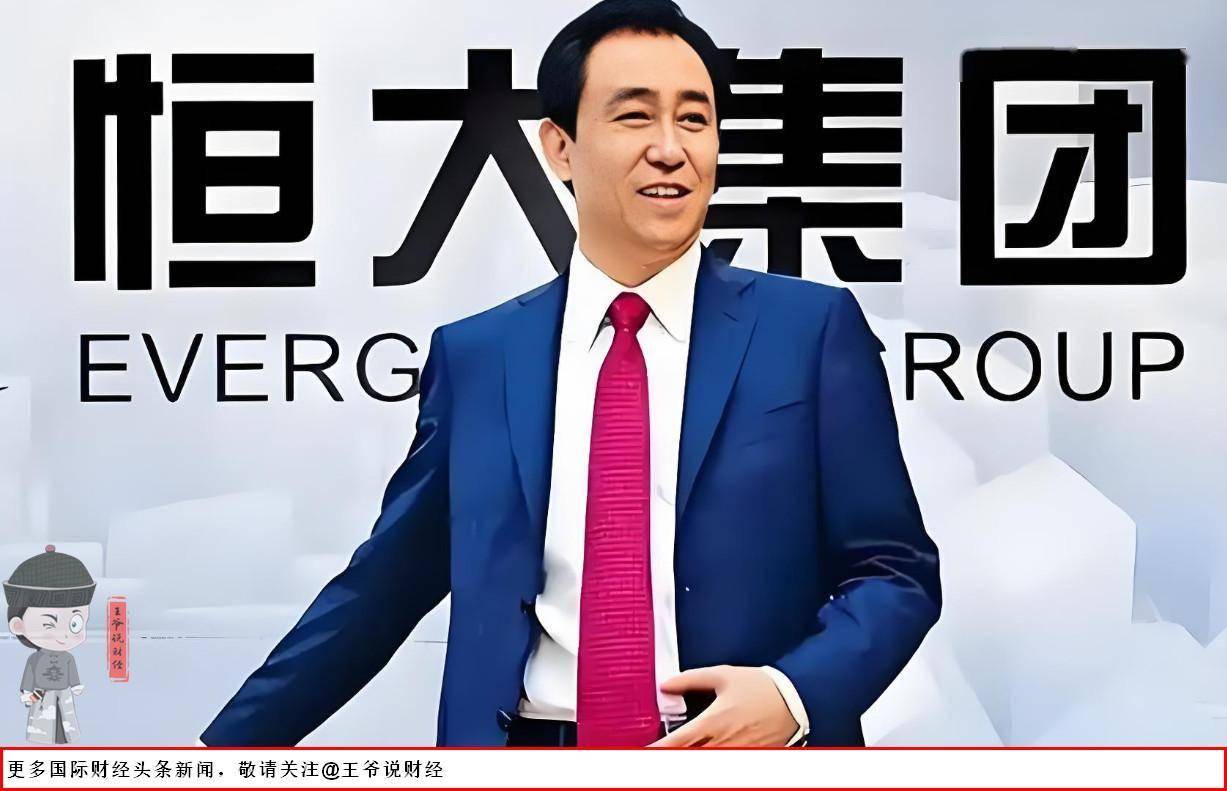
最新:许家印的23亿美元藏不住了!77亿资产冻结,600万恒大业主等答案?
Sou Hu Cai Jing· 2025-10-10 10:30
Core Viewpoint - The recent court ruling has exposed the offshore trust of Xu Jiayin, revealing $2.3 billion that was previously hidden, and has significant implications for his assets and the broader trust industry [1][3]. Group 1: Xu Jiayin's Financial Situation - Xu Jiayin's family is facing a massive debt of 2.4 trillion yuan, while simultaneously having a hidden offshore "savings account" [3]. - As of mid-2023, Evergrande's total liabilities reached 2.39 trillion yuan, with a shortfall of 644.2 billion yuan in assets [3]. - The court ruling has frozen $7.7 billion in assets across 12 countries, providing a glimmer of hope for the 6 million homeowners and creditors who may recover 9.34% of their principal [7]. Group 2: Legal Implications of the Trust - The court utilized two main legal principles to dismantle Xu's offshore trust: the substance-over-form doctrine and fraudulent transfer [5]. - The court found that Xu retained control over the trust, which disqualified it as a legitimate trust and categorized it as a "dummy account" [5]. - The divorce between Xu and his ex-wife was deemed a strategy to evade debt, further undermining the legitimacy of the trust [5]. Group 3: Industry Impact - The ruling has caused panic among wealthy individuals who previously relied on offshore trusts for asset protection, as the trust is now viewed as a potential liability [8]. - The trust industry is facing increased scrutiny, with a clear message that legitimate trusts are protected, but those used to defraud creditors will not be [9]. - Future trends indicate a global shift towards stricter enforcement of debt recovery and a demand for genuine trust structures that relinquish control [11].
香港高等法院:许家印160多亿元家族信托被接管!
Sou Hu Cai Jing· 2025-10-10 06:37
Core Insights - The Hong Kong High Court's recent ruling has set a record with a judgment of 55 billion, exposing the underlying issues of offshore trusts and their management [1] - The case involves Xu Jiayin's family trust established in 2019, which was initially valued at 2.3 billion USD (approximately 164 million RMB), revealing significant control by the investor over the trust [1] - The ruling has implications for the wealthy, highlighting the risks of asset transfer and debt evasion strategies in light of global tax transparency systems [6] Summary by Sections - **Judgment Details** - The judgment of 55 billion is unprecedented and has drawn significant public attention, especially after being reported by major financial media [2] - **Trust Management Issues** - The trust set up by Xu Jiayin was criticized for allowing excessive control by the investor, undermining the intended purpose of the trust [1] - The court identified the actions taken before the debt crisis as "textbook malicious debt evasion," with funds being transferred to children's trust accounts in the U.S. [4] - **Implications for Wealth Management** - The ruling serves as a wake-up call for the wealthy, indicating that traditional methods of asset concealment are no longer viable under the scrutiny of the CRS global tax transparency system [6] - The court's decision emphasizes the need for legitimate business practices as the foundation for wealth management [6]
宗氏家族信托争议引发的跨法域问题思考
Di Yi Cai Jing· 2025-09-30 10:59
Core Viewpoint - The Hong Kong High Court's recent ruling on the Zong family's wealth inheritance case highlights the complexities of cross-jurisdictional legal issues involving trust law, inheritance law, and corporate law, raising expectations for future rulings by mainland Chinese courts [1][2]. Group 1: Multi-Jurisdictional Legal Issues - The case involves parties from different jurisdictions, including the U.S., Hong Kong, and BVI, complicating the legal landscape and raising questions about the compatibility of laws across these regions [1][2]. - The legal relationships in the case are intricate, involving multiple laws and jurisdictions, which poses significant challenges for the mainland Chinese courts in terms of international compatibility of their rulings [1][2]. Group 2: Legal Proceedings and Stages - The case will undergo three stages: asset preservation, confirmation of trust rights, and enforcement of judgments across jurisdictions [2]. - The focus of discussions is primarily on the compatibility of mainland Chinese law with Hong Kong law and BVI law, particularly regarding the ownership of assets held by the BVI-registered company [2]. Group 3: Judicial Assistance and Flexibility - The Hong Kong High Court's decisions reflect a flexible and rigorous approach to judicial assistance, ensuring that the mainland court's rulings can be executed effectively [4][5]. - The court's emphasis on the existence of serious issues to be tried indicates a commitment to judicial courtesy while addressing the complexities of the case [6][7]. Group 4: Trust Establishment and Legal Principles - The case revisits the principles of certainty in trust establishment, including intention, subject matter, and beneficiaries, which are crucial for determining the validity of the trust [7][8]. - The concept of constructive trust is explored, suggesting that the defendant may have assumed fiduciary duties despite the absence of formal trust documentation [8][9]. Group 5: Offshore Trust Structures - The case illustrates the challenges and considerations involved in establishing offshore trust structures, particularly in the context of family governance and wealth transmission [10][11]. - The BVI's legal framework, including the VISTA Act, provides a flexible approach to trust management, which may be beneficial for high-net-worth families [12][13]. Group 6: Implications for Future Legal Frameworks - The outcome of this case could set a precedent for cross-border wealth management and inheritance disputes, emphasizing the need for clearer legal frameworks in China regarding offshore trusts [19]. - The case underscores the urgency for China to consider joining the Hague Trust Convention to enhance legal clarity and compatibility in international trust matters [19].
娃哈哈18亿美元离岸资产案香港再开庭:宗馥莉上诉申请被驳回
Sou Hu Cai Jing· 2025-09-28 01:36
Core Viewpoint - The ongoing legal dispute regarding the offshore assets worth $1.8 billion left by the late founder of Wahaha Group, Zong Qinghou, continues in Hong Kong, with appeals filed by his daughter, Zong Fuli, against previous court rulings [1][2]. Group 1: Legal Proceedings - The hearing on September 26 focused on the appeal filed by Zong Fuli and Jian Hao following the court's ruling on August 1, which included five grounds for appeal related to the applicability of Hong Kong's High Court Ordinance [1]. - The court rejected Zong Fuli's appeal regarding the injunction and disclosure orders made on August 1 but allowed a stay on the disclosure order, meaning the defendants do not have to disclose the latest balance and asset flow of their HSBC account until the appeal is resolved [1][2]. - The three plaintiffs, who claim to be children of Du Jianying, are seeking to confirm their beneficial rights to the assets in Jian Hao Ventures Limited's HSBC account, which is estimated to hold approximately $1.8 billion as of May 31, 2024 [2][3]. Group 2: Asset Details - Jian Hao Ventures Limited, registered in the British Virgin Islands, was solely directed by Zong Qinghou before his death, and Zong Fuli has since taken over [2]. - The assets in the HSBC account primarily consist of bonds, fixed-income assets, and cash, which the plaintiffs assert were promised to them by Zong Qinghou [2][3]. - The plaintiffs are also requesting that Zong Fuli fulfill fiduciary duties regarding the trust assets and pay interest based on a principal of $2.1 billion, along with compensation for losses amounting to approximately $1.085 million [3].
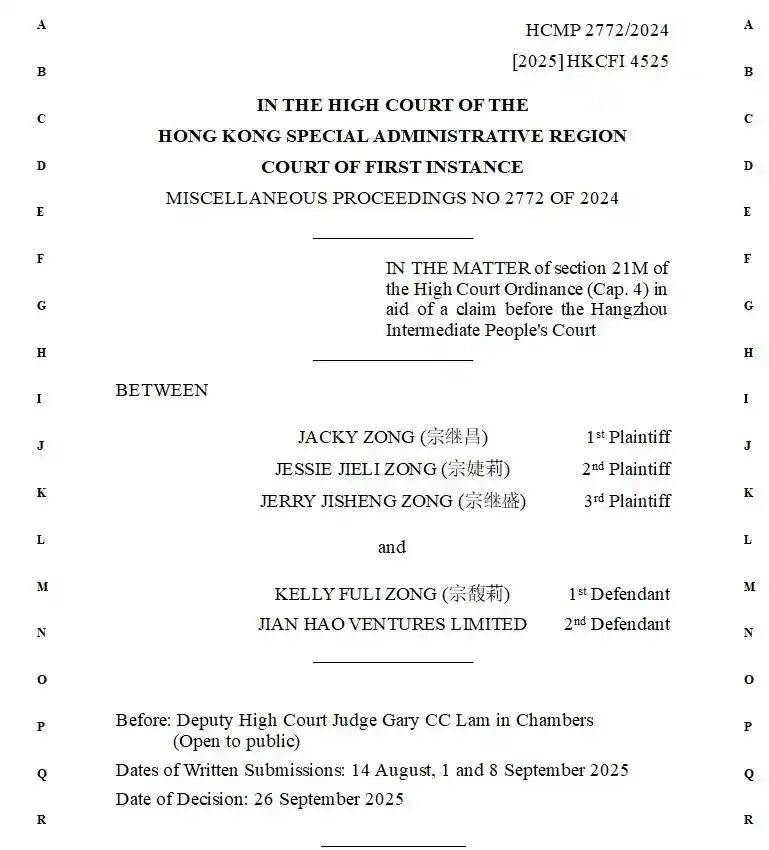
宗庆后遗产纠纷案香港高院裁决全文
YOUNG财经 漾财经· 2025-08-03 03:05
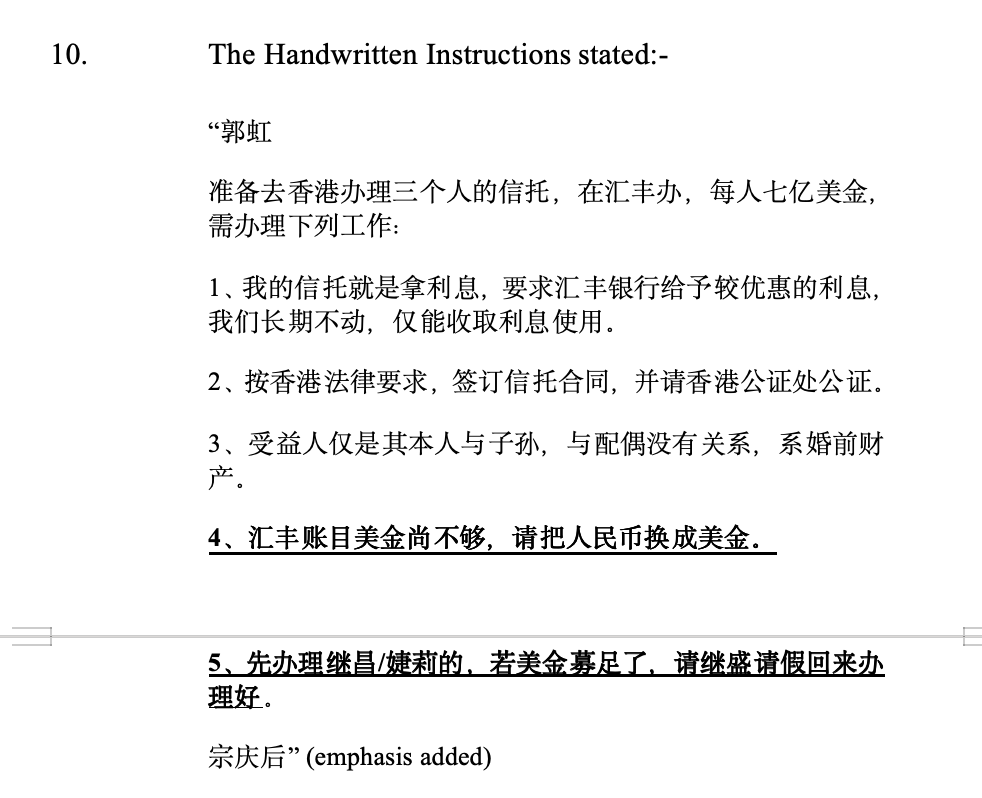
Core Viewpoint - The article discusses the recent developments in the inheritance dispute involving the late founder of Wahaha Group, Zong Qinghou, and his children, focusing on the court's decision to restrict the current chairman, Zong Fuli, from accessing certain assets in a HSBC bank account until the legal proceedings in Hangzhou are resolved [2][4]. Group 1: Court Ruling and Legal Proceedings - The Hong Kong High Court issued a non-judicial injunction preventing Zong Fuli from withdrawing or transferring any assets from the HSBC account of Jian Hao Ventures Limited until the outcome of the litigation in Hangzhou [2][4]. - The court ordered Zong Fuli to disclose the current balance and transaction details of the HSBC account, which held approximately $1.799 billion (around HKD 141 billion) as of May 31, 2024 [3][4]. Group 2: Background of the Dispute - The dispute arises from Zong Qinghou's two families, with the plaintiffs being his children from his relationship with Du Jianying, and the defendant being Zong Fuli, his daughter from another relationship [7][9]. - Zong Qinghou passed away on February 25, 2024, leaving behind two wills that did not name the plaintiffs as beneficiaries, which has led to the current legal conflict over the inheritance [12][26]. Group 3: Financial Details and Allegations - Jian Hao Ventures Limited's HSBC account primarily consists of bonds, fixed-income assets, and some cash and time deposits [3][11]. - The plaintiffs allege unauthorized withdrawals by Zong Fuli from the HSBC account, totaling approximately $5.244 million and $1.085 million, which they claim were not for the purpose of establishing the offshore trusts as per Zong Qinghou's instructions [34][35][46]. Group 4: Trust Establishment Issues - The plaintiffs argue that Zong Fuli has failed to establish the offshore trusts as outlined in the agreements and has not provided necessary documentation for the trust setup [36][54]. - Zong Fuli contends that the establishment of the trusts is contingent upon the valuation of the assets in the HSBC account, which she claims has not reached the expected amount of $2.1 billion [32][32][33].

宗氏百亿信托纠纷案存三大争议点
Xin Lang Cai Jing· 2025-08-02 09:29
Core Viewpoint - The Hong Kong High Court ruled on a lawsuit involving the Zong family, focusing on the establishment of a $2.1 billion offshore trust and the legal disputes surrounding it [2][3]. Group 1: Court Ruling - The court ordered that the defendant cannot withdraw or encumber assets in the HSBC account, and this order will remain effective until the outcome of related lawsuits in Hangzhou [2]. - The ruling highlighted the evidence provided by both the plaintiffs and the defendant regarding the establishment of the offshore trust [2][3]. Group 2: Evidence and Disputes - The plaintiffs, Jacky, Jessie, and Jerry Zong, claim to be beneficiaries of a $2.1 billion offshore trust that has not been successfully established, leading to ongoing legal battles [3]. - The defendant, Kelly Zong, argues that the plaintiffs are being overly hasty and that discussions regarding the trust's establishment are genuine [9][10]. Group 3: Trust Structure and Legal Implications - The plaintiffs assert that the trust should consist of $700 million for each beneficiary, while the defendant contends that only the interest from the principal should be considered trust assets [10][11]. - Legal experts indicate that the trust's establishment involves a two-step process, transitioning from a Private Trust Company (PTC) to a professional trustee [12][13]. Group 4: Future Legal Considerations - The case raises questions about the legal jurisdiction and applicability of laws governing the trust, especially since the assets are located offshore [16]. - The ongoing litigation in Hangzhou is expected to be the main battleground for resolving the disputes over the trust's existence and its assets [16].
宗氏三兄妹去年已申请对宗馥莉临时禁令,信托和遗嘱冲突,该听谁的
21世纪经济报道· 2025-07-18 12:21
Core Viewpoint - The inheritance dispute involving Zong Fuli and three individuals claiming to be the children of Zong Qinghou has escalated, with legal actions initiated to prevent asset disposal from a bank account linked to Jian Hao Ventures Limited, which is believed to hold significant trust assets [1][2][6]. Group 1: Legal Proceedings and Asset Management - The Hong Kong High Court issued a ruling prohibiting Zong Fuli and Jian Hao Ventures Limited from disposing of or diminishing the assets in the HSBC bank account [2]. - The plaintiffs are required to provide detailed account information, including balance, transfer records, and transaction details since February 2, 2024, highlighting a significant fund transfer shortly after Zong Qinghou's death [2][6]. - The account in question is reportedly a trust account established for Zong Qinghou's three children, with a total value of $2.1 billion [6]. Group 2: Trust Structure and Legal Implications - There are speculations regarding the existence of a trust set up by Zong Qinghou, potentially in the British Virgin Islands (BVI), which may have allowed Zong Fuli to act as a director or controller of Jian Hao Ventures Limited [3][9]. - Legal experts suggest that the validity of the trust is not contingent on the total amount deposited, indicating that the trust could be effective even with minimal initial funding [10][12]. - The conflict between the trust and Zong Qinghou's will raises questions about which document holds precedence, with legal opinions suggesting that trusts generally take priority over wills [12]. Group 3: Potential Scenarios for Asset Withdrawal - Various scenarios are proposed regarding how Zong Fuli may have accessed trust assets, including the possibility of her being designated to fulfill funding obligations for the trust [14][15]. - The structure of offshore trusts often involves multiple layers of companies, which may complicate the management and access to assets, potentially allowing Zong Fuli to operate without direct oversight [15]. - Legal interpretations indicate that if the trust is still in the establishment phase or if Zong Fuli is a beneficiary, she may have legitimate grounds to withdraw funds for specific purposes, such as business expenses [16][17].