
府院联动

Search documents
济南探索公益清算强制注销新路径,打通“最后一公里”
Qi Lu Wan Bao· 2025-12-17 11:18
Core Viewpoint - The Jinan Municipal Intermediate People's Court held a press conference to discuss the implementation of compulsory liquidation measures for long-term non-operating enterprises, emphasizing the importance of market exit mechanisms for resource allocation efficiency and risk prevention [1][2]. Group 1: Policy Implementation - The Jinan Market Supervision Administration is promoting the exit of long-term non-operating enterprises as a means to enhance market vitality and ensure healthy growth of business entities [1]. - A collaborative mechanism between government and courts has been established to address the challenge of non-operating enterprises not voluntarily applying for deregistration [1][2]. - The joint issuance of a notice on the implementation of compulsory liquidation has been initiated, detailing the cooperation process among administrative agencies, courts, and registration authorities [2]. Group 2: Operational Framework - The operational framework includes a systematic approach where market supervision departments identify companies for deregistration and courts appoint liquidation managers to oversee the process [2]. - Regular coordination meetings are held to address common issues and ensure effective implementation of the compulsory exit measures [2]. - Future plans include the continuous optimization of departmental collaboration processes and the implementation of the compulsory deregistration system to enhance competitive vitality among business entities [2].
济南中院破产审判激活市场发展动能,核心在于这九个字
Qi Lu Wan Bao· 2025-12-17 11:18
Core Viewpoint - The Jinan Intermediate People's Court has highlighted its efforts in bankruptcy trials to support high-quality development through a collaborative approach involving various government departments and innovative practices [1][2] Group 1: Full Coverage - The establishment of a special task force for handling bankrupt enterprises at the municipal level, led by the Development and Reform Commission, has achieved full coverage across 13 districts [1] - A notable case involved the bankruptcy restructuring of an agricultural company, where a collaborative model addressed issues related to land use rights and farmers' grievances, protecting the rights of over 200 employees and more than 2,000 farmers [1] Group 2: Collective Efforts - The court has fostered collaboration through joint meetings, policy integration, and performance assessments, enhancing the collective effort in bankruptcy management [1] - A partnership with the Taxation Bureau has led to the establishment of a mechanism to optimize the handling of tax-related matters in bankruptcy cases, facilitating tax incentives and credit restoration [1] - Collaboration with the Procuratorate and Public Security Bureau has resulted in a framework to combat debt evasion through bankruptcy, creating a judicial deterrent network [1] Group 3: Innovation - The court has focused on optimizing market resource allocation by exploring innovative solutions to practical issues, such as the introduction of a "public welfare liquidation" system [2] - A joint initiative with the Market Supervision Administration has led to the issuance of a notice to facilitate the orderly exit of 1,130 non-viable entities from the market [2] - These innovative practices have been recognized and promoted by the National Market Supervision Administration and the provincial government [2]
海陵法院构建涉重大项目执行快速响应机制
Xin Hua Ri Bao· 2025-12-16 21:51
Core Viewpoint - The Taizhou Hailing Court has established an innovative rapid response mechanism for executing major project cases, ensuring the smooth implementation of significant projects through effective judicial measures, which has received recognition from local government leaders [1] Group 1: Rapid Response Mechanism - The court has created a classification response mechanism for litigation projects, allowing for special identification of "major project" cases and the establishment of dedicated collegial panels for full-process tracking [1] - In a specific case involving the "Hailing Port" project, the court expedited the execution process by allowing for preliminary execution to avoid delays that could impact project construction [1] Group 2: Internal and External Collaboration - A collaborative execution system has been built to address the multi-departmental challenges of executing major project cases, enhancing internal integration and external cooperation [2] - The court has engaged with various departments such as development, construction, and land management to facilitate information sharing and collaborative measures, exemplified by the resolution of a land lease dispute in the special aquatic breeding project [2] Group 3: Comprehensive Service Tracking - The court has implemented a service chain that includes a "project demand list," "execution progress board," and "risk warning ledger" to ensure a full-cycle legal service from project initiation to operation [3] - In a case involving a new energy motorcycle manufacturing project, the court provided comprehensive legal guidance and coordinated resources to facilitate the project's rapid launch and stable operation [3]
“烫手山芋”变抢手资产
Jing Ji Ri Bao· 2025-12-14 22:34
Group 1 - The new production line for iminodiacetic acid at Xinmin Pharmaceutical Co., Ltd. in Shandong Province is set to begin operations, with an annual output of 15,000 tons, utilizing an automated and environmentally friendly process that does not produce waste gas or wastewater [1] - The company, previously known as Purun Pharmaceutical Co., Ltd., faced bankruptcy and was sued by over 20 suppliers, but the court recognized the value of its hazardous chemical operating licenses and allowed the company to enter a restructuring process [1] - The local court and government initiated a collaborative mechanism to attract investment, resulting in an injection of 150 million yuan into the company to stabilize employment and support its recovery [1] Group 2 - The former Fumeikang site, covering 102 acres, was found to have 3,000 tons of hazardous chemicals and was considered a "hot potato" due to its status as outdated capacity [2] - The local government implemented a "replace old with new" strategy, leading to the acquisition of the site by Shenglong New Materials Co., Ltd., which invested 430 million yuan in a new project expected to generate an annual output value of 1.7 billion yuan and create over 300 jobs [2] - The local government has prioritized optimizing the business environment and revitalizing "zombie enterprises," enhancing legal frameworks to support economic development [2]
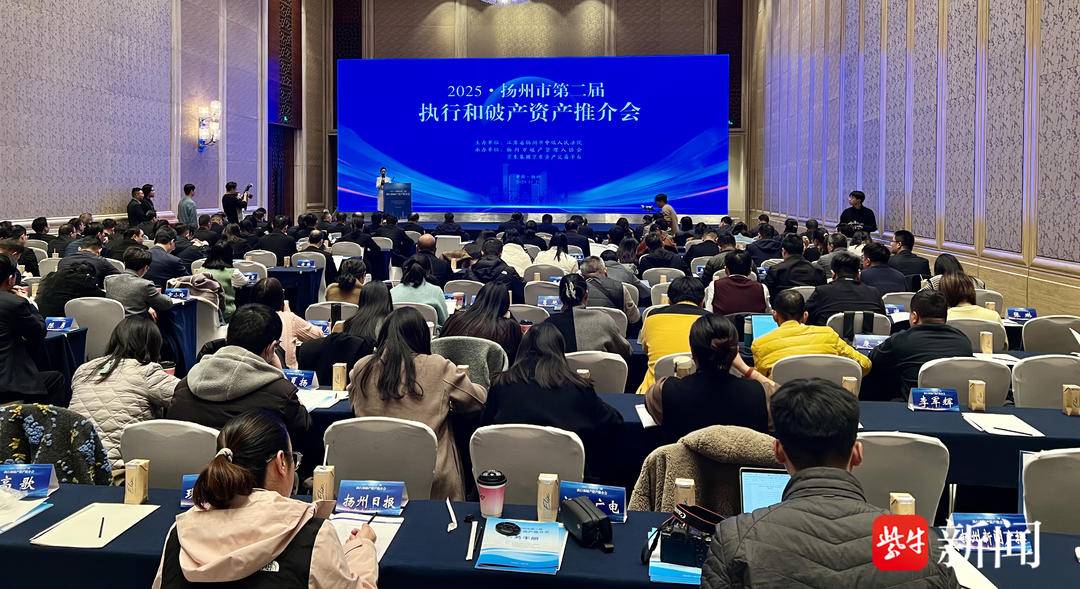
为地方经济转型升级注入法治动力!这场执行和破产资产推介会备受关注成效显著
Yang Zi Wan Bao Wang· 2025-11-22 04:54
Core Viewpoint - The second asset promotion conference in Yangzhou aims to enhance asset promotion through government-court collaboration, creating an information platform to revitalize underutilized land and idle properties, thereby injecting strong legal momentum into local economic transformation and upgrading [1]. Group 1: Conference Overview - The conference attracted attention from various sectors, including representatives from the Jiangsu High Court, Yangzhou government, JD Group, bankruptcy managers, and industry scholars, discussing new paths for asset disposal and seeking cooperation opportunities [3]. - A specialized course on "Bankruptcy Law Amendments" was presented by Professor Lou Aihua from Suzhou University, providing theoretical depth and practical guidance to attendees [3]. Group 2: Key Addresses - Jiangsu High Court Vice President Wei Ruijin praised Yangzhou's innovative practices in asset disposal and emphasized the need for precise market demand alignment and improved collaborative mechanisms [3]. - Yangzhou Vice Mayor Sheng Weizhong focused on building a legal business environment to encourage investment and support economic transformation [3]. - Yangzhou Intermediate Court President Yang Xiaoyong highlighted the importance of deepening government-court collaboration and enhancing asset disposal efficiency [3]. - JD Group Vice President Han Chengxin expressed commitment to leveraging the conference as a starting point for revitalizing assets in Yangzhou [3]. Group 3: Asset Promotion and Agreements - The conference featured a concentrated promotion of 29 selected quality execution and bankruptcy assets, detailing their status, investment value, and connection methods for investors [4]. - Seven projects successfully signed investment intention agreements during the event [4]. Group 4: Discussions and Future Directions - A panel discussion on "Opportunities and Challenges in Special Asset Disposal" included insights from various industry leaders, emphasizing the critical role of bankruptcy managers in asset disposal [4]. - The successful hosting of the conference established a solid bridge for efficient asset-capital connections and exemplified the ongoing optimization of the government-court collaboration mechanism [4]. - Future efforts will focus on deepening cooperation to address asset disposal challenges, supporting Yangzhou's economic stability and industrial upgrading [4].


山东滨州:沉睡资产正焕新
Jing Ji Ri Bao· 2025-11-01 02:21
Core Insights - The transformation of the Huaneng Zhanhua Thermal Power Company into Shandong's largest wind-solar power station demonstrates effective resource revitalization and project upgrades, significantly increasing power generation efficiency [1] - The "government-court linkage" approach in Binzhou combines judicial expertise with government resources to address complex bankruptcy issues, ensuring environmental responsibilities are prioritized during corporate restructuring [1] - The initiative to revitalize dormant state-owned assets in Binzhou aims to clear "sleeping assets" by 2027, with a current asset revitalization rate of 24.2%, exceeding initial targets [2] Group 1 - The Huaneng Shandong Company invested nearly 100 million yuan to initiate a new energy project, transitioning from coal to renewable energy generation [1] - The Binzhou Water Development Group is implementing a transformation model that utilizes idle land and facilities to create a high-end equipment manufacturing park, projected to generate an annual output value of 850 million yuan [2] - The focus on "tailored solutions" for asset disposal allows each asset to find the most suitable path based on its unique conditions, enhancing overall efficiency [3] Group 2 - The Binzhou government has completed asset revitalization worth 3.21 billion yuan, with state-owned enterprises experiencing a year-on-year increase in total assets and operating income of 15.89% and 20.29%, respectively [3] - The transformation of the original wetland restoration technology center into a space for aerospace culture education is expected to attract 1 million visitors annually, generating 50 million yuan in revenue [3] - The ongoing revitalization efforts are characterized as a long-term battle requiring comprehensive coordination and targeted breakthroughs to optimize the layout of state-owned capital [3]
海安“府院联动”力推破产案件高效办理
Jiang Nan Shi Bao· 2025-10-22 15:17
Core Viewpoint - The meeting between Hai'an Court and Hai'an Economic and Technological Development Zone Management Committee focused on bankruptcy cases, emphasizing the importance of legal proceedings in protecting creditor rights and enhancing collaboration in asset disposal [1] Group 1: Bankruptcy Case Management - Hai'an Court and the Development Zone Management Committee held a joint meeting to discuss the status of bankruptcy cases within the development zone [1] - The court president, Qin Changdong, highlighted the need to advance bankruptcy case handling in accordance with the law to safeguard creditor interests [1] - The committee director, Zhang Yonghua, expressed the intention to strengthen cooperation in asset disposal through a "government-court linkage" approach [1] Group 2: Future Actions - Hai'an Court plans to deepen the linkage mechanism to fully utilize bankruptcy adjudication functions [1] - The court aims to provide judicial support for optimizing the business environment and promoting high-quality development in the region [1]
甘肃:强化与市场监管部门协作深化府院联动
Ren Min Wang· 2025-10-18 02:12
Core Viewpoint - The meeting between Gansu Provincial High People's Court and Gansu Provincial Market Supervision Administration aims to deepen government-court collaboration, address enforcement and judicial challenges, and improve cooperation mechanisms for better legal services to support economic and social development in Gansu [1]. Group 1: Meeting Objectives - The meeting is a concrete action to implement the Central Committee's decision on government-court collaboration and is an important measure for promoting the rule of law in Gansu [1]. - Both parties reached consensus on six specific topics to enhance cooperation [1]. Group 2: Specific Agreements - Promote the proper resolution of administrative disputes in the market supervision field and improve the dispute diversion and guidance mechanism [1]. - Strengthen coordination in administrative non-litigation enforcement work to enhance execution efficiency and effectiveness [1]. - Legally standardize and govern enterprise registration behaviors to maintain market access order [1]. - Establish a mechanism for connecting intellectual property infringement disputes with mediation and litigation to strengthen the protection of innovative achievements [1]. - Create a unified technical investigator system across the province to provide professional support for case handling [1]. - Regulate judicial enforcement behaviors related to enterprises to effectively reduce the burden on businesses [1].
常州老牌饲料企业2亿债务危机四个月逆转,“府院联动+大数据”创破产重整“常州速度”
Yang Zi Wan Bao Wang· 2025-09-26 05:03
Core Insights - Changzhou Dajiang Feed Co., Ltd. has successfully undergone a bankruptcy restructuring process, overcoming a debt crisis of 200 million yuan and avoiding layoffs, thanks to a collaborative effort between the local government and the court [1][2][6] Group 1: Company Background and Crisis - Established in 1992, Changzhou Dajiang Feed Co., Ltd. was a leading brand in the agricultural sector of Changzhou, with its products widely distributed in East China [2] - The company faced multiple crises starting in 2020, including debt defaults leading to lawsuits and the disappearance of its legal representative, resulting in a reported external debt of 200 million yuan before the bankruptcy proceedings began [2][3] Group 2: Restructuring Process - The local court recognized the potential for recovery due to the brand's continued recognition and the company's advantageous location near Benniu Port, initiating a rapid rescue operation [2][3] - A collaborative mechanism was established between the court and local government to address various issues related to the bankruptcy process, including public grievances and maintaining stability [2][3] Group 3: Key Actions and Outcomes - A professional team was formed to manage the restructuring, which included auditing the company's financials and identifying critical issues, such as seasonal losses during winter [3][4] - The restructuring plan was developed with input from all stakeholders, ensuring that secured debts and tax claims were fully repaid, while ordinary creditors received a 17% repayment [5][6] Group 4: Judicial Innovations and Broader Impact - The court's innovative bankruptcy restructuring mechanism has been effective in reviving struggling companies, with 26 companies saved and nearly 7 billion yuan in bad debts resolved from 2021 to 2023 [7] - The establishment of a bankruptcy information platform has improved investor recruitment, while a comprehensive judicial process has streamlined the bankruptcy restructuring efforts [7][8]
常州老牌饲料企业债务危机四个月逆转
Jiang Nan Shi Bao· 2025-09-23 06:25
Core Viewpoint - Changzhou Dajiang Feed Co., Ltd. has successfully undergone a bankruptcy restructuring process, overcoming a debt crisis of 200 million yuan and achieving operational recovery with zero layoffs for employees, showcasing a model for optimizing the business environment in China [1][6]. Group 1: Company Background and Crisis - Established in 1992, Changzhou Dajiang Feed Co., Ltd. was a leading brand in the agricultural sector of Changzhou, with its products widely distributed in East China. However, starting in 2020, the company faced multiple crises, including debt defaults and legal issues, leading to a reported external debt of 200 million yuan before the bankruptcy proceedings began in 2024 [2][3]. - The company’s trademark remained well-known, and its production license was still valid, providing a glimmer of hope during the bankruptcy process [2]. Group 2: Restructuring Process - The bankruptcy court in Changzhou initiated a collaborative mechanism with local government to address the company's issues, focusing on information sharing and coordinated efforts to resolve problems related to the bankruptcy [2][3]. - A professional team was formed, including Jiangsu Yuanbo Law Firm and Changzhou Hengxin Accounting Firm, to manage the restructuring process. They discovered that the company had a seasonal financial pattern, which became a key factor in the restructuring plan [3][4]. - The restructuring involved public recruitment of potential investors through various platforms, ultimately selecting Shanghai Kewang Feed Co., Ltd. as the investor due to its relevant industry experience and the highest investment amount [4][5]. Group 3: Outcomes and Future Prospects - The restructuring plan ensured 100% repayment of secured and tax debts, while ordinary creditors received a 17% repayment. The plan allowed the company to retain its operational identity and valuable assets, facilitating a smoother transition into a sustainable business model [5][6]. - Post-restructuring, the company has resumed full production and maintained employee positions, enhancing its market competitiveness and operational vitality [6][7]. - The bankruptcy restructuring mechanism has been effective in saving distressed companies, with Changzhou courts reportedly rescuing 26 companies and resolving nearly 7 billion yuan in bad debts from 2021 to 2023 [7].