开放贸易

Search documents
德国巴伐利亚州副州长最新涉华表态:保护主义非解决之道,欢迎中国投资
Huan Qiu Wang· 2025-09-13 08:45
Core Viewpoint - Despite the current tensions in EU-China relations, Bavaria continues to welcome Chinese investments, emphasizing the importance of economic resilience and self-sufficiency without resorting to protectionism [1][3]. Investment Opportunities - In 2024, Chinese investments in Bavaria are expected to reach record levels, with approximately 500 Chinese companies operating in the region, creating thousands of jobs [3]. - Bavaria, as the headquarters for major automotive companies like BMW and Audi, is positioned as a key location for Chinese automotive firms to establish production bases in Europe [3]. Trade Relations - The Deputy Governor criticized the EU's anti-subsidy tariffs on electric vehicles imported from China, arguing that such measures are not the correct solution [3]. - There is a call for negotiations between the EU and China to reach a WTO-compliant resolution, avoiding tariff impositions [3].


荷兰首相:荷兰受益于开放贸易和最少的贸易壁垒。我们需要冷静应对,防止事态升级。
news flash· 2025-05-23 14:00
Core Viewpoint - The Prime Minister of the Netherlands emphasizes the benefits of open trade and minimal trade barriers, advocating for a calm response to prevent escalation of current issues [1] Group 1 - The Netherlands benefits from open trade practices, which contribute positively to its economy [1] - The Prime Minister calls for a measured approach to current trade tensions to avoid further complications [1]
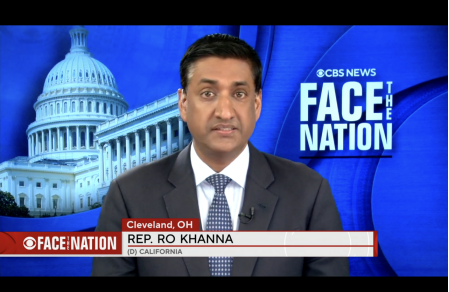
美众议员批特朗普关税政策:无法将制造业带回美国,“他们需要对经济有21世纪的理解”
Huan Qiu Wang· 2025-04-14 08:24
Core Viewpoint - Congressman Ro Khanna criticized President Trump's tariff policies, warning that they will increase prices of electronic products in the U.S. and fail to bring manufacturing jobs back to the country [1][3]. Group 1: Tariff Policies - Khanna referred to Trump's trade protectionism as reminiscent of 19th-century policies, specifically mentioning the McKinley administration's average import tariff rate of 52%, which led to increased prices and heightened global trade tensions [1]. - The Trump administration's recent decision to exclude smartphones and computers from its tariff policy indicates confusion and disorder within the White House regarding its manufacturing revival plans [3]. Group 2: Manufacturing Challenges - Khanna stated that the plan to revitalize domestic manufacturing has failed, emphasizing that tariffs alone cannot achieve the goal of bringing manufacturing, particularly in electronics, back to the U.S. [3]. - Analysts noted that the supply chains for smartphones and laptops are deeply rooted in Asia, making it challenging to relocate manufacturing to the U.S. due to time constraints, policy uncertainty, high costs, and a shortage of skilled labor [3].