抗美援朝战争

Search documents
“哪里有伤病员,我就到哪里去”(时空对话)
Ren Min Ri Bao· 2025-08-19 22:46
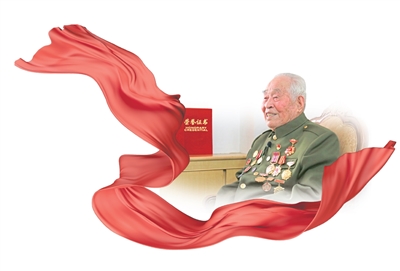
Core Viewpoint - The article highlights the life and experiences of Zhang Yishun, a 92-year-old veteran who participated in significant historical conflicts, including the Anti-Japanese War, the Liberation War, and the Korean War, emphasizing his contributions and reflections on war and peace [6][12]. Group 1: Early Life and Motivation - Zhang Yishun was born in 1933 in a poor family in Zibo, Shandong, and joined the anti-Japanese efforts at the age of 11, motivated by the harsh realities of life under Japanese occupation [6][7]. - He experienced severe hardships as a child laborer in coal mines, which fueled his hatred for Japanese invaders and motivated his enlistment in the military [7][8]. Group 2: Military Service and Experiences - Zhang Yishun became a nurse in the military, where he learned to care for wounded soldiers, including Japanese prisoners of war, which he initially resisted but later accepted as part of his duty [9][10]. - He participated in significant battles and was involved in the care of injured soldiers, demonstrating a commitment to humanity even towards enemies [9][10]. Group 3: Post-War Contributions and Legacy - After the war, Zhang Yishun continued his service in the medical field, eventually becoming a key figure in the health system in Zhangzhou after transitioning from military to civilian life in 1978 [11][12]. - He remains active in sharing his experiences and promoting the values of patriotism and peace, contributing to initiatives that document the memories of war veterans [12].

中国驻朝鲜使馆祭扫中国人民志愿军烈士陵园
Xin Hua She· 2025-07-26 15:43
Core Points - The commemoration of the Korean War Armistice Day is marked by a visit from the Chinese ambassador to North Korea, Wang Yajun, and over 70 diplomats to honor the Chinese People's Volunteer Army martyrs [1][2] - The Chinese People's Volunteer Army martyrs' cemetery in Pyonganbuk-do contains three collective graves with over 1,100 martyrs buried [1] - The visit included a solemn ceremony with the singing of the national anthem, moments of silence, and the laying of wreaths, emphasizing the enduring friendship between China and North Korea [1][2] Summary by Sections - **Commemoration Activities** - The Chinese ambassador and diplomats participated in a memorial service at the cemetery, which included singing the national anthem and laying flowers [1] - The ceremony highlighted the respect and remembrance for the sacrifices made by the Chinese People's Volunteer Army [1] - **Historical Significance** - The visit underscored the significant contributions and sacrifices made by the Chinese People's Volunteer Army during the Korean War, reinforcing the historical ties between China and North Korea [2] - The North Korean side acknowledged the unity and joint efforts of the Chinese and North Korean forces during the war [1][2] - **Memorial Facilities** - There are currently 71 memorial sites for the Chinese People's Volunteer Army martyrs in North Korea, with annual maintenance and commemorative activities conducted by the representative office [2]
“守阵地,要咬牙拼到底”(时空对话)
Ren Min Ri Bao· 2025-07-22 22:13
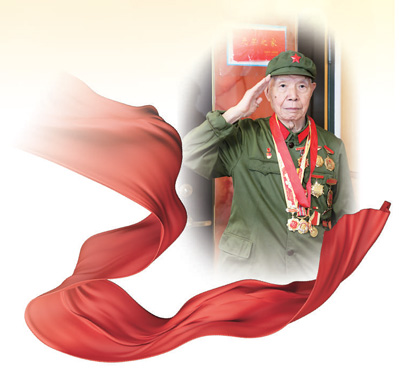
Core Viewpoint - The article highlights the life and experiences of Bai Zhirong, a 101-year-old veteran of the Anti-Japanese War, emphasizing his dedication, bravery, and the historical significance of his service during a tumultuous period in Chinese history [4][6][9]. Group 1: Personal Background and Military Service - Bai Zhirong was born in 1924 in a small village in Shanxi and decided to join the Eighth Route Army to fight against Japanese invaders, motivated by a desire to protect his homeland [6]. - He served for 16 years, including significant participation in the Anti-Japanese War, and was recognized for his skills as a soldier [5][9]. - Bai Zhirong was initially tasked with sabotaging enemy communication lines before becoming a mortar operator, where he faced numerous dangers and challenges [6][8]. Group 2: Combat Experiences - During his service, Bai Zhirong participated in various battles, including a notable ambush against Japanese forces, where he witnessed the harsh realities of war [7][8]. - He described the conditions of warfare, including the scarcity of ammunition and the need for strategic planning to maximize their limited resources [8][9]. - Bai Zhirong's experiences reflect the camaraderie and support from local civilians, who often aided the troops despite their own hardships [8]. Group 3: Legacy and Reflections - After the war, Bai Zhirong joined the Communist Party and continued to serve in various capacities, eventually retiring from the geological exploration sector [9][10]. - He maintains a habit of writing diaries, documenting his memories and reflections on the war, which serve as a testament to his experiences and the sacrifices made by his comrades [9][10]. - Bai Zhirong expresses gratitude for surviving the war and often shares his stories with younger generations, emphasizing the importance of remembering history [10].
“牺牲是光荣的,我参军就不怕死”(时空对话)
Ren Min Ri Bao· 2025-06-19 21:51
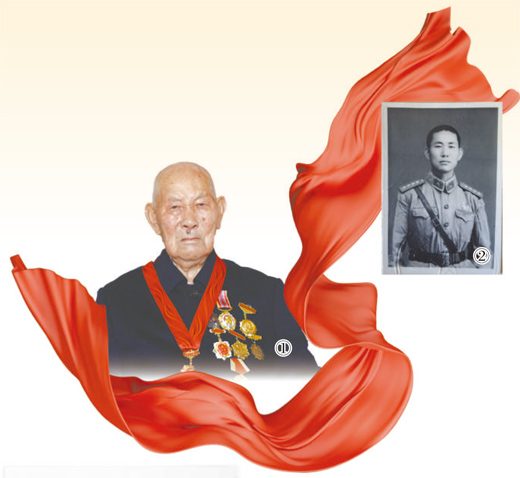
Core Points - The article highlights the life and experiences of Sun Wenxiu, a centenarian veteran who participated in the Anti-Japanese War and later served in the Korean War, emphasizing his contributions and the sacrifices made by his comrades [2][3][4][5][6]. Group 1: Early Life and Military Involvement - Sun Wenxiu was born in February 1924 in Shandong and initially named "Seventy-One" after his grandmother's age, later renamed by his commander to Sun Wenxiu to reflect the importance of education alongside military prowess [2][3]. - At the age of 14, he joined the Eighth Route Army to fight against Japanese invaders, motivated by a desire to protect the local populace [3][4]. Group 2: Combat Experiences - Sun participated in numerous battles, including a significant engagement where his unit was surrounded by Japanese forces, showcasing the strategic support from local villagers that enabled their successful escape [4]. - He quickly rose through the ranks, becoming a squad leader and later a deputy platoon leader, emphasizing the importance of tactical thinking and minimizing casualties during combat [4][5]. Group 3: Post-War Contributions - After the war, Sun Wenxiu served as a deputy county head in Jilin Province, where he focused on building a memorial for General Yang Jingyu and addressing public health issues, such as providing clean drinking water to combat diseases [6]. - His commitment to serving the community and sharing his wartime experiences with future generations reflects his dedication to national development and patriotism [6].
桌子被子当掩护 迎着弹雨往前冲(时空对话)
Ren Min Ri Bao· 2025-06-18 21:53
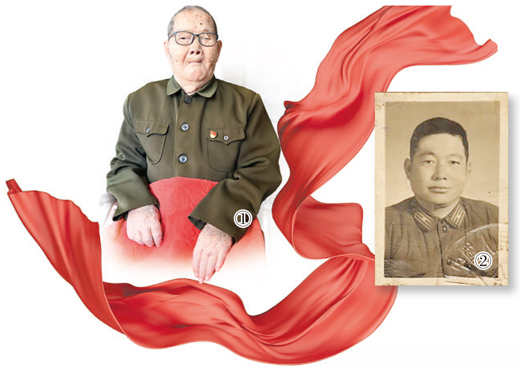
Core Viewpoint - The article highlights the life and experiences of Sun Yeman, a veteran who participated in significant battles during the Anti-Japanese War, the Liberation War, and the Korean War, emphasizing his dedication to protecting his family, comrades, and country [6][12]. Group 1: Early Life and Motivation - Sun Yeman was born in January 1926 in Anhui Province and faced hardships in his childhood, including the loss of his father and poverty [6][8]. - His early experiences with Japanese invaders and the struggles of his family instilled a strong desire to fight back against oppression [6][7]. Group 2: Military Career - In December 1943, at the age of 17, Sun Yeman made the pivotal decision to join the New Fourth Army to combat Japanese forces [8][9]. - He underwent rigorous training, which not only enhanced his military skills but also fostered lifelong friendships with fellow soldiers [9][13]. Group 3: Notable Battles - Sun Yeman participated in a significant battle during the Spring Festival of 1944, where his unit successfully attacked a Japanese stronghold, leading to the capture of numerous enemy weapons [10][12]. - The victory was celebrated by local villagers, marking a memorable moment in his military career [12]. Group 4: Post-War Contributions - After the establishment of New China, Sun Yeman continued to serve the country by engaging in various construction projects, including building reservoirs and underground facilities [13]. - He has remained committed to sharing his revolutionary stories and encouraging younger generations to contribute to national development [13][14].