
文物事业高质量发展

Search documents
世界遗产达60项 博物馆年接待观众近15亿人次 文物事业高质量发展迈出坚实步伐(权威发布·高质量完成“十四五”规划)
Ren Min Ri Bao· 2025-09-10 21:59
Core Viewpoint - The "14th Five-Year Plan" period has seen significant advancements in the high-quality development of cultural relics and heritage protection in China, with historical achievements being made in various aspects of cultural heritage management and preservation [1]. Group 1: Cultural Heritage Protection - The protection of cultural relics has improved significantly, with nearly 2,000 key national relic protection and repair projects underway and over 1,200 preventive protection projects implemented [2]. - The new revised "Cultural Relics Protection Law" has been in effect since March 1, marking a new phase of legal governance in cultural heritage management [2]. - A comprehensive legal framework for cultural relics protection has been established, consisting of the Cultural Relics Protection Law, six administrative regulations, ten departmental rules, and over 400 local regulations [2]. Group 2: Museum Development - During the "14th Five-Year Plan" period, museums in China added 8.892 million new items to their collections, with 91% of the 7,046 registered museums offering free admission [4]. - The central government has invested over 15 billion yuan in subsidies for free museum access, with museums receiving nearly 4.1 billion visitors over five years [4]. - Over 40,000 exhibitions and more than 500,000 educational activities are held annually, promoting the transmission of traditional Chinese culture and enhancing the educational role of museums [4]. Group 3: International Cultural Exchange - China has successfully added several cultural heritage sites to the World Heritage List, with ongoing applications for sites like "Jingdezhen Handcrafted Porcelain" and "Sanxingdui - Jinsha Site" [6]. - The establishment of the "Asian Cultural Heritage Protection Alliance" has expanded to 20 member and partner countries, contributing to international governance in cultural heritage [6]. - A series of high-profile exhibitions, including the "Silk Road" and "Pyramid of Giza" exhibitions, have showcased China's cultural heritage on the global stage [6]. Group 4: Archaeological Contributions - The "Chinese Civilization Exploration Project" has developed a research paradigm that integrates humanities and natural sciences, contributing original insights into the origins of civilization [7]. - Advanced archaeological techniques and equipment have been employed in significant underwater excavations, enhancing the understanding of ancient maritime activities [7]. - International collaborations in cultural relic technology, such as the "Silk Road Interactive Map," have garnered widespread participation from the global academic community [7].
文物事业高质量发展取得历史性成就
Yang Shi Wang· 2025-09-10 14:19
Core Viewpoint - The "14th Five-Year Plan" period has seen significant achievements in the high-quality development of cultural relics in China, with a focus on resource management, protection, and public engagement [2] Group 1: Achievements in Cultural Relics Management - The national cultural relics census has been completed, with 767,000 registered cultural relics undergoing review, and over 130,000 new relics discovered [2] - The protection and restoration of key cultural relics, such as grottoes, earth sites, murals, and fragile museum collections, have significantly improved [2] - The number of key research bases under the National Cultural Heritage Administration has reached 40 [2] Group 2: Museum Development and Public Engagement - The total number of registered museums in China has reached 7,046, with 6,444 of them being free to the public, accounting for over 91% [2] - New museum collections have increased by 8.892 million items/suits, and annual visitor numbers have approached 1.5 billion, indicating that museum visits are becoming an integral part of people's lives [2] - During the "14th Five-Year Plan" period, 537 pieces/sets of lost cultural relics have returned to China, and 49 joint archaeological projects have been steadily implemented [2]

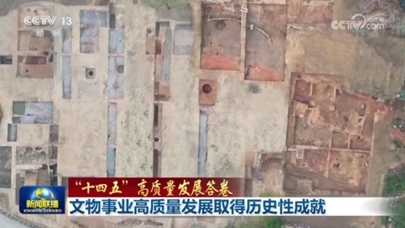
【“十四五”高质量发展答卷】文物事业高质量发展取得历史性成就
Yang Shi Wang· 2025-09-10 12:50
Core Points - The State Council's press conference highlighted the historical achievements in the cultural heritage sector during the "14th Five-Year Plan" period [1] - The National Cultural Heritage Administration reported significant progress in the fourth national cultural heritage census, with 767,000 registered cultural relics reviewed and over 130,000 new relics discovered [3] - The number of registered museums in the country reached 7,046, with 6,444 of them being free to the public, accounting for over 91% [5] Group 1 - The cultural heritage resources have been largely clarified, with the fourth national cultural heritage census marking an important milestone [3] - The protection and restoration levels of key cultural relic types, such as grottoes and fragile museum collections, have significantly improved [3] - The total number of key research bases established by the National Cultural Heritage Administration has reached 40 [3] Group 2 - The number of newly added museum collections reached 8.892 million items, with annual visitor numbers nearing 1.5 billion [5] - During the "14th Five-Year Plan" period, 537 pieces of lost cultural relics returned to the country, and 49 joint archaeological projects were steadily implemented [5] - Visiting museums has increasingly become a part of people's quality of life [5]
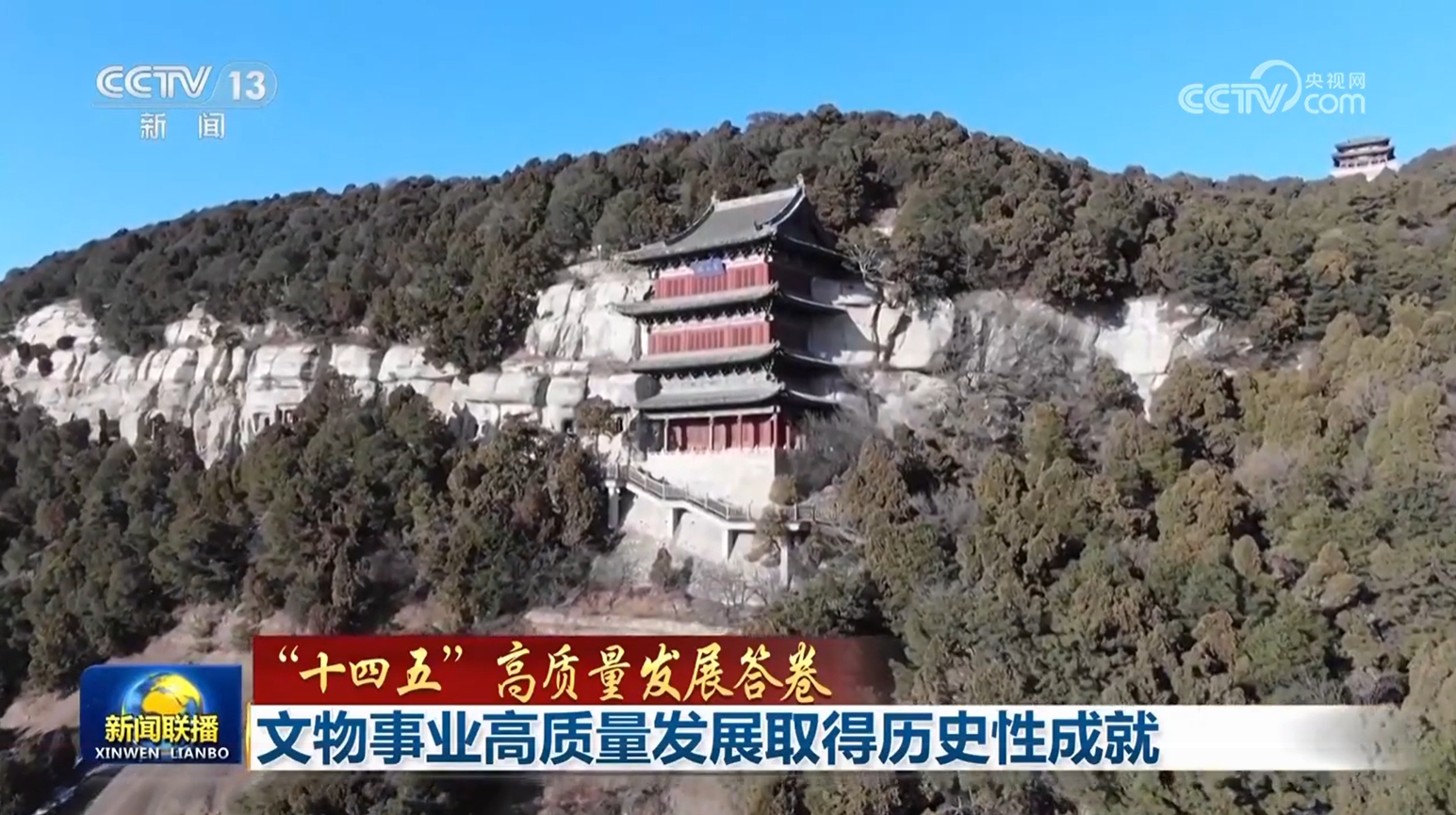
全国备案博物馆数量达7046家
Yang Shi Xin Wen· 2025-09-10 07:26
Core Insights - The press conference highlighted the high-quality development of cultural relics during the "14th Five-Year Plan" period [1] Group 1: Museum Development - The number of registered museums nationwide has reached 7,046, including 1,660 national first, second, and third-level museums, indicating a diverse and inclusive museum system [1] - The number of free-entry museums has reached 6,444, accounting for over 91%, with nearly 1.5 billion annual visitors [1] Group 2: Archaeological and Cultural Heritage - The number of national archaeological heritage parks has increased to 65 [1] - The protection and inheritance of revolutionary cultural relics have stimulated patriotic enthusiasm, while the creation of national cultural relics protection and utilization demonstration zones has driven reform [1] - The construction of cultural tourism routes has connected urban and rural cultural narratives [1]
河南文物事业荣获多个全国奖项
He Nan Ri Bao· 2025-06-14 23:51
Group 1 - The main event for the 2025 Cultural and Natural Heritage Day was held in Changsha, Hunan Province, where the National Cultural Heritage Administration announced the list of high-quality development cases for cultural heritage in 2024 and the list of excellent projects for new media communication of Chinese cultural heritage in 2025 [1][2] - Ten projects, including "Activating Protection Synergy through Heritage Application to Promote Cultural Heritage Protection and Urban Collaborative Development," were included in the "Top Ten Cases of High-Quality Development of Cultural Heritage in 2024" [1] - The project "Guarding and Utilizing Cultural Heritage to Deeply Empower County Development" from the Huaiyang District Cultural Relics Bureau in Zhoukou City was listed among the shortlisted cases [1] Group 2 - Huaiyang District leverages its unique position to connect urban and rural areas, focusing on the first principle of protection and gathering various forces to safeguard and utilize county cultural heritage [2] - The district aims to address the imbalances and inadequacies in grassroots cultural relics development, enhancing the management level of cultural relics protection and the supply capacity of cultural products [2] - The work in Huaiyang District exemplifies the integration of cultural heritage protection with urban-rural development and tourism, showcasing a successful model for high-quality county development [2] Group 3 - The documentary "Entering Civilization" is a five-episode large-scale humanistic documentary focusing on the origins and development of Chinese civilization, planned by the Henan Provincial Cultural Relics Bureau and produced by Henan University and its Digital Art Research Center [3] - The documentary utilizes Henan's rich cultural relic resources and major archaeological findings to systematically outline the historical context of Chinese civilization from its origins to prosperity [3]