
文物事业高质量发展

Search documents
优化博物馆 和社会文物管理服务
Xin Lang Cai Jing· 2026-01-13 04:19
Core Viewpoint - The National Cultural Heritage Administration emphasizes the need to enhance the utilization of cultural relics and optimize museum and social relic management services, while deepening the protection and display of revolutionary relics [1] Group 1: Strategic Planning - The meeting outlines the importance of developing a comprehensive plan for the cultural relics sector, including the implementation of the "14th Five-Year" plan [1] - It highlights the necessity of systematic protection and the completion of the fourth national cultural relics census [1] Group 2: Research and Education - There is a focus on deepening archaeological and civilization research, with major projects like the "Chinese Civilization Exploration Project" and "Archaeological China" being prioritized [1] - The need to strengthen management and enhance educational and technological support for cultural relics is emphasized to promote high-quality development in the cultural heritage sector [1] Group 3: International Cooperation - The meeting calls for expanding international exchanges and cooperation in cultural heritage, aiming to better excavate and disseminate the contemporary value of cultural relics [1]
2026年全国文物局长会议在京召开
Xin Lang Cai Jing· 2026-01-13 04:19
Core Viewpoint - The 2026 National Cultural Relics Directors Conference was held in Beijing, focusing on the implementation of the "14th Five-Year Plan" for cultural relics management and development, emphasizing the importance of cultural heritage in national identity and international cooperation [1] Group 1: Meeting Objectives - The conference aimed to summarize the work of 2025 and outline tasks for 2026, ensuring a strong start for the "14th Five-Year Plan" in the cultural relics sector [1] - Key figures from the Ministry of Culture and Tourism, including Minister Sun Yeli and National Cultural Heritage Administration Director Rao Quan, participated in the meeting [1] Group 2: Strategic Initiatives - Emphasis was placed on systematic protection and the completion of the fourth national cultural relics census [1] - The meeting highlighted the need to deepen archaeological and civilization research, implementing major projects like the "Origin of Chinese Civilization" and "Archaeology of China" [1] Group 3: Utilization and Management - There is a focus on enhancing the utilization of cultural relics, optimizing museum and social relic management services, and expanding international cultural heritage cooperation [1] - The conference called for strengthening management and support for education and technology in the cultural relics sector to promote high-quality and sustainable development [1]
国家文物局:优化博物馆和社会文物管理服务
第一财经· 2026-01-12 15:09
Group 1 - The core viewpoint of the article emphasizes the need to enhance the utilization of cultural relics and optimize museum and social relic management services, as discussed in the national cultural relics bureau meeting [3] - The meeting outlined the importance of systematic protection and the completion of the fourth national cultural relics census, as well as the establishment of a long-term safety mechanism for cultural relics [3] - There is a focus on deepening archaeological and civilization research, implementing major projects like the "Archaeological China" initiative, and expanding international cultural heritage exchanges [3] Group 2 - The article highlights the necessity for strengthening management and enhancing educational and technological support for cultural relics, aiming for high-quality and sustainable development in the cultural relics sector [3]


国家文物局:优化博物馆和社会文物管理服务
Xin Hua She· 2026-01-12 14:29
Core Viewpoint - The National Cultural Heritage Administration emphasizes the need to enhance the utilization of cultural relics and optimize museum and social relic management services, while deepening the protection and display of revolutionary relics [1] Group 1: Strategic Planning - The meeting outlines the importance of developing a comprehensive plan for the cultural relics sector, including the implementation of the "14th Five-Year" plan [1] - A systematic protection approach is to be adopted, with a goal to complete the fourth national cultural relics census [1] Group 2: Research and International Cooperation - There is a focus on deepening archaeological and civilization research, with major projects like the "Source of Chinese Civilization" and "Archaeology China" being prioritized [1] - The administration aims to expand international exchanges and cooperation in cultural heritage, emphasizing the importance of uncovering and disseminating the contemporary value of cultural relics [1] Group 3: Management and Development - Strengthening management and enhancing educational and technological support for cultural relics are key objectives [1] - The goal is to promote the high-quality and sustainable development of the cultural relics sector [1]
“十四五”期间,四川交出“守护历史文脉、传承中华文明”、文物事业高质量发展的优异答卷 擦亮巴蜀文化的灿烂底色
Si Chuan Ri Bao· 2025-09-24 08:01
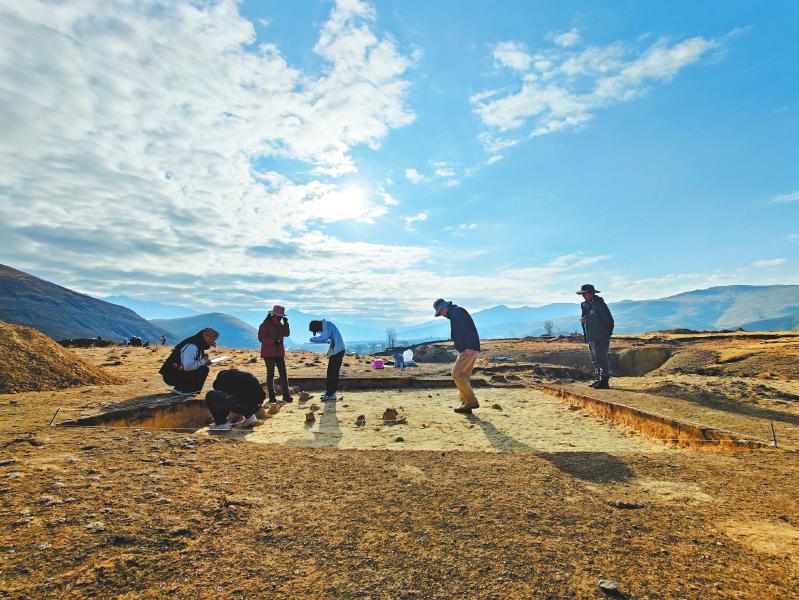
Core Insights - The article highlights the significant advancements in archaeological discoveries and cultural heritage preservation in Sichuan, showcasing the province's rich historical legacy and ongoing efforts to protect and promote its cultural assets [13][14][15]. Archaeological Discoveries - Sichuan has made notable archaeological breakthroughs, including the discovery of the Pilo site, which indicates human presence in the Tibetan Plateau over 200,000 years ago [14]. - The province has identified over 200 archaeological sites from the Paleolithic era, enriching the cultural sequence of this period [14]. - New findings from the Neolithic era, such as rice paddy remnants at the Baodun site, fill gaps in the understanding of agricultural practices in the upper Yangtze region [14]. Cultural Heritage Protection - Sichuan ranks third in the country for the number of immovable cultural relics, with over 65,231 sites documented [10][17]. - The province has implemented various policies to enhance the protection and utilization of cultural heritage, including the introduction of specific regulations for the preservation of significant sites [17][18]. Museum Development - The number of museums in Sichuan has increased to 459, with a focus on enhancing the visitor experience through diverse exhibitions and educational programs [20][21]. - Major exhibitions, such as those at the Sanxingdui Museum, have attracted significant public interest, with over 8.6 million visitors recorded in 2024 [21]. Public Engagement and Education - Sichuan's museums are evolving into educational hubs, offering a variety of activities and exhibitions that engage the public and promote cultural awareness [20][21]. - Digital technologies are being utilized to enhance visitor experiences, making cultural heritage more accessible and interactive [21][22]. International Collaboration - Sichuan is actively promoting its cultural heritage on the global stage through international exhibitions, showcasing the ancient Shu civilization and fostering cultural exchange [22].
“十四五”时期文物事业高质量发展取得历史性成就
Yang Shi Wang· 2025-09-17 07:39
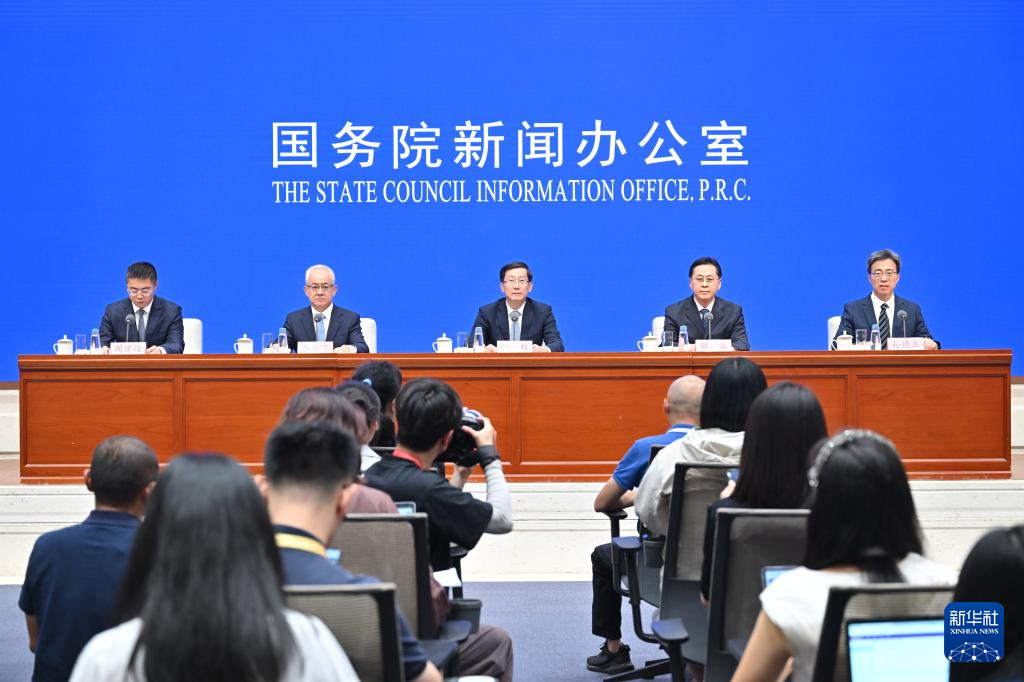
Core Insights - The press conference highlighted the historical achievements in the high-quality development of cultural heritage during the "14th Five-Year Plan" period [1] Group 1: Cultural Heritage Development - The national cultural heritage resources have been largely clarified, with significant progress made in the fourth national cultural heritage census, completing the review of 767,000 registered cultural relics [1] - Over 130,000 new cultural relics have been discovered, and the protection and restoration levels of key cultural relic types, such as grottoes, earth sites, murals, and fragile museum collections, have continuously improved [1] - The number of national registered museums has reached 7,046, with 6,444 of them being free to the public, accounting for over 91% [1] Group 2: Public Engagement and International Cooperation - The annual number of museum visitors has approached 1.5 billion, indicating that visiting museums has increasingly become a part of people's quality of life [1] - During the "14th Five-Year Plan" period, 537 pieces/sets of lost cultural relics and artworks have returned to the country, and 49 joint archaeological projects with foreign countries have been steadily implemented [1]
文物事业发展交出五年答卷
Ren Min Ri Bao Hai Wai Ban· 2025-09-16 22:42
Core Points - The article discusses the achievements and ongoing efforts in the protection and promotion of cultural heritage in China during the "14th Five-Year Plan" period, highlighting significant milestones in archaeological discoveries, museum development, and legal frameworks for heritage protection [6][10][12]. Group 1: Achievements in Cultural Heritage Protection - The "14th Five-Year Plan" has seen the completion of the fourth national cultural relics census, with 767,000 registered relics reviewed and over 130,000 new relics discovered [7][10]. - China now has a total of 60 World Heritage sites, with recent successful additions including the Beijing Central Axis and the ancient tea forest cultural landscape in Pu'er [12][13]. - The number of registered museums in China has reached 7,046, with an average of one museum for every 200,000 people, and over 91% of them are free to visit [14][15]. Group 2: Technological Advancements in Heritage Protection - The integration of digital technology in museums has transformed relic information into interactive digital resources, enhancing public engagement [6]. - Technological innovations such as satellite remote sensing, drones, and AI are being utilized for risk monitoring and protection of cultural relics [16][17]. - The establishment of the world's first multi-field coupling laboratory for relics protection signifies a breakthrough in simulating environmental changes affecting cultural heritage [17]. Group 3: Legal and Institutional Framework - A comprehensive legal framework for cultural heritage protection has been established, including the revised Cultural Relics Protection Law and various administrative regulations [10]. - The systematized protection approach has been reinforced through collaboration among different departments, ensuring effective management and preservation of cultural relics [10][11]. Group 4: Future Directions - The focus for the "15th Five-Year Plan" will include the application for World Heritage status for sites like Jingdezhen's handmade porcelain heritage and the Sanxingdui site [13]. - Continued efforts will be made to enhance the quality and accessibility of museum resources, addressing the growing public demand for cultural experiences [15][16].

高质量完成“十四五”规划|守护国之瑰宝 筑牢文明根基——“十四五”时期文物事业高质量发展迈出坚实步伐
Xin Hua She· 2025-09-12 03:36
Core Viewpoint - The "14th Five-Year Plan" period has seen significant achievements in the high-quality development of cultural relics, with a strong commitment from archaeological workers to protect and promote China's cultural heritage [3] Group 1: Protection of Cultural Relics - The fourth national cultural relics census has made important progress, with 767,000 registered cultural relics reviewed and over 130,000 new relics discovered [4] - The new "Cultural Relics Protection Law" has been implemented since March 1, marking a new phase in the legal governance of cultural relics protection [5] - A comprehensive legal framework for cultural relics protection has been established, including six administrative regulations and over 400 local laws [5] Group 2: Archaeological Research - The "Archaeological China" project has made significant advancements, with over 7,700 archaeological excavation projects approved, leading to important discoveries at sites like Sanxingdui and Niuheliang [5][6] - The "Exploration of Chinese Civilization" initiative has contributed original findings to the global understanding of civilization origins [5] Group 3: Museum Development - By the end of 2024, the number of registered museums in China is expected to reach 7,046, with 91% of them offering free admission, attracting nearly 1.5 billion visitors annually [9] - The revolutionary memorial museum system has been established, with over 3,000 such museums hosting more than 3,000 exhibitions each year [10] Group 4: Cultural Heritage and International Cooperation - Four cultural heritage sites have been successfully added to the World Heritage List during the "14th Five-Year Plan" period [11] - Ongoing efforts are being made to promote the return of lost cultural relics, with 537 items successfully repatriated [13]
文物事业高质量发展迈出坚实步伐(权威发布·高质量完成“十四五”规划)
Ren Min Ri Bao· 2025-09-11 00:33
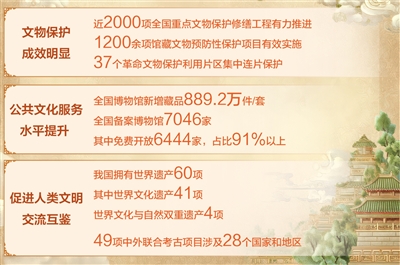
Core Points - The article highlights the significant achievements in the cultural heritage sector during the "14th Five-Year Plan" period, emphasizing the high-quality development of cultural heritage in China [1][2][3] Group 1: Cultural Heritage Protection - The protection of cultural heritage has seen substantial improvements, with nearly 2,000 key national cultural relic protection and repair projects underway and over 1,200 preventive protection projects implemented [2] - The newly revised "Cultural Relics Protection Law" has been in effect since March 1, marking a new phase of legal governance in cultural heritage [2][3] - A comprehensive legal framework for cultural heritage protection has been established, consisting of the Cultural Relics Protection Law, six administrative regulations, ten departmental rules, and over 400 local regulations [2] Group 2: Museum Development - During the "14th Five-Year Plan" period, museums in China added 8.892 million new collections, with 7,046 registered museums, of which over 6,444 are free to the public, accounting for over 91% [6] - Museums received nearly 1.5 billion visitors annually, with a total of over 4.1 billion visitors over five years, supported by over 15 billion yuan in subsidies for free access [6] - The educational role of museums has been emphasized, with over 40,000 exhibitions and more than 500,000 educational activities held annually [6] Group 3: International Cultural Exchange - China has successfully added 60 world heritage sites, including 41 cultural heritage sites and four dual heritage sites, with ongoing applications for additional sites [8] - The establishment of the "Asian Cultural Heritage Protection Alliance" aims to enhance international cooperation in cultural heritage protection, involving 20 member and observer countries [8] - Significant contributions to the study of the origins of world civilizations have been made through archaeological projects and international collaborations [9]
世界遗产达60项,博物馆年接待观众近15亿人次 文物事业高质量发展迈出坚实步伐
Ren Min Ri Bao· 2025-09-11 00:18
Group 1: Core Achievements in Cultural Heritage Protection - The cultural heritage protection efforts have significantly improved, with nearly 2000 key national heritage restoration projects and over 1200 preventive protection projects implemented [2] - The newly revised Cultural Heritage Protection Law, effective from March 1, marks a new phase of legal governance in cultural heritage [2] - A comprehensive legal framework for cultural heritage protection has been established, consisting of the Cultural Heritage Protection Law, six administrative regulations, ten departmental rules, and over 400 local regulations [2] Group 2: Museum Development and Public Engagement - During the "14th Five-Year Plan" period, museums added 8.892 million new collections, with 7046 registered museums, of which over 91% are free to the public [4] - Museums received nearly 1.5 billion visitors annually, with significant government funding exceeding 15 billion yuan for free access initiatives [4] - Over 40,000 exhibitions and 500,000 educational activities are held annually, promoting traditional Chinese culture and enhancing public education [4] Group 3: International Cultural Exchange and Heritage - China has successfully added several sites to the World Heritage List, with ongoing applications for additional sites [6] - The establishment of the Asian Cultural Heritage Protection Alliance reflects China's commitment to international cooperation in cultural heritage [6] - Over 300 exhibitions and exchange activities have been organized, showcasing China's cultural heritage globally [6] Group 4: Archaeological Contributions and Innovations - The Chinese civilization exploration project has advanced archaeological research methodologies, achieving significant breakthroughs in underwater archaeology [7] - International collaborations in archaeological technology have attracted global academic participation, enhancing the role of cultural heritage in promoting human civilization [7]