
旧金山和约

Search documents
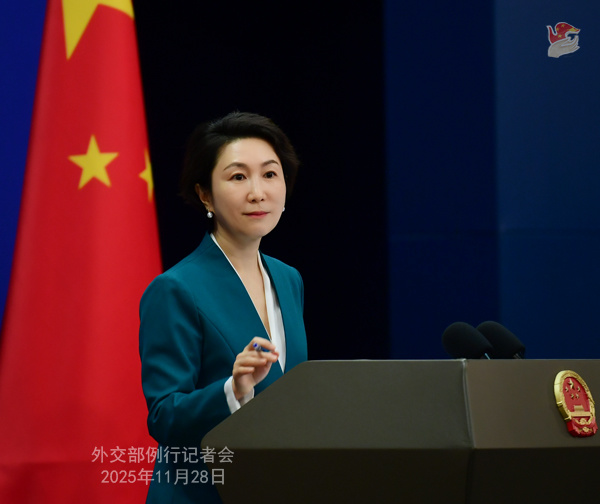
外交部:中方从来没有接受过“旧金山和约”
Huan Qiu Wang· 2025-11-28 11:34
Core Points - The Chinese government has never recognized the "San Francisco Peace Treaty" regarding Taiwan's sovereignty and other territorial rights as a non-signatory [3] - The 1972 Sino-Japanese Joint Communiqué states that Japan acknowledges the People's Republic of China as the sole legitimate government of China, and China reiterates that Taiwan is an inseparable part of its territory [3] - The political foundation of Sino-Japanese relations is established through four political documents that clearly address issues such as Taiwan [3]

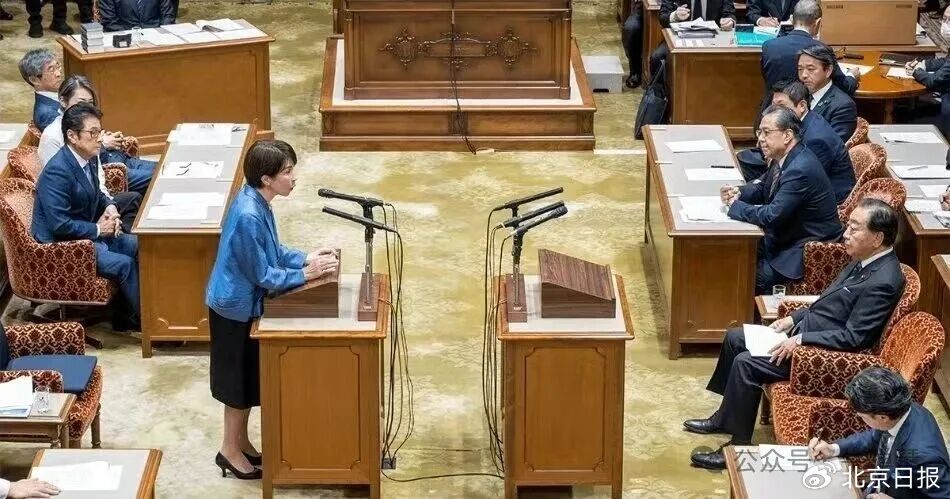
日本最新神操作,世界哭笑不得
Bei Jing Ri Bao Ke Hu Duan· 2025-11-27 23:36
Core Viewpoint - The article discusses the diplomatic tensions between Japan and China, particularly focusing on Japanese Prime Minister Sanae Takaichi's controversial statements regarding Taiwan, which have led to significant backlash from China and raised concerns about Japan's foreign policy approach [2][11][31]. Group 1: Japan's Diplomatic Maneuvering - Takaichi's initial comments on Taiwan being a potential "survival crisis" for Japan were perceived as a hint at possible military involvement in the Taiwan Strait, causing outrage in China [2][11]. - In a subsequent debate, Takaichi attempted to clarify her stance by stating that Japan would assess situations based on specific circumstances, avoiding direct references to Taiwan's legal status [3][4]. - The Japanese government is seen as trying to navigate the fallout from Takaichi's remarks while maintaining a balance between domestic pressures and international relations [29][30]. Group 2: China's Response - China's Foreign Ministry firmly rejected Takaichi's attempts to downplay her previous statements, emphasizing that "not mentioning" does not equate to a retraction of her erroneous comments [7][12]. - The Chinese government highlighted that Takaichi's reference to the "San Francisco Peace Treaty" was inappropriate, as it undermines China's territorial claims and disregards significant historical agreements [13][14]. - China's stance reflects a broader concern about Japan's adherence to its political commitments and the potential implications for regional stability [16][31]. Group 3: International Reactions - The article notes that while Western nations typically support Japan, there has been a notable silence from other countries regarding Takaichi's comments, indicating a lack of consensus on the issue [20][21]. - U.S. President Trump reportedly urged Takaichi to tone down her rhetoric on Taiwan, suggesting that even allies are wary of escalating tensions in the region [23][24][26]. - The situation illustrates the complexities of international diplomacy, where historical grievances and current political dynamics intersect [30][31].
外交部:高市早苗突出非法无效的“旧金山和约”是错上加错
Xin Hua She· 2025-11-27 10:49
Core Viewpoint - The Chinese Foreign Ministry firmly opposes Japanese Prime Minister Fumio Kishida's remarks regarding Taiwan, emphasizing that his reference to the "San Francisco Peace Treaty" is illegal and invalid, and calls for international vigilance against such statements [1][2] Group 1: Legal and Historical Context - The return of Taiwan to China is considered a significant outcome of World War II and an essential part of the post-war international order, confirmed by various international legal documents such as the Cairo Declaration and the Potsdam Proclamation [1] - The establishment of the People's Republic of China (PRC) on October 1, 1949, is viewed as a legitimate government representing all of China, maintaining the country's sovereignty over Taiwan [1] - The 1972 Sino-Japanese Joint Statement acknowledges the PRC as the sole legal government of China and reiterates that Taiwan is an inseparable part of Chinese territory [1] Group 2: Critique of Japanese Statements - The "San Francisco Peace Treaty" is criticized for being a unilateral agreement that excluded major WWII parties like China and Russia, violating international law principles [2] - Kishida's focus on the "San Francisco Peace Treaty" while ignoring legally binding documents like the Cairo Declaration and the Potsdam Proclamation is seen as a disregard for the political foundation of Sino-Japanese relations [2] - The Chinese government urges Japan to reflect on and correct its erroneous statements, emphasizing the need for Japan to fulfill its obligations as a UN member [2]
外交部:高市早苗突出非法无效的“旧金山合约”是错上加错
Xin Hua She· 2025-11-27 08:20
Core Viewpoint - The Chinese Foreign Ministry criticizes Japanese Prime Minister Fumio Kishida for emphasizing the "San Francisco Peace Treaty," which is deemed illegal and invalid, while neglecting the "Cairo Declaration" and "Potsdam Proclamation," which have established international legal standing and are highlighted in bilateral agreements [1] Group 1 - The Chinese government asserts that Kishida's remarks undermine the political foundation of Sino-Japanese relations as established in four key political documents [1] - The statement indicates that Kishida's actions reflect a lack of remorse and a continued challenge to the post-war international order and basic principles of international law [1] - The Chinese side calls for the international community to remain vigilant against such provocations and urges Japan to reflect on its statements and fulfill its commitments to China [1]
多项与琉球相关学术活动在福州陆续举行,梳理中琉源远流长交流史
Xin Lang Cai Jing· 2025-11-18 14:53
Core Viewpoint - Recent academic activities related to Ryukyu have been held, focusing on the historical context of the post-war international order in East Asia and the implications of the 1971 "Okinawa Agreement" [1] Group 1: Conference Overview - The China Japan Historical Society's 2025 annual meeting took place from October 31 to November 2 in Fuzhou, Fujian, with the theme commemorating the 80th anniversary of the victory in the Chinese People's Anti-Japanese War and the World Anti-Fascist War [1] - The conference was hosted by Fujian Normal University, featuring a combination of online and offline participation from various researchers [1] Group 2: Key Presentations - Yang Bojiang, the director of the research institute, delivered a keynote speech titled "The 1971 'Okinawa Agreement' and the Post-War International Order in East Asia," emphasizing the illegitimacy of the "San Francisco Peace Treaty" as a basis for the agreement [1] - The speech highlighted how the 1971 agreement altered the regional landscape and distorted the post-war order in East Asia, calling for deeper research from the Chinese academic community to uphold international justice and national interests [1] Group 3: Discussion Topics - Tang Yongliang, a researcher, chaired the opening ceremony, while Hu Peng, Sun Jiacheng, and Chen Gang presented on topics including post-war Japanese women's movements, the dual construction of Ryukyu culture and arts during the American occupation, and Sino-Japanese relations in the late Ming Dynasty [1]