战后国际秩序

Search documents
沈逸:夯实对日出口管制说明了什么
Xin Lang Cai Jing· 2026-02-25 23:03
Core Viewpoint - The Chinese Ministry of Commerce has announced export control measures against 40 Japanese entities involved in enhancing Japan's military capabilities, marking a significant step in China's commitment to national security and international obligations [1][4]. Group 1: Stability - The export control measures demonstrate stability through the continuity of objectives and predictability of policy tools, focusing on specific Japanese entities that have made erroneous statements and refused to correct them [1][2]. - The measures are aimed at maintaining China's core interests and fulfilling its non-proliferation obligations while ensuring international peace and stability [1]. Group 2: Precision - The controls specifically target "dual-use items," which have both civilian and military applications, indicating a more granular regulatory approach towards high-risk entities [2]. - This arrangement aims to clearly communicate China's serious stance on security and non-proliferation obligations while avoiding unnecessary impacts on regional and global supply chains [2]. Group 3: Responsibility - The measures are deemed reasonable and compliant, allowing listed Japanese entities to apply for removal from the control lists under specific regulations [3]. - The policy emphasizes a legal framework for managing risks associated with military users and military purposes, indicating a commitment to responsible governance [3]. Group 4: Geopolitical Context - The export control measures are viewed as a strategic move by China to uphold post-war international order and maintain regional security, reflecting its responsibilities as a major power [4]. - The measures aim to prevent sensitive resources and technologies from being used to enhance military capabilities that could threaten regional peace [4]. Group 5: Comprehensive Approach - Overall, the measures reflect China's policy orientation of integrating national security, international non-proliferation obligations, and regional stability within a unified framework [5]. - The legal basis and coherent policy logic emphasize risk governance related to end-users and end-uses, providing a structured approach to managing sensitive technology flows [5].
中方必将迎头痛击
Xin Lang Cai Jing· 2026-02-19 20:57
Core Points - The Chinese representative to the United Nations, Fu Cong, emphasized that any attempt by Japan to exercise "collective self-defense" regarding Taiwan would be considered an act of aggression against China, which would be met with a strong response [1][2] - Fu highlighted the importance of the principles established by the UN Charter, which prohibits the use of force or threats of force, in maintaining international order and preventing a third world war [1] - He criticized Japanese leaders for linking Taiwan to Japan's "survival crisis" and attempting to justify military intervention based on the Japan-U.S. alliance [1][2] Legal and Historical Context - Fu argued that the notion of Japan's self-defense in relation to Taiwan is legally unfounded, asserting that Taiwan is an inseparable part of China and that its resolution is a domestic issue that other countries have no right to interfere with [2] - He stated that such claims violate Japan's obligations as a defeated nation under international law, specifically referencing the Cairo Declaration, the Potsdam Proclamation, and Japan's surrender documents [2] - The representative warned that these claims challenge the post-war international order and should raise alarms among peace-loving nations [2]
中国代表:日本行使“集体自卫权”介入台湾问题 中方必将迎头痛击
Xin Hua She· 2026-02-19 01:54
Core Viewpoint - The Chinese representative to the United Nations, Fu Cong, emphasized that any attempt by Japan to exercise "collective self-defense" regarding Taiwan would be considered an act of aggression against China, which would be met with a strong response [1] Group 1: Legal and Historical Context - Fu Cong highlighted that the United Nations Charter establishes the fundamental principle of prohibiting the use of force or threats of force, which is crucial for maintaining post-war international order and preventing a third world war [1] - He criticized Japanese leaders for linking Taiwan to Japan's "survival crisis" and attempting to justify military intervention based on the Japan-U.S. alliance, which he deemed a misinterpretation of international law [1] - The representative asserted that Taiwan is an inseparable part of China, and the resolution of the Taiwan issue is a matter of China's internal affairs, with no foreign interference or military action permitted [1] Group 2: International Obligations and Principles - Fu Cong stated that Japan's claims violate its obligations as a defeated nation under international agreements such as the Cairo Declaration, Potsdam Proclamation, and Japan's surrender documents [1] - He argued that these claims contravene the United Nations Charter's principles of respecting national sovereignty and territorial integrity, as well as non-interference in internal affairs, representing a serious provocation to the post-war international order [1] - The representative called for vigilance and opposition from all peace-loving nations against Japan's attempts to justify military intervention in Taiwan under the guise of "collective self-defense" [1]
外交部:日本是走和平道路还是逆历史潮流值得深思
Xin Lang Cai Jing· 2026-02-09 07:58
Core Viewpoint - The Chinese government expresses concerns regarding Japan's political shift towards the right following recent election results, emphasizing the historical lessons from Japan's militaristic past and its implications for regional peace and stability [1] Group 1: Historical Context - The spokesperson highlights Japan's militaristic actions in the past, which led to aggressive wars and significant suffering for both neighboring countries and the Japanese people [1] - The statement underscores the importance of learning from history to avoid repeating past mistakes [1] Group 2: Future Implications - The Chinese government questions whether Japan will continue on a path of peaceful development and build trust with neighboring countries and the international community through its actions [1] - There is a call for Japanese politicians and intellectuals to reflect on whether Japan will challenge the post-war international order or adhere to it [1]
维护一个中国原则,就是维护国际公平正义(国际论坛)
Ren Min Ri Bao· 2026-02-08 01:08
Group 1 - The core viewpoint emphasizes the importance of consolidating the international community's commitment to the One China principle, which is seen as a respect for China's sovereignty and a necessary action to maintain the outcomes of World War II and the post-war international order [1] - The article asserts that Taiwan has historically been an inseparable part of China, and the One China principle has been reaffirmed by the United Nations General Assembly Resolution 2758 in 1971, recognizing the People's Republic of China as the sole legitimate government representing all of China [1] - The Chinese government has been striving for peaceful development of cross-strait relations, while recent actions by Taiwan authorities promoting independence and external forces attempting to use Taiwan to hinder China's development are viewed as challenges to national sovereignty [1] Group 2 - The article highlights that Taiwan's liberation from Japanese colonial rule is a significant achievement of the Chinese people's victory in the Anti-Japanese War, and it calls for the international community to recognize this historical fact and oppose any resurgence of militarism [2] - In 2025, China will legally establish October 25 as Taiwan Liberation Day, which is seen as a meaningful decision reflecting the importance of history and the pursuit of peace, while also demonstrating the government's unwavering determination to safeguard national sovereignty and development interests [2] - The commemoration of Taiwan's liberation is framed as a victory for all Chinese people and a part of the global anti-fascist struggle, deserving of remembrance and transmission [2] Group 3 - The One China principle is described as a universal consensus within the international community, aligning with the common interests of all peace-loving nations and peoples, and contributing to the maintenance of international fairness, justice, and regional peace and stability [3]
高市又耍新花样!
Xin Lang Cai Jing· 2026-01-30 23:52
Core Viewpoint - Japanese Prime Minister Sanae Takaichi's recent statements linking Taiwan's crisis to the Japan-U.S. alliance have sparked strong backlash from China and criticism from former Japanese officials, indicating a dangerous escalation in Japan-China relations [1][4][5]. Group 1: Takaichi's Statements and Their Implications - Takaichi's assertion that Japan and the U.S. would jointly evacuate citizens in the event of a crisis in Taiwan reflects a continued intention for Japan to intervene in the Taiwan Strait [4]. - The framing of military intervention under the guise of "joint evacuation" and "alliance mutual assistance" suggests a strategic attempt to mask Japan's military ambitions [4]. - Takaichi's rhetoric aims to bind U.S. involvement closely with the Japan-U.S. alliance, pushing for a more aggressive stance against China [4][6]. Group 2: Political Context and Domestic Implications - Takaichi's provocative statements are part of a broader political strategy to showcase her hardline stance and consolidate support among conservative factions amid declining domestic approval ratings [10]. - The current economic challenges in Japan, including sluggish growth and high inflation, have led Takaichi to use external issues like Taiwan to divert public attention from domestic failures [9][10]. - Recent polls indicate a drop in Takaichi's cabinet approval ratings to 57%, prompting her to consider drastic political moves, such as dissolving the House of Representatives [10]. Group 3: Strategic Ambitions and Historical Context - Takaichi's actions reflect a systemic ambition among Japan's right-wing factions to challenge post-war international order and pursue military rearmament [5][8]. - By invoking concepts like "protecting citizens" and "fulfilling alliance responsibilities," Takaichi seeks to justify Japan's military expansion beyond its traditional defensive posture [8]. - The ongoing narrative around Taiwan serves to create a sense of urgency and fear, potentially laying the groundwork for constitutional changes to enable Japan's military engagement [8].
日方没有任何资格对中国台湾置喙
Xin Lang Cai Jing· 2026-01-27 16:54
Core Viewpoint - The Chinese Foreign Ministry firmly rejects Japanese Prime Minister Fumio Kishida's comments regarding Taiwan, asserting that Japan has no historical or legal grounds to interfere in Taiwan's affairs [1][2] Group 1: Historical and Legal Context - The 1972 Sino-Japanese Joint Statement recognizes the People's Republic of China as the sole legitimate government of China and affirms that Taiwan is an inseparable part of China [1] - The 1978 Sino-Japanese Peace and Friendship Treaty confirms the principles outlined in the Sino-Japanese Joint Statement must be strictly adhered to [1] - Japan's historical colonization of Taiwan for half a century has resulted in significant historical responsibilities towards China [2] Group 2: Political Implications - The remarks from Japan are seen as a contradiction to its stated legal commitments and an interference in China's internal affairs, which poses a serious threat to regional peace and stability [2] - The comments are viewed as an attempt by Japanese right-wing forces to provoke tensions and advance militarization, challenging the post-war international order [2] - The Chinese government urges Japan to adhere to the spirit of the four political documents between China and Japan and to cease its provocations regarding Taiwan [2]
“高市称如果台海发生危机,美日可能采取联合行动撤离美日公民”,外交部:日方没有任何资格对中国台湾置喙
Xin Lang Cai Jing· 2026-01-27 14:46
Core Viewpoint - Japanese Prime Minister Sanae Takaichi stated that in the event of a crisis in the Taiwan Strait, the US and Japan may take joint action to evacuate their citizens, emphasizing that Japan cannot abandon its allies. This statement has drawn a strong response from China's Foreign Ministry, highlighting historical grievances and calling for Japan to reflect on its past actions regarding Taiwan [2][2][2]. Group 1: Japan's Position and Actions - Takaichi's comments reflect Japan's commitment to its alliance with the US and its stance on regional security in the context of Taiwan [2]. - The remarks indicate a potential shift in Japan's military posture, suggesting a readiness to engage in collective defense operations [2]. Group 2: China's Response - China's Foreign Ministry spokesperson, Guo Jia Kun, criticized Japan's statements, asserting that Japan has no historical or legal grounds to comment on Taiwan [2]. - Guo emphasized that Japan's actions reveal a desire to provoke tensions and advance its militarization agenda, which poses a serious threat to regional peace and stability [2]. - The spokesperson also reminded Japan of its colonial history in Taiwan, urging it to adhere to the spirit of the four political documents between China and Japan and to cease its provocations regarding Taiwan [2].


外交部回应高市早苗涉台最新言论
2 1 Shi Ji Jing Ji Bao Dao· 2026-01-27 08:17
Group 1 - The core viewpoint of the article highlights Japan's Prime Minister's statement regarding potential joint actions with the U.S. in the event of a crisis in the Taiwan Strait, emphasizing Japan's commitment to its allies [1] - The Chinese Foreign Ministry spokesperson criticized Japan for its contradictory stance of claiming to act within legal boundaries while interfering in China's internal affairs and issuing threats, which undermines regional stability [3] - The historical context is provided, noting Japan's colonial rule over Taiwan for half a century and the associated historical responsibilities towards the Chinese people, asserting that Japan has no right to comment on Taiwan [3] Group 2 - The article points out that Japan's recent rhetoric reflects the ambitions of right-wing forces to provoke tensions and advance militarization, posing a serious threat to the post-war international order [3] - There is a call for the international community to remain vigilant and resist Japan's actions, which are seen as detrimental to peace and stability in the region [3] - The Chinese side urges Japan to adhere to the spirit of the four political documents between China and Japan and to cease its manipulations regarding the Taiwan issue [3]
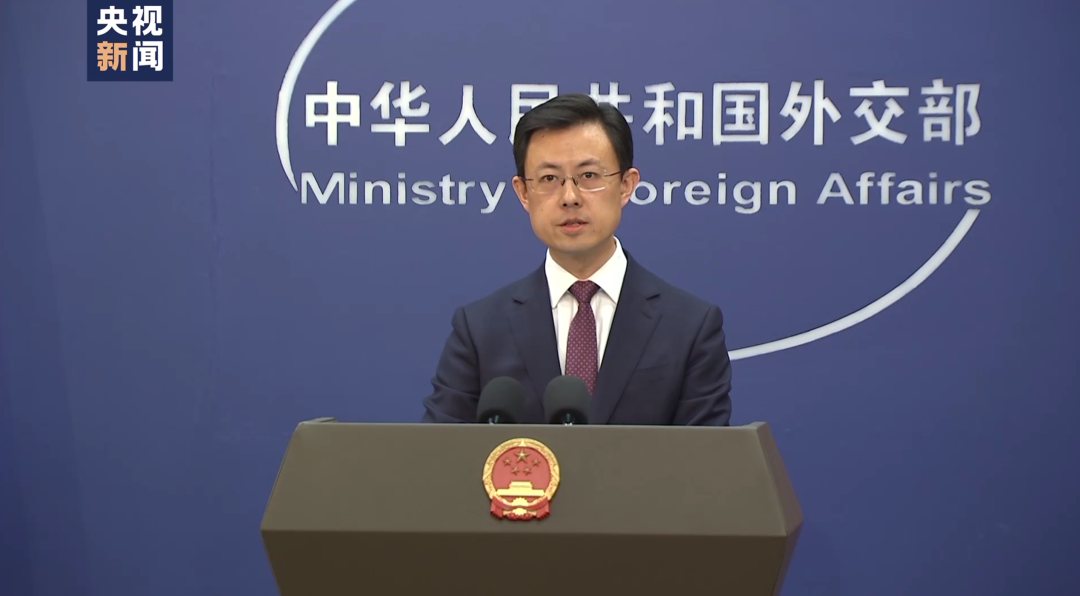
外交部回应高市早苗言论:日方没有任何资格!
中国能源报· 2026-01-27 08:15
Core Viewpoint - The article discusses the response from the Chinese Foreign Ministry regarding Japanese Prime Minister Kishi Nobuo's comments on Taiwan, emphasizing that Japan has no right to interfere in Taiwan's affairs and highlighting historical grievances between China and Japan [1]. Group 1 - The Chinese Foreign Ministry spokesperson, Guo Jia Kun, stated that Japan's comments reveal the ambitions of Japanese right-wing forces to provoke conflict and advance militarization, posing a serious threat to regional peace and stability as well as to Sino-Japanese relations [1]. - Guo emphasized that Japan's historical colonial rule over Taiwan for half a century has resulted in severe historical grievances towards the Chinese people, and urged Japan to adhere to the spirit of the four political documents between China and Japan [1]. - The article calls for the international community to remain vigilant and firmly resist Japan's actions regarding the Taiwan issue, indicating a need for Japan to reflect and correct its stance [1].