
智能微电网

Search documents
滨海投资与浙江泰能签署战略合作协议
Ge Long Hui A P P· 2025-11-25 09:50
Core Viewpoint - Binhai Investment (02886.HK) has entered into a strategic cooperation agreement with Zhejiang Chint Electric Co., Ltd. to jointly develop comprehensive energy business projects across the country, focusing on zero-carbon parks, smart microgrids, energy storage, and charging stations [1] Group 1: Strategic Cooperation - The agreement involves Binhai Investment's wholly-owned subsidiary in Tianjin collaborating with Zhejiang Chint's subsidiary, Zhejiang Taineng Smart Power Co., Ltd. [1] - The partnership aims to leverage Taineng's expertise in comprehensive energy solutions, which includes capabilities in constructing smart green microgrids and zero-carbon parks [1] Group 2: Business Development - This strategic cooperation aligns with the group's development strategy in the comprehensive energy sector, enhancing its core competitiveness in zero-carbon parks and comprehensive energy [1] - By integrating Taineng's technological advantages in smart power and energy management systems with the group's market resources and industry chain layout, both parties will identify and promote high-quality projects [1] Group 3: Long-term Value Creation - The collaboration is expected to cultivate new profit growth points for the group and strengthen its competitiveness in the energy transition [1] - The initiative aims to create sustainable long-term value for shareholders [1]

滨海投资(02886)与浙江泰能订立《战略合作协议》,将在全国范围内开展综合能源业务合作
智通财经网· 2025-11-25 09:11
Core Viewpoint - Binhai Investment has entered into a strategic cooperation agreement with Zhejiang Chint Electric Co., Ltd. to jointly develop comprehensive energy business across the country, focusing on zero-carbon parks, smart microgrids, energy storage, and charging stations [1][2]. Group 1: Strategic Cooperation Areas - The collaboration will focus on planning and implementing zero-carbon parks, providing integrated energy solutions including smart microgrids, green electricity connections, regional energy stations, distributed energy, energy storage, and waste heat utilization [1]. - Both parties will leverage their strengths in funding, market resources, and technical solutions to explore project opportunities and enhance brand influence and market share [2]. - The exploration of equity cooperation opportunities will include mutual strategic investments and participation in each other's or their affiliates' equity collaborations [3]. Group 2: Resource and Talent Sharing - The companies will share project opportunities, customer resources, and market channels, and enhance their overall strength through the exchange of management and technical personnel [4]. - This strategic cooperation aligns with the group's development strategy in the comprehensive energy sector, enhancing its core competitiveness in zero-carbon parks and comprehensive energy [4]. - By integrating Zhejiang Chint's technological advantages in smart electricity and energy management systems with the group's market resources and industry chain layout, both parties aim to identify, incubate, and promote high-quality projects [4].
滨海投资(02886.HK)与浙江泰能签署战略合作协议
Ge Long Hui· 2025-11-25 09:05
Core Viewpoint - Binhai Investment (02886.HK) has entered into a strategic cooperation agreement with Zhejiang Chint Electric Co., Ltd.'s subsidiary, Zhejiang Taineng Smart Power Co., Ltd., to collaborate on comprehensive energy business across the country, focusing on zero-carbon parks, smart microgrids, energy storage, and charging stations [1] Group 1: Strategic Cooperation - The agreement aims to leverage both companies' strengths in the comprehensive energy sector, enhancing Binhai Investment's core competitiveness in zero-carbon parks and comprehensive energy [1] - Zhejiang Taineng possesses multiple professional construction qualifications and offers one-stop energy solutions, emphasizing core areas such as "green sources, smart grids, load reduction, new storage, and ultra-fast charging" [1] Group 2: Project Development - The collaboration will involve selecting, incubating, and promoting high-quality projects by integrating Zhejiang Taineng's technological advantages in smart power and energy management systems with Binhai Investment's market resources and industry chain layout [1] - This initiative is expected to cultivate new profit growth points for Binhai Investment and strengthen its competitiveness in the energy transition, ultimately creating sustainable long-term value for shareholders [1]
国家能源局:优化“沙戈荒”储能比例,探索新能源集成融合项目纳入容量补偿
中关村储能产业技术联盟· 2025-11-12 08:17
Core Viewpoint - The article emphasizes the importance of integrated and collaborative development in the renewable energy sector, aiming for significant improvements in reliability and market competitiveness by 2030, which will support a comprehensive green transition in the economy and society [6][7]. Group 1: Overall Requirements - The guidance is aligned with Xi Jinping's thoughts and aims to implement the new development philosophy, focusing on system integration and one-time development to enhance the reliability and stability of energy supply [7]. - By 2030, integrated development will become a key approach in renewable energy, significantly enhancing its reliability and market competitiveness [7]. Group 2: Accelerating Multi-Dimensional Integrated Development - The article calls for optimizing the power structure and energy storage configuration of renewable energy bases, encouraging the use of thermal power and new storage technologies to enhance collaboration between renewable and coal power [9]. - It supports the establishment of 100% renewable energy bases in suitable regions and promotes the integrated development of water, wind, and solar energy [9][10]. Group 3: Promoting Integrated Operation of Renewable Energy - Continuous improvement in the accuracy of renewable energy power forecasting and the adoption of advanced grid technologies are encouraged to enhance the controllability of renewable energy [12]. - The article advocates for the integration of renewable energy with energy storage systems and the exploration of substantial joint operations with other power sources to improve market competitiveness [12]. Group 4: Promoting Synergistic Development with Multiple Industries - The guidance suggests enhancing the green manufacturing capabilities of the renewable energy industry and promoting the integration of renewable energy with traditional industries to optimize energy consumption and reduce costs [13][14]. - It encourages the development of new energy industries, such as green hydrogen and ammonia, in resource-rich areas, promoting the establishment of comprehensive industrial bases [16]. Group 5: Strengthening Organizational Support - The article emphasizes the need for coordinated project construction and management, encouraging local energy authorities to enhance collaboration and ensure the smooth execution of renewable energy projects [19]. - It also highlights the importance of optimizing investment and development management processes for renewable energy integration projects [20].


江苏智能微电网加速规模化落地
Xin Hua Ri Bao· 2025-10-27 20:30
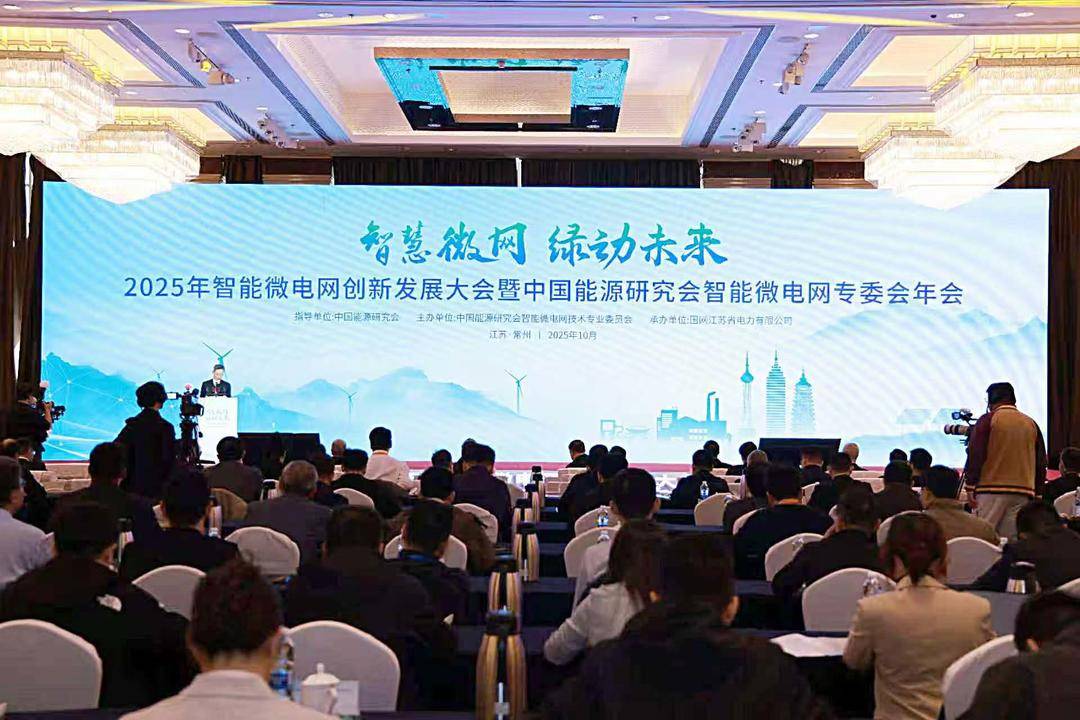
Core Viewpoint - The 2025 Smart Microgrid Innovation Development Conference was held in Changzhou, focusing on the theme "Smart Microgrid Green Future," gathering experts and energy company representatives to discuss policy directions, technological frontiers, and business models [1] Group 1: Smart Microgrid Overview - Smart microgrids are defined as power systems composed of distributed energy sources and electrical loads that can operate both in grid-connected and island modes [1] - As of May this year, the installed capacity of renewable energy in Jiangsu Province has exceeded 100 million kilowatts, accounting for 46% of the total installed capacity in the province [1] Group 2: Policy and Project Development - Jiangsu is actively implementing the national high-quality development plan for distribution networks, planning to construct 137 microgrid projects covering five major scenarios: smart manufacturing, building energy efficiency, vehicle-grid interaction, park source-grid-load-storage coordination, and virtual power plants [1] - Currently, 86 projects have been completed in the province, with 13 cities coordinating local characteristics for advancement [1] Group 3: Case Study - Changzhou - Changzhou has been recognized as one of the first cities in the country to implement large-scale vehicle-grid interaction applications, achieving significant results in the construction of vehicle-grid interaction projects and serving as a demonstration model [1]
2025年智能微电网创新发展大会暨中国能源研究会智能微电网专委会年会在江苏召开
Yang Zi Wan Bao Wang· 2025-10-25 09:01
Core Insights - The conference on smart microgrid innovation and development was held in Changzhou, Jiangsu, focusing on the theme "Smart Microgrid, Green Future" and aimed to discuss new opportunities for the development of smart microgrids in the energy sector [1][3]. Group 1: Objectives and Goals - The Smart Microgrid Committee aims to support the national "dual carbon" strategy and promote green energy transition, focusing on technological innovation and application in smart microgrids [3]. - The conference is designed to create a dialogue platform across academia, industry, and commerce, addressing key topics such as cutting-edge technologies and operational models while responding to policy directions and enterprise needs [5]. Group 2: Achievements and Developments - The Smart Microgrid Committee highlighted its achievements in technology promotion and standardization, identifying development bottlenecks and outlining the industry's growth trajectory [7]. - The conference showcased the practical efforts and leading outcomes of State Grid Jiangsu Electric Power in advancing high-quality development of microgrids, emphasizing the committee's role as a bridge in promoting technological innovation and industry application [7]. Group 3: Conference Structure and Activities - The conference lasted one day and was structured as a "main forum + sub-forums" format, featuring key segments such as work summaries, forward-looking discussions, keynote speeches, and high-level dialogues [5]. - Prior to the conference, experts and industry representatives conducted in-depth research at typical microgrid demonstration projects, gaining insights into the technological pathways and advanced operational models of Jiangsu's microgrid interactions with the grid [7].
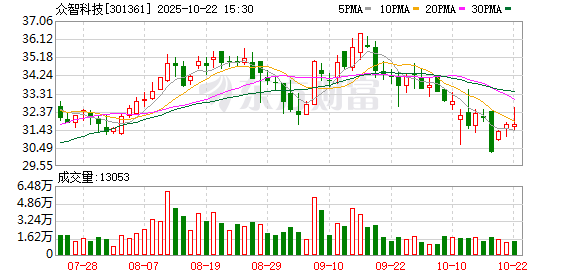
众智科技:控制器系列产品及配套可用于近海、陆上风电项目的发电机组控制系统以及配电系统中
Zheng Quan Ri Bao· 2025-10-22 08:37
Core Viewpoint - The company, Zhongzhi Technology, is actively involved in the renewable energy sector, providing control systems and products that support offshore and onshore wind power projects, as well as energy storage systems [2] Group 1: Product Offerings - The company's controller series products are applicable for generator control systems and distribution systems in offshore and onshore wind power projects [2] - The renewable energy segment includes products such as Energy Management Systems (EMS), Battery Management Systems (BMS), Power Conversion Systems (PCS), and energy storage cabinets [2] Group 2: Industry Impact - The company's products enable multi-energy complementarity with wind, solar, oil, and gas, addressing the needs of smart microgrids and related energy storage systems [2] - The offerings contribute to the construction of a sustainable energy ecosystem [2]

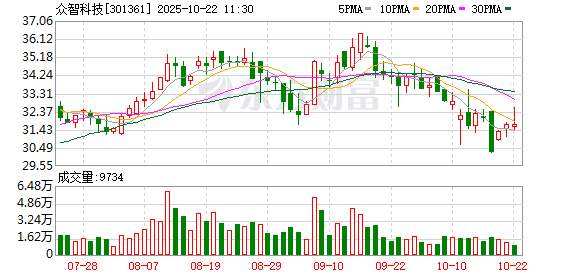
众智科技:公司的控制器系列产品及配套可用于近海、陆上风电项目的发电机组控制系统以及配电系统中
Mei Ri Jing Ji Xin Wen· 2025-10-22 05:01
Group 1 - The company, Zhongzhi Technology, confirmed that its controller series products can be applied in offshore and onshore wind power projects for generator control systems and distribution systems [2] - The company's new energy sector products, such as EMS, BMS, PCS, and energy storage cabinets, enable multi-energy complementarity with wind, solar, oil, and gas, meeting the needs of smart microgrids and related energy storage systems [2] - The company's efforts contribute to the construction of a sustainable energy ecosystem [2]
江苏南通: 智能微电网推动源网荷储协调发展
Ke Ji Ri Bao· 2025-09-17 02:04
Core Viewpoint - The establishment of a microgrid management platform in Jiangsu enhances energy efficiency and supports renewable energy consumption, contributing to the resilience of the power grid during peak loads [1][2]. Group 1: Microgrid Management Platform - The microgrid management platform, launched in April, integrates various energy facilities and provides efficient energy usage strategies for enterprises [1]. - The platform allows real-time monitoring of solar power generation, energy storage status, and electricity load, enabling companies to optimize their energy consumption [1]. - The platform generates monthly energy analysis reports, helping companies understand their energy efficiency levels more intuitively [1]. Group 2: Power Consumption Growth - Jiangsu's electricity consumption has been steadily increasing, with the highest summer load reaching 155 million kilowatts, a year-on-year increase of 5.99% [2]. - The smart microgrid enhances the resilience and emergency response capabilities of the power grid, meeting rising electricity demands while improving green energy consumption [2]. Group 3: Microgrid Project Implementation - As of now, the microgrid platform in Nantong has connected 39 microgrid projects, covering five typical application scenarios including vehicle-grid interaction and smart manufacturing [2]. - The cumulative capacity of various resources connected to the microgrid is 344 megawatts, with a total power generation of approximately 60.12 million kilowatt-hours and a renewable energy consumption rate of 97% [2].

江苏南通:智能微电网推动源网荷储协调发展
Ke Ji Ri Bao· 2025-09-16 23:24
Core Insights - The article highlights the implementation of a smart microgrid management platform in Jiangsu, which integrates various energy resources to enhance energy efficiency and sustainability [1][2]. Group 1: Microgrid Management Platform - The microgrid management platform, launched in April, is the first of its kind in Jiangsu, covering the entire "source-network-load-storage" chain [1]. - The platform provides real-time data on photovoltaic generation, energy storage status, and electricity load, allowing companies to optimize their energy consumption strategies [1]. - The platform generates monthly energy analysis reports, enabling companies to better understand their energy efficiency levels [1]. Group 2: Energy Consumption and Performance - Jiangsu's electricity consumption has been steadily increasing, with the highest summer load reaching 155 million kilowatts, a year-on-year increase of 5.99% [2]. - The smart microgrid enhances the resilience and emergency response capabilities of the power grid during peak load times, while also improving the consumption of green electricity [2]. - As of now, the microgrid platform in Nantong has connected 39 microgrid projects, covering five typical application scenarios and achieving a total capacity of 344 megawatts, with a renewable energy consumption rate of 97% [2].