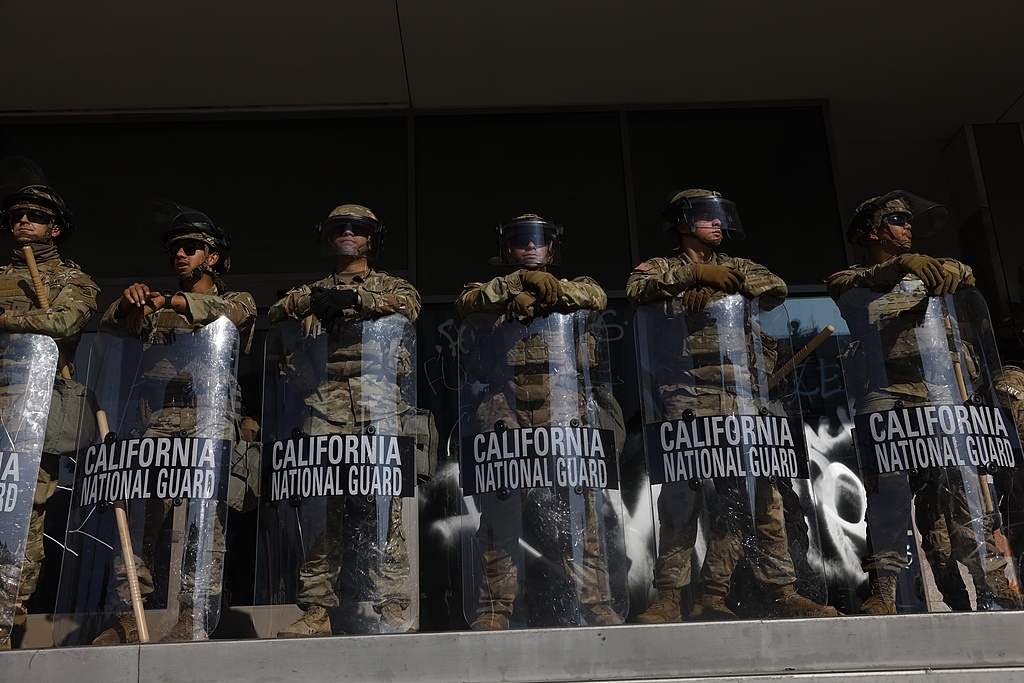
权力制衡

Search documents
给特朗普放水后,美国共和党大法官,被自己定的规则坑惨
Sou Hu Cai Jing· 2025-09-14 04:43
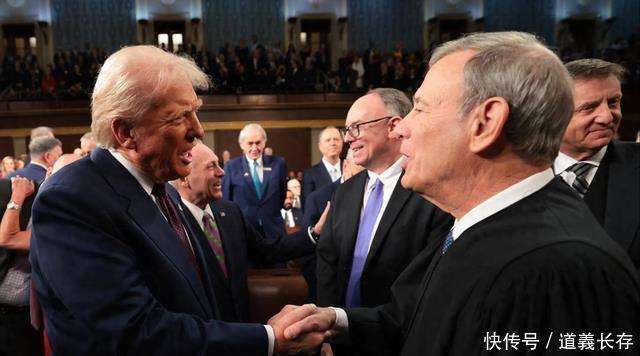
Core Points - The trade policy has become a central issue in Trump's agenda after his return to the White House, with tariffs on goods from major trading partners increasing from an average of 3% to 25% [1] - The policy aims to reduce the long-standing trade deficit and protect domestic manufacturing, but faced strong opposition from the American Importers Alliance, leading to legal challenges [1][6] - The legal theory of "major questions doctrine" has emerged, requiring explicit congressional authorization for significant economic or political policies, which has been used to challenge Biden's policies but now complicates Trump's tariff measures [2][3] Group 1 - Trump's tariffs cover $2.3 trillion in imports, including a 25% tariff on Chinese goods and a 20% tariff on EU cars [6] - The New York International Trade Court ruled that the IEEPA does not authorize the president to impose tariffs as a regular trade policy, which was upheld by the Federal Circuit Court [6][7] - The legal challenges highlight a growing legitimacy crisis for the Supreme Court, which has a conservative majority that originally aimed to limit executive power but now restricts a Republican president's policies [7][11] Group 2 - The "major questions doctrine" was first introduced in a 2014 case regarding EPA regulations, evolving to require congressional authorization for significant economic policies [3][5] - The Biden administration's student loan forgiveness plan was struck down under this doctrine, emphasizing its application to major economic impacts [5] - The potential overturning of Trump's tariffs could lead to retaliatory tariffs from the EU and China, significantly impacting U.S. agricultural exports and potentially reducing GDP growth by 1.2% [7][12] Group 3 - The case reflects deep-seated issues within the U.S. political system, where judicial decisions are increasingly viewed through a partisan lens [11] - The Supreme Court faces a critical decision that could either limit the application of the major questions doctrine, uphold it to strike down tariffs, or create exceptions that may lead to further controversy [12] - Public trust in the Supreme Court has reached a historic low of 38%, indicating potential political polarization stemming from the court's handling of this case [12]

白宫拒绝接受判决结果:除了美国总统之外,特朗普还有另一个身份
Sou Hu Cai Jing· 2025-09-03 16:42
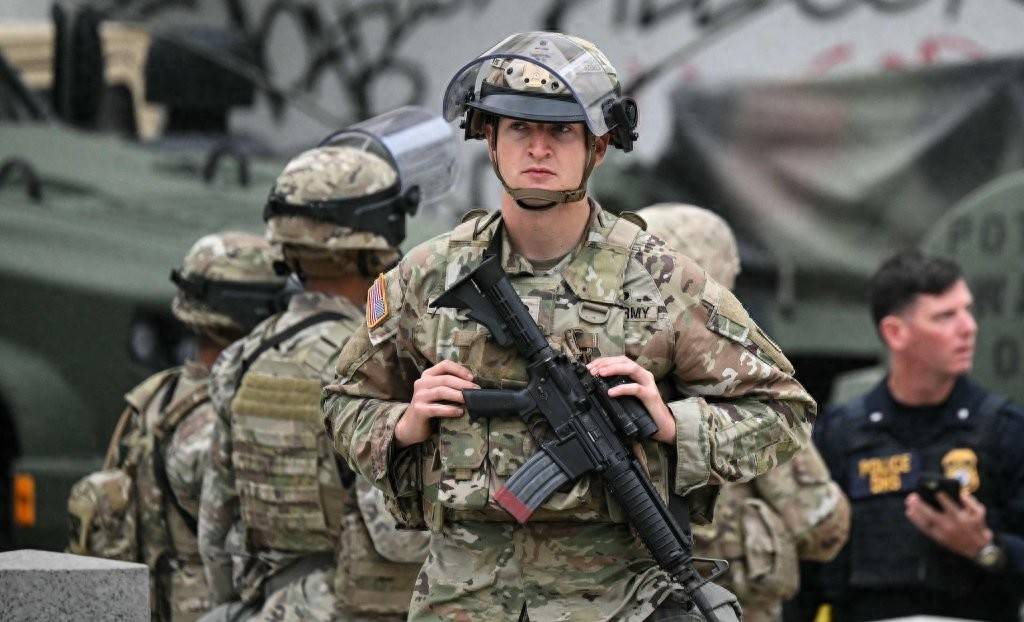
Core Viewpoint - The article discusses recent legal setbacks faced by former President Trump, highlighting the implications of his business-like approach to governance and the resulting conflicts with established legal frameworks [1][3][20]. Group 1: Legal Setbacks - A federal judge in California ruled that Trump's deployment of troops to Los Angeles in June violated the 1878 Posse Comitatus Act, which restricts the use of military forces for domestic law enforcement without congressional approval [9][13][22]. - In a separate ruling, a federal appeals court determined that Trump's broad tariffs were illegal, emphasizing that the power to levy taxes is constitutionally reserved for Congress, not the President [7][20]. Group 2: Business Approach to Governance - Trump's background as a businessman influences his decision-making, particularly his use of tariffs as negotiation tools, akin to tactics used in business negotiations [5][7]. - The article notes that Trump's attempts to manage state affairs as if they were business operations have led to significant legal challenges, as governance requires adherence to constitutional limits on presidential power [18][20]. Group 3: Political and Legal Implications - The rulings against Trump may lead to substantial financial implications for the U.S. Treasury, as the government might have to refund previously collected tariffs, creating uncertainty for businesses regarding future import costs [20][22]. - The ongoing legal battles could escalate to the Supreme Court, where recent trends indicate a focus on limiting executive power and reinforcing the necessity for congressional authorization in significant decisions [22].
美联储高官告到最高院:不会听由特朗普安排,坚决捍卫美联储独立
Sou Hu Cai Jing· 2025-08-29 02:08
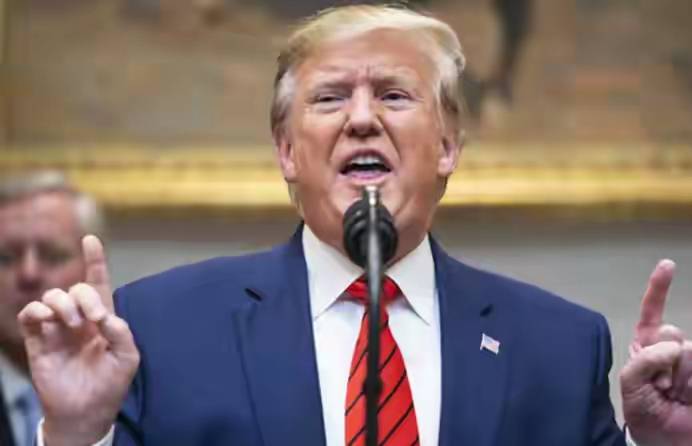
Core Points - The lawsuit initiated by Federal Reserve Governor Lisa Cook against former President Trump marks a significant legal battle regarding the independence of the U.S. central bank and the boundaries of presidential power [1][3] - The case was triggered by Trump's announcement on social media to "immediately" remove Cook from her position, citing alleged misconduct related to a housing loan application [1] - Cook's term, which was confirmed by the Senate in 2022, is supposed to last until 2038, and she plays a crucial role in setting interest rate policies as a voting member of the Federal Open Market Committee [1] Legal and Political Implications - The lawsuit reflects deeper conflicts between executive power and independent institutions within the U.S. political landscape, particularly since Trump's administration has attempted to exert control over independent agencies [3] - The outcome of this legal battle could reshape the fundamental rules of power balance in American politics, especially as it pertains to the relationship between the White House and federal agencies [3] - Legal experts suggest that if Trump's reasons for removal lack substantial evidence, it could represent a serious infringement on the independence of the central bank [1]
【环时深度】从洛杉矶骚乱看美国联邦政府与各州“权力的游戏”
Huan Qiu Shi Bao· 2025-06-11 22:33
Core Viewpoint - The tensions arising from the Los Angeles riots are spreading to other U.S. cities, highlighting the ongoing conflict between federal and state government powers, particularly regarding the deployment of the National Guard without state consent [1][6]. Group 1: Federal and State Government Dynamics - The conflict between the federal government and state governments has intensified, with the Trump administration's deployment of National Guard troops in California being a focal point of contention [1][6]. - California's Governor Newsom and Attorney General Bonta are suing the federal government, claiming the deployment of National Guard troops without local consent infringes on state rights [6]. - The political polarization in the U.S. is evident, with Democratic governors supporting California's stance against the federal government, while Republican leaders generally support the federal actions [6][7]. Group 2: Military Deployment and Legal Framework - As of March 2023, the U.S. has approximately 1.32 million active-duty military personnel, with the majority stationed domestically [2]. - The National Guard in the U.S. consists of over 430,000 members, with California having the largest contingent at about 24,000 [3]. - The Insurrection Act allows the President to deploy federal troops domestically under certain conditions, although the use of federal troops for domestic law enforcement is generally prohibited [3][4]. Group 3: Political Implications and Historical Context - The last invocation of the Insurrection Act was during the 1992 Los Angeles riots, where federal troops were deployed at the request of local authorities [4]. - The current situation reflects a broader trend of increasing federal power at the expense of state authority, with historical precedents of federal intervention during civil rights movements [8][10]. - The ongoing conflicts between federal and state governments are reshaping the political landscape, leading to a "blue state versus red state" dynamic, particularly on issues like immigration and abortion [8][9].