滥用职权

Search documents
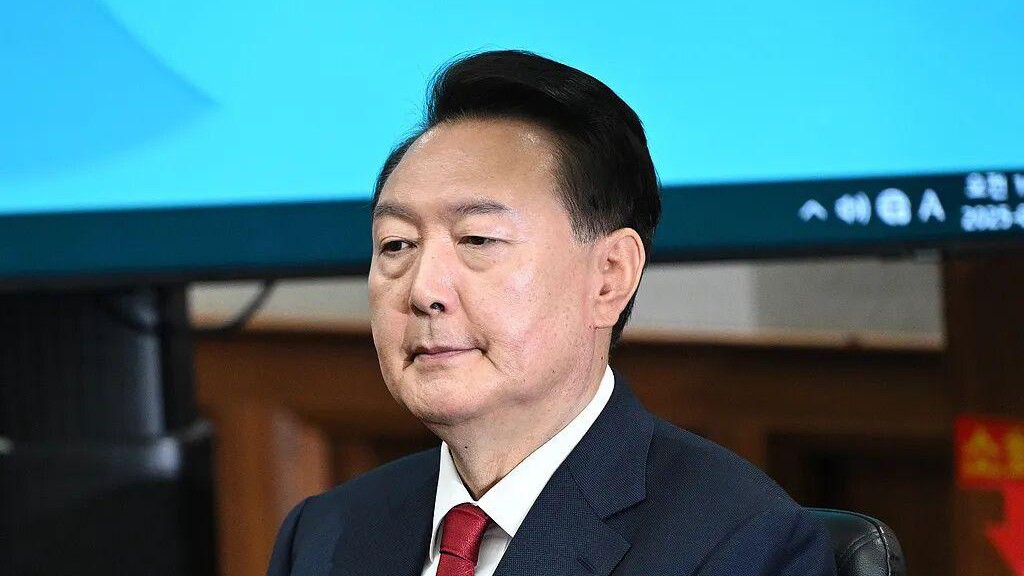
30年来首次!韩国检方要求判处尹锡悦死刑,专家预测最终或判无期
Di Yi Cai Jing· 2026-01-14 01:04
Core Viewpoint - The South Korean prosecution has requested the death penalty for former President Yoon Suk-yeol, citing his alleged role in instigating a state of emergency, which they argue severely undermines the rule of law in South Korea [1][3]. Legal Context - South Korean law stipulates that those who lead a rebellion can face penalties including death, life imprisonment, or indefinite confinement [3][4]. - This case marks the first time in 30 years that prosecutors have explicitly sought a death sentence for a leader accused of rebellion, following the precedent set by former President Chun Doo-hwan [3][4]. Public Sentiment and Political Implications - Public opinion largely supports a severe penalty for Yoon, with many believing that a death sentence would serve as a deterrent against similar future actions [3][5]. - The political landscape is tense, with the ruling Democratic Party advocating for a harsh sentence while the opposition People Power Party expresses concerns over judicial independence [4][5]. Upcoming Judicial Developments - The first-instance verdict for Yoon's rebellion case is expected to be announced around mid to late February [5]. - Other related cases involving Yoon and former officials are also set for judgment, indicating a broader judicial reckoning within South Korea's political sphere [6]. Historical Context - Since December 1997, South Korea has not executed any death sentences, and even if a death sentence is imposed, it may effectively result in life imprisonment due to current judicial practices [4][6]. - Comparisons are drawn to the Chun Doo-hwan case, where an initial death sentence was later commuted to life imprisonment, suggesting a potential outcome for Yoon's case as well [4].

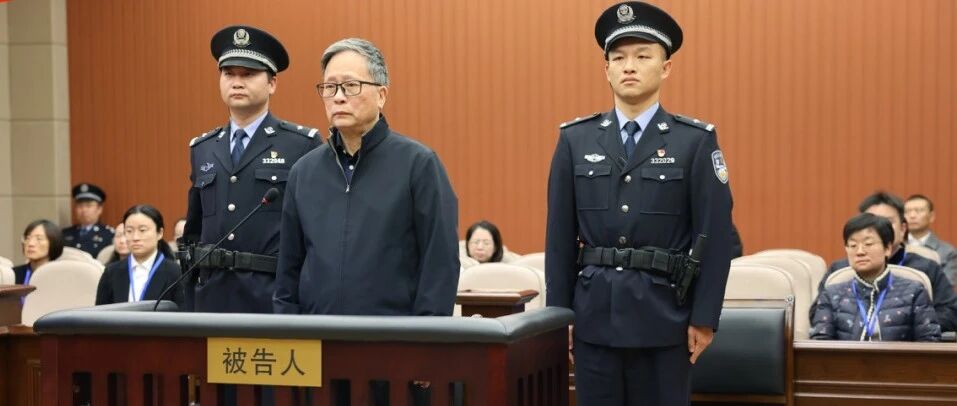
受贿数额特别巨大 南京市人大常委会原主任龙翔被公诉
Zhong Guo Xin Wen Wang· 2026-01-13 03:03
Core Viewpoint - The former director of the Nanjing Municipal People's Congress, Long Xiang, has been prosecuted for serious charges including bribery, embezzlement, abuse of power, and insider trading [1][2] Group 1: Charges and Legal Proceedings - Long Xiang is accused of illegally occupying public property through fraudulent means, with the amount involved being particularly large [2] - He allegedly used his positions in various governmental roles to benefit others and illegally accepted significant amounts of money [2] - The prosecution has been initiated by the Jingzhou Municipal People's Procuratorate, which has combined the cases against Long Xiang for a comprehensive legal approach [1][2] Group 2: Specific Allegations - The charges include serious abuse of power that resulted in significant losses to public property and the interests of the state and people [2] - Long Xiang is also accused of illegally obtaining insider information related to securities trading and making trades before the information was publicly disclosed, which is considered particularly severe [2]
检察机关依法对龙翔涉嫌贪污、受贿、滥用职权、内幕交易案提起公诉
Xin Hua She· 2026-01-13 02:32
Core Viewpoint - The case of Long Xiang, former director of the Nanjing Municipal People's Congress, involves serious allegations of corruption, bribery, abuse of power, and insider trading, leading to his arrest and prosecution by the judicial authorities [1][2]. Group 1: Allegations and Charges - Long Xiang is accused of embezzling and illegally occupying public property through fraudulent means, with the amount involved being particularly large [2]. - He allegedly used his positions in various governmental roles to benefit others and illegally accepted substantial amounts of money [2]. - The charges also include serious abuse of power that resulted in significant losses to public property and the interests of the state and people [2]. - Long Xiang is implicated in insider trading, having illegally obtained confidential information that significantly affected securities trading prices before such information was made public [2]. Group 2: Legal Proceedings - The National Supervisory Commission concluded its investigation and transferred the case to the prosecutorial authorities for review and prosecution [1]. - The Hubei Provincial Jingzhou People's Procuratorate has been designated to handle the case, which has now been combined with the insider trading investigation [1]. - The Jingzhou People's Procuratorate has formally filed a public prosecution against Long Xiang in the Jingzhou Intermediate People's Court [1].
离谱!国企董事长把自家房产塞进拆迁名单
Mei Ri Jing Ji Xin Wen· 2025-12-30 16:04
Core Viewpoint - A state-owned enterprise chairman was sentenced to 17 years in prison for corruption involving illegal land expropriation and personal gain from demolition compensation schemes [1][9]. Group 1: Corruption Scheme Details - From 2014 to 2019, a government in Gansu Province initiated a housing expropriation project, with a state-owned enterprise responsible for the execution and management of funds [2]. - The chairman of the enterprise, Wu, conspired with others to purchase properties in anticipation of demolition, manipulating the process to ensure their inclusion in the expropriation [3][4]. - Wu and his accomplices inflated property sizes and misused their positions to secure substantial demolition compensation, totaling over 9.95 million yuan [4][5]. Group 2: Abuse of Power - Wu abused his authority to include his own property in the demolition list, significantly increasing the reported demolition area from 700 square meters to over 3000 square meters [5][6]. - He received bribes totaling 135.8 million yuan from various individuals in exchange for favorable treatment in the expropriation process [6][7]. Group 3: Legal Proceedings - Investigations revealed Wu's involvement in embezzlement, bribery, abuse of power, and potential money laundering, leading to his prosecution [8]. - In 2024, Wu was convicted of multiple charges, including embezzlement and bribery, but the initial charge of money laundering was not recognized due to legal technicalities [9]. - Following an appeal, the court upheld the conviction and sentenced Wu to 17 years in prison, along with a fine of 1.1 million yuan [10].
离谱!一国企董事长把自家房产塞进拆迁名单,还帮亲友多占面积,用贪污款给家人买商铺,最终获刑17年
Mei Ri Jing Ji Xin Wen· 2025-12-30 08:16
Core Points - A state-owned enterprise chairman was sentenced to 17 years in prison for corruption related to demolition projects [1][14] Group 1: Case Overview - The case involves a chairman of a state-owned enterprise, Wu, who exploited his position to manipulate demolition projects for personal gain [3][12] - Wu, along with accomplices, purchased properties with the intent to profit from subsequent demolition compensation [4][7] Group 2: Corruption Details - From 2014 to 2019, Wu was responsible for overseeing demolition and compensation processes, which he manipulated to benefit himself and his associates [2][3] - Wu and his associates engaged in fraudulent activities, including inflating property sizes and misusing funds, resulting in significant financial losses for the state [11][12] Group 3: Legal Proceedings - Investigations revealed Wu's involvement in bribery and abuse of power, leading to multiple charges including embezzlement and money laundering [13][14] - The court ultimately found Wu guilty of several crimes, sentencing him to 17 years in prison and imposing a fine of 1.1 million yuan [14][15]

受贿数额特别巨大,苏增添被判死缓
中国能源报· 2025-12-05 14:53
Core Viewpoint - The court sentenced Su Zengtian, former Vice Chairman of the Fujian Provincial People's Congress, to death with a two-year reprieve for bribery, abuse of power, and using influence for bribery, highlighting the severity of his crimes and the significant losses incurred to the state and public interests [2][4]. Summary by Sections Criminal Activities - From 1996 to 2023, Su Zengtian utilized his positions in various governmental roles to provide assistance to related entities and individuals in matters such as company listings and project contracts, illegally accepting bribes totaling approximately 1.65 billion RMB [3]. - Between 2019 and 2024, after leaving office, he continued to exploit his former authority to gain improper benefits for others, receiving bribes amounting to around 3.356 million RMB [3]. - During his tenure as Vice Governor and Mayor of Fuzhou from 2010 to 2011, he made illegal decisions to sell land at low prices and reduce land value fees, resulting in significant losses to state assets [3]. Court's Ruling - The Ningbo Intermediate People's Court determined that Su Zengtian's actions constituted severe bribery and abuse of power, with particularly large amounts involved and a notably negative social impact, warranting a death sentence [4]. - The court acknowledged mitigating factors such as his confession and the return of illicit gains, allowing for a suspended death sentence for the bribery charge and a lighter penalty for the influence-related bribery charge [4].
美国住房管理局局长被调查
Zhong Guo Xin Wen Wang· 2025-12-05 13:53
Group 1 - The U.S. Congress oversight agency is investigating Bill Pulte, the director of the U.S. Housing Management Agency, for potential abuse of power and government resources [1] - Eight Democratic senators called for an immediate investigation into Pulte's actions regarding the transfer of public officials to the Justice Department, questioning whether it was politically motivated and constituted abuse of power [2] - Pulte, an ally of President Trump, has made accusations against several government officials, including New York Attorney General Letitia James and Federal Reserve Governor Christopher Waller, alleging mortgage fraud, although these claims have faced legal pushback [2] Group 2 - Tensions within the Trump administration are highlighted by an incident where Treasury Secretary Steven Mnuchin threatened Pulte during a White House dinner, indicating discontent among some officials regarding Pulte's actions [3] - Mnuchin acknowledged the altercation, referencing a historical context of confrontations among Treasury Secretaries, while emphasizing the importance of teamwork within the Trump administration [3]
贵州黔东南爆破协会会长涉罪不起诉,刚过两月再被调查
Qi Lu Wan Bao· 2025-11-27 03:47
Core Viewpoint - The case involving Song Tianpei, former chairman of the Qiandongnan Prefecture Explosive Industry Association and director of Zhongli Company, has seen a reversal after an initial decision of non-prosecution due to insufficient evidence. However, a new investigation has been initiated by the police, raising concerns about potential abuse of power [1][4]. Group 1: Legal Proceedings - Song Tianpei was initially charged with forced trading, illegal sale of explosives, creating disturbances, and embezzlement, but was not prosecuted due to insufficient evidence as determined by the Qiandongnan Prefecture Luodian County Procuratorate [2][5]. - The investigation into Song's actions, including the collection of fees from member units and the provision of explosives to a coal mine, was deemed not to constitute criminal behavior under the law [2][3]. - The charges related to the illegal sale of explosives were also dismissed due to unclear facts and insufficient evidence [3][5]. Group 2: New Investigation - Following the non-prosecution decision, Zhongli Company received a notice from the police requesting evidence related to its operations, which has raised questions about the legitimacy of this new investigation [4][5]. - The new inquiry focuses on administrative violations rather than the previous criminal charges, suggesting a shift in the nature of the investigation [4][5]. - Song's defense attorney has expressed concerns that this new investigation may represent an abuse of power, as it does not align with the previous findings of insufficient evidence for criminal charges [4][5].
尹锡悦定于26日出庭受审 先前连续10次缺席
Xin Hua She· 2025-09-24 10:08
Group 1 - Former South Korean President Yoon Suk-yeol's legal team announced that he will attend the court hearing on September 26 regarding the emergency martial law incident from December last year [1] - Yoon has previously missed 10 court hearings related to the martial law incident, citing health issues [1] - The special prosecutor's team has charged Yoon with insurrection, and the upcoming hearing will address accusations of abuse of power and obstruction of rights [1] Group 2 - Yoon Suk-yeol was arrested for the first time on January 15 this year, marking him as the first sitting president in South Korea's constitutional history to be arrested [2] - Following his arrest, the Constitutional Court upheld his impeachment on April 4, resulting in his removal from the presidency [2] - The special prosecutor's team filed charges against Yoon on July 19 [2]
白宫拒绝接受判决结果:除了美国总统之外,特朗普还有另一个身份
Sou Hu Cai Jing· 2025-09-03 16:42
Core Viewpoint - The article discusses recent legal setbacks faced by former President Trump, highlighting the implications of his business-like approach to governance and the resulting conflicts with established legal frameworks [1][3][20]. Group 1: Legal Setbacks - A federal judge in California ruled that Trump's deployment of troops to Los Angeles in June violated the 1878 Posse Comitatus Act, which restricts the use of military forces for domestic law enforcement without congressional approval [9][13][22]. - In a separate ruling, a federal appeals court determined that Trump's broad tariffs were illegal, emphasizing that the power to levy taxes is constitutionally reserved for Congress, not the President [7][20]. Group 2: Business Approach to Governance - Trump's background as a businessman influences his decision-making, particularly his use of tariffs as negotiation tools, akin to tactics used in business negotiations [5][7]. - The article notes that Trump's attempts to manage state affairs as if they were business operations have led to significant legal challenges, as governance requires adherence to constitutional limits on presidential power [18][20]. Group 3: Political and Legal Implications - The rulings against Trump may lead to substantial financial implications for the U.S. Treasury, as the government might have to refund previously collected tariffs, creating uncertainty for businesses regarding future import costs [20][22]. - The ongoing legal battles could escalate to the Supreme Court, where recent trends indicate a focus on limiting executive power and reinforcing the necessity for congressional authorization in significant decisions [22].