权力制衡

Search documents
特朗普拒退相关款项,强硬举动惹全球不满,美媒称中国或减停购美大豆
Sou Hu Cai Jing· 2026-02-26 16:03
Core Viewpoint - The U.S. Supreme Court ruled that the Trump administration's use of the International Emergency Economic Powers Act to impose tariffs on various countries was an overreach of authority, emphasizing that tax powers reside with Congress, not the executive branch [1][3][5]. Group 1: Legal and Regulatory Implications - The Supreme Court's decision on February 20, 2026, declared that the tariffs imposed by the Trump administration were illegal, leading to potential refunds amounting to hundreds of billions of dollars [1][3]. - The ruling highlighted that the use of emergency powers for tariff imposition was not aligned with the original legislative intent of the International Emergency Economic Powers Act [3][5]. - The legal battle has resulted in a surge of lawsuits from companies seeking refunds for tariffs paid since 2025, complicating the refund process due to the need for individual proof of payment [1][10]. Group 2: Economic Impact - The imposition of tariffs has led to increased prices for consumers, with reports of price hikes on everyday goods such as soy sauce and bread, contributing to inflationary pressures [1][9]. - The agricultural sector is particularly affected, with U.S. soybean sales to China declining significantly, leading to inventory buildup and financial losses for farmers [9][15]. - The uncertainty surrounding tariffs has caused importers to hesitate in placing large orders, prompting some to shift production to countries like Vietnam and Mexico [9][10]. Group 3: Political and Strategic Considerations - The Trump administration's approach appears to be a political strategy aimed at rallying support from blue-collar voters ahead of the midterm elections in 2026, despite the adverse effects on businesses and the economy [12][18]. - The new tariffs implemented under the Trade Act of 1974 have drawn international criticism, with countries like Canada and the EU considering retaliatory measures [9][18]. - The ongoing legal and political turmoil has raised questions about the reliability of the U.S. as a trading partner, with allies reassessing their economic strategies in light of the unpredictable tariff landscape [12][18].

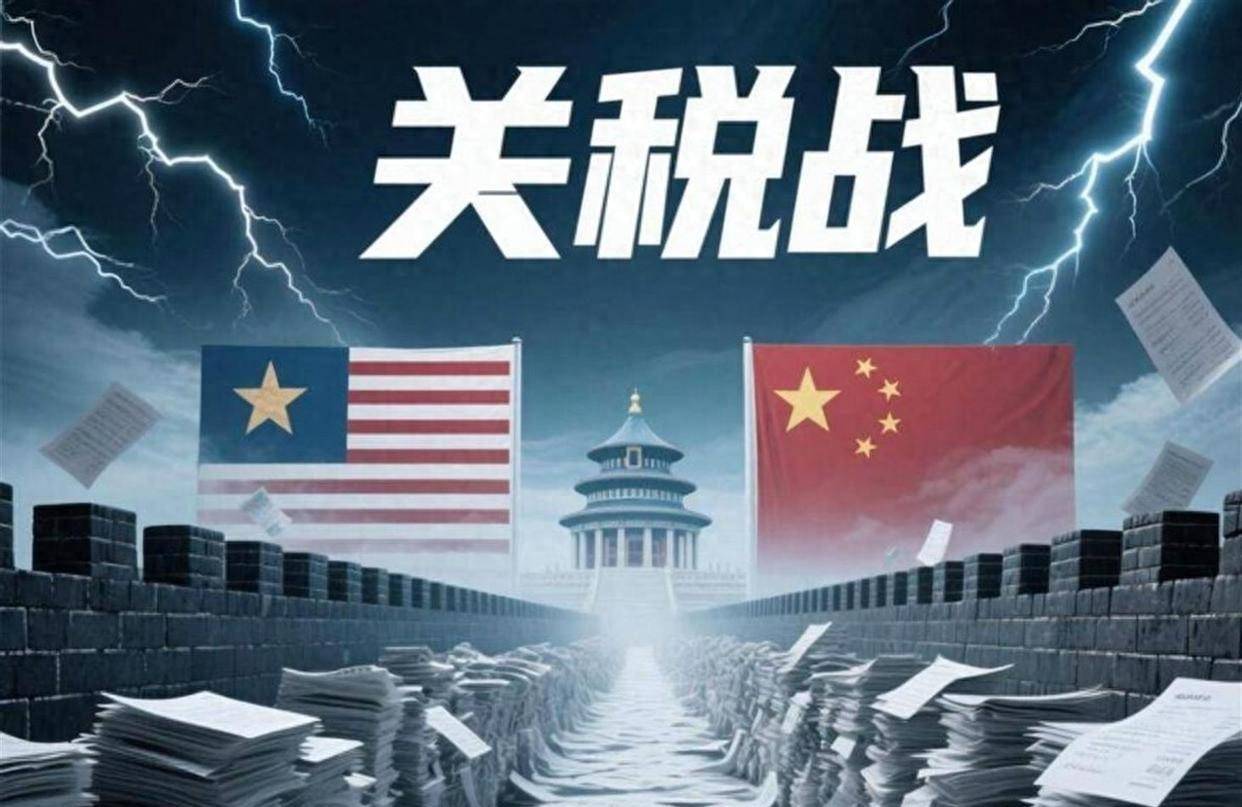
美国联邦法院出手!特朗普23000亿关税被推翻,国会重掌征税大权
Sou Hu Cai Jing· 2026-02-25 01:15
Core Argument - The Supreme Court ruling in 2026 highlighted the constitutional limits of presidential power, specifically regarding taxation and spending authority, affirming that only Congress has the right to impose taxes and allocate funds [1][10][14]. Group 1: Taxation Authority - Trump's proposed tariff policy aimed to generate $23 trillion over ten years, which raised questions about who has the authority to collect and spend this revenue [1][9]. - The ruling emphasized that taxation is a congressional power, and any attempt by the president to bypass this authority poses a significant constitutional threat [1][10][14]. Group 2: Legal Basis and Implications - Trump attempted to justify his actions using the International Emergency Economic Powers Act, which was originally designed to limit presidential power, not expand it [4][9]. - The ruling reinforced that even in times of crisis, the president cannot circumvent democratic processes, maintaining the integrity of the constitutional framework [10][14]. Group 3: Economic Impact - The tariffs led to increased costs for consumers, with everyday expenses rising due to higher prices on goods affected by the tariffs [6][12]. - The Supreme Court's decision provided a potential reprieve for Trump, allowing him to step back from unpopular policies without facing backlash for neglecting public welfare [7][9]. Group 4: Institutional Checks and Balances - The ruling served as a reminder of the importance of checks and balances within the U.S. political system, preventing any single branch from overstepping its bounds [12][16]. - The market reacted positively to the ruling, indicating investor confidence in the preservation of established rules and the stability of U.S. governance [9][16].
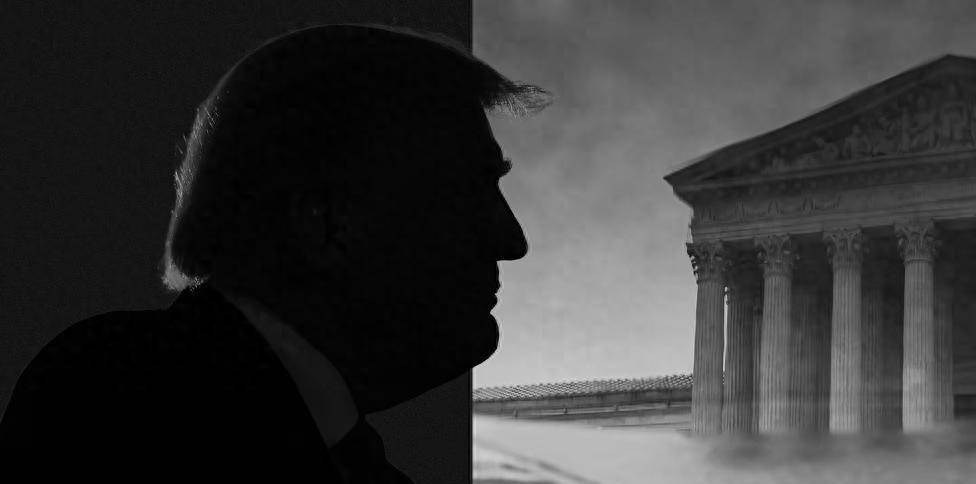
关税刚被裁定违法,特朗普立马代表美国,向全球打响第一枪
Sou Hu Cai Jing· 2026-02-23 19:50
Core Viewpoint - The U.S. Supreme Court's 6-3 ruling has blocked Trump's ability to impose global tariffs under the International Emergency Economic Powers Act without Congressional approval, indicating a significant limitation on presidential power in trade matters [1][11]. Group 1: Legal and Political Implications - Trump's immediate response to the ruling was to sign an executive order imposing a 10% tariff on all trade partners, demonstrating his intent to circumvent judicial limitations [1][3]. - The ruling has raised concerns about the erosion of political foundations in the U.S., as Trump's rhetoric challenges the legitimacy of judicial authority [1][7]. - Analysts suggest that Trump's reliance on tariffs as a political tool may backfire, as it could lead to increased tensions with allies and a loss of credibility in international trade [5][10]. Group 2: Economic Impact - The imposition of tariffs is expected to raise commodity prices, increase corporate costs, and tighten consumer spending, leading to a deteriorating trade environment [1][3]. - The uncertainty surrounding U.S. trade policies is likely to deter long-term investments, as businesses fear unpredictable regulatory changes [3][8]. - Countries dependent on exports to the U.S. are considering alternative markets, which could lead to a shift away from reliance on the American market [4][5]. Group 3: Global Trade Dynamics - The ruling and subsequent actions by Trump may accelerate the reorganization of global supply chains, as countries seek to reduce dependence on the U.S. [5][10]. - The potential for retaliatory measures from other nations could harm U.S. exports in key sectors such as agriculture, automotive, and technology [3][4]. - The perception of the U.S. as an unpredictable trading partner may lead to a decline in its influence within the global trade system [5][11].
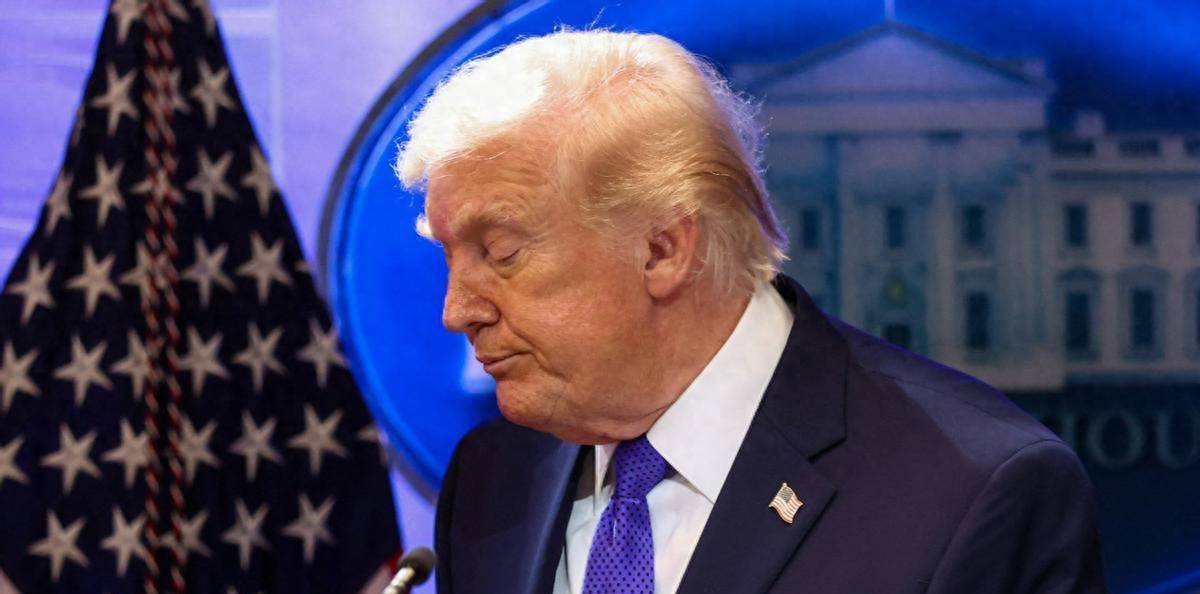
特朗普全球关税被最高法院否决后遭嘲讽,纽森:可怜的小猪
Sou Hu Cai Jing· 2026-02-22 05:55
Core Viewpoint - The U.S. Supreme Court ruled against President Trump's tariff policy, leading to his aggressive response and subsequent increase in tariffs on global goods, which has drawn criticism and mockery from political opponents [1][5][7]. Group 1: Supreme Court Ruling - The Supreme Court deemed Trump's broad reciprocal tariff policy unconstitutional, stating he exceeded his authority without Congressional approval [7][8]. - Trump's reaction included labeling the justices as "unpatriotic" and expressing shame over the ruling, claiming it was influenced by foreign interests [7][8]. Group 2: Tariff Policy Changes - Following the ruling, Trump signed an executive order to impose a 10% tariff on all imports, later increasing it to 15%, the maximum allowed under the relevant law [5][8]. - The law cited by Trump, Section 122 of the Trade Act of 1974, is intended for short-term emergencies rather than long-term economic policy [8][11]. Group 3: Political Reactions - French President Emmanuel Macron welcomed the Supreme Court's decision, emphasizing the importance of checks and balances in a democracy [1]. - California Governor Gavin Newsom mocked Trump, suggesting he was losing control and calling for the return of funds taken from American citizens due to the illegal tariffs [5][7]. - Illinois Governor J.B. Pritzker sent a bill for $8.6 billion in tariff refunds to Trump, threatening further action if not addressed [5]. Group 4: Legal Framework for Tariffs - Trump has other legal avenues to pursue tariffs, including Section 301 for discriminatory foreign trade practices and Section 232 for national security threats, which he previously used for steel and aluminum [11]. - The 1930 Tariff Act also provides grounds for imposing tariffs on countries that discriminate against U.S. businesses [11].
2026年1月美国关税收入激增超3倍,美国关税暴增背后的喜与忧
Sou Hu Cai Jing· 2026-02-19 00:34
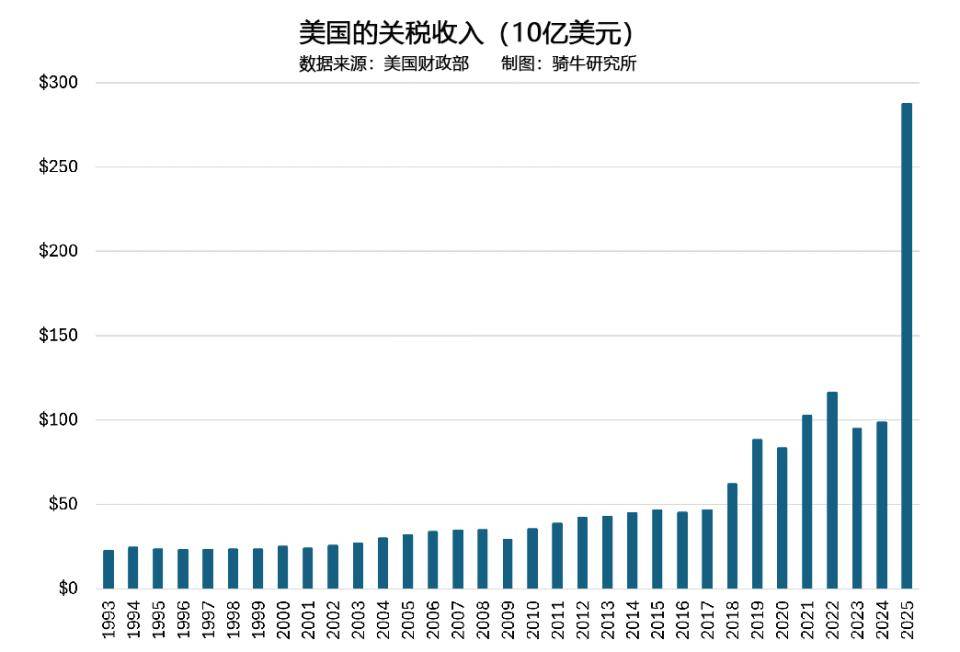
Core Insights - In January 2026, U.S. tariff revenue surged by 304% year-on-year, reaching $30 billion, with a total of $124 billion collected in the first four months of the fiscal year, significantly slowing the growth of the federal deficit [1][3][4] Tariff Revenue Impact - The substantial increase in tariff revenue has provided a crucial buffer for the U.S. federal budget, helping to reduce the deficit, which was approximately $95 billion in January, down 26% from the previous year [7][10] - The total deficit for the first four months of 2026 was $697 billion, a 17% decrease compared to the same period last year [7] Legal and Political Implications - The legality of the tariff policy is under scrutiny, with the U.S. Supreme Court set to rule on whether the Trump administration had the authority to impose such high tariffs without Congressional approval [11][12] - A ruling against the government could require the return of hundreds of billions of dollars in tariffs already collected, posing a significant risk to the federal budget [11][12] Global Trade Dynamics - The situation highlights the increasing politicization and legal complexities surrounding trade policies, with supporters arguing that tariffs correct unfair trade practices, while critics warn of potential negative impacts on global supply chains and consumer costs [14][15] - The outcome of the Supreme Court's decision will influence not only U.S. fiscal policy but also global trade rules and corporate strategies [15][17]
特朗普耍脾气,为赌一口气,就要放弃2万亿美元的美加贸易市场
Sou Hu Cai Jing· 2026-02-15 15:12
Core Viewpoint - The article discusses the political ramifications of President Trump's proposed tariffs on Canada, highlighting a shift in Republican support and the implications for trade agreements and upcoming elections [1][3][11]. Group 1: Political Dynamics - Several Republican members have opposed Trump's tariff plans, indicating a significant shift in party dynamics as they align with Democrats to block the proposed tariffs [3][4]. - The opposition from within the Republican Party is driven by concerns over Trump's unilateral decision-making and its potential impact on the party's image and future elections [6][9]. Group 2: Trade Implications - Trump's threats to impose 100% tariffs on all Canadian goods could jeopardize the US-Mexico-Canada Agreement (USMCA), affecting trade worth approximately $2 trillion [7]. - The potential tariffs create uncertainty for investors, as they reflect a disregard for established trade agreements and could deter future investments in the US [9]. Group 3: Economic Consequences - The economic burden of tariffs primarily falls on American consumers, leading to rising prices and stagnant employment rates, which could be leveraged by Democrats in the upcoming midterm elections [11][13]. - The White House's attempts to attribute low employment rates to immigration policy rather than Trump's decisions indicate a defensive strategy in light of economic challenges [11][13]. Group 4: Power Dynamics - Trump's use of emergency powers to impose tariffs raises concerns about the erosion of checks and balances within the US political system, prompting Republicans to seek ways to limit his authority [15]. - The transformation of enforcement agencies under Trump's influence is seen as a potential threat to the established political order, necessitating a response from the Republican Party to safeguard its future [15].
不听我的就弄死你?特朗普越来越像国王了!
Sou Hu Cai Jing· 2026-01-14 02:16
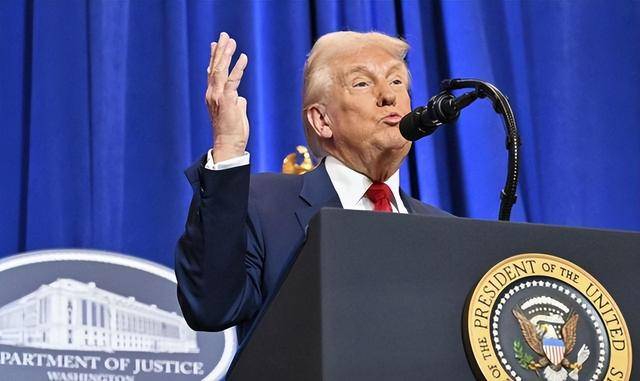
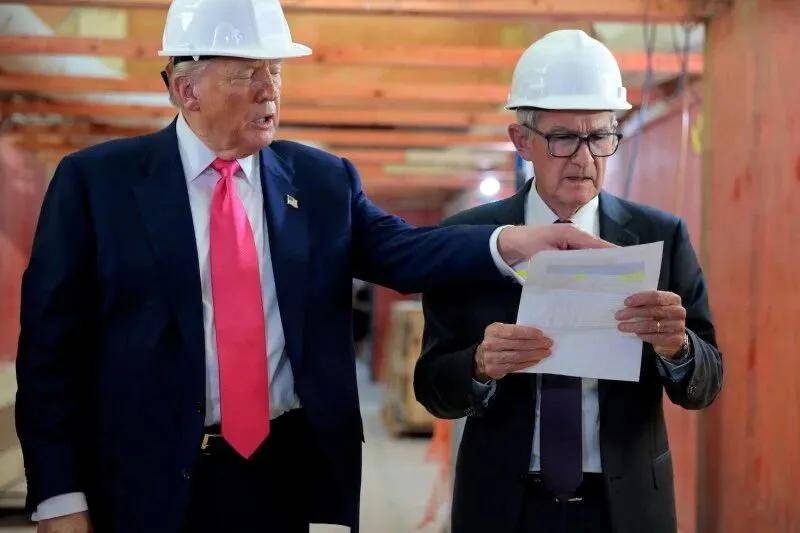
Core Viewpoint - The article discusses the escalating conflict between former President Donald Trump and Federal Reserve Chairman Jerome Powell, highlighting the implications for the independence of the Federal Reserve and the broader political landscape in the U.S. [2][3][4] Group 1: Political Dynamics - Trump is attempting to use the Department of Justice as a tool for personal political gain, moving beyond mere verbal pressure to more aggressive tactics [3][5] - The relationship between Trump and Powell is marked by irony, as Powell was appointed by Trump himself, illustrating the lack of permanent allies in Trump's political sphere [3][4] - The independence of the Federal Reserve is crucial for maintaining long-term monetary stability, and Trump's actions threaten to undermine this foundational principle [3][4] Group 2: Powell's Response - Powell has publicly asserted his commitment to impartiality and his determination to resist threats, positioning himself as a guardian of institutional integrity [4] - Republican Senator Thom Tillis has indicated he will block any new nominations for the Federal Reserve chair until Powell's legal issues are resolved, complicating Trump's strategy [4] - The confrontation between Trump and Powell represents a broader test of the balance of power within U.S. politics, with implications for future governance [4][5] Group 3: Implications for Governance - Trump's tactics may create a chilling effect on independent decision-makers within federal institutions, raising concerns about the future of independent governance [5] - The article suggests that Trump's approach could erode the foundational principles of checks and balances in the U.S. political system [5] - The ongoing conflict is seen as a critical moment for the resilience of American constitutional governance against authoritarian tendencies [5]
民进党成了“民禁挡”,赖清德成了“赖独裁”
经济观察报· 2025-12-15 13:19
Core Viewpoint - The article discusses the perceived decline of democracy in Taiwan under the current administration, highlighting concerns over administrative dictatorship and the erosion of checks and balances in governance [1][2][9]. Group 1: Administrative Actions and Reactions - The Democratic Progressive Party (DPP) has been criticized for its unilateral actions, leading to claims of administrative dictatorship, as noted by various media outlets [2][4]. - The DPP's decision to ban multiple mainland shopping and social platforms has been labeled as "民禁挡" (people's prohibition), indicating a growing disconnect with the public [2][3]. - The controversy surrounding the "财划法" (Financial Planning Law) showcases the struggle between the legislative and executive branches, with the DPP's refusal to sign and announce the law raising alarms about the state of democracy [5][6][8]. Group 2: Political Dynamics and Implications - The ongoing political battle among the blue (Kuomintang), green (DPP), and white (People's Party) factions reflects deep divisions in Taiwan's political landscape, with significant implications for governance and public trust [4][7]. - The DPP's actions are seen as a direct challenge to the constitutional framework, with critics arguing that this undermines the rule of law and democratic principles [7][8]. - The article suggests that if the DPP continues on this path, it may lead to a personal dictatorship under Lai Ching-te, rather than a mere administrative dictatorship [8][9]. Group 3: Broader Context and Consequences - The DPP's policies, framed as "国安五法" (National Security Five Laws), are perceived as tools to suppress dissent and control public discourse, particularly against those advocating for cross-strait relations [8][9]. - The article emphasizes that the core of Taiwan's democratic identity—checks and balances—has been severely compromised, leading to a potential political self-destruction [1][9].

美国法院正式宣布了!美国最高法院正式就美高层任内推行的大规模对等关税政策展开辩论
Sou Hu Cai Jing· 2025-11-07 10:58
Core Viewpoint - The debate in the U.S. Supreme Court regarding the large-scale "reciprocal tariff" policy initiated by the current administration has significant implications for both domestic politics and global markets, with unexpected shifts in the expected outcomes of the conservative majority [1][3] Group 1: Supreme Court Debate - The Supreme Court's debate revealed internal divisions within the conservative camp, which was initially thought to favor the administration [1] - Chief Justice Roberts emphasized that tariffs are essentially taxes on citizens and should be a power reserved for Congress, questioning the expansion of executive power [1] - The discussion shifted from trade policy to the fundamental issue of constitutional power distribution, highlighting the tension between executive and legislative authority [1] Group 2: Implications for Future Policies - Analysts suggest that the cautious stance of the Supreme Court reflects a commitment to the principle of checks and balances, indicating that any executive actions exceeding constitutional limits may face judicial scrutiny [3] - The outcome of this debate could influence future trade policy-making processes and reshape the interaction between the executive and legislative branches [3] - The situation underscores the importance of the judiciary in maintaining institutional stability when executive power attempts to overstep traditional boundaries [3]
白宫清算名单曝光!73岁律师阿贝·洛威尔出山,为特朗普政敌辩护
Sou Hu Cai Jing· 2025-10-27 03:53
Core Insights - Abe Lowell has transitioned his legal focus to defending individuals targeted by the Trump administration, particularly those on a "cleansing list" [1][5][7] Group 1: Legal Practice and Philosophy - In May 2025, Lowell left his long-standing law firm to establish Lowell & Associates, aiming to provide legal services to those facing unjust legal actions due to political stances or government actions [2][7] - Lowell's law firm is positioned as a "defensive stronghold" against what he perceives as government power abuse, emphasizing the importance of judicial independence and the boundaries of power [5][7] Group 2: Notable Cases and Clients - Recent high-profile cases include defending New York Attorney General Letitia James against allegations of bank fraud and false statements, and representing Federal Reserve Governor Lisa Cook in a challenge against her removal by the President [5][7] - The clientele has expanded to include former government officials and judicial personnel who have faced investigations after "offending the White House," highlighting the intersection of law and politics [7][8] Group 3: Public Perception and Impact - Lowell's approach has sparked controversy; while supporters view him as a champion against power, critics accuse him of self-promotion through high-profile cases [8][10] - Regardless of the outcomes of these cases, Lowell and his team have made a significant mark on the legal landscape in the context of America's polarized political environment [10][12]