标本兼治

Search documents
信长星在全省群众身边不正之风和腐败问题集中整治工作推进会上强调
Nan Jing Ri Bao· 2025-08-07 01:52
Group 1 - The meeting emphasized the importance of addressing corruption and misconduct at the grassroots level, highlighting the need for a strong political consciousness and effective measures to deepen the ongoing rectification efforts [1][2] - The provincial government has made significant progress in tackling local corruption issues, with a focus on addressing the concerns of the public and enhancing the connection between the party and the people [1][2] - The meeting called for a systematic approach to rectify issues, focusing on specific areas such as education, rural management, and public services, ensuring that the public feels the tangible results of these efforts [3][4] Group 2 - The leadership underscored the necessity of strict investigations into corruption, with a commitment to uphold accountability and ensure that all cases are thoroughly examined [2][4] - There is a strong emphasis on integrating various responsibilities and enhancing collaboration among different levels of government to effectively address public concerns and improve governance [2][4] - The meeting highlighted the need for continuous efforts in both immediate rectification and long-term institutional improvements to prevent corruption from re-emerging [2][3]
信长星在全省群众身边不正之风和腐败问题集中整治工作推进会上强调以高度政治自觉纵深推进集中整治 不断增强群众获得感幸福感安全感许昆林主持 张义珍刘小涛出席
Xin Hua Ri Bao· 2025-08-06 23:36
Core Points - The meeting on the concentrated rectification of corruption and misconduct issues among the masses was held, emphasizing the importance of deepening the work to address these issues in line with the directives from the central government [1][2] - The provincial leadership highlighted the need for a focused approach to tackle prominent issues raised by the public, ensuring that the anti-corruption efforts are felt by the people [2] Group 1 - The meeting was attended by key provincial leaders, including the provincial party secretary and the governor, indicating a high level of commitment to the rectification efforts [1][3] - The provincial government has made significant progress in addressing corruption, having dealt with several cases of minor corruption that directly affect the public [1][2] - There is a strong emphasis on maintaining a people-centered development approach, ensuring that the rectification efforts yield tangible benefits for the public [1][2] Group 2 - The strategy includes a rigorous investigation of corruption issues, with a commitment to uphold strict standards and accountability [2] - The leadership called for a combination of immediate corrective actions and long-term institutional improvements to prevent future misconduct [2] - The meeting underscored the importance of collaboration among various government departments to effectively address issues affecting the public [2]
陕西:加强类案分析把握共性规律 举一反三推进系统治理
Zhong Yang Ji Wei Guo Jia Jian Wei Wang Zhan· 2025-07-08 00:53
Group 1 - The article emphasizes the importance of case analysis in promoting systemic governance and addressing root causes of corruption [2][3] - Various local disciplinary inspection and supervision agencies in Shaanxi Province are enhancing case analysis to identify issues and implement targeted measures [2][3] - The analysis includes examining the characteristics of corruption in specific sectors, such as healthcare, and developing recommendations for improving governance mechanisms [2][3] Group 2 - The article highlights the implementation of 32 new regulations to improve public vehicle management in response to identified vulnerabilities [2] - In Baoji City, four major categories of issues were identified in the healthcare sector, leading to recommendations for better management of key personnel and processes [2][3] - Yulin City is focusing on strict oversight of the energy sector, with projected production figures for coal, oil, and natural gas in 2024 being 624 million tons, 10.52 million tons, and 24.1 billion cubic meters respectively [3] Group 3 - The article discusses the establishment of "early warning indicators" and "checklists" based on case characteristics to enhance supervision [4] - It mentions the exploration of big data mechanisms to break down data barriers between various departments, facilitating the identification of risks and correlations in cases [4] - Continuous efforts are being made to address systemic issues and improve the effectiveness of case handling and governance [5]
“组合拳”推动专项监督提质增效
Zhong Yang Ji Wei Guo Jia Jian Wei Wang Zhan· 2025-05-13 23:55
Core Viewpoint - The article emphasizes the importance of specialized supervision by disciplinary inspection and supervision agencies to enhance the effectiveness of oversight, focusing on major decisions from the central government and addressing urgent issues faced by the public [1] Group 1: Focus Areas of Supervision - Specialized supervision targets specific areas for concentrated oversight, ensuring strong impact and quick results by selecting appropriate entry points [2] - The focus is on major political directives, aligning supervision with the implementation of significant decisions from the central government, such as the "Four Responsibilities Coordination" mechanism and anti-corruption efforts in rural revitalization and grain purchasing [2][3] - Emphasis is placed on addressing public concerns, such as the management of rural collective assets and issues raised through citizen hotlines, to ensure that supervision is responsive to the needs of the people [3] Group 2: Collaborative Supervision Mechanisms - Establishing collaboration mechanisms with regulatory departments is crucial for integrating supervision into industry governance, enhancing the effectiveness of oversight [4] - Strengthening cooperation with audit, finance, and urban management departments to leverage their expertise for conducting specialized audits and data analysis [5] - Implementing a "room-group-field" linkage mechanism to ensure coordinated supervision across different levels, enhancing the effectiveness of oversight efforts [5] Group 3: Optimizing Supervision Approaches - Emphasizing self-inspection responsibilities among supervisory departments to ensure thorough problem identification and rectification [6] - Focusing on key supervision points by utilizing a systematic approach to identify and categorize issues, ensuring that resources are directed towards critical areas [6][7] - Maintaining a presence in the field through on-site inspections and community engagement to gather real-time feedback and adjust supervision strategies accordingly [7] Group 4: Ensuring Long-term Effectiveness of Supervision - The article advocates for a systematic and comprehensive approach to governance, emphasizing the need for timely recommendations and the closure of institutional loopholes [8] - Prioritizing accountability by swiftly addressing issues identified during supervision and ensuring responsible parties are held accountable [9] - Encouraging problem rectification through detailed action plans and ongoing monitoring to ensure effective resolution of identified issues [9]
高培勇:宏观调控要在病灶和病源两个层面同时着力,标本兼治
Xin Jing Bao· 2025-04-23 02:08
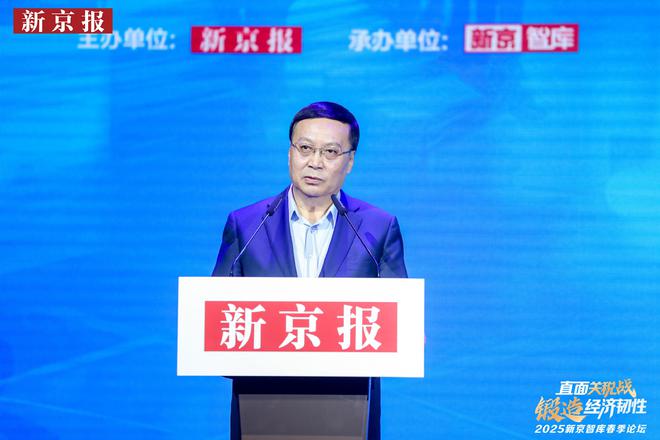
新京报讯(记者柯锐)4月22日,在新京报主办的主题为"直面关税战,锻造经济韧性——2025新京智库 春季论坛"上,中国社会科学院学部委员、中国社会科学院原副院长高培勇表示,当下宏观调控所需解 决的问题至少是双重的,既有需求不足的"老"问题,也有预期偏弱的"新"问题,宏观调控要在病灶和病 源两个层面同时着力,既着眼于治标,又着重于治本,标本兼治。 高培勇表示,以往经济运行当中面对的困难和挑战多可归结于因社会总供求失衡而导致的经济波动,而 当前我们面对的经济运行当中的困难和挑战,则相对复杂得多。 虽然同样表现为经济波动,虽然同样可以从中发现社会总供求失衡的身影,但顺藤摸瓜,透过经济波动 和社会总供求失衡而深入到其本质,仔细比对之后,会发现其背后的深层原因在于预期偏弱,故而当下 宏观调控所需解决的问题便不那么单一了。 在高培勇看来,如果将有效需求不足视作病灶,那么其背后的深层病源则是预期偏弱,因预期偏弱而导 致有效需求不足,进而导致社会总供求失衡,是当下宏观调控所需解决的问题的复杂性之所在。"这意 味着当前中国宏观经济运行中的突出矛盾,较之于以往在发生变化,这就是由社会总供求失衡引致的经 济波动,延伸为由预期和信心 ...