
预期偏弱

Search documents
中国社科院原副院长、学部委员高培勇:将预期因素纳入宏观经济分析 让政策调整和改革行动同频共振
Zheng Quan Shi Bao· 2025-06-25 18:21
Core Viewpoint - The integration of expectation factors into macroeconomic analysis is essential for addressing the current challenges in China's economic development, particularly in stabilizing consumer and investment demand [1][2] Group 1: Macroeconomic Analysis - The analysis should focus on the interplay between demand, supply, and expectations, emphasizing the need for stable expectations to alleviate issues related to insufficient consumer and investment demand [1] - It is crucial to address both old and new problems in macroeconomic analysis, as the inclusion of expectation analysis complicates the focus, requiring attention to both traditional demand issues and new concerns regarding weak expectations and confidence [1] - The analysis must adapt to the current context of weak domestic demand and expectations, necessitating a shift in focus towards strategies that enhance both demand and confidence [1] Group 2: Goals and Policies - The analysis should reconcile old and new goals, recognizing that effective macroeconomic strategies must consider both immediate demand expansion and long-term confidence stabilization [1][2] - The dual system of macroeconomic regulation involves both policy adjustments and reform actions, which must work in tandem to effectively address short-term and long-term economic challenges [2] - Focusing solely on policy adjustments without considering necessary reforms may undermine the overall effectiveness of economic efforts [2] Group 3: Long-term Strategy - Incorporating expectation factors into macroeconomic analysis is not only a response to current economic pressures but also a long-term strategy for promoting stable and rapid economic development [2] - Market expectations play a significant role in influencing economic activities, highlighting the importance of integrating these factors into comprehensive macroeconomic analysis for enhanced effectiveness and relevance [2]
高培勇:宏观调控要在病灶和病源两个层面同时着力,标本兼治
Xin Jing Bao· 2025-04-23 02:08
Core Viewpoint - The current macroeconomic challenges in China are dual-faceted, involving both the longstanding issue of insufficient demand and the emerging problem of weak expectations, necessitating a comprehensive approach to macroeconomic regulation that addresses both symptoms and root causes [2][3] Group 1: Economic Challenges - The difficulties faced in the current economic environment are more complex than in the past, stemming from a combination of economic fluctuations and social supply-demand imbalances [2] - The underlying cause of these economic fluctuations is identified as weak expectations, which complicates the macroeconomic regulation needed to address these issues [3] Group 2: Macroeconomic Regulation - Effective demand deficiency is viewed as a symptom, while weak expectations are seen as the deeper underlying issue that leads to this deficiency, resulting in social supply-demand imbalances [3] - High Peiyong emphasizes the importance of distinguishing between immediate problems and underlying causes, advocating for a focus on correcting weak expectations to effectively address both demand and supply issues [3] - A dual approach to macroeconomic regulation is necessary, targeting both the symptoms of demand insufficiency and the root cause of weak expectations, to avoid superficial solutions that fail to address deeper issues [3]

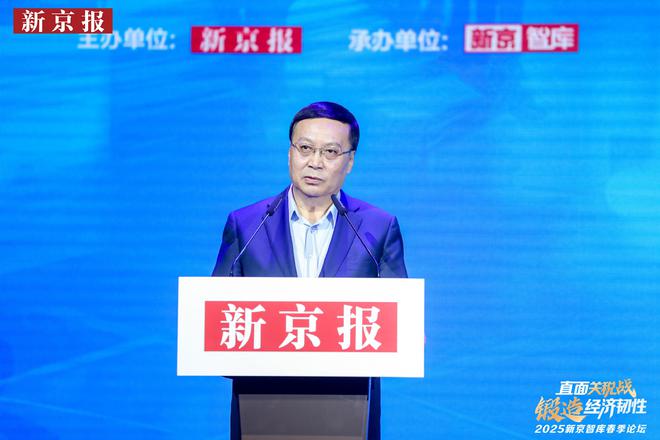
高培勇:提高宏观调控的前瞻性有效性针对性
Xin Jing Bao· 2025-04-23 02:08
Core Viewpoint - The external environment poses new and higher demands on China's macroeconomic regulation, especially in the context of the trade and tariff wars initiated by Trump, necessitating a focus on improving the foresight, effectiveness, and targeting of macroeconomic policies [2] Group 1: Complexity of Current Economic Challenges - The difficulties and challenges in the current economic operation are more complex than in the past, primarily due to weak expectations leading to insufficient effective demand, which in turn causes social supply-demand imbalances [3] - The current macroeconomic issues are dual in nature, involving both the "old" problem of insufficient demand and the "new" problem of weak expectations, requiring simultaneous attention to both aspects in macroeconomic regulation [3] Group 2: Dual Objectives of Macroeconomic Regulation - The dual objectives of macroeconomic regulation must focus on both expanding demand and stabilizing expectations, with the latter supporting the former [4] - It is essential to analyze measures that relate to both demand expansion and expectation stabilization, ensuring that macroeconomic operations are not simplistically equated to demand expansion alone [5] Group 3: Policy and Reform as Dual Engines - Macroeconomic regulation relies on both policy adjustments aimed at expanding demand and reform actions focused on stabilizing expectations, necessitating a dual approach [6] - Policy adjustments play a supportive role in stabilizing expectations, while comprehensive reforms provide the necessary institutional mechanisms to achieve this stability, highlighting the importance of both in addressing current economic challenges [6]