
研

Search documents
“耐心资本+国际场景”双轮驱动 香港锻造金融科创超级平台
Zheng Quan Shi Bao· 2025-08-10 17:33
Group 1 - The Hong Kong government, through the Hong Kong Investment Management Company, has invested in over 100 projects, with more than 10 companies preparing to apply for listing in Hong Kong [1] - The investment management company currently manages approximately HKD 62 billion, focusing on hard technology, life sciences, and renewable/green technology [1] - Each HKD 1 invested by the company has attracted over HKD 5 in long-term market funding from various sources, including sovereign funds and family offices [1] Group 2 - The Hong Kong government is set to announce a new batch of over 10 key enterprises, many of which are international pharmaceutical companies [2] - The introduction of these enterprises is expected to bring around HKD 50 billion in investment and create over 20,000 jobs in Hong Kong [2] - The government emphasizes the importance of attracting both enterprises and talent to create a positive cycle of industry and talent development [2] Group 3 - The Hong Kong government promotes deep collaboration among government, industry, academia, research, and investment sectors to enhance the local economy [3] - Hong Kong's international application scenarios attract numerous domestic and foreign companies to test and apply cutting-edge technologies [3] - The city serves as a platform for both Hong Kong and mainland enterprises to expand globally, promoting professional services and standards [3]


多方共赢!兰山区扩大高层次人才“朋友圈”赋能科技成果转化对接
Qi Lu Wan Bao Wang· 2025-07-25 08:19
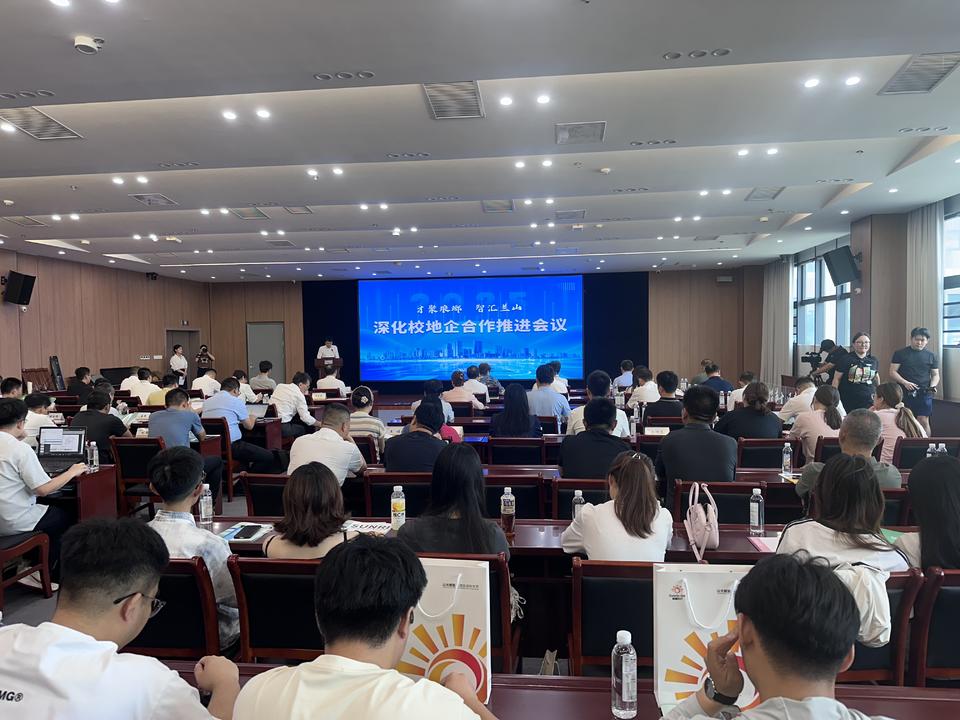
Group 1 - The meeting titled "Talent Gathering in Langya, Wisdom Gathering in Lanshan" focused on "Carbon Neutral Technology Innovation and Green Development," aiming to enhance collaboration between universities, local governments, and enterprises [1][3] - Linyi University has established a Carbon Neutral College and Research Institute, and has launched undergraduate programs in carbon sink science and technology, aligning with national carbon neutrality strategies [3][8] - The collaboration has led to the development of innovative technologies and products in photovoltaic building integration, providing talent and technological support for Linyi's carbon neutral industry chain [3][8] Group 2 - Yaoling Times, the host of the meeting, aims to create a high-level platform for idea exchange and a deep integration of industry, academia, and research [5] - The company emphasizes the critical role of solar energy in future energy systems and is committed to making solar energy more efficient and integrated into various aspects of life [5] - Linyi City is actively promoting collaboration between schools and enterprises, having engaged with 56 key universities and institutions, and facilitated 156 cooperative projects in the first half of the year [8]
新能源销量全球前三!上汽通用五菱“极速转型”的底层逻辑是什么?
汽车商业评论· 2025-07-08 03:10
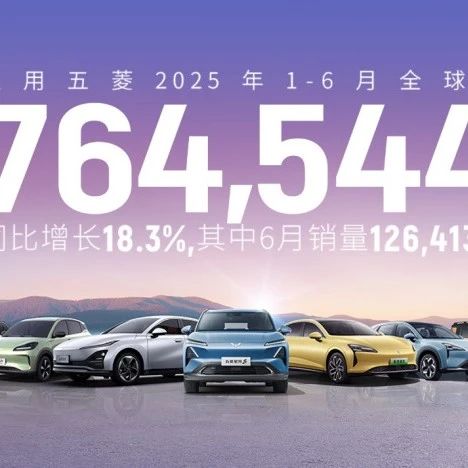
Core Viewpoint - SAIC-GM-Wuling has achieved remarkable sales growth in the first half of 2025, with a total sales volume of 764,544 vehicles, representing an 18.3% year-on-year increase, and a significant 73.8% increase in new energy vehicle sales [2][3][21]. Group 1: Sales Performance - In June 2025, SAIC-GM-Wuling sold 126,413 vehicles, marking a 32.1% year-on-year growth, with new energy vehicle sales reaching 70,357 units [2]. - The company has maintained over 50% year-on-year growth in new energy vehicle sales for six consecutive months [2]. Group 2: Transformation Strategy - The success of SAIC-GM-Wuling's transformation is attributed to its focus on genuine user needs, driving innovation through technology and industry chain collaboration [5][24]. - The "Wuling Model" serves as a replicable example for the transformation of traditional manufacturing in China, demonstrating the potential of traditional industrial systems in the new era [5][18]. Group 3: Product Development - SAIC-GM-Wuling emphasizes user-centric product development, focusing on practical solutions that avoid redundant features, aligning with the principle of "affordable, usable, and good" [8][10]. - The company has launched various models tailored to specific user scenarios, such as the Hongguang MINIEV for urban commuting and the Wuling Bingguo for family outings [10]. Group 4: Systematic Engineering - The transformation is driven by the "125" project, integrating innovation across government, industry, academia, research, and application [12]. - SAIC-GM-Wuling has developed a proprietary technology system, including six core technologies, and has achieved significant breakthroughs in key areas [12][14]. Group 5: Industry Chain Development - The company has established five billion-yuan autonomous industrial clusters in Liuzhou, enhancing local supply chain capabilities and increasing localization rates from 36% to 63% [16]. - SAIC-GM-Wuling is leading the transformation of the aluminum industry in Guangxi, creating an integrated ecosystem for high-value automotive components [17]. Group 6: Global Expansion - In the first half of 2025, SAIC-GM-Wuling's new energy vehicle exports reached 35,964 units, a 147.6% year-on-year increase, with a notable 250.5% increase in June alone [21]. - The company is implementing a regional integration strategy in Southeast Asia, focusing on local production and supply chain development [22]. Group 7: Lessons for the Industry - SAIC-GM-Wuling's experience illustrates that the challenges faced by traditional automakers in transformation are more about the choice of development path rather than scale [25][26]. - The company's approach of precise positioning, system reconstruction, and ecological collaboration provides valuable insights for other traditional manufacturers undergoing transformation [24][26].
“杏苑讲堂”培训平台启动
Su Zhou Ri Bao· 2025-06-11 00:32
Group 1 - The "Xingyuan Lecture Hall" platform was officially launched to create a new ecosystem for traditional Chinese medicine (TCM) in research, education, and application, enhancing innovation in TCM between Beijing and Suzhou [1] - The platform aims to become a hub for academic exchange in TCM, inviting top experts monthly to share cutting-edge ideas and stimulate innovative thinking through lectures and discussions [1] - The first two invited scholars are prominent figures in TCM, including Professor Zhong Lidan and Zhang Weiku, who are recognized for their contributions to clinical specialties and technology transfer [1] Group 2 - The Suzhou Hospital of Xiyuan Hospital is set to become the first national regional medical center in Suzhou, with a focus on building a "clinical-research-translation" communication platform [2] - The local TCM system has submitted 2,267 research projects since the 14th Five-Year Plan, with 855 approved, including 47 National Natural Science Foundation projects, indicating a strong emphasis on research and development [2] - Suzhou has been designated as a national experimental zone for the inheritance and innovation of TCM, aiming to cultivate clinical research talent and promote the transformation of traditional remedies into accessible treatments for the public [2]