科学管理

Search documents
霸权交接:超越日不落帝国的美国逻辑
3 6 Ke· 2025-06-23 01:50
Core Insights - The article discusses the rise of the United States as a global economic power from 1865 to 1925, highlighting the transition from British dominance to American supremacy in industrial and financial sectors [3][28]. Group 1: Pre-Civil War Industrial Foundation - Before the Civil War, the U.S. industrial base was significantly influenced by "technology smuggling," with key figures like Samuel Slater bringing British textile technology to America [4][5]. - The U.S. faced legislative barriers from Britain aimed at stifling its industrial growth, which included prohibiting the export of advanced technologies and skilled workers [4][9]. - By 1860, the U.S. industrial output had surpassed France, although it still lagged behind Britain in key metrics like steel production [10][12]. Group 2: Post-Civil War Technological Assimilation - After the Civil War, the U.S. became a "new technology digestion machine," rapidly adopting and improving upon European innovations [13][18]. - The revision of patent laws in 1870 facilitated the absorption of foreign technologies, leading to a significant increase in U.S. steel production, surpassing that of Britain by 1880 [13][18]. - The industrial boom was characterized by the emergence of influential figures like Andrew Carnegie and John D. Rockefeller, who revolutionized their respective industries through innovative business practices [14][15]. Group 3: Innovation and Financial Systems - The introduction of the assembly line by Henry Ford in 1908 drastically reduced production costs and time, leading to a significant increase in automobile production [19][21]. - By the 1920s, the U.S. accounted for approximately 66.4% of global industrial output, showcasing its dominance in manufacturing and innovation [22][24]. - The establishment of the Federal Reserve in 1913 marked a pivotal moment in U.S. financial history, enhancing the capital markets and enabling significant wartime financing [23][24]. Group 4: Factors Contributing to U.S. Ascendancy - The article identifies four key factors in the U.S. rise: institutional advantages, scale economies, a pragmatic approach to efficiency, and an open spirit towards immigration and talent acquisition [29].


【直击】红旗连锁股东大会:深化线上线下融合发展 将向川南等区域渗透布局
Zheng Quan Shi Bao Wang· 2025-05-15 12:25
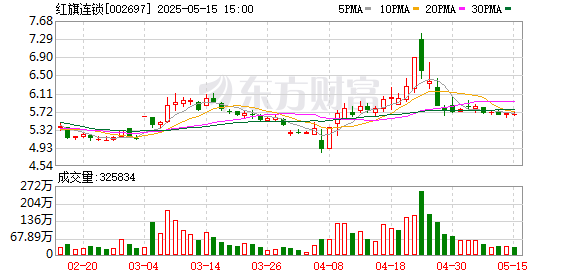
Group 1: Company Overview - Hongqi Chain officially held its 2024 annual shareholder meeting on May 15, with key executives in attendance [2] - In November 2024, the controlling stake and actual controller of Hongqi Chain changed to Sichuan Shantou Investment Co., Ltd. and Sichuan Provincial State-owned Assets Supervision and Administration Commission, respectively [2] - The company reported a total operating revenue of 10.123 billion yuan for 2024, remaining stable compared to the previous year, while the net profit after deducting non-recurring gains and losses was 477 million yuan, a decrease of 13 million yuan year-on-year [2] Group 2: Financial Performance - The main business revenue for Hongqi Chain was 9.371 billion yuan, reflecting a growth of 0.23% compared to the previous year [2] - The decline in overall performance was primarily attributed to a decrease in investment income, with the company recognizing a cumulative income of 122 million yuan from its investment in Xinwang Bank, down nearly 30 million yuan from the previous year [2] Group 3: Market Position and Strategy - The retail convenience store industry is facing increasing competition, with large supermarkets experiencing a wave of store closures [4] - Hongqi Chain emphasizes the importance of continuous innovation and scientific management, having developed the "Hongqi Cloud Platform" to enhance decision-making efficiency across the supply chain [4] - The company has been actively integrating online and offline operations, achieving over 1 billion yuan in sales through Douyin live streaming in 2024 [4] Group 4: Product and Service Expansion - Hongqi Chain has introduced a variety of products, including coffee, meals, and fresh produce, to meet diverse consumer needs [5] - The company has over 3,000 stores, primarily concentrated in the Chengdu area, and aims to expand into second and third-tier cities in Sichuan [5] - As a state-owned enterprise, Hongqi Chain is committed to promoting local products and enhancing shopping environments to improve market competitiveness [5]