美国制造业复兴

Search documents
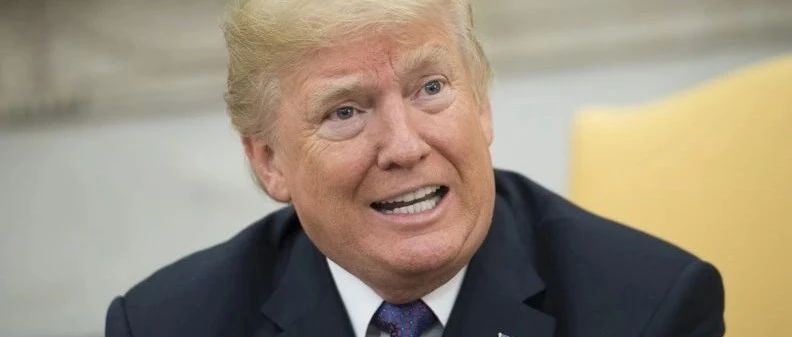
特朗普盯上驻韩美军基地土地所有权
Xin Hua She· 2025-08-26 00:34
Group 1 - The meeting between US President Trump and South Korean President Lee Jae-myung focused on US-South Korea alliance, the situation on the Korean Peninsula, and manufacturing cooperation [1][2] - Trump expressed a desire for South Korea to transfer ownership of land for US military bases, which currently are provided for free under an agreement [1] - Trump indicated he is open to renegotiating the US-South Korea trade agreement, while Lee Jae-myung expressed willingness to participate in the US's manufacturing revival initiatives [2] Group 2 - Discussions included the potential for US-South Korea-Japan cooperation in developing oil and gas resources in Alaska, although historical sensitivities between South Korea and Japan were noted as a concern [2] - Trump announced plans to visit South Korea for a trade meeting, likely related to the upcoming APEC leaders' informal meeting scheduled for October 31 to November 1 [2]
美国制造业复兴——从数据看在岸制造的挑战
王涵论宏观· 2025-08-24 14:31
Core Viewpoint - The article discusses the challenges and slow progress of the U.S. manufacturing sector's efforts to return production to the country, despite significant investment announcements from foreign entities and government initiatives aimed at revitalizing the industry [1][6]. Investment Overview - Announced greenfield foreign direct investment (FDI) projects in the U.S. have increased by 96% from the average levels of 2017-2019, with commitments of $550 billion from Japan and $350 billion from South Korea [2][9]. - However, actual FDI inflows have only grown by 18% during the same period, indicating a significant gap between announced and realized investments [10]. Manufacturing Production - Despite a 110% increase in manufacturing construction spending since 2020, this has not translated into a corresponding increase in manufacturing production, which has only seen a 2% rise since 2019 [12][17]. - The manufacturing value added as a percentage of global totals has continued to decline, indicating a lack of competitiveness [17]. Employment Trends - Although companies have announced job creation due to manufacturing reshoring, actual employment in the sector has decreased, with a notable drop in 2024, marking the largest contraction since the 2008 financial crisis [2][22]. - The manufacturing employment share of total non-farm employment has fallen from 13% in 2000 to 8% in 2024, highlighting a significant labor shortage [31]. Sector-Specific Insights - The electronics industry has seen substantial investment growth, with construction spending in data centers and electronic equipment manufacturing increasing by 247% and 740%, respectively [25][28]. - However, the electronics sector's contribution to overall manufacturing output remains limited, accounting for only 4% of total manufacturing production [28]. Structural Challenges - The U.S. manufacturing sector faces significant constraints, including a shortage of qualified labor and inadequate infrastructure, which hinder further progress [4][31]. - The labor cost in the U.S. is significantly higher than in other countries, with manufacturing costs being 10%-50% more expensive, complicating the reshoring efforts [32]. Infrastructure Issues - The American Society of Civil Engineers (ASCE) has rated U.S. infrastructure as a C grade, indicating critical issues that need addressing to support manufacturing growth [35]. - Upgrading the aging electrical grid is essential, as increased power demands from new manufacturing facilities are expected to strain existing infrastructure [35].


Citadel创始人:特朗普的贸易战已“毫无意义”,砸了美国资产的牌子,还让美国人更穷了
华尔街见闻· 2025-04-24 10:30
Core Viewpoint - Ken Griffin criticizes Trump's tariff policies, stating they are damaging the reputation of the United States and its assets, including U.S. Treasury bonds and the strength of the dollar [1][5]. Group 1: Economic Impact - Griffin warns that the trade war has become meaningless, necessitating a reevaluation of supply chains [2]. - He highlights that tariffs cannot bring manufacturing back to the U.S., noting that the U.S. has become 20% poorer in recent weeks due to Trump's inconsistent tariff stance [5][7]. - Griffin emphasizes that when the economic "cake" shrinks rapidly, there are no significant opportunities, and the focus shifts to merely surviving [8]. Group 2: Brand and Reputation - Griffin states that the damage done to the U.S. brand may take a lifetime to repair [3]. - He compares the current situation to the pressure on Harvard University, suggesting that attacking such a prestigious institution is akin to attacking one of America's most outstanding brands [4]. - He expresses concern that the actions of U.S. officials may weaken the country's standing, especially amid a debt crisis in the Western world [9]. Group 3: Manufacturing and Investment - Griffin strongly doubts the effectiveness of Trump's goal to revive U.S. manufacturing through tariffs, asserting that the volatility of policies undermines the intended objectives [6].