考古发掘

Search documents
考古人员在三亚落笔洞遗址发现海南最早墓葬
Xin Hua She· 2025-11-10 11:33
Core Viewpoint - The discovery of a prehistoric burial site at the Luobi Cave site in Sanya, dating back approximately 13,000 to 12,000 years, represents the earliest burial site found in Hainan, providing significant insights into early human culture in the region [1][2] Group 1: Archaeological Findings - A prehistoric burial site was discovered, with the burial estimated to be around 13,000 to 12,000 years old, making it the earliest known burial site in Hainan [1] - The burial was of a juvenile individual, with a side-sitting burial style, and included woven shell ornaments found at the head and waist [1] - The Luobi Cave site has been under excavation since its discovery in 1983, with significant findings including human fossils, stone tools, and animal remains [1] Group 2: Academic Significance - Experts from various institutions highlighted the burial as the most definitive early burial style found in South China, emphasizing its importance for understanding prehistoric burial customs [2] - The woven shell ornaments found are noted as the earliest reported in China, providing valuable material for studying the prehistoric cultural practices of Hainan Island and its cultural exchanges with Southeast Asia [2] - Ongoing excavations will involve a multidisciplinary research team focusing on various scientific fields to comprehensively reveal the cultural significance of the Luobi Cave site [2]
文化中国行丨走进四角坪遗址
Xin Hua Wang· 2025-10-18 01:01
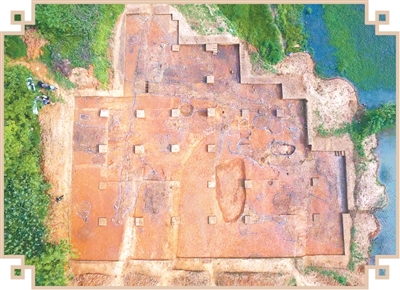
Core Insights - The Sijiaoping site in Gansu Province has been recognized as one of the top ten archaeological discoveries in China for 2023, highlighting its significance in the field of archaeology [2]. Summary by Sections - **Location and Historical Context** - The Sijiaoping site is located 2.5 kilometers northeast of Lixian County in Longnan City, Gansu Province, and is a large ceremonial architectural complex from the Qin Dynasty [2]. - **Archaeological Findings** - This year marks the final year of field archaeology at the site, which has been under excavation for six years. The overall architectural layout of the site has been largely clarified [2]. - The site features a central square rammed earth platform of approximately 900 square meters, surrounded by three groups of parallel gate structures on each side, and L-shaped buildings at the corners, indicating a symmetrical architectural design [2]. - **Purpose of the Site** - Given its geographical location and architectural characteristics, the site is likely to have been a sacrificial venue prepared for Emperor Qin Shi Huang's western tours [2].

历时60余年,几代考古工作者在琉璃河遗址开展考古发掘工作—— 探寻北京“城之源”(赓续历史文脉·考古故事)
Ren Min Ri Bao· 2025-08-13 21:51
Core Viewpoint - The Liuli River site in Beijing's Fangshan District is the largest known Western Zhou period site in the Yanshan southern foothills, recognized for its extensive archaeological significance and rich cultural artifacts, including bronze, lacquer, jade, and pottery items. It has been selected as one of the top ten archaeological discoveries in China for 2024 [1][10]. Archaeological Discoveries - The site has undergone extensive excavations since its discovery in 1945, revealing a wealth of artifacts, including the renowned Jin Ding and Bo Ju Li from the Capital Museum [1]. - Recent excavations have confirmed the existence of an outer city wall and moat, expanding the site from less than 600,000 square meters to approximately 1,000,000 square meters, with 12-16 layers of deposits indicating the city's construction and abandonment timeline [2][5]. Historical Significance - The Liuli River site is pivotal in understanding Beijing's 3,000-year history of urban development, marking it as the earliest known urban civilization in the region [10]. - The discovery of inscriptions on bronze vessels has confirmed the site as the capital of the Yan state during the Western Zhou period, further solidifying its historical importance [4]. Multidisciplinary Collaboration - The recent archaeological efforts have involved collaboration among various institutions, employing advanced techniques such as carbon-14 dating, isotopic analysis, and organic residue analysis to enhance understanding of the site's historical context [5][6]. - The establishment of an archaeological geographic information system has allowed for detailed mapping and modeling of the site, showcasing the complexity of urban planning during the Western Zhou period [6]. Educational Initiatives - The Liuli River site has become a focal point for educational activities, including international field schools that engage students from various countries in archaeological practices, promoting cross-cultural understanding of archaeological methodologies [8]. - Public engagement initiatives have allowed families to experience archaeology firsthand, fostering a deeper appreciation for the site's historical and cultural significance [7]. Future Developments - Plans are underway to create an archaeological park at the Liuli River site, aimed at showcasing China's archaeological heritage and providing a space for public interaction with history [9].
考古发现+1 山西沁县连家庄遗址发掘资料公布
Yang Shi Xin Wen· 2025-08-08 12:20
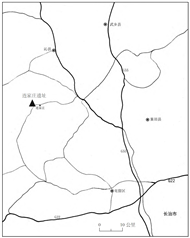
Core Viewpoint - The Lianjiazhuang site in Shanxi Province has been excavated, revealing significant archaeological findings that contribute to understanding the cultural characteristics of the southeastern Jin region during the same period [3][7]. Group 1: Site Overview - The Lianjiazhuang site is located approximately 0.5 kilometers west of Lianjiazhuang Village in Qinxian County, Shanxi Province, covering an area of about 200,000 square meters [3]. - The site has been severely disturbed by agricultural activities and construction projects, with archaeological remains found primarily beneath the plow layer and no cultural accumulation layers identified [3]. Group 2: Archaeological Findings - The excavation revealed a single type of archaeological feature, specifically ash pits, with no direct stratigraphic relationships among the remains [5]. - The pottery discovered at the site predominantly consists of gray and brown pottery, with mud-gray pottery being the most common type [5]. - Decorative features on the artifacts include cord patterns, basket patterns, and additional raised patterns, with some vessel rims exhibiting a scalloped design [5]. - The main types of pottery include various jars and urns, with a smaller quantity of bowls, basins, and pointed-bottom bottles. Two distinct categories of urns and jars were identified based on their lip and rim characteristics [5]. Group 3: Cultural Significance - The Lianjiazhuang site shares geographical proximity and cultural similarities with the Dongcun site, reflecting both northern and southern regional influences while maintaining unique characteristics [7]. - The findings from the Lianjiazhuang excavation provide new data for further clarifying the cultural features of the southeastern Jin region and exploring interactions with other regions such as southwestern and central Jin [7].
一场延续七十余年的考古接力(赓续历史文脉·考古故事)
Ren Min Ri Bao· 2025-07-17 22:02
Core Viewpoint - The Panlongcheng site in Hubei, recognized as one of the "Top Ten Archaeological Discoveries of 2024," provides unique evidence of the evolution of Chinese civilization through extensive archaeological efforts and technological advancements in cultural heritage preservation [8][10][18]. Archaeological Discoveries - The Panlongcheng site has yielded over 3,000 valuable artifacts, including bronze vessels and pottery, indicating its significance during the Shang Dynasty [9][18]. - Recent excavations have uncovered a large-scale stone structure at the Yangjiazui site, suggesting that Panlongcheng may have been a central city in the middle Yangtze River region during the Xia and Shang periods [11][18]. Historical Context - The site was first identified in 1954 when artifacts were discovered during flood prevention efforts, leading to a 70-year-long archaeological journey [10][11]. - The name "Panlongcheng" was officially adopted in 1964, following initial scientific excavations that confirmed its historical significance [10]. Preservation and Restoration Techniques - The site employs a combination of restoration techniques, including the use of glass fiber reinforced concrete and mud sculpture methods, to maintain the integrity of the artifacts and structures [13][14]. - A digital model of Panlongcheng has been created to enhance visitor experience through virtual reality technology [14]. Cultural and Educational Integration - The Panlongcheng Archaeological Park integrates cultural heritage preservation with tourism, offering interactive experiences and educational programs related to archaeology and ancient Chinese civilization [15][17]. - The park covers an area of 4.86 square kilometers, preserving the original environment while providing facilities for visitors [16]. Ongoing Research and Future Prospects - Current archaeological efforts focus on various sites within Panlongcheng, with a significant portion of the area still unexplored [17]. - The involvement of younger archaeologists is expected to lead to further discoveries and insights into the site's historical context [17].
山西公布平遥唐墓发掘资料 墓主为太原郡人士
Zhong Guo Xin Wen Wang· 2025-05-07 01:12
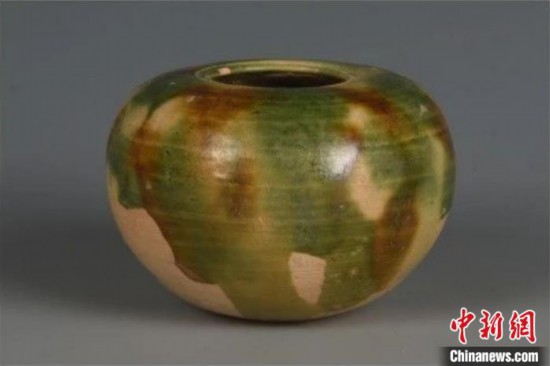
Core Insights - The excavation of the Tang Dynasty tomb M5 in Pingyao County, Shanxi Province, reveals significant historical information about the burial practices and cultural artifacts of the early Tang period [1][3] - The tomb, dating back to the early Tang period, belonged to an individual from the Taiyuan Commandery and provides evidence for the location of the ancient Pingyao city during the Sui and Tang dynasties [3] Summary by Sections Excavation Details - The tomb M5 is located approximately 8.3 kilometers west of the ancient city of Pingyao and 8.6 kilometers north of the Zhen Guo Temple [1] - The tomb structure consists of a vertical pit with a single brick chamber, including a tomb passage, door, and chamber [1] Artifacts and Historical Context - A total of 13 burial items were unearthed, including pottery, bronze, and iron artifacts [3] - The tomb's owner was buried in the year 700 AD, providing a reference point for the early Tang period [3] - The findings indicate that early Tang tombs in Shanxi typically featured gray pottery and colorful glazed pottery, with a transition to white porcelain in the middle Tang period [3] Research Significance - The M5 tomb serves as a chronological marker for the transition between the early and middle Tang periods in Shanxi [3] - The burial structure and artifacts contribute valuable insights into the funerary customs and evolution of Tang Dynasty burial practices in the Jinzhong region and beyond [3]