盆

Search documents
这个春节,拼年货的战斗力还得看老乡
2 1 Shi Ji Jing Ji Bao Dao· 2026-02-09 06:54
Core Insights - The article highlights the significant increase in online shopping for traditional New Year goods in rural areas, driven by improved logistics and digital platforms like Pinduoduo [1][12][14] - Rural consumption is outpacing urban growth, with a reported 4.1% year-on-year increase in rural retail sales, indicating a shift in consumer behavior and market dynamics [1][12] Group 1: Rural Consumption Trends - As the Spring Festival approaches, there is a noticeable rise in the volume of packages, with some rural areas experiencing a 30% increase in delivery volumes compared to earlier in the month [4] - The average disposable income for rural residents is projected to reach 24,456 yuan in 2025, reflecting a 6% real growth from the previous year [1] - The retail sales of consumer goods in rural areas are expected to reach 6.8 trillion yuan by 2025, continuing a trend of growth that outpaces urban areas for 13 consecutive years [12] Group 2: Logistics and Delivery Innovations - The logistics network has been significantly enhanced, with rural delivery services adapting to local conditions, including challenging terrains and weather [5][6] - Pinduoduo's rural delivery initiatives have led to a substantial increase in package volumes, with some stations handling up to 6,000 packages daily [6][10] - The integration of e-commerce into rural logistics has reduced delivery times from five to seven days to approximately three days [14] Group 3: Demographic Shifts in Online Shopping - Older consumers are increasingly participating in online shopping, challenging the stereotype that e-commerce is only for the young [7][10] - Many elderly individuals are becoming comfortable with online purchases, often starting with assistance from younger family members [7][10] - The trend of older consumers engaging in e-commerce is reshaping their shopping habits, making online platforms a stable part of their daily lives [10][12] Group 4: Economic Impact and Future Prospects - The article emphasizes the role of e-commerce in enhancing rural productivity and convenience, with farmers increasingly purchasing agricultural supplies online [8][14] - The ongoing digital transformation in rural areas is seen as a critical factor for rural revitalization, with e-commerce providing new opportunities for local economies [17] - The challenges of maintaining stable supply chains for rural products highlight the need for sustainable growth strategies in the e-commerce sector [17]

陕西富平发现一处仰韶文化史家类型为主要内涵的环壕聚落遗址
Zhong Guo Xin Wen Wang· 2026-01-16 13:41
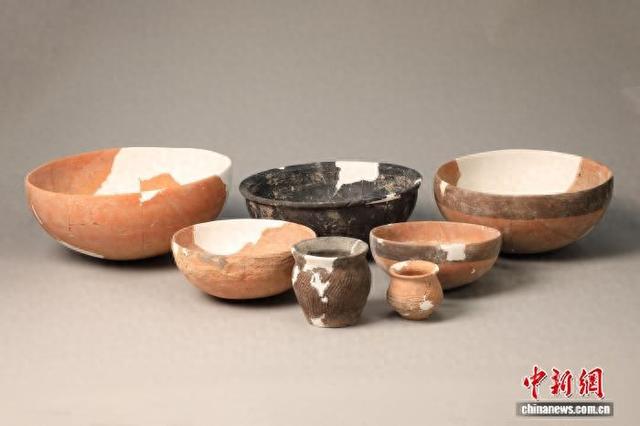
Core Viewpoint - The archaeological discovery at the Yong'an site in Shaanxi Province is significant for understanding the Yangshao culture and early social structures in the region, with the site being recognized as one of the six major archaeological finds of 2025 [1][4]. Group 1: Archaeological Findings - The Yong'an site has revealed a rich cultural connotation, with a total of 151 relics from the Yangshao period, including 14 house sites and 134 ash pits [1]. - The excavation uncovered 14 well-preserved semi-subterranean house sites, providing a model for studying settlement family structures [3]. - The ash pits exhibited a regular shape, with a significant number of bag-shaped pits containing a variety of artifacts, including complete animal bones [1][3]. Group 2: Settlement Structure - The layout of the house sites indicates a centralized settlement structure, which is crucial for exploring the forms of early Yangshao settlements and social development processes [3]. - Two segments of a circular trench were revealed, indicating a defensive nature, with features such as a semi-convex entrance and surrounding postholes that may have served as a fence [3][4]. - The combination of the semi-convex entrance, "gatehouse," and "fence" structures represents a significant finding in the Guanzhong region, marking the first discovery of such features [4].

考古发现+1 山西沁县连家庄遗址发掘资料公布
Yang Shi Xin Wen· 2025-08-08 12:20
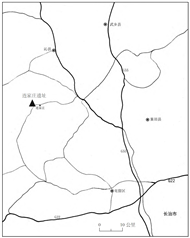
Core Viewpoint - The Lianjiazhuang site in Shanxi Province has been excavated, revealing significant archaeological findings that contribute to understanding the cultural characteristics of the southeastern Jin region during the same period [3][7]. Group 1: Site Overview - The Lianjiazhuang site is located approximately 0.5 kilometers west of Lianjiazhuang Village in Qinxian County, Shanxi Province, covering an area of about 200,000 square meters [3]. - The site has been severely disturbed by agricultural activities and construction projects, with archaeological remains found primarily beneath the plow layer and no cultural accumulation layers identified [3]. Group 2: Archaeological Findings - The excavation revealed a single type of archaeological feature, specifically ash pits, with no direct stratigraphic relationships among the remains [5]. - The pottery discovered at the site predominantly consists of gray and brown pottery, with mud-gray pottery being the most common type [5]. - Decorative features on the artifacts include cord patterns, basket patterns, and additional raised patterns, with some vessel rims exhibiting a scalloped design [5]. - The main types of pottery include various jars and urns, with a smaller quantity of bowls, basins, and pointed-bottom bottles. Two distinct categories of urns and jars were identified based on their lip and rim characteristics [5]. Group 3: Cultural Significance - The Lianjiazhuang site shares geographical proximity and cultural similarities with the Dongcun site, reflecting both northern and southern regional influences while maintaining unique characteristics [7]. - The findings from the Lianjiazhuang excavation provide new data for further clarifying the cultural features of the southeastern Jin region and exploring interactions with other regions such as southwestern and central Jin [7].