自然资源确权登记

Search documents
我国首批5个国家公园全部完成确权登记
Yang Shi Wang· 2025-08-11 12:32
Group 1 - The core viewpoint is that the completion of natural resource registration for the first five national parks marks a significant step in establishing their legal status and ownership [1][3] - The registration provides a clear delineation of the boundaries of these national parks, which is crucial for ecological management and resource protection [3] - The results of the registration will be utilized in various applications, including baseline surveys, resource management, and ecological protection efforts [3]

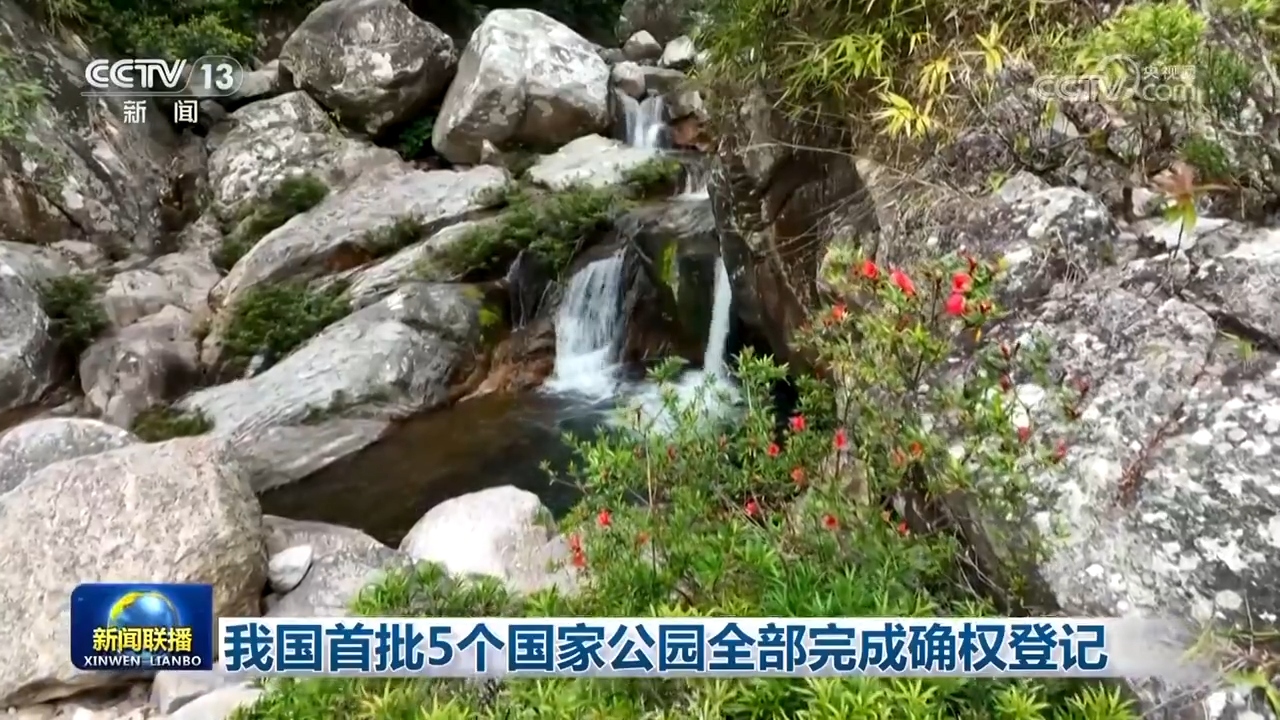
给自然资源上“户口”,首批5个国家公园完成确权登记
第一财经· 2025-08-11 10:49
Core Viewpoint - The article emphasizes the importance of natural resource property rights registration as a crucial step in promoting ecological civilization and addressing existing environmental protection issues in China [4][5]. Group 1: Natural Resource Property Rights Registration - As of August 11, 2025, the first batch of five national parks in China, including Sanjiangyuan, Giant Panda, Northeast Tiger and Leopard, Hainan Tropical Rainforest, and Wuyi Mountain, have completed natural resource property rights registration [3][4]. - The Ministry of Natural Resources highlights that the lack of clear ownership and responsibilities has hindered effective environmental protection, making property rights registration essential for clarifying ownership and responsibilities [4][5]. Group 2: National Parks Overview - The total area of Hainan Tropical Rainforest National Park is 4,268.54 square kilometers, with state-owned land accounting for 3,772.41 square kilometers (88.38%) and forest resources covering 97.21% of the total area [5][6]. - Wuyi Mountain National Park spans 1,280.41 square kilometers, with the Fujian section covering 1,001.41 square kilometers and the Jiangxi section 279 square kilometers [6]. - The Giant Panda National Park covers approximately 22,000 square kilometers, with the Sichuan section being the largest at 19,300 square kilometers [6][7]. - Northeast Tiger and Leopard National Park has a total area of 14,100 square kilometers, with forest resources making up 97.58% of the area [7]. - Sanjiangyuan National Park encompasses about 190,700 square kilometers, with grassland resources being the most significant at 128,900 square kilometers [7]. Group 3: Future Directions - The Ministry of Natural Resources plans to enhance the legal, standardized, and information-based levels of natural resource property rights registration, aiming to complete the registration of newly established national parks and other significant natural resources during the 14th Five-Year Plan period [8]. - By the end of July 2025, a total of 1,057 key areas covering 320,000 square kilometers have completed property rights registration, including various types of natural resources [8].

摸家底、建档案!首批5个国家公园已明确“谁所有”“由谁管”
Yang Shi Wang· 2025-08-11 08:46
Core Points - The first batch of five national parks in China has completed the registration of natural resource rights, providing them with official ownership documentation [1][5] - The registration clarifies ownership and management responsibilities for the natural resources within these parks, with the Sanjiangyuan National Park's resources being entirely state-owned, while the others have a mix of state and collective ownership [5][11] - The detailed registration includes information on the area, type, quantity, and quality of natural resources, with Sanjiangyuan National Park covering 190,700 square kilometers, and the other parks varying in size from 1,280.41 to 22,000 square kilometers [9][11] Summary by Category Ownership and Management - The registration process has established clear ownership and management responsibilities for the natural resources in the five national parks, addressing issues of unclear ownership and boundary definitions [11] Resource Details - The registration records the specific natural resources present in each park, with Sanjiangyuan primarily featuring grasslands, while the other four parks are predominantly forested [9] Ecological Importance - The registration emphasizes the ecological value of the national parks, ensuring that the ownership and management of these resources are legally recognized and clearly defined [11]

给自然资源上“户口”,首批5个国家公园完成确权登记
Di Yi Cai Jing· 2025-08-11 08:36
Core Insights - The article emphasizes the importance of clarifying property rights in the context of ecological product value realization within national parks, establishing an ecological ledger based on registration data to facilitate asset management of natural resources [1][8] - The Ministry of Natural Resources of China has completed property rights registration for the first batch of five national parks, which is a significant step towards ecological civilization and resource management [2][3][4] Group 1: Property Rights Registration - The first batch of national parks, including Sanjiangyuan, Giant Panda, Northeast Tiger and Leopard, Hainan Tropical Rainforest, and Wuyi Mountain, has completed natural resource property rights registration [2][3][4] - The registration process is part of a broader initiative to reform the natural resource asset property rights system, aiming to clarify ownership and responsibilities [2][7] - The registration results indicate significant areas of national ownership, with Hainan Tropical Rainforest National Park having 88.38% of its area as state-owned [3] Group 2: Ecological Management and Future Plans - The establishment of a "Four Libraries" ecological ledger (water, grain, money, carbon) is proposed to enhance the management of national parks and natural resources [1][8] - By July 2025, a total of 1,057 key areas are expected to complete property rights registration, covering 320,000 square kilometers of various natural resources [8] - The Ministry of Natural Resources plans to improve the legal, standardized, and information-based levels of unified property rights registration for natural resources [8]

为保护绿水青山“定责任” 为可持续发展“明权属”
Nan Jing Ri Bao· 2025-08-07 02:29
Core Viewpoint - Nanjing has successfully completed the unified registration of all key natural resources, becoming the first city in China to do so, which includes the registration of the Qinhuai River and its tributaries [1][2]. Group 1: Registration Process - The registration process for the Qinhuai River and its tributaries involved a comprehensive survey and delineation of natural resource boundaries, incorporating various management and ownership factors [2]. - A total area of approximately 9,000 hectares of natural resources, including the main stream of the Qinhuai River and other significant sites, has been registered [2]. Group 2: Implications of Registration - The completion of the registration clarifies ownership of natural resource assets, establishing a clear and effective property rights system for natural resources in Nanjing [2]. - The registration results will support future initiatives in ecological product value realization, ecological protection compensation, and carbon trading [2]. Group 3: Future Mechanisms - The city plans to establish a long-term mechanism covering the entire lifecycle of natural resource registration, including initial registration, changes, and data updates, to ensure sustainable development and harmony between humans and nature [3].
山东在自然资源确权登记工作中积极开展信息数据库建设和应用——数据集成管理 成果共享应用
Zhong Guo Zi Ran Zi Yuan Bao· 2025-06-16 01:59
Core Insights - Shandong Province has made significant progress in establishing a provincial-level natural resource rights confirmation registration information database over the past five years, achieving effective data integration management and a clear review process [1][5][6] Group 1: System Development and Implementation - The provincial-level natural resource unified rights confirmation registration information management system was initiated in 2020, with continuous improvements from 2021 to 2023 based on business needs [2][5] - The system includes four modules: data management, data display, data analysis, and data sharing, allowing for unified management of various types of data related to natural resources [2][5] - By the end of 2024, Shandong aims to complete the unified rights confirmation cadastral survey and data organization for key areas across the province [2][5] Group 2: Data Management and Integration - The database currently manages data for 203 natural protected areas (covering 1,565,460.83 hectares), 50 rivers (totaling 5,016.89 kilometers), and 1,374 mining areas, with over 1.359 million entries [2][5] - The system facilitates multi-dimensional comprehensive analysis of natural resource data and integrates various data sources for enhanced visualization and management [2][5] Group 3: Review Process and Pilot Projects - In 2021, Shandong initiated a pilot project for internal review processes at the Kunyu Mountain National Nature Reserve, refining the review workflow and enhancing efficiency [3][6] - As of January 9, 2023, Shandong completed the natural resource rights confirmation registration for Kunyu Mountain, becoming one of the first in the country to have an "account book" for ecological spaces [3][6] Group 4: Updates and Future Plans - Shandong is actively exploring updates to the natural resource rights confirmation registration results by establishing a logical framework for data updates [4][6] - From September 2024 to January 2025, the deployment and testing of the national natural resource rights confirmation registration results update management system will continue in Shandong [4][6]