
青铜文明

Search documents
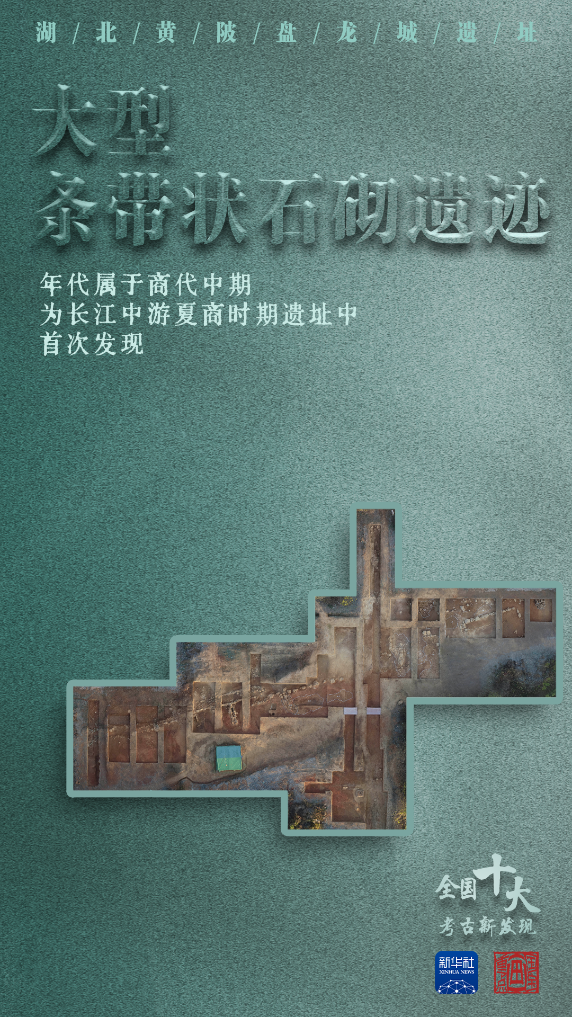
文化中国行·国宝画重点|江河“对话”:盘龙城遗址里的夏商印记
Xin Hua She· 2025-05-24 14:14
Core Insights - The article highlights the significance of the Panlongcheng site in Hubei, which serves as a central hub for the governance model of ancient China and the development of bronze civilization in the Yangtze River basin [1] Archaeological Discoveries - The Panlongcheng site was discovered in 1954 and confirmed as belonging to the early Shang Dynasty in 1958, with large-scale excavations starting in 1974 [1] - Recently, the site was selected as one of the "Top Ten Archaeological Discoveries of 2024" [1] - New findings from the Yangjiawan area include a large strip-shaped stone structure, marking the first discovery of such a construction in the Yangtze River midstream during the Xia and Shang periods [2][4] Cultural Artifacts - A bronze axe unearthed from the Li Jiazui No. 2 tomb is noted as the largest known early Shang bronze axe, symbolizing military power [6] - The Yangjiawan M17 tomb yielded significant artifacts, including a unique turquoise-inlaid gold ornament, which is one of the earliest gold and jade inlaid decorations found in the Central Plains culture [8] - The site also revealed a bronze vessel with features of multiple bronze wine vessels, showcasing the artistic and aesthetic characteristics of the Shang Dynasty [11] Historical Context - The Panlongcheng site is positioned as a crucial center for early bronze civilization in the Yangtze River basin, reflecting the cultural exchanges between the Yellow River and Yangtze River regions [13][16] - The site has been linked to the Zhengzhou city in terms of ritual artifacts, indicating a high degree of consistency in material culture and customs between the two locations [16]

楚玉风华:楚人如何将浪漫与灵动注入玉石|观展
Jing Ji Guan Cha Bao· 2025-05-17 00:47
Group 1 - The article explores the historical significance of jade in early Chinese civilization, highlighting its dual role as a symbol of both divine and royal power [2][12][32] - Jade artifacts from different periods reflect the evolution of cultural practices, transitioning from spiritual communication tools to symbols of social hierarchy [12][32] - The craftsmanship of jade artifacts, such as the intricate designs and techniques used in the production of jade items, showcases the advanced skills of ancient artisans [5][18][24] Group 2 - The article discusses the transformation of jade from ritualistic objects in the Xia and Shang dynasties to more secular and decorative items in the Ming dynasty, indicating a shift in societal values [24][28][32] - Specific jade pieces, like the jade crown and belt buckles from royal tombs, illustrate the intertwining of art, power, and social status in ancient China [25][30][32] - The exhibition at Hubei Provincial Museum serves as a comprehensive showcase of jade artifacts across various dynasties, providing insights into the cultural and historical context of jade in Chinese civilization [33]