食品工业化

Search documents
专家:国家界定与公众认知存在差距 预制菜产业成熟仍需时间
Di Yi Cai Jing· 2025-09-12 13:38
Core Viewpoint - The recent dispute between Luo Yonghao and the restaurant group Xibei has cast a shadow over the "pre-prepared dishes" industry, highlighting the need for clearer definitions and standards in this sector [1] Group 1: Definition and Characteristics of Pre-prepared Dishes - The National Market Supervision Administration and five other departments have jointly issued a notice that clearly defines pre-prepared dishes, emphasizing their industrial pre-processing characteristics and the requirement that they must be heated or cooked before consumption [2] - Pre-prepared dishes must not include staple foods and should meet specific production and processing standards, including being packaged for storage, transportation, and sale [2][3] Group 2: Industry Context and Consumer Perception - The pre-prepared dish sector is currently driven by policy support, capital investment, and industry competition, but consumer acceptance remains low due to safety and nutritional concerns [4] - Many consumers associate pre-prepared dishes with a lack of quality and safety, leading to apprehension about their use in restaurant chains [4][5] - The industry faces challenges in balancing consumer expectations for freshly prepared meals with the operational realities of restaurant chains, which often rely on central kitchens for efficiency [4][6] Group 3: Recommendations for Industry Improvement - Experts suggest that the industry needs to respect consumer rights to information and choice, advocating for the establishment of national standards for pre-prepared dishes to alleviate consumer concerns [6] - There is a call for regulatory measures to ensure that pre-prepared products meet safety standards and that restaurants disclose their use of such products to consumers [6]
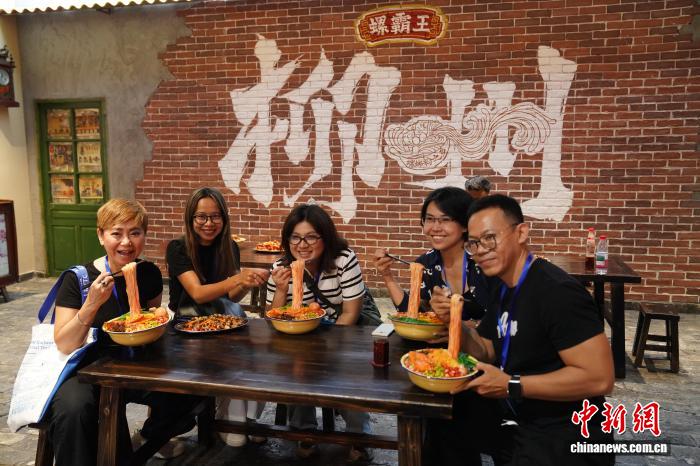
一碗粉“嗦”出百亿产业 化身文化符号飘香海外
Zhong Guo Xin Wen Wang· 2025-08-30 07:16
Core Insights - The article highlights the transformation of Liuzhou's snail rice noodle into a cultural symbol and a billion-dollar industry, attracting global attention and tourism [1][2]. Industry Overview - The Liuzhou snail rice noodle industry has developed into a comprehensive industry chain with a total revenue of 759.6 billion RMB in 2024, including 169 billion RMB from packaged snail rice noodles [2]. - The industry has expanded significantly over the past decade, evolving from a street food to a globally recognized product, with exports reaching over 20 countries and regions [2]. Company Developments - Luobawang Food Technology Co., Ltd. is noted as the first Chinese company with export qualifications to Europe and the United States, focusing on expanding its market presence in Southeast Asia [3][4]. - The company is preparing to launch a halal production line for snail rice noodles, aiming for a daily output of 50,000 packages [4]. Market Expansion - Liuzhou city is actively promoting the snail rice noodle industry internationally, with initiatives to assist companies in understanding international trade standards and conducting promotional activities in Southeast Asia [4]. - The popularity of Liuzhou snail rice noodles has led to a surge in tourism, with the city receiving 51.66 million domestic and international visitors in the first half of 2025, marking an 11.9% increase year-on-year [5].