AI蛋白质设计

Search documents
不用抗生素也能抗菌!AI设计新型蛋白质抵御细菌耐药性|Nature子刊
量子位· 2025-07-14 07:01
Core Insights - The article discusses a groundbreaking study that utilizes AI to design proteins that can effectively inhibit the growth of antibiotic-resistant bacteria like E. coli by blocking their access to essential nutrients [1][29]. Group 1: AI-Driven Protein Design - Researchers have successfully designed proteins that bind to the ChuA protein in E. coli, acting as "gatekeepers" to prevent the bacteria from extracting heme from hemoglobin [3][22]. - The AI-driven protein design platform is the first of its kind in Australia, modeled after Nobel laureate David Baker's work, and is accessible for free to global scientists [7][8]. - The study highlights a rapid design process using AI algorithms, completing tasks that traditionally took months or years in a significantly shorter timeframe [19][24]. Group 2: Mechanism of Action - The study reveals that iron is a critical nutrient for the growth of bacteria, and during infections, the host employs a mechanism called "nutritional immunity" to sequester free iron [10][11]. - E. coli and Shigella utilize the ChuA protein to "steal" heme from hemoglobin, which is essential for their growth [12][15]. - The designed proteins specifically inhibit the interaction between ChuA and hemoglobin, effectively starving the bacteria of the necessary nutrients [22][28]. Group 3: Efficacy and Specificity - Among the AI-designed proteins, one inhibitor (G7) demonstrated an IC50 value of 42.5 nM, indicating its potency comparable to traditional antibiotics [21]. - The designed proteins exhibit exceptional specificity, only inhibiting the extraction of heme from hemoglobin without affecting the transport of free heme [25][26]. - This innovative approach represents a new paradigm in antibacterial strategies, focusing on nutrient deprivation rather than direct bacterial killing [27][28]. Group 4: Broader Implications - The advancements in AI-driven protein synthesis are expected to reshape the drug development landscape, enabling customized treatment solutions [37]. - The study emphasizes the potential of AI to revolutionize the field of antibiotic research by significantly reducing the risk of antibiotic resistance through novel mechanisms [29][31].

人工合成酶效率飙升100倍!生物制造或迎技术革命
合成生物学与绿色生物制造· 2025-06-27 10:42
Core Viewpoint - Israeli scientists from the Weizmann Institute have developed a new computer algorithm based on enzyme principles to design highly efficient synthetic enzymes, achieving 100 times the efficiency of AI-designed enzymes, marking a new phase in "on-demand" enzyme customization [1][2]. Group 1: Algorithm Development - Traditional computer algorithms for enzyme design are often inefficient and require extensive laboratory optimization [2]. - The research team utilized "Kemp elimination" as a case study, collecting natural enzyme data and decomposing protein sequences into fragments, which were then recombined to identify the optimal chemical "skeleton" [2]. - The algorithm challenged the traditional belief that enzyme active sites require cyclic amino acids, showing that non-cyclic structures can be more efficient, significantly enhancing catalytic efficiency [2][3]. Group 2: Synthetic Enzyme Characteristics - The resulting synthetic enzyme differs from natural enzymes by over 140 amino acid sequences but demonstrates comparable catalytic efficiency [3]. - The current synthetic protein structure remains simpler than natural enzymes, with future research focusing on complex multi-step reactions, such as those catalyzed by the key photosynthetic enzyme rubisco [3]. Group 3: Future Directions - While AI protein design has been prevalent over the past decade, it primarily mimics existing enzymes; the new algorithm constructs enzymes based on physical principles [3]. - The research team acknowledges that AI is irreplaceable for certain protein designs but struggles with complex catalytic reactions, suggesting a need for complementary approaches to achieve optimal enzyme designs [3]. Group 4: Upcoming Events - The 4th Synthetic Biology and Green Bio-Manufacturing Conference (SynBioCon 2025) will be held from August 20-22 in Ningbo, Zhejiang, focusing on the intersection of AI and biological manufacturing, along with four application areas: green chemicals and new materials, future food, future agriculture, and beauty raw materials [5].
从大脑到心脏,红杉医疗成员企业收获多项成果|Healthcare View
红杉汇· 2025-06-26 07:22
Group 1 - The article discusses the first real theater-based neuroaesthetic experiment in China, conducted at Tsinghua University, where eight volunteers wore portable EEG devices while watching a dance performance to capture their neural activity in real-time [3][6]. - The NeuroHUB platform, developed by Boruikang, is highlighted for its ability to achieve millisecond-level synchronization of EEG and physiological signals in a real-world setting, marking a significant advancement in neuroaesthetic research [5][6]. - The experiment demonstrated that audience engagement significantly increases brain activity, revealing the neural connections between emotional responses and artistic experiences [6][7]. Group 2 - NeuroHUB showcases three core advantages: wireless freedom allowing natural seating in the theater, group super-scanning enabling real-time dialogue among multiple brains, and robust interference resistance against complex electromagnetic environments [7][9]. - The platform's modular design and wireless data transmission ensure a seamless experience for participants, maintaining the purity of the artistic experience during the performance [7]. - NeuroHUB's capability to synchronize data from over ten participants simultaneously represents a breakthrough in overcoming the limitations of traditional laboratory settings [8]. Group 3 - The article also mentions advancements in medical technology, including a new integrated solution for coronary function and imaging assessments approved for market release, which combines multiple evaluation metrics for enhanced surgical decision-making [11][12]. - The development of a fully magnetic levitation artificial heart by Xinxin Medical has been recognized as one of the top ten technological advancements in Jiangsu Province, showcasing significant progress in heart failure treatment [13][15]. - The iPSC-derived CAR-NK cell therapy developed by Qihan Biotech has achieved notable clinical results in treating refractory systemic sclerosis, marking a significant milestone in autoimmune disease treatment [16][17]. Group 4 - The article highlights the introduction of two first-in-class drugs by Dige Pharmaceutical, which will be presented at major international conferences, indicating ongoing innovation in the hematology sector [21]. - The J-VALVE TF system's 12-month clinical follow-up results demonstrate superior performance compared to similar products, emphasizing the potential of Chinese-developed medical devices on the international stage [22][24]. - The article concludes with advancements in AI-driven enzyme design and biodegradable medical devices, showcasing the ongoing evolution and innovation within the healthcare and biotechnology industries [25][35].

为千亿酶缺口定制生物钥匙!中国团队首创AI零样本酶设计方法
Huan Qiu Wang· 2025-06-18 02:16
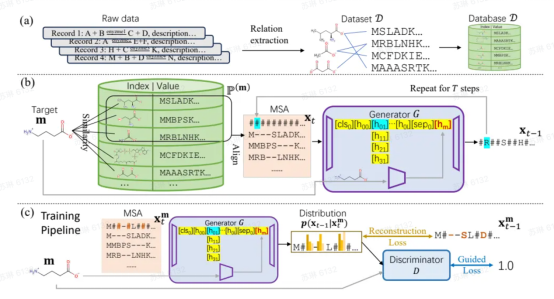
Core Insights - The recent breakthrough in AI enzyme design by MoleculeMind and Hong Kong Polytechnic University has been recognized at the ICML 2025 conference, marking a significant advancement in the field of AI enzyme design [1] - The traditional methods of enzyme discovery and optimization are time-consuming and costly, with a success rate of less than 1%, highlighting the urgent need for innovative solutions in the biomanufacturing sector [2] - The introduction of the SENZ method, which utilizes substrate structure similarity for enzyme design, represents a novel approach that could revolutionize enzyme generation [3][5] Industry Overview - Enzymes are crucial for the development of the trillion-dollar bio-economy, impacting sectors such as biomedicine, green chemistry, and environmental degradation [1] - The lack of ideal biocatalysts is a major barrier to scaling production in the biomanufacturing industry, leading to annual capacity losses exceeding $100 billion in pharmaceuticals, chemicals, and agriculture [2] - AI protein design has emerged as a promising solution to generate precise catalysts by learning from existing enzyme structure-function relationships, although it faces challenges with novel synthetic molecules due to limited training data [2] Company Developments - MoleculeMind has developed the SENZ method, which integrates biological data retrieval and generative AI to create enzymes without direct catalytic data, thus addressing a critical challenge in enzyme generation [3][5] - The SENZ method has demonstrated superior performance compared to traditional enzyme design methods, potentially providing tailored solutions for complex drug synthesis and environmental remediation [6] - MoleculeMind is expanding its capabilities in "on-demand design" across various fields, including antibodies, vaccines, and industrial enzymes, aiming to provide innovative biological solutions for health, environmental, and sustainability challenges [7]